Italy Guide  |
|---|
|
| | Top Italian Cities |
|---|
|
| | Italian Regions |
|---|
|
| | Europe Guide |
|---|
|
| | Travel Tools |
|---|
|
|
|
|
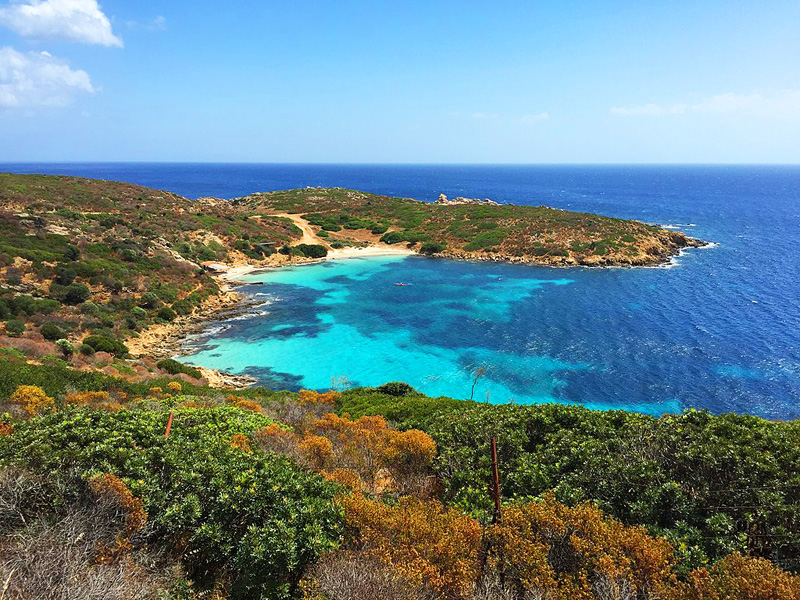
 Cala Coticcio, Caprera Island, Sardinia. Cala Coticcio, Caprera Island, Sardinia.
Introduction

Sardinia (Sardegna in Italian, Sardigna in Sardinian) is one of the five an autonomous regions of Italy, and the second-largest island in the Mediterranean Sea after Sicily. With 24,090 km² (about the size of the US state of New Hampshire), it is the third largest Italian region, but also the third most sparsely populated, with only 69 inhabitants per km².
Sardinian people are fairly unique genetically, having been isolated from the rest of Europe since the Neolithic period. Lacking the Indo-European gene flow from the Bronze Age, Sardinians have nearly 100% of black hair and brown eyes. Remains of the pre-Indo-European Nuragic civilization (1800 BCE to 1st cenury CE) can be seen at several locations around the island, the most famous of which is Su Nuraxi di Barumini, a World Heritage Site.
Roughly three quarters of the population speak Sardinian, the most distinctive of all Romance languages, more distant from Italian than Italian is to French or Romanian. Sardinian language is noted for its substantial Paleosardinian substratum (words surviving from the pre-Indo-European Nuragic language). There are three Sardinian dialects: Campidanese, spoken in the southern half of the island, Logudorese in the north-west, and Nuorese in th north-east. In the northern tip of the island, Corsican dialects are spoken, from Sassari to the Emerald Coast. Catalan is also spoken around Alghero, and Ligurian on Isola de San Pietro and Isola de Sant'Antioco.
Sardinia has one of the most singular culture in Europe. It is home to one of the oldest forms of vocal polyphony, generally known as cantu a tenore, which has been recognised by the UNESCO as an intangible cultural heritage. Local festivals are a major attraction, such as the Sa Sartiglia equestrian tournament in Oristano, or the Sagra del Redentore in Nuoro (on 29th August).
For most tourists, Sardinia is first and foremost superb beaches with crystal-clear water. The most beautiful of them are located in the north-east corner, near Corsica, including the Maddalena archipelago and the Emerald Coast (Costa Smeralda).
Famous people from Sardinia include (chronologically): the writer Grazia Deledda (Nobel Prize), the Marxist thinker Antonio Gramsci, the politician Antonio Segni (Prime Minister then President of Italy), the politician Francesco Cossiga (Prime Minister then President of Italy), and the entrepreneur Renato Soru (founder of Tiscali).
Cuisine
Sardinian people enjoy an exceptional longevity, which can be attributed to the climate, relaxed pace, and healthy diet of its people. Seafood (rock lobsters, sea urchins, octopus, clams, mussels, and squid) in coastal areas, pork, goat meat and game inland, and fresh vegetables and herbs everywhere are what best define Sardinian cuisine. Saffron was introduced to the island by the Phoenicians, and has been grown extensively ever since. It is one of the commonest spices in Sardinian cuisine.
Bread is heavily consumed. Sardinian bread was traditionally made dry so that it could be kept for days by herders. It often comes in crispy paper-thin flatbread like the pane carasau (a.k.a. carta da musica or "music sheet", similar to the Indian papadum) or pistoccu (often rectangular, like lasagna sheets). Round loaves also exist, like the civraxiu. The most peculiar of all breads is coccoi, a hard crusted soft inside bread which comes in dozens of decorative shapes changing from village to village. The most famous Sardinian cheeses are the pecorino romano and pecorino sardo, both made from ewe's milk.
Typically Sardinian dishes include butàriga (or botargo, cured mullet roe), carne a carraxiu (suckling pig, lamb or calf buried in the ground with myrtle leaves on top, upon which a fire is lit and left to cook the meat for hours), and porceddu (roast suckling pig). There is a number of pasta specific to Sardinia, like fregula (similar to the Israeli couscous), culurgiones (ravioli folded like braids, filled with potato and pecorino), or malloreddus (small shell-shaped gnocchi).
Beer has been produced since the Copper Age in Sardinia. The island has the highest beer consumption per capita within Italy, with 60 litres per person per year, against an Italian average of 28 litres. The highest consumption is in the province of Nuoro, with an average of 100 liters per capita, as much as in Ireland or Australia. The most widespread Sardinian beer is Birra Ichnusa, a pale lager. Sardinia produces 1 million hectolitres of wine annually. It has one DOCG (Vermentino di Gallura) and 19 DOC wines. The Sardinian varieties of Vernaccia grapes are used to make the Sherry-like wine Vernaccia di Oristano. Sardinian red wine is said to contains 5 to 10 times the procyanidins (antioxidants with cardiovascular benefits) than other varieties. The Sardinian digestif par excellence is the Mirto, a myrtle liqueur that is either red or white.
Attractions
North
| Asinara National Park ※ |
|---|
 Asinara National Park, located off the northwest coast of Sardinia, is home to the unique Albino donkey, a symbol of the island, which roams freely alongside other wildlife such as mouflon, wild boar, and various bird species. Established in 1997, the park has a complex past, having served as a quarantine station during pandemics and later as a high-security prison, earning it the nickname "Italian Alcatraz". The island boasts pristine beaches, rugged cliffs, and crystal-clear waters that are part of a Marine Protected Area, making it a haven for diverse marine life and a popular spot for snorkeling and diving. With nearly 700 plant species, including 30 endemic ones, Asinara's flora is of great biogeographical interest. The park's transformation from a prison island to a protected natural area reflects Italy's commitment to preserving its environmental heritage. |
| Stintino |
|---|

 Founded on 14 August 1885, Stintino was established when 45 families were relocated from Asinara Island to make way for a quarantine station and penal colony. The name "Stintino" means "intestine" in the local dialect, referring to the town's long, narrow shape between two inlets. Stintino is renowned for its stunning beaches, particularly La Pelosa, famous for its shallow turquoise waters and fine white sand. The town has a rich fishing heritage, once known for its traditional tuna fishing technique called "mattanza". This history is preserved in the Museo della Tonnara (Tuna Fishing Museum), which showcases the town's historical connection to tuna fishing. |
| Alghero |
|---|
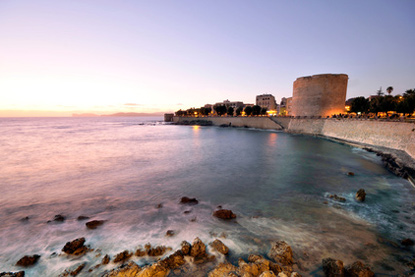
 Settled since the Neolithic, Alghero evolved into an important centre of the Bronze-Age Nuragic civilization. It later became Phoencian, Roman, Genovese, then Spanish, and Catalan is still spoken by a quarter of the population, which earned it the nickname of "Barceloneta" (Little Barcelona). The city was founded in 1102 by the Genoese Doria family and later came under Aragonese rule in 1354, shaping its distinctive cultural identity. Alghero is renowned for its well-preserved 16th-century golden sea walls and towers, which form a picturesque backdrop to its historic center. The city is also famous for its high-quality red coral, earning it the nickname "Riviera del Corallo" (Coral Riviera). This precious resource has been so significant to Alghero's economy and culture that a coral branch is featured in the city's coat of arms. Nature enthusiasts will appreciate Alghero's two protected areas: Cape Caccia and Piana Island Natural Regional Park, and Conte Harbour Natural Regional Park. The dramatic Capo Caccia promontory, resembling a sleeping giant, has become an iconic symbol of the city and is steeped in local legend. |
Other attractions
Sassari
| Costa Smeralda |
|---|

The Costa Smeralda, or Emerald Coast, is a stunning 10 km stretch of coastline named after its crystal-clear emerald waters. It was developed in the 1960s by Prince Karim Aga Khan IV, who was captivated by the area's natural beauty. Porto Cervo, the main resort town, is known for its luxury boutiques, exclusive restaurants, and marina filled with superyachts. Despite its development, strict planning controls have ensured that the Costa Smeralda maintains its natural beauty and blends well with the surroundings. The area is home to several archaeological sites, including the Nuraghe La Prisgiona, which dates back to the Bronze Age. |
| Maddalena Archipelago |
|---|

 The Maddalena Archipelago, located in the Strait of Bonifacio between Sardinia and Corsica, is a stunning collection of seven main islands—La Maddalena, Caprera, Spargi, Santo Stefano, Santa Maria, Budelli, and Razzoli—along with numerous smaller islets. Established as a national park in 1994, it spans over 20,000 hectares of land and sea, featuring pristine beaches and rich marine biodiversity, including rare species like sperm whales and Caretta turtles. Historically significant, the archipelago has been inhabited since prehistoric times and was known to the Romans as Cunicularia. It has served as a strategic naval base for figures such as Admiral Nelson and Giuseppe Garibaldi, who spent his last years on Caprera. The islands are renowned for their unique natural beauty, particularly the pink sands of Budelli's Spiaggia Rosa and the crystal-clear waters that attract boaters and divers alike. |
| Castelsardo |
|---|

Castelsardo is a medieval fortress town, perched on a promontory overlooking the Mediterranean Sea, is renowned for its striking 12th-century Doria Castle, which now houses the Museum of Mediterranean Weaving. The town is famous for its unique tradition of basket weaving, with intricate creations made from local Mediterranean plants. It is home to the Roccia dell'Elefante, a natural rock formation resembling an elephant, which also contains ancient Domus de Janas (fairy houses). The town's name has changed several times throughout history, from Castel Genovese to Castel Aragonese, before finally becoming Castelsardo in 1767. Interestingly, Castelsardo is one of the best places to witness the 'Tenores', a form of traditional Sardinian singing recognized by UNESCO as intangible cultural heritage. |
Centre
| Bosa |
|---|

Bosa is a picturesque town known for its colorful houses lining the banks of the Temo River, the only navigable river in Sardinia. The town is dominated by the Castello Malaspina, a 12th-century castle built by the Malaspina family, which offers panoramic views of the surrounding area. Bosa's historic center, known as Sa Costa, features narrow cobblestone streets and medieval architecture, making it one of Italy's most beautiful villages. Bosa is also famous for its Malvasia wine, beautiful beaches like Bosa Marina, and the nearby Capo Marrargiu Bio-marine Park, which offers excellent opportunities for hiking and birdwatching. |
| Nuoro |
|---|

Known as the "Sardinian Athens," Nuoro has been home to numerous renowned artists, writers, and intellectuals. Nuoro boasts several important museums, including the Museum of Life and Sardinian Popular Traditions, which showcases the island's material culture through displays of traditional clothing, masks, and musical instruments. The city is also the birthplace of Grazia Deledda, the only Italian woman to win the Nobel Prize in Literature in 1926. The city is home to the world's rarest pasta, "su filindeu," which means "the threads of God" in Sardinian. This pasta is made exclusively by the women of a single family in Nuoro, with the recipe passed down through generations. The surrounding area is known for its archaeological sites, including numerous nuraghi (ancient megalithic structures) and Domus de Janas (prehistoric rock-cut tombs). |
Other attractions
 Tharros
| Su Nuraxi di Barumini ※ |
|---|
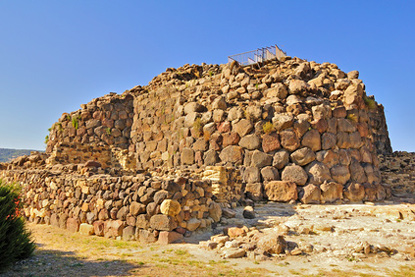
Su Nuraxi di Barumini is a remarkable archaeological site in Sardinia, Italy, that offers a fascinating glimpse into Bronze Age civilisation. This UNESCO World Heritage Site features a unique defensive structure called a nuraghe, which consists of a central tower surrounded by four corner towers, all connected by massive stone walls. Built around 1500 BCE, the central tower originally stood over 18.5 meters tall and contained three chambers connected by a spiral staircase. The site also includes the remains of an extensive village of circular stone huts, showcasing the evolution of Nuragic society over time. Remarkably, Su Nuraxi di Barumini was continuously inhabited from the 16th century BCE until the 3rd century CE, spanning nearly two millennia. It stands as the most impressive and well-preserved example of Nuragic architecture, providing invaluable insights into the sophisticated engineering and social structures of this ancient Sardinian civilisation. |
| Oristano |
|---|

Oristano served as the capital of the Giudicato of Arborea, one of the independent states of medieval Sardinia, playing a crucial role in the island's history. The town is closely associated with Eleonora d'Arborea, a revered 14th-century judge who promulgated the Carta de Logu, an advanced set of laws that promoted women's rights and justice. The city is renowned for its annual equestrian tournament called Sa Sartiglia, which has been held for over 500 years during Carnival and showcases the region's strong horse-riding tradition. Its historical centre features stunning architecture, including the 13th-century Torre di Mariano II. |
South
| Cagliari |
|---|

Founded by the Phoenicians, this ancient city has been ruled by various civilisations, including the Romans, Vandals, and Byzantines. Cagliari is built on seven hills, much like Rome, and boasts a strategic location on the Mediterranean Sea. The city's history dates back to the Neolithic period, with remnants of various pre-Nuragic cultures still visible today. Cagliari's historic centre, known as Castello, sits atop the highest hill and features ancient bastions, picturesque streets, and grand old buildings like Palazzo Regio and the Cathedral of Santa Maria. The city is home to several impressive landmarks, including the Roman Amphitheatre, the medieval Elephant and San Pancrazio towers, and the Shrine of Our Lady of Bonaria. As Sardinia's economic and industrial hub, Cagliari boasts one of the largest ports in the Mediterranean Sea and an international airport. The city is also known for its beautiful beaches, particularly the 8-kilometer-long Poetto Beach, which offers golden sands and crystal-clear waters. Cagliari's culinary scene celebrates Sardinian flavors, with local specialties like culurgiones (filled pasta) and porceddu (roast suckling pig). |
|


 : Local interest
 : Moderately interesting
 : Outstanding place
 : Must-see in the country
 : Top cities in Europe