Italy Guide  |
|---|
|
| | Top Italian Cities |
|---|
|
| | Italian Regions |
|---|
|
| | Europe Guide |
|---|
|
| | Travel Tools |
|---|
|
|
|
|
Emilia-Romagna Travel Guide
 Colourful streets of Modena, Emilia-Romagna. Colourful streets of Modena, Emilia-Romagna.
Introduction

Emilia-Romagna is composed of the two historic regions of Emilia and Romagna. With an area of 22,446 km² (8,666 sq mi) and 4.4 million inhabitants, it is the 6th largest and 7th most populous of the 20 Italian regions. It is the second richest region after Lombardy in terms of GDP per capita.
The University of Bologna, founded in 1088, is the world's oldest university in continuous operation, while Modena's is the fourth oldest. Italy's most prestigious automobiles and motorcycles (Ferrari, Lamborghini, Maserati, De Tomaso and Ducati) are all manufactured in Emilia-Romagna.
Most of Emilia-Romagna lies in the flat Po Valley and the local architecture is dominated by red bricks rather the stone. Some cities like Modena and Correggio opted for painted façades, conferring them a brighter and more cheerful atmosphere than their neighbours. The Renaissance city planning of Ferrara and its grand ducal castle have contributed to its listing as a UNESCO World Heritage Site. Also listed are the Early Christian monuments of Ravenna.
Famous people from Emilia-Romagna include (chronologically): the composer Giuseppe Verdi, the poet Giosuè Carducci (Nobel Prize, and regarded as Italy's national poet), the inventor Guglielmo Marconi, the dictator Benito Mussolini, the motor racing driver Enzo Ferrari (founder of the Scuderia Ferrari), the fashion designer Giorgio Armani, the politician Romano Prodi (former Prime Minister of Italy and President of the European Commission), and the alpine ski champion Alberto Tomba.
Cuisine
The cuisine of Emilia-Romagna is highly reputed and includes classic dishes such as tortellini, lasagne, and tagliatelle. Parmesan (Parmigiano Reggiano), Italy's most famous cheese, is produced in the Emilian cities of Parma, Reggio Emilia, Modena and Bologna, while the Grana Padano variety is produced in Piacenza.
Other culinary specialities include the Parma's prosciutto, Piacenza's pancetta, Modena's cotechino and Bologna's mortadella. Barilla, Italy's most famous pasta maker, and its subsidiary Mulino Bianco, a well-known biscuit manufacturer, are both based in Parma.
The region's gastronomic capital might well be Modena, which ranks in sixth position nationwide for the total number of Michelin stars.
Attractions
Attractions are listed geographically, from west to east (left to right) and north to south (top to bottom).
|
West
| Piacenza |
|---|

 Founded as a Roman colony in 218 BCE, Piacenza sits majestically on the south bank of the Po River in northern Italy, southeast of Milan. The city earned the distinguished title of 'First-born of the Unification of Italy' after an overwhelming vote for annexation into the Kingdom of Sardinia in 1860. Its strategic location along ancient trade routes, including the Via Francigena, contributed to its emergence as one of Europe's wealthiest cities during the Middle Ages. The city's rich history is reflected in its motto 'Placentia floret' (Piacenza flourishes), which appeared on sixteenth-century coins. Notably, the city lends its name to the Piacenzian Age of the Pliocene Epoch, named by geologist Karl Mayer-Eymar based on local deposits. In a remarkable display of engineering prowess, Piacenza became home to northern Italy's first railway bridge over the Po River, inaugurated in 1865. |
| Castell'Arquato |
|---|

 Castell'Arquato is a captivating medieval village perched on the hills of Val d'Arda in northern Italy, where prehistoric seas once flowed, leaving behind fascinating fossils now displayed in the Cortesi Geological Museum. This picturesque town, nicknamed "the city of lovers," features a majestic Visconti fortress, charming stone houses, and winding alleys that have attracted filmmakers, including those who shot "Lady Hawke" and the musical "Verona". The town's rich cultural heritage includes the Municipal Winery where visitors can sample local wines, and the Illica Museum, dedicated to the famous dramatist who wrote librettos for Puccini's masterpieces including La Bohème and Madama Butterfly. Local culinary specialities include a unique interpretation of anolini pasta stuffed with cheese rather than the traditional meat, and the renowned Vin Santo produced in nearby Vigoleno. The town hosts delightful events throughout the year, including the Monterosso Festival celebrating local wines and the Vernasca Silver Flag vintage car race in June. |
| Fontanellato |
|---|

 The magnificent Rocca Sanvitale, situated in Fontanellato near Parma, is a 14th-century fortress surrounded by an emerald moat that transformed from a military garrison into an elegant noble residence. The castle houses remarkable treasures, including Parmigianino's celebrated 1523 fresco of Diana and Actaeon, and features Italy's only functioning camera obscura that cleverly projects images of the town square onto interior panels through a system of mirrors. After being home to the Sanvitale family for nearly six centuries until 1948, this architectural masterpiece now serves as a museum, displaying period furniture, weapons collections, and historical artefacts. Visitors can enhance their cultural experience by sampling the region's renowned culinary delights, including the local speciality Culaccia di Fontanellato, alongside other famous products like Parmigiano Reggiano cheese and culatello ham. |
| Vigoleno |
|---|

Vigoleno is a remarkably preserved medieval village that dates back to the 10th century CE. This enchanting borgo features an imposing castle that remained under the control of a single family, the Scottis, for nearly 900 years — an unusual occurrence in Italian history. The village's cobblestone streets contain fascinating marine fossils, hinting at the area's ancient underwater past. Vigoleno gained cinematic fame as a filming location for the 1985 film "Ladyhawke" starring Michelle Pfeiffer, and in the early 1900s, the castle served as a cultural salon hosting luminaries like Gabriele d'Annunzio and Max Ernst. The area is renowned for its Vin Santo di Vigoleno, a dessert wine that has achieved recognition as one of Italy's top 20 wines. Nature enthusiasts can explore the 21-kilometre Anello dei briganti trail, which offers spectacular views of golden broom flowers during the blooming season. The village's strategic position along the Via Francigena trade route contributed to its historical significance, and today it proudly holds its place among Italy's "Most Beautiful Villages". |
| Parma |
|---|

 Parma is renowned for its culinary excellence and cultural heritage. The city boasts remarkable architectural marvels, including the 12th-century Palazzo della Pilotta, which houses several museums and one of Europe's oldest opera houses. The city centre features the stunning Piazza Garibaldi, considered the most beautiful square in Parma, surrounded by historic buildings and vibrant cafés. Art enthusiasts can marvel at masterpieces by Renaissance artists like Correggio and Leonardo da Vinci in the National Gallery. Beyond its architectural splendour, Parma is globally celebrated as a gastronomic capital, particularly famous for its prosciutto. The city's green spaces include the star-shaped Parco Cittadella, a former defensive fortress now transformed into a public park with sports facilities and walking paths. Notably, the surrounding province of Parma contains the world's largest labyrinth and numerous medieval castles. |
| Torrechiara Castle |
|---|

Perched strategically atop a hill overlooking the Parma River valley, Torrechiara Castle is a magnificent 15th-century fortress located just 20 kilometres from Parma. This remarkably well-preserved castle, built between 1448 and 1460, tells a fascinating tale of romance between Count Pier Maria II de' Rossi and his beloved Bianca Pellegrini, which is beautifully depicted in the castle's renowned Camera d'Oro (Golden Chamber) through stunning frescoes. The castle's name derives from 'Torciara', meaning 'wine press', reflecting the area's rich viticultural heritage that continues to thrive today with local wine production. Visitors can explore the castle's four impressive towers, three rings of defensive walls, and splendidly frescoed halls, with the site being particularly lively during its annual medieval festival in June. The castle is conveniently accessible by both car and public transport, making it an ideal destination for a day trip that combines historical architecture, romantic art, and opportunities to sample local wines. |
| Salsomaggiore Terme |
|---|
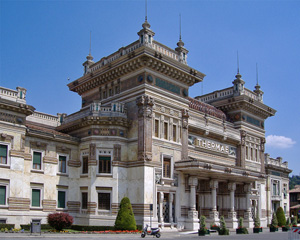
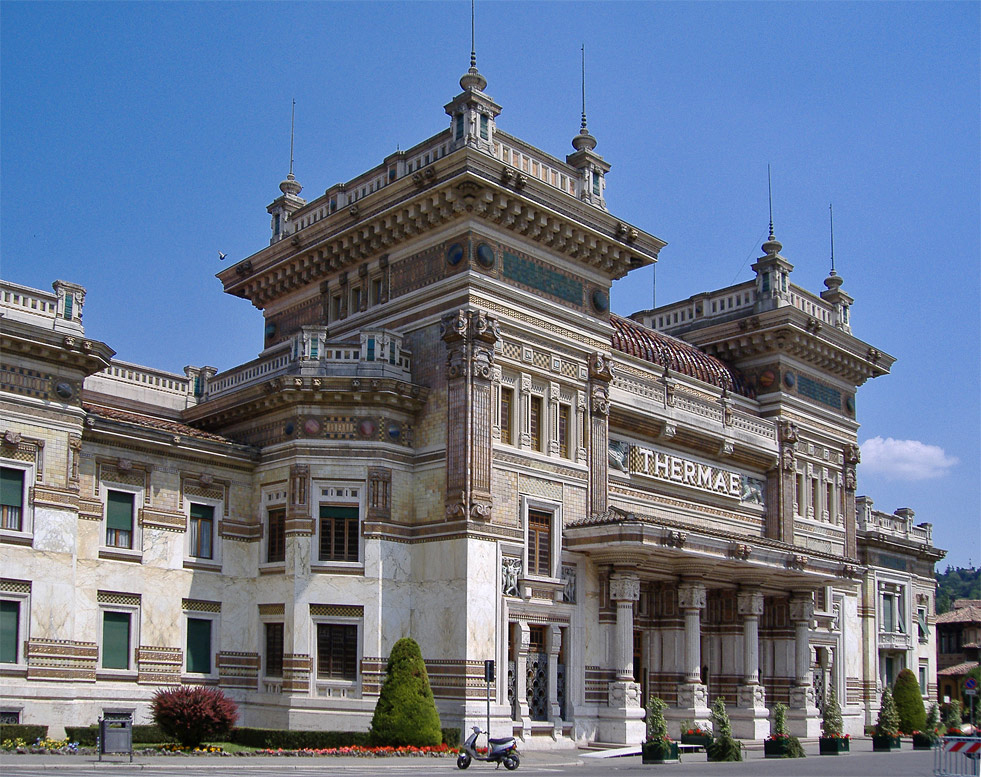
Salsomaggiore Terme is a spa town renowned for its therapeutic salt-rich thermal waters that have been used since Roman times. The town's crown jewel is the stunning Terme Berzieri, an architectural masterpiece completed in 1923 that showcases magnificent Art Nouveau design with Eastern influences, decorated by the celebrated artist Galileo Chini. The town's thermal waters, drawn from depths of 800-1,200 metres, are uniquely rich in sodium chloride, bromide and iodide, offering various health treatments through four different types of specially processed waters. Beyond wellness tourism, the town is surrounded by rolling green hills perfect for cycling and hiking, whilst its city centre features numerous Liberty and Art Deco style buildings that create a splendid architectural ensemble. |
Central
| Correggio |
|---|

Correggio's rich Renaissance heritage is exemplified by its most famous son, the influential 16th-century painter Antonio Allegri, known as 'il Correggio'. Visitors can explore elegant 18th-century palaces along Corso Mazzini, including the stunning Cantarelli Palace with its columned courtyard. The Renaissance-style Palace of the Princes, built in 1507 and attributed to architect Biagio Rossetti, features an impressive brick façade and marble-columned portico. The local cuisine is a highlight, with specialities including Scarpasot, a unique savoury pie that differs from the regional Erbazzone by omitting the pastry crust. The town's cultural scene thrives around the neoclassical Asioli Theatre and has produced notable figures including rock singer Luciano Ligabue and marathon runner Dorando Pietri. From the 11th to 17th centuries, Correggio was ruled by the powerful Da Correggio family, who transformed it from a feudal land into a principality and hosted renowned intellectuals like Ariosto and Bembo at their cour. |
| Reggio Emilia |
|---|

Reggio Emilia holds the distinction of being the birthplace of the Italian tricolor flag in 1797. The city boasts several cultural attractions, including the fascinating Palace of Museums which houses rich collections of art and archaeology, and the serene People's Park perfect for leisurely strolls. The local cuisine is particularly noteworthy, featuring unique specialities such as the Bomba di Riso (a rich winter rice dish) and Erbazzone (a savoury pie with vegetable filling dating back to medieval times). The city's Civic Museums showcase an impressive collection ranging from Etruscan artefacts to contemporary fashion exhibits, including an extraordinary collection by Lazzaro Spallanzani featuring preserved animals, minerals, and plants. The city is also renowned for its educational approach, known as the Reggio Emilia approach, which has influenced early childhood education worldwide. The local economy is closely tied to the production of renowned Parmigiano Reggiano cheese and excellent wines including Lambrusco. |
| Carpi |
|---|
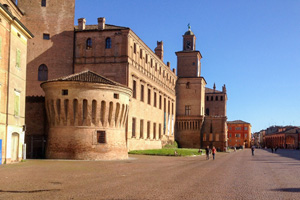
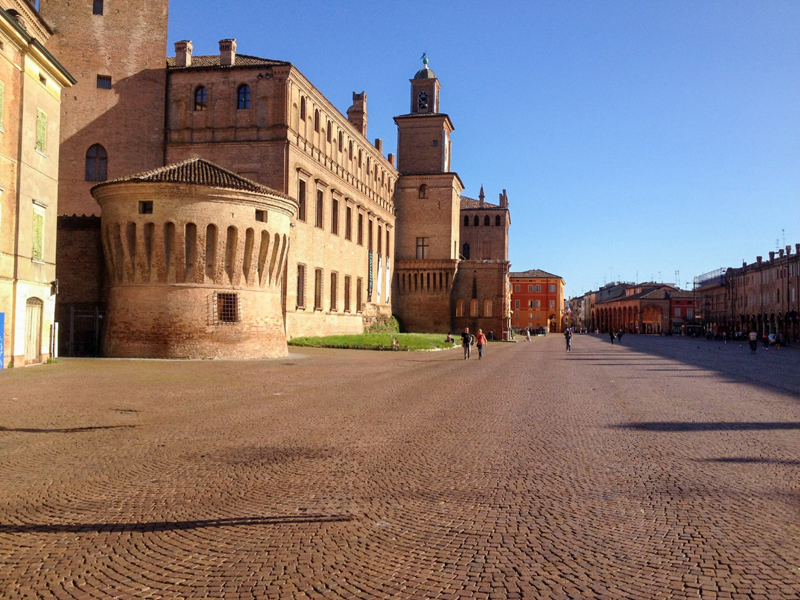
Carpi, a bustling town of 71,000 inhabitants, is known as the "pearl of the Renaissance" and boasts Italy's third-largest square, the impressive Piazza dei Martiri, which features a stunning 52-column portico. The town's name derives from 'carpinus' (hornbeam), a tree that was widespread in medieval times in the Po Valley. The local economy thrives on its textile industry and craftsmanship, while the culinary scene features exceptional specialities including hand-made pasta, the prestigious Parmigiano Reggiano DOP cheese, and the distinctive Lambrusco Salamino di Santa Croce wine. A fascinating historical note is that during a siege in 1510-11, a creative cook invented zampone by stuffing minced pork into pig trotters to prevent the food from falling into enemy hands. The town's rich heritage is preserved in the recently restored Palazzo Pio, which houses important museums documenting the area's history from the Bronze Age to modern times. Visitors can experience a unique taste of local tradition at the Municipal Vinegar Loft, where the city produces its own Traditional Balsamic Vinegar of Modena DOP in precious barrels named Maria Beatrice, Caterina and Adelaide. |
| Modena ※ |
|---|

Modena boasts a remarkable UNESCO World Heritage site comprising the Romanesque Duomo, built in 1099 CE, the 86-metre Ghirlandina Tower, and the medieval Piazza Grande. The city gained prominence as the capital of the Este family after they left Ferrara, leading to its rich artistic heritage and palatial architecture. Modern Modena is globally renowned as the birthplace of luxury automotive excellence, being home to Enzo Ferrari's legacy and the Ferrari Museum. The city's economic prowess extends beyond automobiles to its celebrated traditional balsamic vinegar, which is meticulously aged for decades in wooden barrels. The city's architectural splendour is complemented by its network of wide arcaded streets and grand squares, where visitors can explore the vibrant Mercato Albinelli or enjoy the local cuisine in numerous trattorias. A poignant historical note is found in Palazzo dell'Arcivescovado, where memorials honour members of the Resistance executed in Piazza Grande in 1944. |
| Bologna ※ |
|---|

Bologna is home to the world's oldest university founded in 1088 CE. Its iconic Two Towers stand as remarkable symbols of the city, with the Asinelli Tower reaching 97 metres as Italy's tallest leaning tower. The city centre revolves around the vibrant Piazza Maggiore, where the magnificent Neptune Fountain created by Giambologna in the 16th century serves as a popular meeting spot. The city once boasted 180 towers built by competing noble families, though only 24 remain standing today. At the Archiginnasio, visitors can marvel at 6,000 coats of arms representing former students, while the building houses a fascinating anatomical theatre where public dissections were once conducted. The city's unique architectural feature is its extensive network of porticoes, and its scientific legacy includes the world's longest sundial, housed in the Basilica di San Petronio. |
Other attractions
Carpi
Castel San Pietro Terme
Ferrari Museum in Maranello
Lamborghini Automobile Museum in Sant'Agata Bolognese
Panini Motor Museum in Modena
San Giovanni in Persiceto
Vignola Castle
San Marino
| San Marino ※ |
|---|

San Marino, the third-smallest country in Europe after Vatican City and Monaco, is a fascinating microstate perched on Mount Titano. This ancient republic, established in 301 CE, is Europe's oldest existing republic and features a unique governmental system with two captains-regent serving as joint heads of state. The country's dramatic landscape includes the UNESCO World Heritage-listed Old Town, dominated by three iconic towers, including the 11th-century Guaita Tower which formerly served as a prison and military lookout. Visitors can explore the neo-Gothic Palazzo Pubblico, stroll through medieval streets, and enjoy breathtaking views of the Adriatic Riviera from the mysterious Passo delle Streghe (Witches' Pass). The local cuisine reflects both land and sea influences, with specialities like faggioli con le cozze (beans with mussels) and traditional handmade pasta called strozzapreti. Despite its tiny size of just 61 square kilometres, San Marino boasts a robust economy based on tourism, agriculture, and fine printing, particularly of postage stamps, with its citizens enjoying a high standard of living. |
East
| Ferrara ※ |
|---|

Ferrara showcases remarkably preserved Renaissance urban planning and architecture. The city's skyline is dominated by the magnificent Este Castle (Castello Estense), a 14th-century moated fortress that served as the seat of the powerful Este dynasty. The city is encircled by an exceptional 8-kilometre ring of medieval and Renaissance walls, now serving as a popular cycling and walking path. Ferrara's distinctive character is exemplified by the unique Palazzo dei Diamanti, featuring a facade adorned with 8,500 marble blocks carved into diamond shapes. The city's layout represents a perfect blend of medieval and Renaissance architecture, with the Via delle Volte offering a picturesque glimpse of medieval life through its characteristic covered archways. Being situated near Bologna, Italy's culinary capital, Ferrara benefits from the fertile Po Valley's agricultural bounty, ensuring excellent local cuisine. The city is also one of Italy's greenest urban centres, thanks to numerous surviving Renaissance gardens that have been converted into public parks. |
| Imola |
|---|

Imola is globally renowned for its Enzo and Dino Ferrari Racetrack, built in the 1950s, which continues to host major international racing events. The impressive 13th-century Rocca Sforzesca fortress dominates the cityscape, featuring a fascinating collection of ancient weapons and Renaissance ceramics, whilst offering panoramic views of the surrounding countryside. Nature enthusiasts can explore the Acque Minerali Park, established in the early 20th century following the discovery of mineral water in 1830. The city's cultural heritage is showcased in the elegant Palazzo Tozzoni, an 18th-century mansion turned civic art museum1, and the remarkable Hospital Pharmacy from 1794, which houses 457 antique majolica vases in carved wooden cabinets. The city also maintains a poignant connection to motorsport history through a memorial statue of Ayrton Senna in Parco di Acque Minerale, which has become a pilgrimage site for Formula 1 fans. |
| Faenza |
|---|
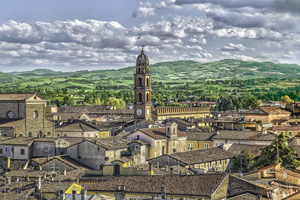
Faenza is globally renowned for its exquisite majolica-ware glazed earthenware pottery, which was so influential that the French word for such ceramics, 'faience', derives from the city's name. The city's heart comprises two magnificent squares: Piazza del Popolo, featuring elegant 15th-century colonnades, and Piazza della Libertà, adorned with a stunning Baroque fountain from 1620. The city's artistic legacy is preserved in several remarkable buildings, including the Palazzo Milzetti, considered the finest Neoclassical building in the region, with its walls adorned with intricate paintings by Felice Giani. Throughout the year, Faenza buzzes with cultural events, including the Potter's Wheel World Competition and the independent music festival MEI, whilst its historic centre features beautiful porticoes filled with galleries and shops where visitors can explore local ceramic artistry. |
| Ravenna ※ |
|---|

Ravenna, a historic city in northern Italy, is renowned worldwide for its spectacular Byzantine mosaics housed in eight UNESCO World Heritage monuments dating from the 5th and 6th centuries CE. The city served as the capital of the Western Roman Empire and later the Ostrogothic Kingdom under Theodoric the Great, whose striking cylindrical mausoleum still stands today. Beyond its artistic treasures, Ravenna holds special significance in Italian literary history as the final resting place of Dante Alighieri, who died here in 1321 CE and whose tomb is kept perpetually lit with oil donated by his native Florence. The city offers a delightful mix of historical and modern attractions, from Roman mosaic floors at the Domus dei Tappeti di Pietra (House of Stone Carpets) to the charming Piazza del Popolo with its café-lined streets. Nature enthusiasts can enjoy cycling in nearby pine forests and swimming in the Adriatic Sea6, while the presence of the Byron Museum reflects the city's connection to the famous English poet. |
| Rimini |
|---|

Rimini blends ancient Roman heritage with modern coastal charm. The city's remarkable Roman landmarks include the Arch of Augustus, erected in 27 BCE, and the engineering marvel of Tiberius Bridge, constructed between 14-21 CE, which has withstood earthquakes and wars for two millennia. The historic centre features the picturesque Piazza Tre Martiri, where Julius Caesar famously addressed his troops after crossing the Rubicon. Rimini's culinary scene is a celebration of Emilia-Romagna's rich traditions, with the iconic piadina (a traditional flatbread) and fresh Adriatic seafood taking centre stage. The city's gastronomic excellence extends to its local produce, including DOC wines like Sangiovese and Rebola, DOP extra virgin olive oil from the Romagna hills, and prized white truffles from Sant'Agata Feltria. Beyond its historic and culinary attractions, Rimini offers a blend of medieval and Renaissance architecture, complemented by the charming Borgo San Giuliano neighbourhood with its colourful streets. |
| San Leo |
|---|

San Leo is a stunning hilltop village perched dramatically on a 600-metre-high rocky outcrop that has been inhabited since Roman times. The village's crowning glory is its impregnable fortress, which inspired Dante's descriptions of purgatory and later served as a formidable prison, notably holding the mysterious Count of Cagliostro in 1795. This architectural masterpiece, redesigned in the 15th century by Francesco di Giorgio Martini, appears to emerge organically from the sheer cliffs and can only be accessed via a single carved mountain road. The village, recognised as one of Italy's most beautiful, offers spectacular views across the Marecchia Valley to the Adriatic Sea and houses remarkable Renaissance structures, including the Medici Palace which now serves as a museum of sacred art featuring artefacts from the 8th to 18th centuries. Historically, San Leo was a strategic battleground between powerful families, particularly the Montefeltro and Malatesta clans who fought for control of the valley, and the town's original name, Monte Feltro, derives from an ancient Roman temple dedicated to Jupiter Feretrio. |
Other attractions
 Bellaria – Igea Marina
 Casentinesi Forests National Park Casentinesi Forests National Park
Cervia
Cesenatico
Comacchio
Forlì
Milano Marittima
Misano Adriatico
Pomposa Abbey in Codigoro
Riccione
Rocca Malatestiana in Cesena
Sant'Agata Feltria
Sant'Arcangelo di Romagna
|



 : Local interest
 : Moderately interesting
 : Outstanding place
 : Must-see in the country
 : Top cities in Europe