


| Contents |
|---|
Introduction
Bari is the capital city of the Apulia region, situated on the Adriatic Sea. As the second most important economic centre of mainland Southern Italy, it boasts a population of approximately 315,000 inhabitants within the city proper, while its metropolitan area is home to 1.3 million people. The city is divided into four distinct urban sections, with the closely built old town to the north featuring the Basilica of Saint Nicholas, the Cathedral of San Sabino, and the Norman-Swabian Castle. To the south lies the Murat quarter, the modern heart of the city, laid out on a rectangular grid-plan with a promenade on the sea and major shopping districts. Bari serves as a significant port city with two harbours (the Old Port and the New Port), houses a university founded in 1924, and hosts the annual Fiera del Levante, an Occidental-Oriental trade fair. Known for its vibrant culture, architectural landmarks, and culinary delights such as handmade orecchiette pasta, Bari offers visitors a genuine taste of southern Italian life without being overrun by tourists.
Interesting Facts about Bari
- Bari boasts Europe's longest seafront, offering spectacular views of the Adriatic Sea.
- The city is home to the Basilica of Saint Nicholas, making Bari the city of "Santa Claus".
- Bari's Petruzzelli Theatre is the fourth largest in Italy, known for its majestic architecture and exceptional acoustics.
- The port of Bari is one of the largest tourist ports in Italy, serving as a major hub for exploring Puglia.
- Bari has become a popular film set, attracting national and international productions due to its unique atmosphere and varied backdrops.
- The city is famous for its handmade orecchiette pasta, a distinctive ear-shaped local speciality.
- Bari Vecchia, the old town, is a maze of narrow streets and 13th-century monuments, including the 12th-century Romanesque cathedral.
- The city has been inhabited since at least 1500 BCE and was an important port even in Roman times.
- Bari is the first most important economic centre of mainland Southern Italy.
- The Fiera del Levante, an annual Occidental-Oriental trade fair, has been held in Bari since 1930.

History
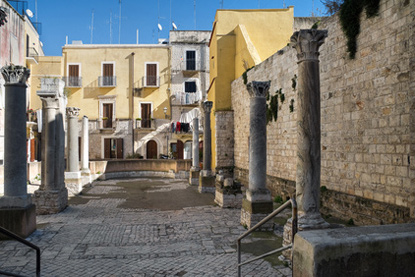
Founded around 1500 BCE as a small fishing settlement, Bari later flourished as an important Greek colony known as Barion, before becoming the Roman Barium. Under Roman rule, the city established itself as a significant port and trade centre along the Via Traiana, serving as a crucial connection between Rome and the eastern territories. Archaeological evidence of this Roman influence can still be observed today at sites like Piazza del Ferrarese, where ancient columns stand as testament to the city's classical heritage.
The Middle Ages brought turbulent times as Bari changed hands repeatedly amongst various powers. After briefly becoming an Islamic emirate in the 9th century, Byzantine forces recaptured it in 871 CE. The Normans, led by Robert Guiscard, conquered Bari in 1071, initiating a period of relative stability. A pivotal moment in the city's history occurred in 1087 when sailors brought the relics of Saint Nicholas from Myra (in modern Turkey), establishing Bari as a major pilgrimage destination. The magnificent Basilica di San Nicola was constructed to house these relics, cementing the city's religious significance. Emperor Frederick II further enhanced Bari's prominence during his 13th-century reign, fortifying the castle that still dominates the cityscape.
Modern Bari began taking shape in 1813 when Joachim Murat, King of Naples during the Napoleonic era, instituted a new urban development plan with a distinctive chessboard layout. Following unification with the Kingdom of Italy in 1860, the city underwent significant modernisation, including expansion of its port facilities. The early 20th century saw further development with modern plumbing arriving in 1915 and the establishment of the Fiera del Levante trade fair in 1930. Today, Bari harmoniously blends its ancient heritage with contemporary vitality, offering visitors a fascinating journey through time—from its Romanesque cathedral and Norman castle to its bustling commercial districts and lively waterfront promenade.
Main Attractions
Bari Vecchia (Old Town)
Bari Vecchia, the historic heart of Bari, is a labyrinth of narrow, winding streets that transport visitors back in time. This area is a living representation of Bari’s traditions and local culture. The streets are lined with centuries-old buildings, small chapels, and quaint homes where locals often sit outside chatting or making fresh orecchiette pasta by hand. Piazza Mercantile and Piazza del Ferrarese are two of the main squares in Bari Vecchia, serving as gathering points for locals and visitors alike. Piazza Mercantile features the Colonna della Giustizia (Column of Justice), a medieval pillar symbolising punishment for debtors in the past. The vibrant atmosphere of Bari Vecchia is enhanced by street vendors selling traditional snacks like focaccia barese and panzerotti, as well as artisan shops offering handmade goods. Exploring this area is best done on foot, allowing visitors to fully immerse themselves in the charm and authenticity of Bari’s historic quarter.

Castello Svevo (Swabian Castle)
The Castello Svevo is a striking medieval fortress located near Bari Vecchia. Originally constructed by Norman King Roger II in 1132, it was later rebuilt by Emperor Frederick II in 1233 after being damaged during conflicts. The castle’s architecture reflects its Norman-Swabian origins with robust stone walls, imposing towers, and fortified bastions designed for defence purposes. While its interior now houses temporary exhibitions and cultural events, visitors can also explore its expansive courtyards and climb its ramparts for panoramic views of Bari’s surroundings. The castle has served various roles throughout history—from a royal residence to military barracks—and remains an enduring symbol of Bari’s historical significance.

Basilica of Saint Nicholas
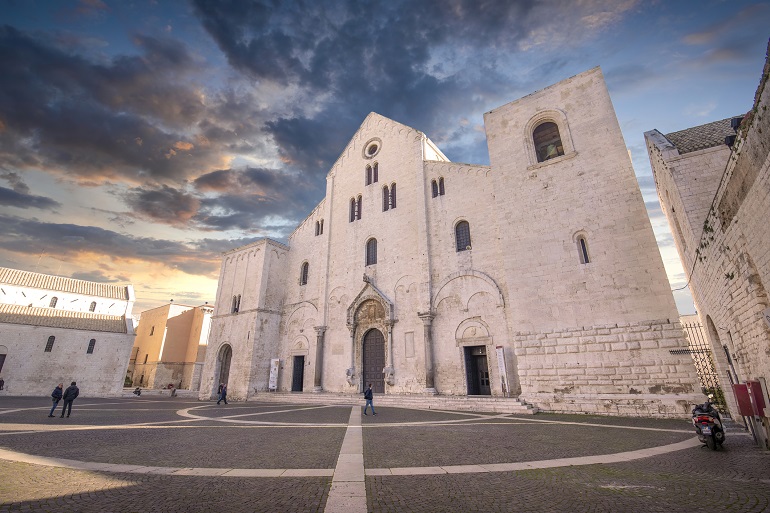
The Basilica of Saint Nicholas is a magnificent example of Apulian Romanesque architecture, constructed between 1087 and 1197. This imposing structure, with its stark façade and two massive towers, was built to house the relics of Saint Nicholas, which were brought to Bari from Myra in 1087. The basilica features a Latin cross floor plan with three naves, adorned with a wooden ceiling and the oldest ciborium in Puglia. Its crypt, consecrated by Pope Urban II in 1089, contains the saint's remains and is a significant pilgrimage site for both Catholic and Orthodox Christians. The church's interior boasts notable artworks, including mosaics, sculptures, and a 16th-century Renaissance tomb. As a testament to its historical and religious importance, the Basilica of Saint Nicholas remains a central landmark in Bari's old town and a symbol of the region's rich cultural heritage.
Cathedral of San Sabino
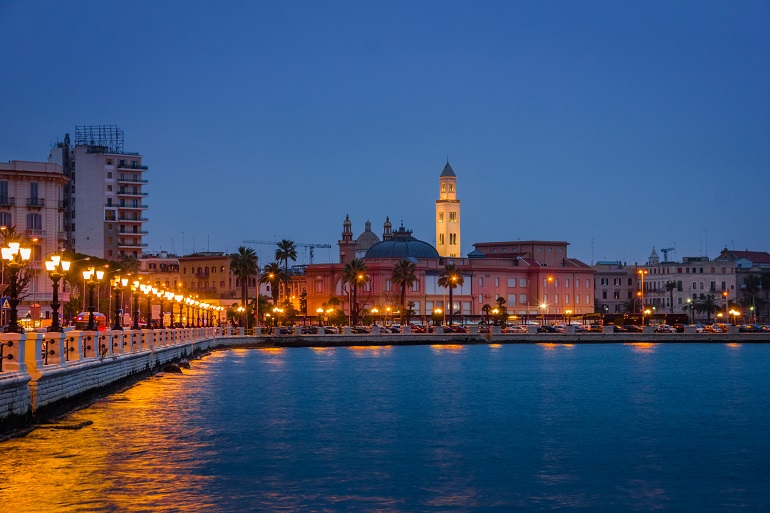
The Cathedral of San Sabino in Bari is a magnificent example of Apulian Romanesque architecture consecrated in 1292. Built on the ruins of a Byzantine imperial cathedral destroyed in 1156 by William I of Sicily, it features a simple tripartite façade with three portals beneath a rose window adorned with carvings of fantastical creatures. The cathedral's interior is divided into three aisles supported by sixteen columns with arcades, and has been carefully restored to reveal its original Romanesque beauty. Its bell tower, rebuilt in modern times using similar stone to the original, stands prominently among the low roofs of Bari's old town. The crypt houses the relics of Saint Sabinus, brought to Bari in 844, as well as the venerated icon of the Virgin Hodegetria. Beneath the cathedral lies a 6th-century Early Christian basilica with mosaic pavements, making this historic episcopal seat one of the city's most noble and ancient buildings.
Seafront Promenades
Bari's seafront promenades, Lungomare Imperatore Augusto and Lungomare Nazario Sauro, are among the most picturesque coastal walkways in Italy. Lungomare Imperatore Augusto, built in the first half of the 20th century, stretches along the Adriatic Sea and is considered one of Bari's landmarks and one of the longest seafront promenades in Europe. Meanwhile, Lungomare Nazario Sauro runs between Piazza Armando Diaz and Bari's beach, offering stunning views of the harbour and marina. The entire 15-kilometre waterfront promenade is dotted with benches, palm trees and elegant walking paths, making it perfect for leisurely strolls, particularly at sunset. Visitors can enjoy the refreshing sea breeze, observe fishermen with their daily catch, and access nearby attractions including the Basilica of Saint Nicholas, Petruzzelli Theatre and Margherita Theatre. The area is also home to numerous cafés and restaurants serving fresh seafood, providing an authentic taste of local cuisine whilst enjoying the coastal scenery.
Teatro Margherita
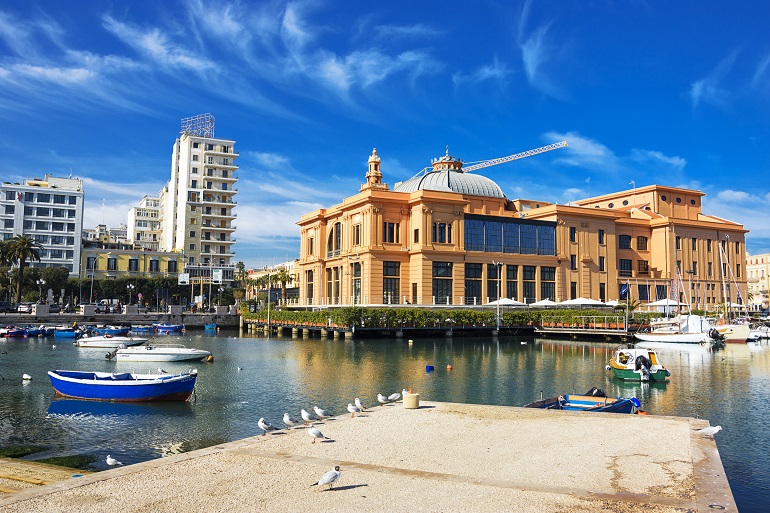
The Teatro Margherita is notable for being built on stilts over the sea. Originally constructed in 1910 as a wooden structure called Varietà Margherita, it was destroyed by fire in 1911 and rebuilt in 1914 in reinforced concrete—making it the first such structure in Bari and the only building in Europe built on stilts at that time. Designed in Liberty style by architect Francesco De Giglio, the theatre was strategically built over water to circumvent an agreement between the municipality and the Petruzzelli family that prohibited building other theatres on municipal land except those constructed by the sea. After serving as both a theatre and cinema until 1979, the Teatro Margherita underwent extensive restoration and reopened in December 2018 as a contemporary art museum. This architectural gem represents an important part of Bari's cultural heritage and stands as a unique landmark visible from both the seafront and Corso Vittorio Emanuele II in the city centre.
Teatro Petruzzelli
Teatro Petruzzelli is an iconic landmark in Bari and one of Italy’s largest opera houses. Built in 1903, this theatre has played a significant role in Bari’s cultural life for over a century. Its elegant façade features neoclassical architectural elements that make it stand out among surrounding buildings. Inside, Teatro Petruzzelli boasts opulent interiors with gilded decorations, plush seating, and impressive acoustics that enhance every performance held there. Although primarily known for opera productions, the theatre hosts a variety of events including ballets, concerts, and theatrical performances. Even if visitors do not attend a show, they can admire its architectural beauty from the outside or take guided tours to explore its interiors when available.
Piazza del Ferrarese
Piazza del Ferrarese serves as a gateway between Bari Vecchia and Borgo Murattiano, making it one of the most visited squares in the city. This lively piazza is surrounded by historical buildings and restaurants offering outdoor seating where guests can enjoy local dishes while soaking up the atmosphere. The square often hosts cultural events such as open-air concerts or food festivals that attract both locals and tourists. A notable feature of Piazza del Ferrarese is its ancient Roman road visible beneath glass panels on the square’s surface—a reminder of Bari’s long history as a crossroads for civilisations.
Borgo Murattiano
Borgo Murattiano is Bari’s modern district, developed during the 19th century under King Joachim Murat’s reign. This area contrasts sharply with the medieval charm of Bari Vecchia due to its grid-like layout and wide boulevards lined with elegant buildings. Borgo Murattiano is home to Via Sparano, Bari’s main shopping street featuring high-end boutiques, jewellery stores, and international brands. Architecturally significant landmarks such as Palazzo Fizzarotti—a Liberty-style building with ornate details—and Teatro Margherita—a former theatre built on stilts over water—add character to this district. Borgo Murattiano also offers numerous cafes and restaurants where visitors can enjoy modern Italian cuisine while taking in views of bustling city life.
Torre a Mare
Located just south-east of Bari city centre, Torre a Mare is a charming coastal village that originated around a 16th-century defence tower built to protect against pirate attacks. Today, Torre a Mare has evolved into a popular seaside destination known for its picturesque harbour filled with fishing boats and yachts. Visitors can stroll along its waterfront promenade or dine at seafood restaurants serving freshly caught fish from local waters. Torre a Mare also offers access to small beaches where travellers can relax or swim in the Adriatic Sea away from the bustle of central Bari.

Top Museums
Archaeology
Museo Archeologico di Santa Scolastica
Housed within a historic convent overlooking Bari’s old town (Bari Vecchia), this archaeological museum offers a captivating journey through Puglia’s ancient history. Its exhibitions span prehistoric times through to the Middle Ages, showcasing artefacts such as pottery, jewellery, tools, and mosaics unearthed from archaeological sites across the region. The museum also features interactive displays that bring history to life for visitors of all ages—perfect for families or those new to archaeology. The convent itself adds an atmospheric backdrop to the exhibits; its architecture reflects centuries of historical evolution.
Museo Archeologico Statale
The Museo Archeologico Statale focuses on Italy's archaeological heritage with exhibits featuring Neanderthal skeletons alongside artefacts recovered from sites damaged during World War II bombings—making it unique among Bari’s museums due to its emphasis on resilience amidst historical adversity.
Natural History
Museo Civico di Zoologia
The Museo Civico di Zoologia is a delightful destination for those with a love of natural history and zoology. This museum houses a diverse collection that spans several themes, including live animal exhibits and prehistoric fossils. Visitors can marvel at dinosaur skeletons that evoke the grandeur of Earth's ancient past while exploring exhibits dedicated to lions, hippos, and marine life. The museum’s interactive displays make it particularly appealing for families with children, offering both educational value and entertainment. The exhibits are thoughtfully curated to showcase the wonders of nature across different eras, making it a must-visit for anyone intrigued by the natural world.
Science & Technology
Planetario Sky-Skan
Science enthusiasts will find much to enjoy at Planetario Sky-Skan—a state-of-the-art planetarium located in Bari. The facility features a large dome where visitors can experience immersive astronomical shows that explore topics such as constellations, planetary systems, black holes, and space exploration missions. In addition to its stunning visual displays, Planetario Sky-Skan hosts live science demonstrations that engage audiences with hands-on learning opportunities about physics and astronomy. Whether you’re an aspiring astronomer or simply curious about the universe beyond Earth’s atmosphere, this planetarium offers an unforgettable experience.
Cittadella Mediterranea della Scienza
The Cittadella Mediterranea della Scienza is another excellent destination for science lovers visiting Bari. This expansive science centre promotes curiosity through interactive exhibits covering topics such as biology, physics, chemistry, technology, and environmental science. It regularly hosts cultural events like workshops and lectures designed to inspire visitors of all ages to explore scientific concepts creatively. Families will particularly enjoy its hands-on activities that make learning fun while fostering an appreciation for scientific discovery.
Religious Art & History
Museo Diocesano
Nestled within the Episcopio—the residence of Bari’s Archbishop—the Museo Diocesano is a treasure trove of religious art and artefacts. This museum is divided into five distinct sections that provide insight into Bari's Christian heritage. The lapidary section features ancient stone carvings and inscriptions, while the art gallery displays sacred paintings and sculptures that highlight the artistic devotion of past centuries. The treasure hall contains intricate liturgical objects crafted from precious metals, while the room dedicated to sacred vestments showcases ornate garments worn during religious ceremonies. Perhaps most intriguing is the section devoted to Exultet rolls—illuminated manuscripts used in medieval Easter celebrations. The museum’s setting within the historic Episcopio adds an extra layer of charm to this cultural experience.
Museo Nicolaiano
This museum is closely tied to Bari’s iconic Basilica di San Nicola, one of the city’s most important landmarks. The Museo Nicolaiano offers visitors a deeper understanding of Saint Nicholas (San Nicola), whose relics are housed in the basilica. Its three exhibition rooms—Angelo Docente Room, Ruggero II Room, and Diavolo Wood Hall—are filled with religious artefacts, historical documents, and artworks that celebrate the legacy of Saint Nicholas and his significance in both Catholic and Orthodox traditions. In addition to its permanent collection, the museum frequently hosts temporary exhibitions that explore various aspects of religious art and history.
Art Galleries
Pinacoteca Metropolitana "Corrado Giaquinto"
Named after Corrado Giaquinto—a renowned painter from Molfetta—the Pinacoteca Metropolitana is one of Puglia’s premier art museums. Its extensive collection includes works spanning several centuries: from medieval religious paintings to Baroque masterpieces by Giaquinto himself and other notable artists such as Luca Giordano and Francesco Solimena. The museum also houses contemporary pieces that highlight modern artistic trends alongside historical works that reflect Puglia’s cultural evolution over time.
Baart Gallery
For those with an appreciation for modern art, Baart Gallery provides a refreshing contrast to Bari’s more traditional museums. Situated in the heart of the city, this gallery showcases a dynamic mix of contemporary works alongside pieces rooted in classical traditions. Visitors can explore graphic art, sculptures, paintings, and mixed-media installations created by emerging artists as well as established names in the art world. Baart Gallery serves as a cultural hub for Bari’s artistic community, hosting events such as exhibitions, workshops, and talks that encourage dialogue between artists and audiences.
Local Cuisine
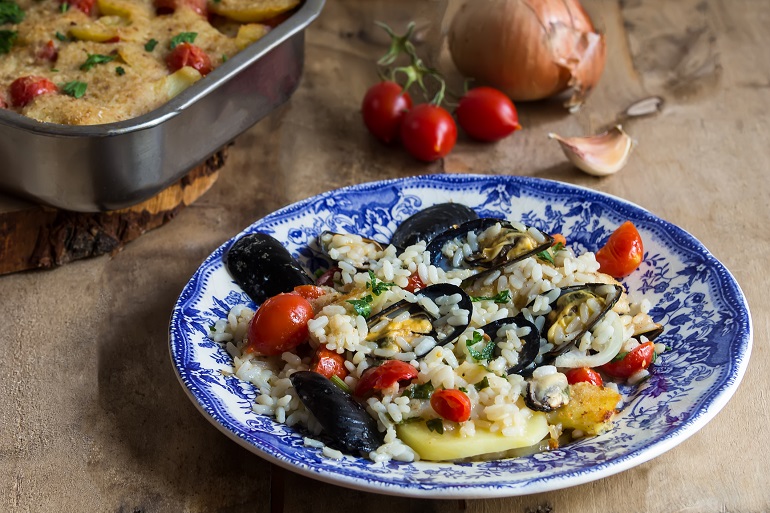
Bari's gastronomy celebrates fresh, locally sourced ingredients that reflect the region's natural abundance. Visitors must sample the iconic orecchiette con cime di rapa, ear-shaped pasta served with turnip greens, and the comforting riso, patate e cozze, a delightful combination of rice, potatoes and mussels. The focaccia barese, topped with cherry tomatoes and olives, makes for a perfect snack at any time of day. Seafood enthusiasts should try polpo in acqua sua (octopus in its own water) or enjoy raw seafood at Porto Vecchia. The city's vibrant street food scene features panzerotti, fried turnovers bursting with mozzarella and tomato, and sgagliozze, crispy fried polenta pieces. For meat lovers, braciole al sugo (meat rolls slowly cooked in sauce) offers a taste of authentic home cooking, whilst the crunchy spaghetti all'assassina provides a uniquely Barese pasta experience. Round off your culinary exploration with taralli, the quintessential Apulian breadsticks perfect for nibbling alongside a glass of local wine.
Shopping
Bari boasts varied shopping districts, with luxury boutiques along Via Sparano featuring brands like Gucci and Armani, and artisanal shops in Bari Vecchia selling traditional crafts and jewellery. The tree-lined Corso Cavour houses fashion stores and cafés, whilst the Monday morning Via Napoli Market offers second-hand items and handicrafts. Visitors can purchase regional delicacies including local cheeses, handmade orecchiette pasta and quality olive oil. Seasonal sales run from January to early March and July to early September, with additional shopping opportunities at centres like Barimax Shopping Village outside the city centre.
Nature in and around Bari
Bari and its surrounding areas offer a diverse range of natural attractions for visitors to explore. The Adriatic Coastline boasts numerous beautiful beaches, including Pane e Pomodoro Beach in Bari itself, and the picturesque Lama Monachile in Polignano a Mare, sitting atop a 20-metre sandstone precipice. Other notable beaches include Cala Paura, Cala Porta Vecchia (ideal for families), and Torre Quetta. The Polignano a Mare caves pierce the coastal cliffs, offering boat tours to explore these natural formations. Further inland, Alta Murgia National Park, the largest national park in Italy, stands as a symbol of biodiversity with dry stone walls, ancient farms and diverse butterfly species. Underground wonders await at the Castellana Caves, featuring impressive karst formations with dramatic stalagmites and stalactites.
Getting There & Around
The airport is easily accessible, with domestic flights from major Italian cities like Rome and Milan. For those already in Italy, high-speed trains provide convenient access, particularly from Rome. Once in Bari, the city boasts an extensive public transport network. The AMTAB urban bus service, with 33 lines covering the entire city, is an economical choice at €1 per journey. For quicker travel, the train connects the airport to the city centre in about 20 minutes for €5. Taxis and private transfers are available for those seeking more comfort, with fares from the airport to the city centre around €25. When exploring nearby towns, regional trains offer affordable and reliable connections. For maximum flexibility, car hire is available, though it's advisable to pick up vehicles when leaving Bari to avoid city centre parking challenges.
Best Time to Visit
The best time to visit Bari is during the shoulder seasons of spring (April to June) and early autumn (September to October), when you can enjoy pleasant temperatures ranging from 15°C to 26°C, abundant sunshine, and fewer tourists. These periods offer the perfect balance of warm weather without the scorching heat and crowds of summer, allowing you to comfortably explore the city and its surroundings. While July and August boast the hottest temperatures (reaching up to 35°C) and are ideal for beach activities with sea temperatures of around 26°C, they also bring cruise ship crowds and higher prices. Winter months, particularly January and February, are the coldest and rainiest, though even during Christmas the climate remains relatively mild with temperatures between 10°C and 15°C. For those seeking to combine city exploration with beach time, June and September provide an excellent compromise with warm seas and more manageable temperatures.