Italy Guide  |
|---|
|
| | Top Italian Cities |
|---|
|
| | Italian Regions |
|---|
|
| | Europe Guide |
|---|
|
| | Travel Tools |
|---|
|
|
|
|
 Sorrento Coast, Campania. Sorrento Coast, Campania.
Introduction

Campania is the most densely populated Italian region with 5.8 million people living on just 13,595 km², an area slightly smaller than Northern Ireland or the US state of Connecticut. It is also the poorest regions of Italy, with only half the GDP per capita of Lombardy (the richest region). The only major city is the capital, Naples, where nearly 1 million people live. The second largest city is Salerno, which has a population of 140,000.
Like the rest of Southern Italy, Campania was colonised by the Greeks from around the 9th century BCE, and became part of Magna Graecia until the Romans annexed the south of the peninsula in the 3rd century BCE. The temples of Hera and Poseidon at Paestum date from this period (5th century BCE).
Few places in the world have such beautiful scenery has the region of Naples, and in particular the Amalfi coast, and the islands of Capri, Procida and Ischia in the Bay of Naples. The area has attracted well-to-do tourists since ancient times, when Emperors Augustus and Tiberius had their villas on Capri. Nowadays the upper classes and the jet set from all over the Western world still relish its ideal climate and sensational natural beauty. It is little wonder that the Amalfi coast has the highest concentration of Michelin-starred restaurants in Europe outside Paris and London.
But in the backdrop of this enchanting vista looms Mount Vesuvius, the volcano that buried the Roman cities of Pompeii and Herculaneum, still at risk of erupting once again. Immediately south of the Vesuvius stretches the Cilento and Vallo di Diano National Park, Italy's largest national park. It is now protected by the UNESCO as a World Heritage Site, along with the ancient Greek towns of Paestum, Velia and the Padula that surround it.
Famous people from Campania include (chronologically): the fashion designer Salvatore Ferragamo, the film producer Dino De Laurentiis, and the actress Sophia Loren.
Cuisine
Campania played a essential role in the history of Italian, and even European cooking. Naples alone contributed to the invention of tomato sauce, mozzarella cheese (made from buffalo milk), and pizza. Tomatoes were brought from the Americas to Spain and Italy by the Spaniards in the 16th century, but were used for a long time solely as ornamental plants. The earliest known cookbook including tomato recipes was published in Naples in 1692. The San Marzano tomato, grown in the rich volcanic soil around Mount Vesuvius, is considered by many chefs to be the best plum tomatoes in the world thanks to its low acidity. Neapolitan sauce (often mistakenly called marinara sauce in the US), made with tomatoes, garlic, onions and herbs, is probably the world's most widely recognised tomato sauce.
Modern pizza, though inspired by ancient Greek and Roman flatbreads, originated in Campania, where it first acquired it present-day appearance in the 19th century. Legend has it that in June 1889 the Neapolitan pizza-maker Raffaele Esposito created the "Pizza Margherita" in honour to the Queen consort of Italy, Margherita of Savoy. He garnished it with tomato, mozzarella and basil, to represent the colours of the new Italian flag.
Campania is renowned for the exceptional quality of its vegetables and fruits. Most famous among them are the Sorrento lemons, used to make limoncello, an after-dinner lemon liqueur with an alcohol content of 32%.
Typical Campanian dishes include gattò (potato casserole with ham, Parmesan and pecorino), insalata caprese (salad of tomatoes, mozzarella and basil), maccheroni alla napoletana (macaroni with a sauce of braised beef, carrot, celery, onion, garlic, white wine, tomato paste and fresh basil), mozzarella in carrozza (fried mozzarella with slices of toasted bread and olive oil), polipo alla Luciana (octopus with tomatoes sauce, chopped tomatoes, olives and garlic), sartù di riso (rice with mushrooms, peas, onions, tomato paste, meatballs, chicken liver, cheese, and olive oil), spaghetti alle vongole (with clams in a white sauce with garlic, olive oil and pepper).
Wine has been made in Campania for three millennia, making it one of Europe's oldest viticultural region. The greatest part of the 2 million hectolitres of wine produced annually are cheap table wines. Quality has been increasing since the 1970's, and Campania now has 20 DOC and 4 DOCG wines. The most famous DOC is Lacryma Christi, originally produced by monks on the slopes of Mount Vesuvius. The Taurasi, made from the Aglianico grape brought by the ancient Greek settlers, has been the local rising star among red wines, gaining DOC status in 1970, then promoted to DOCG in 1993. Aglianico del Taburno became the second DOCG for reds in 2011. The native Fiano and Greco grape varieties are used to make Campania's two DOCG white wines: Fiano di Avellino and Greco di Tufo.
Attractions
Attractions are listed geographically, from west to east (left to right) and north to south (top to bottom).
|
| Naples (Napoli) ※ |
|---|

 Naples is one of Europe's oldest cities. Founded as Parthenope in the 9th century BCE and later re-established as Neapolis ("New City") in 470 BCE, it played a crucial role in transmitting Greek culture to Roman society. The city flourished under Roman rule, becoming a favoured holiday destination for wealthy Romans, including emperors Claudius and Tiberius. Naples boasts remarkable archaeological sites, such as sections of Greek town walls and remains of a Roman theatre. The imposing Castel dell'Ovo, though remodelled over time, stands as a testament to the Norman period. Today, visitors can explore the city's fascinating layers of history, from its Greek origins to its time as the largest city in Europe during the Spanish Empire, whilst enjoying its world-renowned cuisine and stunning views of Mount Vesuvius. Additionally, Naples is home to the Naples National Archaeological Museum, which houses one of the world's finest collections of Roman artefacts, including mosaics, sculptures, and frescoes from Pompeii. Naples is also considered the birthplace of pizza, a legacy of its culinary creativity. |
| Procida |
|---|

 Procida, a small island in the Bay of Naples, is a gem known for its colourful houses and maritime charm. First settled in th 16th century BCE by Mycenaean Greeks, it later became a favoured retreat for the ancient Romans, who built luxurious villas here as early as the 2nd century BCE. The island’s volcanic origins, shared with neighbouring Ischia, have shaped its rugged coastline and fertile soil, ideal for vineyards and citrus groves. Procida's landscape is dominated by the Terra Murata, a fortified citadel that provided refuge from invasions throughout the centuries. The island’s vibrant scenery inspired Elsa Morante’s novel Arturo’s Island and featured prominently in the film The Talented Mr. Ripley. In 2022, Procida gained international attention as Italy’s Capital of Culture, celebrating its heritage of art, literature, and sustainability. |
| Ischia |
|---|
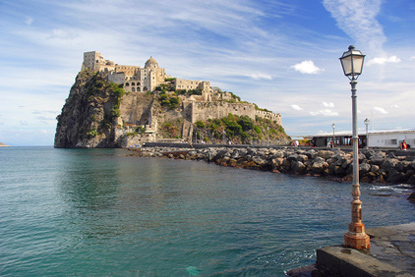
Ischia, a volcanic island in the Tyrrhenian Sea, boasts a rich history dating back to ancient times. First settled by Greeks from Euboea around 770 BCE, it was known as Pithecusae, possibly meaning 'Jar Island' due to its commercial nature. Settled by the Greeks in the 8th century BCE and later a retreat for wealthy Romans, Ischia was prized for its fertile soil and healing hot springs. The Romans, recognising the therapeutic properties of its mineral-rich waters, established luxurious baths here. Interestingly, Ischia harbours an underwater Roman city, Aenaria, founded in the 4th century BCE and suddenly abandoned between 130 and 150 CE due to volcanic activity. Geologically, the island sits atop a dormant volcanic complex, with Mount Epomeo as its highest point, formed from a massive eruption around 130,000 years ago. Visitors can explore the ancient Aragonese Castle, perched dramatically on a volcanic rock, relax in its thermal baths, and enjoy the island's renowned wine, a tradition dating back to antiquity. |
| Capri |
|---|
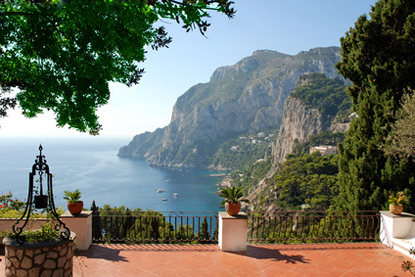
 Capri, an island in the Bay of Naples, Italy, has long enchanted visitors with its stunning landscapes and fascinating history. Known as a retreat for Roman emperors, it was particularly favoured by Emperor Tiberius, who ruled the Roman Empire from his villa on the island, Villa Jovis, from 27 to 37 CE. The island's Blue Grotto, a sea cave illuminated by an ethereal blue light, was likely used as a nymphaeum (a sanctuary dedicated to water nymphs) in ancient times. Capri is also geologically remarkable, formed by limestone and shaped by tectonic activity, offering breathtaking cliffs and caves. Today, it is a haven for naturalists and history enthusiasts alike, blending natural beauty with layers of antiquity.. |
| Pozzuoli |
|---|
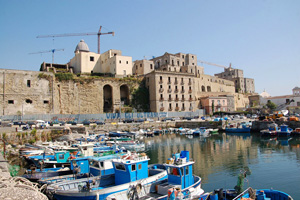
 Pozzuoli, a coastal city near Naples, Italy, boasts a rich history dating back to 531 BCE when Greek refugees founded it as Dicaearchia. The Romans later renamed it Puteoli, making it their primary port for Mediterranean trade. The city's volcanic sand, pozzolana, revolutionised ancient construction, enabling the creation of underwater concrete. Visitors can explore the impressive Flavian Amphitheatre, Italy's third-largest Roman arena, which could hold up to 50,000 spectators and features well-preserved underground mechanisms. The submerged ruins of the ripa Puteolana, a 2-kilometre stretch of Roman port districts, offer a glimpse into the city's bustling past. In 2023, archaeologists discovered a unique Nabataean temple beneath the Gulf of Pozzuoli, the first of its kind found outside the Near East. The nearby Solfatara, a shallow volcanic crater emitting sulfurous fumes, showcases the area's ongoing geological activity. The ancient Macellum, or "Temple of Serapis," features columns marked by marine life, evidence of the region's unique volcanic phenomenon, bradyseism. This slow rise and fall of the land, caused by underground magma movements, highlights Pozzuoli's location within the Campi Flegrei, a supervolcano still under scientific study today. |
| Capua |
|---|

Capua, an ancient city in southern Italy, is famed for its pivotal role in Roman history and gladiatorial culture. Once a prosperous settlement founded by the Etruscans in the 9th century BCE, it became a key ally of Rome before joining Hannibal during the Second Punic War in 216 BCE, a move that ultimately led to its decline. Capua was renowned for its amphitheatre, second only to the Colosseum, where Spartacus, the famous gladiator and leader of a slave revolt, trained. The city was also a centre for metalworking and weapon production, contributing to Roman military success. Today, visitors can explore its well-preserved Roman ruins, including the amphitheatre and ancient roadways, offering a glimpse into the engineering prowess and vibrant cultural life of the Roman era. |
| Caserta Royal Palace & Park ※ |
|---|

The Royal Palace of Caserta is a magnificent 18th-century palace that rivals Versailles in grandeur. Commissioned by Charles VII of Naples in 1752, it boasts 1,200 rooms, 1,742 windows, and covers a staggering 47,000 square metres, making it the largest royal residence in the world by volume. The palace's 120-hectare park features a stunning 3.3km-long canal with fountains and cascades, supplied by the ingenious Carolino Aqueduct. The park’s layout nods to ancient Roman hydraulic engineering, blending classical influences with Baroque and Neoclassical design. The complex also includes the first example of an English Garden in Italy, commissioned by Queen Maria Carolina in 1786, showcasing over 200 botanical species. Film enthusiasts might recognise the palace's grand entrance hall from appearances in Star Wars and Mission Impossible. |
| Vesuvius National Park
|
|---|

 Vesuvius National Park in Italy is home to Mount Vesuvius, the only active volcano on mainland Europe, famous for its catastrophic eruption in 79 CE that buried the ancient Roman cities of Pompeii and Herculaneum under ash and pumice. This event has given its name to the 'Vesuvian' type of volcanic eruption. The area has been settled since at least 1800 BCE, with ancient Romans praising its fertile volcanic soil for agriculture. The volcano’s fertile slopes, enriched by its volcanic soil, have supported vineyards and orchards for centuries, producing renowned wines like Lacryma Christi. Today, visitors can hike along 54 km of trails, observing 612 plant and 227 animal species. The park's main attraction is the 'Gran Cono' trail, which leads to the crater rim, offering breathtaking views of the Bay of Naples. |
| Herculaneum ※ |
|---|

Herculaneum, an ancient Roman town near Naples, Italy, was famously buried by the eruption of Mount Vesuvius in 79 CE, preserving it under layers of volcanic material. Smaller but wealthier than nearby Pompeii, Herculaneum boasts remarkably well-preserved buildings, mosaics, and wooden structures, offering a unique glimpse into Roman life. Archaeological finds include carbonised furniture and scrolls from the Villa of the Papyri, a library that has provided invaluable insight into ancient literature. The town's advanced infrastructure, such as sophisticated sewer systems and luxurious public baths, highlights the engineering prowess of the Romans. Visitors can walk streets once bustling with merchants and residents, frozen in time by the eruption. As you wander through the excavated streets, you'll encounter luxurious houses adorned with colourful marble cladding, bustling markets that once sold exotic animals for entertainment, and public baths where Romans socialised and conducted business. Don't miss the opportunity to explore the remarkably preserved household shrines, where miniature wooden temples served as focal points for domestic worship. |
| Pompeii ※ |
|---|

Pompeii, located near modern Naples, is a fascinating snapshot of ancient Roman life, preserved in time by the catastrophic eruption of Mount Vesuvius in 79 CE. This bustling city, founded around the 6th century BCE, thrived as a hub of trade and culture, with lavish villas, bustling forums, and intricate frescoes showcasing the artistry of the time. Its streets reveal innovative Roman engineering, including sophisticated aqueducts and stepping stones for crossing flooded roads. The eruption's ash remarkably preserved everything from graffiti to everyday household items, providing unique insights into Roman daily life. Visitors can explore sites like the amphitheatre, one of the oldest surviving in the world, and the Villa of the Mysteries, adorned with enigmatic frescoes. The ongoing excavations continue to reveal secrets, offering a blend of history, archaeology, and science. |
| Benevento |
|---|

Benevento, a charming city in southern Italy, has a rich Roman history, dating back to the Samnite period. Originally called Maleventum, meaning 'site of bad events', the Romans renamed it Beneventum ('good wind') after conquering the area in 274 BCE. Known for its well-preserved Roman architecture, it is home to the famous Arch of Trajan, built in 114 CE to celebrate the emperor's victories. Benevento also boasts the remains of a Roman theatre, once holding up to 5,000 spectators. The city's position at the crossroads of ancient Roman roads made it a vital military and trade hub. Notably, Benevento is also renowned for its role in ancient medicinal practices, with the Roman author Pliny the Elder mentioning the city's healing properties. Wine enthusiasts will appreciate the city's rich viticultural heritage, with the surrounding Sannio region producing excellent wines. |
| Sorrento |
|---|
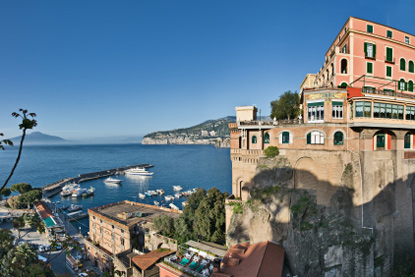
Sorrento, a picturesque coastal town in southern Italy, boasts a rich history dating back to the 6th century BCE when it was founded by Greek settlers. Known as Surrentum during Roman times, it became a favoured retreat for wealthy Romans who built grand villas along its stunning coastline. The town's layout has remained largely unchanged since the Roman era, with its historic centre still following ancient street patterns. Sorrento's strategic location made it a target for various invaders, including the Goths, Lombards, and Byzantines, before it became a duchy in the 9th century CE. The town is also famous for being the birthplace of the renowned 16th-century poet Torquato Tasso, after whom the main square, Piazza Tasso, is named. Today, Sorrento enchants visitors with its lemon-scented air, panoramic views of the Bay of Naples and Mount Vesuvius, and its production of the popular liqueur, Limoncello. |
| Amalfi Coast ※ |
|---|

The Amalfi Coast, a stunning stretch of coastline with dramatic cliffs, crystal-clear waters, and picturesque villages, has been a sought-after destination for centuries. Originally founded by the Romans in the 4th century CE, Amalfi became a powerful maritime republic during the Middle Ages, dominating trade in the western Mediterranean. The coast's history is intertwined with naval prowess, as exemplified by Amalfi's medieval arsenal, the only known surviving example in southern Italy. The Amalfi Coast's towns, such as Ravello and Positano, flourished in the Middle Ages, with Ravello hosting a vibrant cultural scene and a famous music festival. Scientifically, the area's unique microclimate supports a rich variety of plant species, some of which were cultivated by the Romans, including the region's renowned lemons, which have been a key part of the local economy for millennia. |
| Paestum ※ |
|---|

Founded around 600 BCE by Greek colonists from Sybaris, it was originally named Poseidonia after the sea god Poseidon. The city boasts three remarkably well-preserved Greek temples dating from 550 to 450 BCE, which are among the best examples of Doric architecture outside of Greece. In 273 BCE, the Romans seized control, renaming it Paestum and transforming it into a thriving Latin colony. Visitors can explore the impressive city walls, amphitheatre, and paved Roman roads, as well as the remains of the Forum, Comitium, and baths. Interestingly, Paestum was renowned in ancient times for its roses that bloomed twice a year, a fact mentioned by the Roman poet Virgil. Paestum's ancient walls, amphitheatre, and the preserved Forum also reveal much about Roman town planning, making it a fascinating blend of Greek and Roman history. |
| Cilento & Vallo di Diano National Park ※
|
|---|

 Cilento & Vallo di Diano National Park, established in 1991, spans over 180,000 hectares, boasting diverse landscapes from rugged mountains and rolling hills to pristine beaches along the Tyrrhenian Sea. The park is home to ancient Roman ruins, such as the well-preserved archaeological site of Paestum. Nature lovers can explore the park's unique biodiversity, home to endangered species like the European otter, the Apennine wolf, and the Corsican hare, while hiking enthusiasts can traverse the numerous trails that wind through its varied terrain. |
Other attractions
 Avellino
 Castellammare di Stabia
Salerno
Velia
|


 : Local interest
 : Moderately interesting
 : Outstanding place
 : Must-see in the country
 : Top cities in Europe