


| Contents |
|---|
Introduction
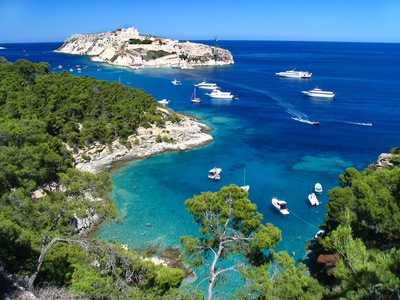
The Gargano National Park, established in 1991, encompasses 118,144 hectares in the province of Foggia, southern Italy. Located on the distinctive 'spur' of Italy's boot, this UNESCO-protected site features diverse landscapes including the ancient Umbra Forest, the coastal lagoons of Lesina and Varano, dramatic sea cliffs, and the Tremiti Islands archipelago. Originally an island that merged with the mainland, the park's unique geological history has created one of Italy's richest areas of biodiversity, hosting 87 varieties of wild orchids, extensive beech and oak forests, and numerous wildlife species including roe deer, foxes, and over 170 bird species. The park spans 18 municipalities and offers more than 500 kilometres of trails suitable for hiking, mountain biking, and horse riding, whilst its coastline features numerous sea caves and beaches ranging from sandy shores to pebbly coves.
Geography and Landscape
Gargano National Park, established in 1991, is located in the Apulia (Puglia) region of southern Italy, specifically in the province of Foggia. The park covers an area of approximately 1,181 square kilometres (456 square miles) across the Gargano Promontory, which juts out into the Adriatic Sea, forming the 'spur' of Italy's boot-shaped peninsula.
Topography
The park's landscape is characterised by its diverse topography, including:
- Mountainous terrain
- Dense forests
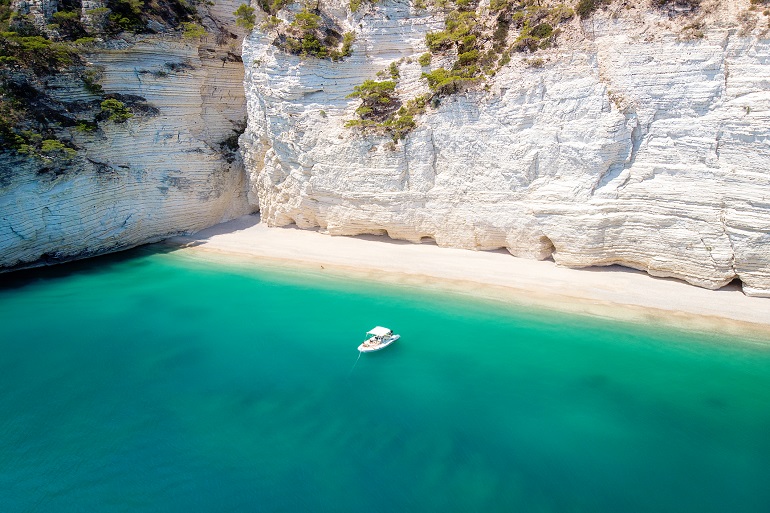
- Coastal areas with cliffs and beaches
- Wetlands and lagoons
The central feature of the park is the Monte Gargano massif, a series of limestone mountains. The highest point in the park is Monte Calvo, standing at 1,056 metres (3,465 feet) above sea level. Other notable peaks include:
- Montenero (1,015 metres / 3,330 feet)
- Monte Spigno (1,010 metres / 3,314 feet)
Geological Features
The Gargano Promontory is entirely composed of limestone, formed between 252 to 66 million years ago during the Mesozoic Era. This geological composition has resulted in a karst landscape, featuring:
- Approximately 600 sea caves along the coast
- Coastal stacks (faraglioni)
- Sinkholes and underground drainage systems inland
Forests and Vegetation
One of the park's most significant features is the Umbra Forest (Foresta Umbra), covering about 105 square kilometres (41 square miles). This ancient woodland is the last remaining significant stretch of old-growth forest in Italy and is part of the Umbra Forest Nature Reserve.
The park's vegetation varies depending on altitude and exposure:
- Coastal areas: Mediterranean maquis, Aleppo pine forests
- Lower altitudes: Holm oak forests
- Higher altitudes: Beech forests, mixed with yew, Turkey oak, ash, maple, and holly
Coastal Areas
The coastline of Gargano National Park is diverse, featuring:
- Sandy beaches, particularly in the north
- Steep calcareous cliffs
- Small coves with fine sand
Wetlands
The park includes important wetland areas, notably:
- Lake Lesina: A brackish lagoon separated from the Adriatic Sea by a thin dune belt
- Lake Varano: Part of the largest brackish complex in southern Italy
- Lake Salso: Located in the southern part of the park
These wetlands are crucial for biodiversity and serve as important habitats for numerous bird species.
Climate
The climate in Gargano National Park is heterogeneous, varying with altitude and exposure:
- Coastal areas: Mediterranean climate with dry summers (approximately 550 mm annual rainfall)
- Inland elevated areas: Mediterranean climate with significant autumn and winter rainfall (up to 1,200 mm in Foresta Umbra)
The northern part of the promontory experiences colder winters due to northerly winds, affecting vegetation distribution.
This diverse landscape and climate contribute to the park's rich biodiversity, making it a unique destination for nature enthusiasts and researchers alike.
Flora and Fauna
Gargano National Park, located in the 'spur' of Italy, boasts an extraordinary biodiversity with over 2,000 plant species and a rich variety of wildlife. The park's diverse ecosystems, including coastal wetlands, dense forests, and limestone cliffs, provide habitats for numerous species.
Flora
The park's vegetation is characterised by its variety and includes several endemic species:
- Umbra Forest: One of Europe's largest beech forests, also home to oak, yew, maple, and chestnut trees.
- Coastal Areas: Dominated by Aleppo pine forests and Mediterranean scrub, including mastic, myrtle, strawberry tree, and heather.
- Orchids: The park hosts over 80 species of wild orchids, some endemic to Gargano.
- Other Notable Species: Adriatic Bellflower (endemic), anemones, and violets.
Fauna
The park's varied environments support a diverse array of animal species:
Mammals
- Italian roe deer
- Wild boar
- Fallow deer
- Fox
- Wild cat
- Badger
- Apennine wolf (recent sightings)
Birds
With over 170 bird species, Gargano is a prime birdwatching destination:
- Birds of Prey: Peregrine falcon, buzzard, kestrel, eagle owl, and occasionally, lanner falcon
- Wetland Species: Grey heron, night heron, cormorants, avocets
- Other Notable Species: Woodpeckers, bee-eaters, hoopoes
- Migratory Birds: Pink flamingos, black storks, white storks, cranes, and spoonbills can be observed during migration periods
Marine Life
The coastal areas and lagoons support a variety of aquatic species, including crabs and numerous fish species.
Where to Observe Wildlife
- Umbra Forest: Ideal for spotting woodland species and birds
- Lakes of Lesina and Varano: Excellent for birdwatching, especially water birds
- Salso Lake Oasis: Home to 60 nesting bird species and a refuge for over 200 species
For the best wildlife viewing opportunities, consider joining guided tours or visiting at dawn or dusk when many animals are most active. Remember to respect the park's regulations and wildlife habitats during your visit.
Activities and Attractions
Coastal Attractions
Sea Cave Boat Tours
One of the most popular activities is taking a boat tour to explore the sea caves along the Gargano coast. Tours typically depart from Vieste and last about 3 hours. You'll visit famous caves such as the Tomato Cave, Smugglers' Cave, Two Eyes Cave, and Broken Cave. Private tours in smaller boats allow for more extensive exploration of the caves.
Beaches
The Gargano coastline boasts a variety of beautiful beaches, including:- Baia delle Zagare
- Spiaggia di Vignanotica
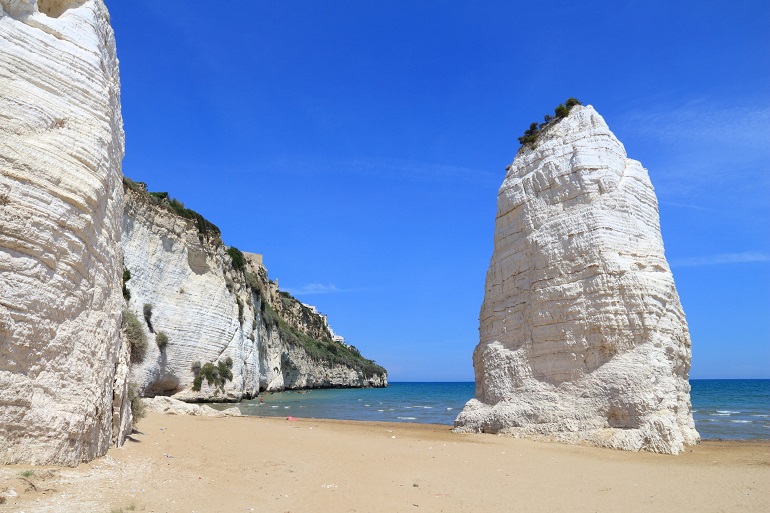
- Spiaggia di Castello in Vieste, featuring the 25-metre-high Monolite Pizzomunno limestone monolith
Architiello of San Felice
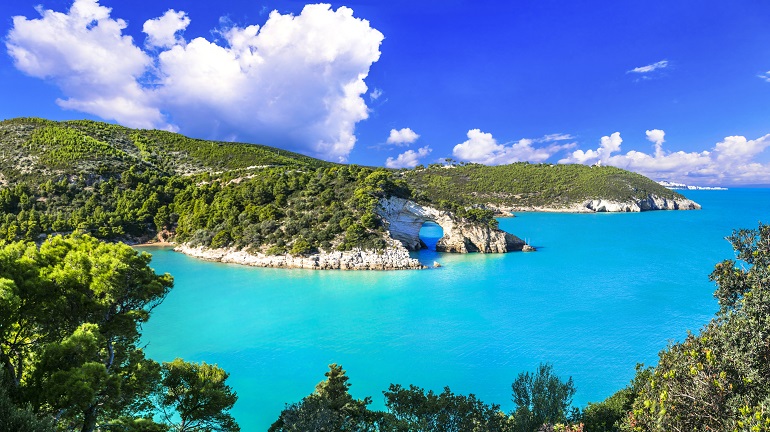
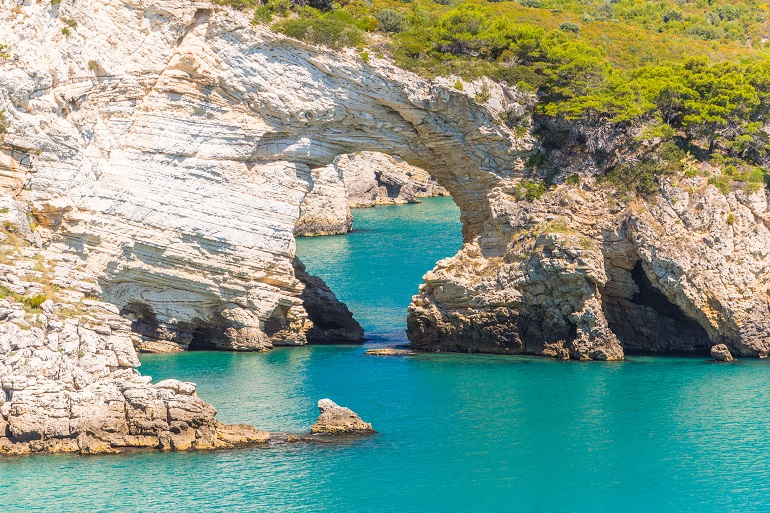
This natural rock arch is one of the most picturesque coastal formations in the Gargano. The best view is from the Torre di San Felice, where there's also a car park.
Inland Attractions
Umbra Forest
The ancient Umbra Forest, located in the heart of the Gargano peninsula, is a UNESCO World Heritage Site known for its beech trees. Visitors can enjoy:
- Numerous hiking trails
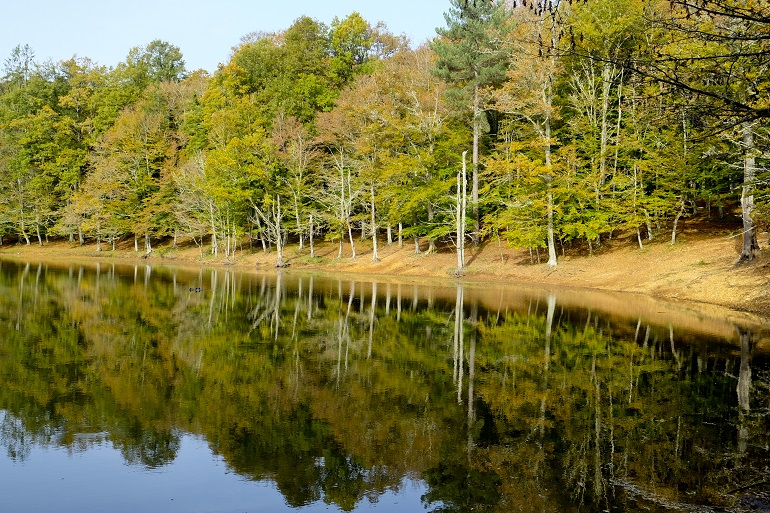
- Laghetto d'Umbra, a small lake
- A wild animal enclosure
- The Umbra Forest Visitor Centre and museum
Monte Sant'Angelo
This hilltop town offers:- Panoramic views of the Adriatic coast
- Castello di Monte Sant'Angelo (admission €2)
- The UNESCO-listed pilgrimage church of St. Michael the Archangel, featuring underground chapels
Activities
Hiking and Cycling
The park boasts over 500 km of marked trails suitable for hiking, mountain biking, and e-biking.
Trabucco Fishing Experience
Visitors can participate in traditional fishing using a trabucco, a wooden fishing machine. This experience is offered by local associations and provides insight into the area's fishing heritage.
Nearby Attractions
- Tremiti Islands: Accessible by boat or helicopter from the Gargano coast
- Lesina and Varano lakes: The largest lakes in southern Italy, known for oyster and mussel production
- Towns of Vieste, Peschici, and Rodi Garganico: Charming coastal settlements with historical centres and beaches
Accommodation
The Gargano National Park offers a diverse range of accommodation options to suit various preferences and budgets. Visitors can choose from hotels, farmhouses, holiday villages, and camping sites scattered throughout the park and its surrounding areas.
Hotels
Hotels in the Gargano area range from budget-friendly to luxury establishments. Many are located in towns like Vieste, Peschici, and San Giovanni Rotondo, offering easy access to both the park and urban amenities. Some hotels feature amenities such as swimming pools, restaurants, and panoramic views of the Adriatic Sea or the park's lush landscapes.
Farmhouses (Agriturismi)
For a more rustic and authentic experience, agriturismi are popular choices. These working farms offer accommodation in renovated buildings, often surrounded by olive groves or other agricultural land. Many agriturismi provide home-cooked meals using locally sourced ingredients, giving visitors a taste of traditional Apulian cuisine.
Holiday Villages
Holiday villages are common along the Gargano coast, particularly near beaches. These complexes typically offer self-catering apartments or bungalows and often include facilities such as swimming pools, restaurants, and entertainment programmes. They are particularly suitable for families or groups seeking a resort-style holiday.
Camping and Caravan Sites
For those who prefer a closer connection to nature, the Gargano National Park has several camping and caravan sites. These range from basic facilities to more developed sites with amenities like swimming pools and on-site shops. Some campsites are located near beaches, while others are nestled in the park's forested areas.
Accessibility
It's worth noting that some accommodations in the park have made efforts to improve accessibility for guests with mobility issues. However, due to the park's natural terrain, not all locations may be suitable for visitors with disabilities.
Booking Considerations
Prices for accommodation in Gargano National Park can vary significantly depending on the season, with peak rates during the summer months of July and August. Booking in advance is advisable, especially for stays during the high season or in popular coastal areas.
Gastronomy
Seafood
The coastal areas of Gargano are renowned for their seafood:
- Fish soup (ciambotto or zuppa alla rodiana): A hearty dish made with various local fish varieties, onion, tomatoes, and basil.
- Mussels and clams: The region is particularly known for these shellfish.
- Octopus: Often served as a salad or grilled in sandwiches.
- Cuttlefish: Commonly used in pasta dishes or stuffed with peas.
Pasta and Bread
Pasta is a staple in Gargano cuisine, often made by hand without eggs:
- Orecchiette: Small, ear-shaped pasta typically served with tomato sauce and cacioricotta cheese.
- Troccoli: Long, fresh handmade pasta often paired with seafood.
- Strascinati: Another local pasta variety, sometimes served with salted anchovies and breadcrumbs.
The region is also known for its bread-based dishes:
- Pancotto: A soup made with stale bread, potatoes, and wild herbs.
- Paposcia: A stuffed pan-focaccia that has become popular street food in the area.
Meat and Cheese
While seafood is prominent, Gargano also offers various meat and dairy products:
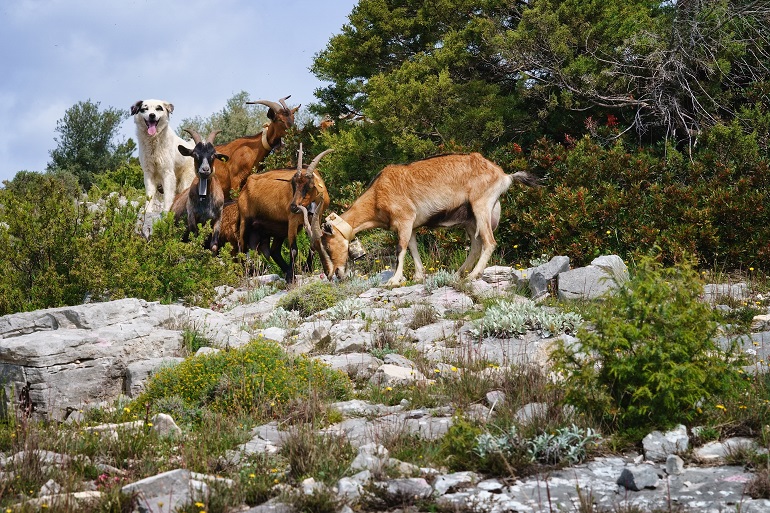
- Lamb and goat: Common meats in the region.
- Podolica cow: A local breed that produces high-quality meat and milk for cheese production.
- Cacioricotta: A cheese often grated over pasta dishes.
- Caciocavallo: A type of stretched-curd cheese, with the Podolico variety being particularly prized.
Fruits and Vegetables
The Gargano area is known for its agricultural produce:
- Citrus fruits: The region produces DOP (Protected Designation of Origin) lemons and oranges.
- Olives and olive oil: Gargano produces high-quality extra virgin olive oil, particularly in the Carpino area.
- Wild herbs: Used in various dishes, including the traditional 'pancotto'.
Desserts and Street Food
Traditional sweets and street food are also part of Gargano's culinary landscape:
- K'lustr (or Cartellate): Fried pastries covered with honey and almonds, typically prepared for Christmas.
- Panzerotti: Crescent-shaped fried pizzas.
- Pugliese pizza (focaccia): A pan-cooked flatbread often topped with cherry tomatoes and garlic.
The gastronomy of Gargano National Park exemplifies the 'cucina povera' (peasant cooking) tradition, emphasising simple, fresh ingredients and traditional preparation methods. This approach results in flavourful dishes that showcase the region's natural bounty from both land and sea.
Best Time to Visit
The ideal time to visit Gargano National Park depends on your preferences and the activities you wish to enjoy. Here's a breakdown of what to expect throughout the year:
Spring (April to May)
Spring is an excellent time to visit Gargano National Park for several reasons:
- Mild temperatures with daytime highs in the mid-20s Celsius
- Wildflowers are in bloom, including 87 varieties of spontaneous orchids
- Ideal conditions for hiking and exploring the Umbra Forest
- Less crowded than the summer months
Summer (June to August)
Summer is the peak tourist season in Gargano:
- Warmest weather with August being the hottest month (average maximum temperature of 29°C)
- Perfect for beach activities and swimming
- Longest days with up to 10.9 hours of sunshine in July
- Very crowded, especially in July and August
- Higher prices for accommodation
Autumn (September to October)
Early autumn can be a pleasant time to visit:
- Mild temperatures suitable for outdoor activities
- Less crowded than summer
- Beautiful autumn colours in the Umbra Forest
- Sea temperatures still warm enough for swimming in September
Winter (November to March)
Winter is the low season in Gargano:
- Coolest temperatures with February being the coldest month (average maximum of 13°C)
- Highest rainfall, particularly in November
- Fewer tourists and lower prices
- Some attractions and accommodations may be closed
Conclusion
For the best balance of pleasant weather, fewer crowds, and diverse activities, consider visiting Gargano National Park in late spring (May) or early autumn (September). These periods offer comfortable temperatures for exploring the park's natural beauty, including the Umbra Forest and coastal areas, without the peak summer crowds.
Getting There and Around
By Car
From Rome (approximately 335 km):
- Take A25/E80 towards Chieti/Pescara/Sulmona/Avezzano
- Continue onto E55/A14 towards Francavilla/Bari
- Exit at Poggio Imperiale for the northern part of the park
- Alternatively, exit at San Severo and take SS 272 for San Giovanni Rotondo
From the south:
- Take the Cerignola Est exit on highway A14
- Continue on SS 545 towards Manfredonia - San Giovanni Rotondo
By Train
Take the Adriatic line to San Severo station, then continue to Peschici on the Gargano line. Ferrovie Del Gargano operates trains from Foggia to Cagnano Varano every 4 hours.
By Bus
SITA Sud operates bus services from Foggia to various towns in the Gargano area. FlixBus runs services from Rome to Vieste, taking approximately 6 hours and 20 minutes.
Getting Around Gargano National Park
Public Transport
Local buses operated by SITA Sud, ACPT, and Ferrovie del Gargano connect the main towns and villages within the park. Bus stops are typically located near the main train stations in San Severo and Foggia.
Cycling
The Parkinbici system offers bike rentals in several municipalities including Ischitella, Peschici, Rodi Garganico, Vico del Gargano, Manfredonia, Mattinata, Rignano Garganico, and San Marco in Lamis. This service aims to reduce city traffic and provide a more direct connection with the territory.
Boat Services
The Tremiti Islands can be reached by hovercraft from Manfredonia, Vieste, and Termoli. In summer, ferry services operate from Rodi Garganico and Peschici. A year-round helicopter service is available from Foggia.
Guided Tours
The park has 52 official tour guides available to organise visits within the park area. These can be particularly useful for exploring the numerous trails in the Foresta Umbra.
Remember to check timetables and book services in advance, especially during peak tourist seasons.
Conservation and Responsible Tourism
Environmental Protection
Gargano National Park, established in 1991, is one of Italy's largest protected areas, covering 118,000 hectares in the province of Foggia. The park is renowned for its rich biodiversity and diverse landscapes, including dense forests, karst plateaus, rugged coastlines, and the Tremiti Islands.
Conservation Efforts
Biodiversity Protection
The park is home to 12 different ecosystems, making it one of the most biodiverse areas in Europe. Conservation efforts focus on protecting various habitats, including:
- The Umbra Forest, a UNESCO World Heritage site since 2021, known for its ancient beech trees
- Coastal lagoons of Lesina and Varano
- Marine environments around the Tremiti Islands
Species Reintroduction
The park authorities, in collaboration with organisations like LIPU, are working on reintroducing endangered species such as the White-headed Duck.
Fire Prevention
The park has been recognised for its successful efforts in reducing forest fires through environmental awareness campaigns.
Responsible Tourism Initiatives
Gargano Green Card
This initiative promotes sustainable tourism by offering discounts on eco-friendly activities within the park. The card is valid for one year and supports various green experiences.
Sustainable Accommodations
Eco-friendly lodging options are available within the park, such as the Cala Molinella village in Vieste, which offers eco-sustainable accommodations including 'ecomobile homes'.
Green Activities
The park encourages responsible tourism through various activities:
- Trekking and mountain biking on over 500 km of trails
- Canoeing and snorkelling along the coast
- Birdwatching in wetland areas
- Guided tours in electric boats at the Lago Salso Nature Sanctuary
Environmental Education
The park aims to raise awareness about local ecosystems and promote environmental respect, particularly among younger visitors, through educational programmes and guided experiences.
Certifications and Recognition
- UNESCO World Heritage status for the ancient beech forests (2021)
- Environmental certifications for local businesses, such as ISO 14001 and EMAS III registrations
By engaging in these conservation efforts and responsible tourism practices, Gargano National Park strives to balance environmental protection with sustainable visitor experiences, ensuring the preservation of its unique natural heritage for future generations.
Visitor Centres
Gargano National Park offers several visitor centres that provide valuable information and services to tourists exploring this diverse natural area in Puglia, Italy.
Villaggio Umbra Visitor Centre
Located near Villaggio Umbra, this centre houses a nature museum and an information point for visitors. The museum features:
- A scale model of Gargano Promontory (1:25,000)
- Lithic artefacts showcasing the ancient human presence in Gargano
- A xylotheque
- Giant posters of local flora and fauna
- A collection of animal taxidermy mounts
Additional amenities include:
- Mountain bike rental service
- Books, maps, and informative materials for purchase
- Surrounding theme trails, rest stops, and picnic areas
'Oasi Lago Salso' Visitor Centre
Situated in Manfredonia, this centre focuses on the marshy environments of the park, with particular emphasis on birdlife. It serves as a hub for naturalistic, cultural, and economic activities related to one of the Mediterranean's most important wetlands.
Foresta Umbra Visitor Centre
Located in the heart of Foresta Umbra on SP52bis near the junction with SP528, this small centre includes:
- A museum with fossils, photographs, and taxidermy specimens
- Guided half-day hikes (€10 per person, reservation required)
- Bicycle hire (€5 per hour or €25 per day)
- Walking maps for sale (€2.50)
Additional Services
The park also offers a bike-sharing system called Parkinbici, available in several municipalities including Manfredonia, Mattinata, Rignano Garganico, and San Marco in Lamis. For more information on this service, visitors can call the toll-free number 800 654214.
These visitor centres play a crucial role in helping tourists explore and understand the rich biodiversity, history, and cultural significance of Gargano National Park.