


Castel San Vincenzo in the Apennines, Molise.
Introduction

Molise is the second smallest Italian region in land area and population after Aosta Valley. With merely 320,000 inhabitants, it is less populous than the nine largest Italian cities.
Made up mostled of forested mountains and hills, Molise is usually considered Italy's most remote region. It is also one of the least visited by tourists, a good place to avoid the crowds of Tuscany or Lazio.
Attractions
| Pesche |
|---|
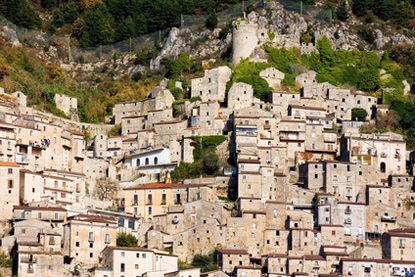
 This picturesque hillside town is known for its ancient white stone buildings, which appear frozen in time due to its status as a protected historic site. Pesche's history dates back to around the year 1000, when people settled near a Benedictine monastery built on a small Sunni fortress. Pesche is home to the Riserva Naturale Orientata di Pesche, where visitors can enjoy e-bike excursions through beautiful natural landscapes. The village's steep, narrow roads wind through rows of stone houses with colorful painted wooden doors, offering a glimpse into Italy's rural past. Additionally, "Pesche" refers to traditional Italian pastries known as "Pesche all'Alchermes." These confections consist of two dome-shaped cookies filled with custard, dipped in Alchermes liqueur, giving them a distinctive pink hue and a sweet, aromatic flavor. This picturesque hillside town is known for its ancient white stone buildings, which appear frozen in time due to its status as a protected historic site. Pesche's history dates back to around the year 1000, when people settled near a Benedictine monastery built on a small Sunni fortress. Pesche is home to the Riserva Naturale Orientata di Pesche, where visitors can enjoy e-bike excursions through beautiful natural landscapes. The village's steep, narrow roads wind through rows of stone houses with colorful painted wooden doors, offering a glimpse into Italy's rural past. Additionally, "Pesche" refers to traditional Italian pastries known as "Pesche all'Alchermes." These confections consist of two dome-shaped cookies filled with custard, dipped in Alchermes liqueur, giving them a distinctive pink hue and a sweet, aromatic flavor. |
| Campobasso |
|---|
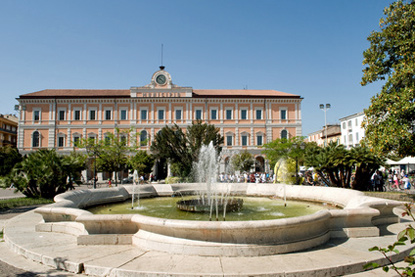
 Known as the "Garden City" due to its abundance of green spaces, Campobasso boasts two distinct historical centers - the medieval old town on a hill and the 19th-century Murattian center below. The city is dominated by the imposing Castello Monforte, a 15th-century castle that offers panoramic views of the surrounding Sannio and Matese mountains. Campobasso has a long-standing tradition of blade craftsmanship, particularly in the production of scissors and knives, dating back to the 14th century. The city is also renowned for its winter-ripening pears and the production of scamorza cheese. Interestingly, beneath the city lies a network of underground tunnels that were once used for military purposes and later served as air raid shelters during World War II. Known as the "Garden City" due to its abundance of green spaces, Campobasso boasts two distinct historical centers - the medieval old town on a hill and the 19th-century Murattian center below. The city is dominated by the imposing Castello Monforte, a 15th-century castle that offers panoramic views of the surrounding Sannio and Matese mountains. Campobasso has a long-standing tradition of blade craftsmanship, particularly in the production of scissors and knives, dating back to the 14th century. The city is also renowned for its winter-ripening pears and the production of scamorza cheese. Interestingly, beneath the city lies a network of underground tunnels that were once used for military purposes and later served as air raid shelters during World War II. |
| Termoli |
|---|
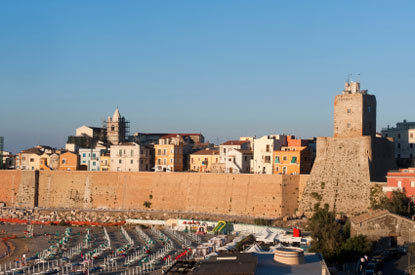 Termoli is home to a well-preserved medieval old town, known as "Borgo Antico" or "Paese vecchio," which sits on a promontory overlooking the Adriatic Sea. One unique feature is the Trabucchi, traditional wooden fishing structures that dot the coastline. Termoli's skyline is dominated by the impressive Castello Svevo, a 13th-century castle built by Frederick II of Swabia, which once served as a strategic defensive structure. The town's economy has evolved from its roots as a fishing port to become a popular resort destination for Italian families, known for its beautiful beaches and clear waters. Termoli is also famous for its fresh seafood and local cuisine, especially brodetto di pesce (a rich fish stew). During World War II Termoli became the centre of one of the largest tank battles of the Italian campaign over the period 2 to 6 October, 1943.
 |
Other attractions
 Agnone
Castel San Vincenzo
Pietrabbondante
Saepinum
San Vincenzo al Volturno
Agnone
Castel San Vincenzo
Pietrabbondante
Saepinum
San Vincenzo al Volturno
| Eupedia's Rating System |
|---|
Cities, towns, villages & historic buildings
Natural attractions
|
 : Local interest
 : Moderately interesting
 : Outstanding place
 : Must-see in the country
 : Top cities in Europe