


| Contents |
|---|

Introduction
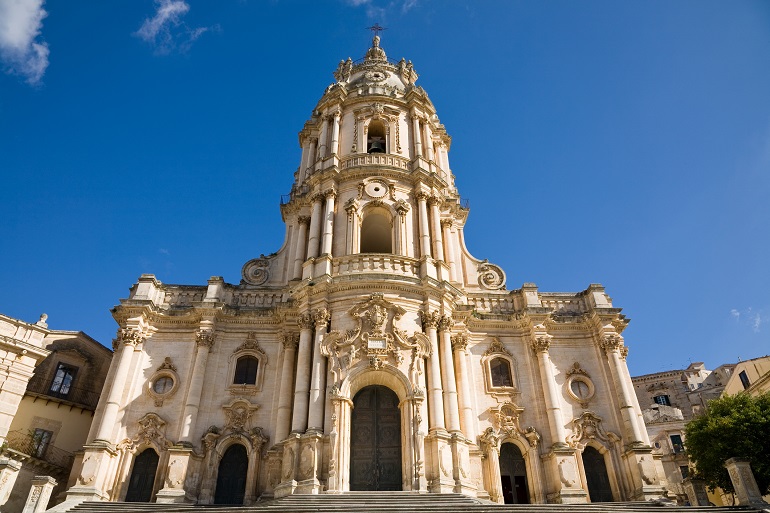
Modica is a UNESCO World Heritage city built across several rocky promontories in the Hyblaean Mountains. It is renowned for its extraordinary Baroque architecture, particularly evident in the majestic Cathedral of St George, which stands 62 metres high and is reached by 250 steps. The city is divided between Modica Alta (Upper Modica) and Modica Bassa (Lower Modica), connected by Europe's highest bridge, the Guerrieri bridge. Beyond its architectural splendour, Modica is famous for its unique chocolate, made following an ancient Aztec recipe. The city's main thoroughfare, Corso Umberto I, is lined with shops, restaurants, and historic buildings, making it an ideal starting point for exploring this remarkable Sicilian town.
Interesting Facts about Modica
- Modica, a UNESCO World Heritage Site, is renowned for its exceptional Sicilian Baroque architecture rebuilt after the devastating 1693 earthquake.
- The town is famed for its unique chocolate, crafted using an ancient Aztec recipe introduced by the Spanish and recognised with Protected Geographical Indication status.
- Divided into Modica Alta (Upper) and Modica Bassa (Lower), the town features steep staircases and Europe’s Guerrieri Bridge, spanning 300 metres between its historic quarters.
- San Giorgio Cathedral, a Baroque masterpiece, boasts a 62-metre-high façade and a sundial marking solar noon with a floor-mounted light beam.
- Modica’s Cava d’Ispica canyon contains Bronze Age cave tombs and offers hiking routes through archaeological sites set in unspoilt nature.
- The town served as a filming location for the popular Italian TV series Inspector Montalbano, featuring landmarks like Palazzo Polara.
- Once the capital of a powerful medieval county, Modica minted its own coins and governed much of southern Sicily until the 19th century.
- Modica’s 1902 flood led to the covering of its rivers, with the main street, Corso Umberto I, now following the course of a buried waterway.
- The town hosts a Chocolate Museum showcasing a nine-metre-tall chocolate sculpture and demonstrations of traditional preparation methods.
- Modica’s population fluctuated dramatically between the late 19th and 21st centuries, peaking at 64,637 in 1921 before declining to 53,554 by 2021.

History
Modica, an ancient city in southern Sicily, boasts a fascinating history stretching back to 1360 BCE when it was first inhabited by the Sicels. The city flourished under various civilisations, including the Romans, Byzantines, and Arabs, who captured it in 845 CE and named it Mudiqah. In 1296, Modica became the capital of a powerful county, achieving semi-independent status and even minting its own currency. A devastating earthquake in 1693 led to the city's remarkable rebirth in the exuberant Sicilian Baroque style, which earned it UNESCO World Heritage status. Today, Modica is renowned for its unique chocolate-making tradition using an ancient Aztec recipe, and its stunning architecture spans two distinct areas: Modica Alta (Upper Modica) and Modica Bassa (Lower Modica), connected by one of Europe's highest bridges.
Main Attractions
Modica is divided into Modica Alta (Upper Town) and Modica Bassa (Lower Town), offering visitors a remarkable blend of Baroque architecture and charming streets. This ancient city, built along the limestone cliffs of the Hyblaean Mountains, showcases some of Sicily's most impressive architectural achievements and provides visitors with an authentic glimpse into traditional Sicilian life.
Cathedral of San Giorgio (Duomo)
The Cathedral of San Giorgio stands as the crowning glory of Modica's Baroque architecture, its magnificent façade rising majestically above the city. This architectural masterpiece features an imposing three-tiered façade that exemplifies the Sicilian Baroque style, complete with ornate decorations, intricate sculptures, and a commanding bell tower. Visitors must climb 250 steps to reach the entrance, but the journey offers increasingly spectacular views of the surrounding city. The interior is equally impressive, housing priceless artworks including remarkable paintings of the Nativity and Assumption. The cathedral's position makes it particularly striking at sunset, when the honey-coloured stone takes on a golden hue. At the base of the church, a beautifully landscaped garden provides a peaceful retreat and excellent photo opportunities.
Cathedral of San Pietro
The Cathedral of San Pietro, located in the heart of Modica Bassa, represents another magnificent example of Sicilian Baroque architecture. Its most distinctive feature is the grand staircase leading to the entrance, adorned with impressive statues of the twelve Apostles, each displaying remarkable detail and craftsmanship. The church's façade showcases intricate Baroque decorations, while the interior houses a collection of stunning frescoes depicting scenes from both the Old and New Testament. The building's honey-coloured stone exterior undergoes a remarkable transformation at sunset, taking on a reddish hue that creates a spectacular visual display. The cathedral's central location makes it a natural meeting point and a focal point of local religious celebrations.
Corso Umberto I
Corso Umberto I serves as the main artery of Modica Bassa, stretching through the heart of the lower town like a ribbon of history. This elegant thoroughfare is lined with perfectly preserved Baroque palaces, churches, and shops housed in historic buildings. The street showcases some of the city's most impressive architectural achievements, including the 19th-century Teatro Garibaldi, with its neoclassical façade and ornate interior decorations. The Palazzo Polara stands as a testament to aristocratic life, featuring an elaborate Baroque façade and elegant balconies. Palazzo Leva, another architectural gem, displays intricate stone carvings and impressive ironwork balconies. Walking along Corso Umberto I feels like stepping back in time, with each building telling its own story of Modica's rich history.
Church of San Giovanni Evangelista
Perched at the highest point of Modica Alta, the Church of San Giovanni Evangelista rewards visitors with the most breathtaking panoramic views of the old town. This church, while smaller than the main cathedrals, holds significant historical importance and architectural beauty. Its location made it a crucial landmark for centuries, serving as both a place of worship and a strategic observation point. The church's interior features beautiful frescoes and religious artifacts, while its exterior terrace provides unparalleled views of the entire city, the surrounding valleys, and the distant hills. The walk to reach the church is steep but offers numerous photo opportunities and glimpses into local life.
San Nicolò Inferiore
San Nicolò Inferiore stands as a unique testament to Modica's ancient history, carved directly into the rock face during the 12th century. This remarkable church remained hidden for centuries until its accidental discovery in 1987 during renovation works. The interior features rare Byzantine-style icons and a striking Christ Pantocrator, demonstrating the strong Eastern influences in medieval Sicily. The church's rock-hewn architecture and ancient frescoes provide visitors with a glimpse into the religious art and architecture of medieval Sicily. The cool, cave-like atmosphere and the subtle lighting create an ethereal environment that transports visitors back in time.
Viewpoints
Pizzo Belvedere offers an unmatched vantage point for appreciating Modica's unique urban landscape. This panoramic terrace provides a perfect view of both Modica Alta and Modica Bassa, allowing visitors to fully comprehend the city's unique topography and architectural layout. From this vantage point, one can trace the winding streets and admire the harmony between the natural landscape and human construction. Via Sant'Andrea, located about a kilometre from the centre, provides a different perspective of the city, particularly enchanting during sunset when the Baroque buildings are bathed in golden light. Monserrato Hill offers yet another spectacular viewpoint, particularly magical after dark when the city lights create a twinkling display against the dark sky.
Historic Buildings
The ancient Castello dei Conti, perched dramatically on a rocky outcrop, tells the story of Modica's medieval past. Though partially in ruins, the castle's remaining structures provide insight into the city's defensive architecture and strategic importance.
The 18th-century Clock Tower, built on the foundations of a former lookout tower, stands as a symbol of the city's evolution. Its mechanism still functions today, marking time as it has done for centuries and providing a constant reminder of Modica's enduring heritage.

Top Museums
Modica, a picturesque Baroque town in southeastern Sicily, boasts a rich cultural heritage reflected in its diverse museums. Here's a guide to the most notable museums in Modica:
Chocolate Museum
Established in 2014 inside the Palazzo della Cultura, the Chocolate Museum celebrates Modica's centuries-old chocolate-making tradition. Visitors can explore exhibits detailing the history of Modican chocolate, which dates back four centuries. The museum features an extraordinary 9-metre-long miniature representation of Italy crafted entirely from chocolate. One of the highlights is the pastry lab, known as "u dammusu ro ciucculattaru", where visitors can observe master chocolatiers at work.
House of Salvatore Quasimodo
Near the Town Clock Tower stands the birthplace of Salvatore Quasimodo, the renowned poet and Nobel Prize winner. Although Quasimodo only lived here for his first 14 months, the house has been transformed into a museum dedicated to his life and works. The Poetry Room is a particular highlight, where visitors can listen to recordings of Quasimodo reciting his own poetry.
Archaeological Museum "Franco Libero Belgiorno"
Housed in the Palazzo della Cultura, a former Benedictine Monastery, this museum is named after its founder. It showcases a fascinating collection of paleontological remains from various sites around Modica. Notable exhibits include:
- Ruins of a Neolithic village discovered in Contrada Pirrone
- Bronze Age objects from Cava Ispica and Cava Lazzaro
- The famous Heracles of Cafeo, a 22 cm tall bronze statue dating back to the 5th century BCE
Museum of Memory
This museum houses a collection of artefacts and relics related to the Allied landing in Sicily during World War II. The exhibits bring to life the dramatic events of the war through historically unique items and simulacra.
Tommaso Campailla House Museum
Dedicated to the Modican philosopher and inventor Tommaso Campailla, this house museum offers insights into the life and works of the author of the philosophical poem "L'Adamo". Visitors can also learn about Campailla's invention of a cure for syphilis.
Civic Museum
Located in the Palazzo della Cultura, the Civic Museum offers a journey through Modica's long history. It houses a variety of artefacts and exhibits that showcase the city's rich cultural heritage.
Modica's museums offer a fascinating glimpse into the town's history, from prehistoric times to the present day, covering archaeology, literature, chocolate-making, and more. Each museum provides a unique perspective on the cultural tapestry that makes Modica such a captivating destination.

Local Cuisine
Modica, a charming Sicilian town, is renowned for its extraordinary culinary heritage, particularly its unique chocolate-making tradition that dates back to the Aztecs via Spanish rule. The town's chocolate makers employ a distinctive cold-pressing method that creates a wonderfully grainy, crumbly texture whilst preserving the true essence of the cacao bean. Beyond its chocolate fame, Modica offers delectable local specialities such as 'mpanatigghi' (spiced chocolate-beef cookies with a 400-year-old recipe), scacce (vegetable-stuffed focaccia), and traditional pasta dishes like lagane e ceci, a hearty chickpea soup. Visitors should not miss sampling the fresh gelato at Caffè Adamo, where ingredients like pistachios are ground on-site, or exploring the historic Dolceria Bonajuto, Sicily's oldest chocolate factory established in 1880.
Shopping
The historic centre in Modica Bassa, particularly along Corso Umberto I, features boutiques, designer clothing shops, and culinary stores specialising in the town's famous chocolate and local delicacies. The commercial district of Modica Sorda, situated a few kilometres from the centre along the S.S 115 road, houses shopping centres and department stores selling clothing, shoes, and household goods. Via Sacro Cuore is another significant shopping street well-connected to both the historic centre and the commercial area. For authentic local products, visitors can explore Frigintini in the countryside, where agricultural experts and farmers sell their produce. The town is particularly renowned for its chocolate shops, with Antica Dolceria Bonajuto, established in 1880, being the oldest and most prestigious establishment.
Nature in and around Modica
Modica is nestled in a deep gorge amongst the Hyblean mountains in the Val di Noto. The city is surrounded by typical Mediterranean countryside and rises up the slopes of four hills, offering panoramic views of the valley and surrounding landscape. Just 10 kilometres from Modica lies the impressive Cava d'Ispica, an extensive cave system dating back to 2000 BCE. This natural wonder features a 13-kilometre-long path that crosses a verdant gorge, providing opportunities for exploration and hiking. The area around Modica also boasts coastal attractions, with the charming seaside village of Cava d'Aliga located between Donnalucata and Sampieri, overlooking the Mediterranean Sea.

Getting Around
Modica is most conveniently reached by car, with journey times of 90 minutes from Catania Airport, 60 minutes from Syracuse, and 25 minutes from Ragusa. For those using public transport, AST buses connect Modica with major Sicilian cities and airports, whilst trains run regularly to Catania and Syracuse. The town itself is built across steep valleys and is divided into Modica Alta (Upper) and Modica Bassa (Lower), connected by 250 steps. Walking is the best way to explore the narrow streets, though local buses run between the two parts of town. A tourist-friendly mini-train (trenino) offers tours around the upper town for about €5, providing a good overview of Modica Alta. When driving within Modica, it's advisable to park at the end of Corso Umberto in Modica Bassa, as the upper town's streets are extremely narrow and steep. The train station is a 15-minute walk from the historic centre, whilst the bus terminal is located at the northern end of Corso Umberto, about a 15-minute walk to the town centre.
Best Time to Visit
The best time to visit Modica, Sicily, is during the shoulder seasons of May to early June and September to early October. These periods offer pleasant temperatures in the low to mid-20s Celsius, ideal for exploring the town's Baroque architecture and enjoying outdoor activities. The summer months of July and August can be scorching hot, with temperatures soaring above 30°C, and tend to be crowded with Italian holidaymakers. Spring and autumn provide a more comfortable climate for sightseeing, allowing visitors to stroll through Modica's charming streets, savour its famous chocolate, and take in panoramic views from Modica Alta without the intense heat. Additionally, these months offer the advantage of fewer tourists and more reasonable accommodation prices compared to the peak summer season.