Italy Guide  |
|---|
|
| | Top Italian Cities |
|---|
|
| | Italian Regions |
|---|
|
| | Europe Guide |
|---|
|
| | Travel Tools |
|---|
|
|
|
|
Lake Maggiore Travel Guide
 View of Rocca di Caldè in Castelveccana, Lake Maggiore, Lombardy. View of Rocca di Caldè in Castelveccana, Lake Maggiore, Lombardy.
Introduction
Lake Maggiore, the second largest lake in Italy, is a breathtaking natural wonder straddling the border between Italy and Switzerland. This picturesque body of water, also known as Verbano, offers a perfect blend of stunning landscapes, rich history, and cultural attractions that make it an ideal destination for travellers.
Nature and Outdoor Activities
Lake Maggiore is a paradise for nature lovers and outdoor enthusiasts. The area boasts several botanical gardens, including the renowned Villa Taranto with over a thousand plant species. Nature reserves such as the National Park of Val Grande and the Natural Park of the Ticino Valley, a UNESCO biosphere reserve, offer ample opportunities for hiking and wildlife observation.
The lake itself is perfect for various water sports, including sailing, canoeing, yachting, water skiing, and scuba diving. The surrounding areas are ideal for activities such as hiking, cycling, golfing, and horseback riding.
For a unique experience, visitors can take the cable car from Carciano to the Botanic Garden of Alpinia and the peak of Mottarone, a popular ski resort.
Arts and Culture
The region around Lake Maggiore is steeped in culture and history. The Hermitage of Santa Caterina del Sasso, a 13th-century complex perched dramatically on a cliff face, is a testament to the area's spiritual heritage. Art enthusiasts will appreciate the numerous villas dotting the shoreline, such as Villa Ducale and Villa Pallavicini in Stresa, and Villa Giulia and Villa San Remigio in Verbania.
One of the most unusual sights is the Colossus of St. Carlo Borromeo in Arona, one of the largest statues in the world, standing at over 35 metres tall.
Local Cuisine
The culinary tradition around Lake Maggiore is a delightful fusion of influences from the nearby Italian regions of Lombardy and Piedmont, as well as central Switzerland. Visitors can savour dishes featuring fresh lake fish, risottos, homemade pasta, and local cheeses.
Some of the best restaurants in the area include:
- Casabella on one of the Borromean Islands, offering contemporary cuisine with a focus on local lake fish.
- Restaurant Battipalo in Stresa, known for its creative dishes and stunning lake views.
- Ristorante alla Taverna in Locarno, serving typical Swiss-Italian cuisine on a terrace overlooking the lake.
Interesting Facts
- Lake Maggiore is shared between two Italian regions (Piedmont and Lombardy) and the Swiss canton of Ticino.
- The Borromean Islands were once bare rocks before being transformed into lush gardens and palatial residences by the Borromeo family.
- The open-air "bucket gondola" in Laveno-Mombello offers a unique way to ascend to Sasso del Ferro for panoramic views of the lake.
- Villa Taranto's botanical gardens boast over 20,000 plant varieties and species, making it a horticultural paradise.
Lake Maggiore truly offers a perfect blend of natural beauty, historical intrigue, and cultural richness, making it an unforgettable destination for travellers seeking a quintessential Italian lakes experience.
Attractions
Attractions are listed geographically, from west to east (left to right) and north to south (top to bottom).
|
Western shore (Piedmont)
| Cannobio |
|---|
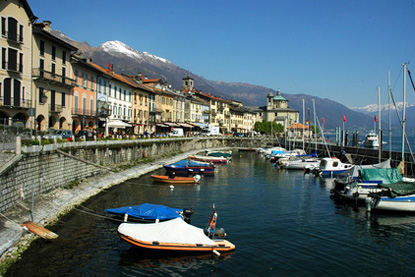
 Nestled on the western shore of Lake Maggiore, Cannobio is a charming town with ancient Roman origins that evolved into a significant medieval trading centre. With a population of around 5,000 residents, this picturesque lakeside community boasts a prestigious Blue Flag beach certification for 2024-2025 and has earned the coveted Orange Flag from the Touring Club Italiano. The town's rich history is reflected in its architectural heritage, including the Palazzo della Ragione which once served as the administrative centre and now hosts cultural events. Every Sunday, the bustling Cannobio Market offers local products and crafts, whilst the town's unique cuisine reflects a fascinating blend of Italian and Swiss influences, featuring specialities like risotto with lake perch and regional cheeses. Art enthusiasts will appreciate the town's collection of Renaissance frescoes hidden in various historic buildings, whilst nature lovers can explore the surrounding Valle Cannobina with its pristine forests and waterfalls. The town is strategically positioned on the delta of the Cannobina River, which winds through the narrow Cannobina Valley before meeting the lake. |
| Cannero Riviera |
|---|

Nestled between mountains and Lake Maggiore, Cannero Riviera boasts a unique microclimate that supports Mediterranean flora, including 25 different species of citrus fruits and exotic plants like camellias and azaleas from China. The village's most iconic feature is the archipelago of Rocca Vitaliana, where picturesque 16th-century castles rise dramatically from small islands, built by the Borromeo family atop the ruins of the earlier Mazzarditi stronghold. The area is part of UNESCO's MAB (Man and the Biosphere) programme and sits near the Val Grande National Park, offering a remarkable ecological transition zone. Local gastronomy centres around freshwater fish including trout, perch, whitefish and pike, whilst the area is renowned for its honey production and citrus-based delicacies such as cakes, liqueurs and jams. Rather intriguingly, the castle waters were the site of mysterious sightings in 1934, drawing comparisons to the Loch Ness phenomenon. The village's natural setting, with its south-facing beach and historic 19th-century promenade lined with magnificent magnolias, creates a perfect microclimate where the lake moderates winter temperatures and mountain breezes provide cooling relief in summer. |
| Stresa |
|---|
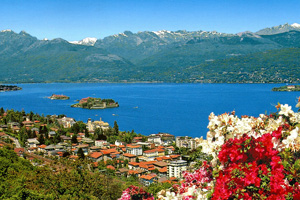
Stresa, a picturesque town on Lake Maggiore's western shore, has evolved from ancient Roman settlements into a sophisticated resort destination that captivated European aristocrats in the 19th century. The town is nestled between the crystalline waters of Italy's largest pre-Alpine lake and the majestic Alps, offering visitors a perfect blend of natural splendour and cultural richness. Beyond its stunning lakefront promenade, Stresa serves as a gateway to the famous Borromean Islands, including Isola Bella with its 17th-century Baroque palace and magnificent terraced gardens. The local cuisine celebrates the bounty of Lake Maggiore, with specialities like risotto con pesce persico (perch risotto) highlighting the region's culinary heritage. Nature enthusiasts can explore numerous hiking trails, enjoy water sports, or take the cable car to Mottarone for panoramic Alpine views. The town's cultural calendar peaks with the renowned Stresa Festival, held from July to September, which transforms the lakeside setting into a celebration of classical and jazz music. |
Other attractions
Arona
Baveno
Feriolo
Intra, Pallanza & Verbania
On Lake Maggiore
| Borromean Islands |
|---|
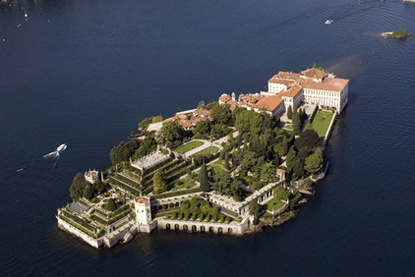
 The crown jewel of Lake Maggiore is undoubtedly the Borromean Islands, a group of three islands and two islets located between Stresa and Verbania. They comprise five isles that have been under the stewardship of the princely Borromeo family since the 14th century. The main attractions include the magnificent Baroque Palazzo Borromeo on Isola Bella, where both Napoleon Bonaparte and Mussolini once stayed. The island's Italian-style gardens are a sight to behold, offering visitors a glimpse into the opulent lifestyle of the Borromeo family. The largest of the Borromean Islands is Isola Madre, which features an English-style botanical gardens with over 20,000 exotic plant species and serve as home to white peacocks and golden pheasants. A delightful curiosity can be found in the Renaissance-style palazzo on Isola Madre, which houses a unique collection of historical puppet theatres that once entertained both the noble family and their servants. The only permanently inhabited island, Isola dei Pescatori, offers a charming fishing village atmosphere with local restaurants serving fresh catches. The gardens are particularly remarkable, featuring the world's finest examples of topiary art, rare specimens like the Kashmir Cypress, and a fascinating collection that stems from the Borromeo family's botanical expeditions to Asia. The islands' splendour so captivated French philosopher Montesquieu that he declared them "the most beautiful place in the world". |
Eastern shore (Lombardy)
| Castelveccana & Rocca di Caldè |
|---|
Castelveccana is a scattered municipality dominated by the rocky spur of the Rocca di Caldè. The town's history dates back to ancient Celtic times, and it was formally created in 1928 through the merger of Veccana and Castello Valtravaglia villages. Its most picturesque hamlet, Caldè, nicknamed 'the Portofino of Lake Maggiore', offers sandy and pebble beaches perfect for swimming. The area's industrial heritage is preserved in impressive 13th-century lime kilns, whilst the Rocca di Caldè fortress, though largely destroyed by the Swiss in 1513, now features a striking pyramidal tower-lighthouse built in 1923 as a memorial to fallen sailors. Nature enthusiasts can explore the spectacular Froda Waterfalls, which cascade nearly 100 metres through a rock amphitheatre, accessed via a woodland path dotted with nine historic mills. |
| Santa Caterina del Sasso |
|---|

 Santa Caterina del Sasso, a breathtaking hermitage perched on a cliff overlooking Lake Maggiore offers visitors a unique blend of history, art, and natural beauty. Founded in the 12th century by Alberto Besozzi, a wealthy merchant who survived a shipwreck, this architectural gem comprises three main buildings: the Southern Convent, the Small Convent, and the Church. The complex features a striking mix of Romanesque and Gothic styles, with frescoes dating from the 13th to the 17th century adorning its interior walls. Visitors can access the hermitage via a steep 240-step staircase or a lift carved into the rock, both offering spectacular views of the Borromeo Gulf. For music enthusiasts, the hermitage hosts popular concerts in late July, coinciding with Stresa's Settimane Musicali. |
| Angera & Rocca Borromea |
|---|
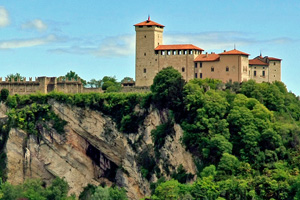
Angera's main attraction is the Rocca Borromea, a medieval fortress built in the 12th century by the Visconti family and later purchased by the Borromeo family in 1449 for 12,800 imperial lire. The castle houses Europe's largest Doll and Toy Museum and features remarkable 13th-century frescoes in its Hall of Justice. Beyond the castle, Angera offers a fascinating 'widespread museum' experience with 57 historical and artistic sites scattered throughout the town. Nature enthusiasts can explore the Oasi Bruschera, a 400-hectare protected area home to rare marsh purple flowers, water lilies, and a colony of cormorants on the island of Partegora. The town's archaeological museum, housed in a 15th-century building, showcases important local historical artefacts and provides insights into the area's ancient Roman heritage, when Angera served as a significant river port. |
Other attractions
 Germignaga
 Ispra
Luino
Maccagno Inferiore
|


