


| Contents |
|---|
Introduction
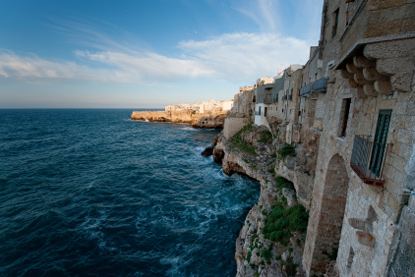
Known as "the Pearl of the Adriatic", Polignano a Mare is a picturesque medieval town built on a rocky outcrop overlooking the Adriatic Sea and offering majestic views of the crystal-clear waters below. The town features a charming historic centre with narrow winding streets, white-washed buildings and beautiful old churches such as the Chiesa Matrice. Visitors can explore natural sea caves carved by water erosion, relax on the iconic Lama Monachile beach, or admire the town from one of three panoramic terraces. Polignano a Mare is also the birthplace of Domenico Modugno, the famous singer-songwriter known for the hit song "Volare", and a statue in his honour stands near the coastline. With its rich history dating back to prehistoric times, diverse cultural influences from Byzantines, Spanish and Normans, and a renowned culinary tradition, Polignano a Mare has become a popular tourist destination that was recognised as the world's friendliest city in the 2023 Booking Traveler Review Awards.
Interesting Facts about Polignano a Mare
- Polignano a Mare is the birthplace of Domenico Modugno, the famous Italian singer-songwriter who wrote and performed the international hit "Nel blu dipinto di blu" (Volare).
- The historic centre of this picturesque town is built entirely on limestone cliffs that dramatically overlook the crystal-clear waters of the Adriatic Sea.
- Throughout the narrow streets of Polignano a Mare, you'll find poems written on walls by a local poet who signs as "Guido il Flaneur," adding a touch of literary charm to the town.
- The town's origins stretch back to Neolithic times (5th millennium BCE), and it was known as Neapolis during ancient Greek times before becoming an important Roman trading centre and seaport.
- Polignano a Mare features the stunning Grotta Palazzese, a natural sea cave that has been transformed into a world-renowned restaurant offering panoramic views of the sea.
- The town is famous for its natural sea caves and caverns, many of which can only be explored by boat tours along the coastline.
- Polignano a Mare has been awarded the Blue Flag designation for its beaches, recognising the exceptional quality and clarity of its waters.
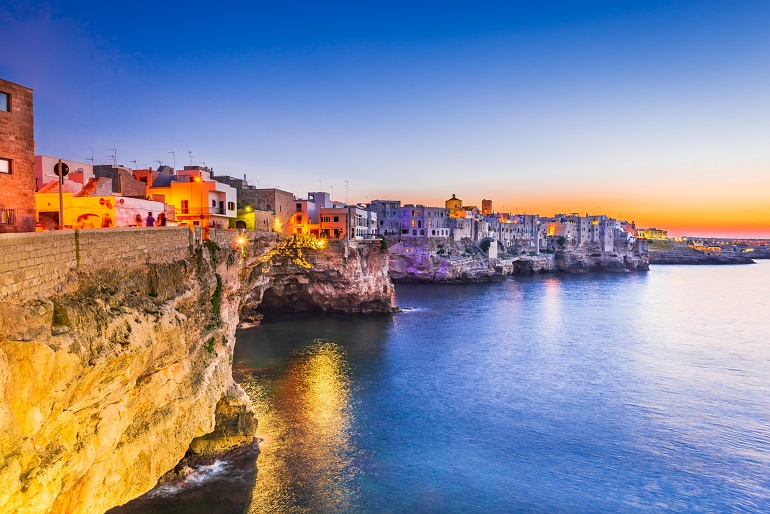
- The houses in the old town appear to emerge directly from the cliffs, creating the illusion that they're suspended over the sea.
- The historic centre can only be accessed through the Porta Vecchia (Old Gate), also known as Arco Marchesale, which leads into a labyrinth of white-washed streets.
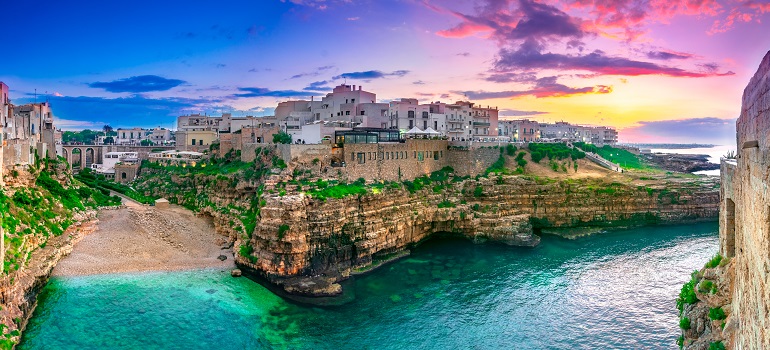
- Lama Monachile, one of the most photographed beaches in Puglia, is framed by a Roman bridge and dramatic cliffs from which locals dive throughout the day.
- The town is renowned for its outstanding ice cream, which is considered a must-try delicacy, especially on warm summer evenings.
History
Polignano a Mare, often referred to as the "Pearl of the Adriatic", boasts a rich history dating back to prehistoric times. Archaeological excavations in the locality of Santa Barbara have unearthed evidence of Neolithic settlements from the 5th millennium BCE. The town is believed to be the site of the ancient Greek city of Neapolis of Apulia, though some historians suggest it was one of two colonies founded by Dionysius II of Syracuse in the 4th century BCE. Others attribute its founding to Julius Caesar, who may have established it as a central hub along the Via Traiana.
Throughout its history, Polignano a Mare has been shaped by various civilisations and dominations. In the 6th century, the Byzantine Empire transformed it into a municipal structure. The Normans, who ruled in the 11th century, bolstered the local economy by promoting olive oil production. The Angevins fortified the town to protect it from potential threats, including the Turkish army and epidemics. Under Aragonese rule, Polignano reached its economic and cultural zenith, attracting merchants and businessmen from around the world. The town also experienced Venetian domination in the 16th century, traces of which can be seen in the Doge's Palace where the Venetian governor resided.
The modern history of Polignano a Mare is marked by its inclusion in the Kingdom of Italy. In 1862, the town was officially given its current name, Polignano a Mare, as part of the newly formed Italian state. Today, the town's rich historical legacy is evident in its architecture, which blends various styles from different periods. The Matrix Church of Santa Maria Assunta, for instance, stands on the site of a former pagan temple and features a façade that combines Gothic and Baroque elements. The town's strategic location on a rocky spur overlooking the Adriatic Sea has not only shaped its history but continues to attract visitors, making it one of the most photographed places in Puglia.
Main Attractions
Old Town
The Old Town of Polignano a Mare, situated on low cliffs overlooking the Adriatic Sea, is a charming historic centre made up of tightly winding lanes on a headland. Visitors enter through the impressive Arco Marchesale (also known as Porta Grande or Porta Vecchia), the principal gateway that was once the only entrance through the town walls. The heart of the old town is Piazza Vittorio Emanuele II, dominated by the Chiesa Matrice di Santa Maria Assunta, a 13th-century church with 16th-century interiors housing fine sculptures and a 15th-century polyptych. The whitewashed streets feature colourful boutiques selling arts and handicrafts, whilst residents have adorned walls with paintings and poetry. A highlight for explorers is discovering panoramic terraces offering breathtaking views along the cliffs or down to the beach at Lama Monachile. The architectural style throughout the old town is diverse, showing Arabian, Spanish, Byzantine and Norman influences. Away from the busier areas, visitors can find the white amphitheatre-like Piazza San Benedetto, the old town's second piazza.
Poems on Walls
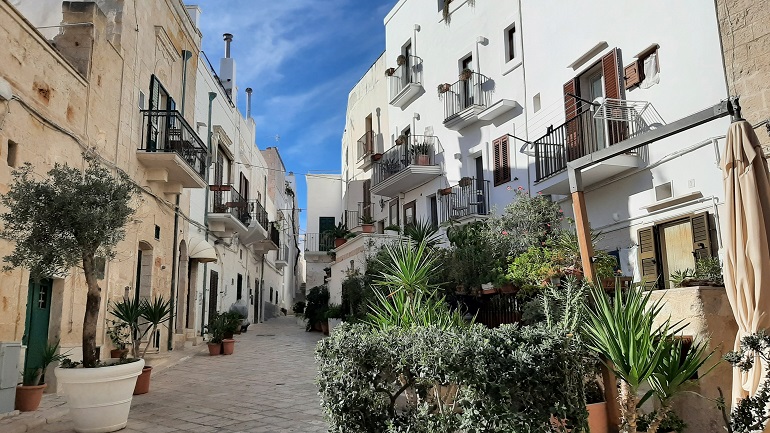
Throughout the labyrinthine streets of Polignano's historic centre, visitors encounter an unusual form of public art – poems, quotes and philosophical musings inscribed directly onto the white walls and stone steps of the town. This project, known locally as "Il Paese della Poesia" (The Village of Poetry), began in the 1990s and has gradually expanded to include hundreds of literary fragments in multiple languages. The texts range from works by celebrated Italian poets to anonymous local verses, creating a democratic literary landscape that rewards slow, attentive exploration. The positioning of each text is carefully considered, with poems about the sea placed where they can be read with the Adriatic as backdrop, or reflections on time inscribed near ancient doorways. The calligraphy itself varies, with some texts rendered in elegant, flowing script and others in more contemporary typographic styles. The poems change character throughout the day as light and shadow play across the white walls, sometimes highlighting certain words while obscuring others. Many of the inscriptions are accompanied by simple illustrations or decorative elements that complement the text without overwhelming it. Local residents continue to suggest new additions, ensuring that this literary project remains a living, evolving aspect of the town rather than a static installation. During evening passeggiata (the traditional Italian evening stroll), it's common to see both visitors and locals pausing to read and discuss particularly striking passages.
Arco Marchesale
Standing as the proud sentinel to Polignano's historic centre, the Arco Marchesale represents the primary gateway through the ancient walls that once completely encircled the town. This imposing limestone arch dates back to the 16th century and bears the coat of arms of the Marchese (Marquis) who governed the town during that period. The archway features intricate carvings that have weathered over the centuries, creating a textured surface that speaks to its age and historical significance. Passing beneath this arch, visitors transition from the modern town into the medieval heart of Polignano, a physical and symbolic threshold between different eras. The surrounding stonework shows evidence of multiple periods of construction and repair, revealing how the gateway evolved over the centuries to meet changing defensive and aesthetic requirements. The arch is particularly striking when illuminated in the evening, casting dramatic shadows that emphasise its architectural details. Local tradition holds that important announcements and decrees were once read from this spot, making it not just a physical gateway but a historical centre of civic communication.
The Dramatic Cliffs
The limestone cliffs that embrace Polignano a Mare represent some of the most spectacular coastal geology in Puglia. These vertical faces rise dramatically from the sea, reaching heights of up to 20 metres in places, creating a natural fortress that has protected the town throughout its history. The distinctive stratification visible in the cliff faces reveals the geological history of the region, with clearly defined layers representing different periods of sedimentary deposition over millions of years. Fossilised marine creatures can occasionally be spotted embedded in the rock, testament to the area's underwater past. The colour of the cliffs shifts throughout the day, from brilliant white under the midday sun to warm gold at sunset and silvery grey in the moonlight. Natural erosion has created fascinating formations along the cliff bases, including arches, pillars and caves that can be explored by boat. The cliff tops are dotted with native Mediterranean vegetation – prickly pears, wild capers, and resilient shrubs that somehow thrive in this seemingly inhospitable environment. Seabirds, particularly gulls and occasional falcons, make their homes in the higher, inaccessible portions of the cliffs, adding movement and life to the rocky landscape. The sound of waves echoing against these stone walls creates a distinctive acoustic environment that has inspired poets and musicians throughout the centuries.
Going westward from the Old Town
Lama Monachile (Cala Porto)
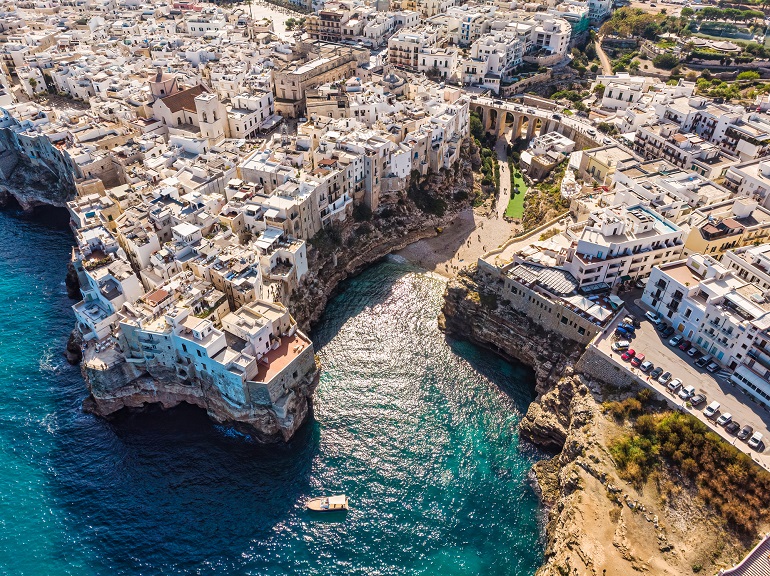
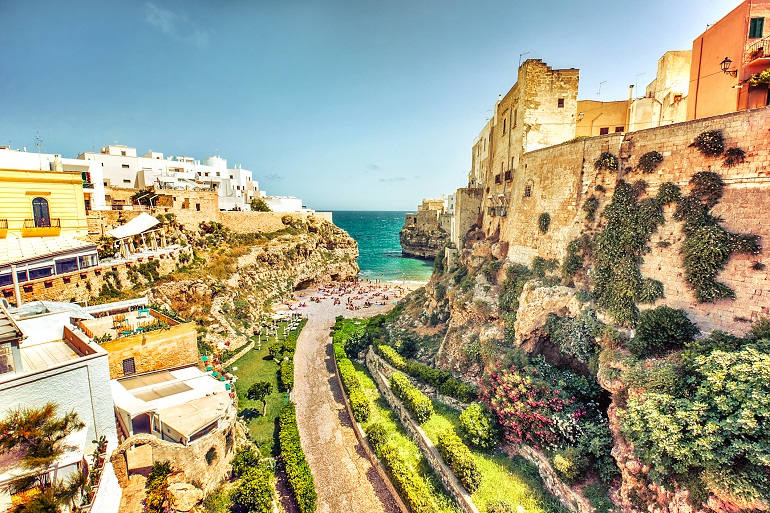
Nestled between dramatic limestone cliffs, Lama Monachile is the postcard image of Polignano a Mare that has captivated visitors for generations. This iconic pebble beach sits at the mouth of an ancient ravine, creating a natural cove of exceptional beauty. The beach is framed by the historic Bourbon Bridge that arches gracefully overhead, adding architectural splendour to the natural landscape. The crystalline waters here transition from turquoise to deep azure, offering excellent visibility for swimmers and snorkellers alike. During Roman times, this area served as a small harbour, and remnants of this history can occasionally be glimpsed beneath the water's surface. The unique geological formation of the cove creates a natural amphitheatre, amplifying the sounds of the waves against the smooth stones. In the early morning hours, before crowds gather, the play of light on the white cliffs creates a mesmerising spectacle that photographers particularly treasure. The beach derives its name from the monks who once inhabited nearby caves, adding a layer of historical significance to its natural allure.
Terrazza di Santa Candida
Named for the patron saint of Polignano a Mare, Terrazza di Santa Candida occupies a privileged position overlooking one of the most dramatic sections of the town's coastline. This spacious viewing platform extends from the edge of the historic centre, seemingly suspended between earth and sky. The terrace is paved with local stone that has been polished by countless footsteps over the years, creating a smooth, reflective surface that catches the Mediterranean light. Ancient olive trees in weathered terracotta pots line portions of the terrace, providing welcome shade during the heat of summer days. From this elevated position, visitors can observe the fascinating interaction between sea and stone below, where waves have carved intricate patterns into the base of the cliffs over millennia. The terrace offers particularly striking views of Lama Monachile beach and the Bourbon Bridge from an unusual aerial perspective. During the festa of Santa Candida in September, this terrace becomes the focal point for celebrations, decorated with lights and flowers in honour of the town's protector. The acoustic properties of the surrounding cliffs mean that sounds from the sea below – from crashing waves to the calls of seabirds – are carried up to the terrace with remarkable clarity.
Statue of Domenico Modugno
Standing with arms outstretched towards the endless horizon of the Adriatic, the bronze statue of Domenico Modugno captures the spirit of Polignano's most famous son. Modugno, who gained international fame with his song "Nel Blu Dipinto di Blu" (better known as "Volare"), is depicted in the iconic pose from his performances – arms wide open as if embracing the sea and sky. The statue stands 3 metres tall on a limestone pedestal, creating an impressive silhouette against the backdrop of sea and sky. The sculptor has captured not just Modugno's physical likeness but something of his exuberant spirit and connection to his hometown. The patina of the bronze has developed a distinctive character through exposure to the sea air, creating subtle variations in colour and texture that bring the figure to life. The location of the statue on Lungomare Modugno was carefully chosen to align with views of the open sea that inspired the singer's most famous composition. The plaza surrounding the statue has become a gathering place for both locals and visitors, many of whom recreate Modugno's pose for photographs. At sunset, the statue is dramatically silhouetted against the changing colours of the sky, creating a particularly poignant image.
Grotta Azzurra
The Grotta Azzurra, or Blue Cave, is named for the ethereal azure light that fills its interior – a phenomenon created by sunlight refracting through underwater openings. This optical marvel transforms the cave into a chamber of liquid blue light that seems to emanate from the water itself. The cave's entrance is relatively modest, concealing the spacious interior that opens up once visitors pass through the narrow aperture. Inside, stalactites descend from the ceiling, the result of millennia of mineral deposits slowly accumulating. The water within the cave reaches depths of several metres, appearing almost luminous due to the unique lighting conditions. Marine life thrives in this protected environment, with various species of fish making their home in the cave's nooks and recesses. The walls of the grotto bear witness to the cave's formation, with visible layers of sedimentary rock telling the geological story of the region. The acoustics within the cave create an almost mystical atmosphere, with sounds reverberating in unexpected ways. Local legends associate the cave with sea nymphs and ancient deities, adding a mythological dimension to its natural splendour.
Cala Paura
Just a short walk from the town centre lies Cala Paura, a sheltered cove whose name translates to "Bay of Fear" – a reference to its historical vulnerability to pirate attacks rather than any present danger. This intimate beach offers a more secluded alternative to Lama Monachile, with its own distinctive charm. The cove is flanked by weathered limestone formations that have been shaped by millennia of wind and waves. The sea floor here slopes gently, creating safe swimming conditions that are particularly suitable for families with young children. Local fishermen still launch their traditional wooden boats from this cove, continuing centuries-old practices. At dawn, visitors might witness these fishermen returning with their catch, offering a glimpse into the authentic maritime culture that remains vital to Polignano's identity. The surrounding cliffs feature small caves that were once used by fishermen for storage and shelter during storms. These natural indentations create fascinating patterns of light and shadow across the water throughout the day.
Terrazza Santo Stefano
Perched atop the limestone cliffs that define Polignano's coastline, Terrazza Santo Stefano offers one of the most comprehensive panoramic views of the town and surrounding seascape. This elevated platform takes its name from the ancient church of Santo Stefano that once stood nearby, though only fragments now remain. The terrace provides an uninterrupted 180-degree vista encompassing the curved coastline, the historic centre with its jumble of whitewashed buildings, and the infinite blue expanse of the Adriatic. From this vantage point, visitors can trace the natural contours of the coastline, identifying the various coves and beaches that punctuate the shoreline. The terrace features ancient stone balustrades worn smooth by generations of hands and the constant sea breeze. Local flora has established itself in the cracks and crevices of the limestone platform, with hardy succulents and wildflowers adding splashes of colour to the predominantly white and blue landscape. The terrace is particularly magical at dawn, when the rising sun bathes the white buildings of the old town in a golden glow, and at dusk, when the lights of the town begin to twinkle against the deepening blue of the evening sky.
Grotta delle Rondinelle
Named after the swallows (rondinelle) that nest in its upper reaches, this sea cave offers a fascinating glimpse into the interplay between marine and avian ecosystems. The cave features multiple chambers connected by narrow passages, creating a labyrinthine structure that rewards exploration. The interior walls display a remarkable palette of colours, from ochre and sienna to subtle blues and greens, all created by mineral deposits and biological processes over centuries. During spring and summer, the cave comes alive with the darting flight and cheerful chirping of swallows, who build their nests in the cave's higher recesses, safe from predators. The cave floor features interesting rock formations, including small pools where marine creatures find sanctuary. The entrance to the grotto frames a perfect view of the open sea, creating a natural picture window that changes with the light and weather conditions. The cave's orientation means it catches the golden light of sunset, transforming its interior into a warm, glowing sanctuary in the late afternoon. Local boat tours often time their visits to coincide with this magical period of the day.
Ponte dei Lapilli Beach
Ponte dei Lapilli Beach offers a tranquil retreat from the more frequented shores of Polignano. This secluded stretch of coastline is characterised by its distinctive volcanic pebbles, from which it derives its name ('lapilli' referring to volcanic fragments). The beach is framed by rugged, untamed cliffs that have been sculpted into fascinating formations by centuries of erosion. The water here is exceptionally clear, with visibility often extending several metres below the surface, revealing a diverse underwater ecosystem. Marine life thrives in the protected waters, with schools of small fish darting between the rocks and occasional sightings of octopus and sea urchins. The surrounding landscape features patches of resilient Mediterranean vegetation that cling to the cliff faces, adding splashes of green to the predominantly rocky terrain. The relative seclusion of this beach has preserved its natural character, offering visitors a glimpse of the Adriatic coastline in its most authentic state. During the shoulder seasons of late spring and early autumn, it's not uncommon to have this slice of paradise almost entirely to oneself.
Abbey of San Vito
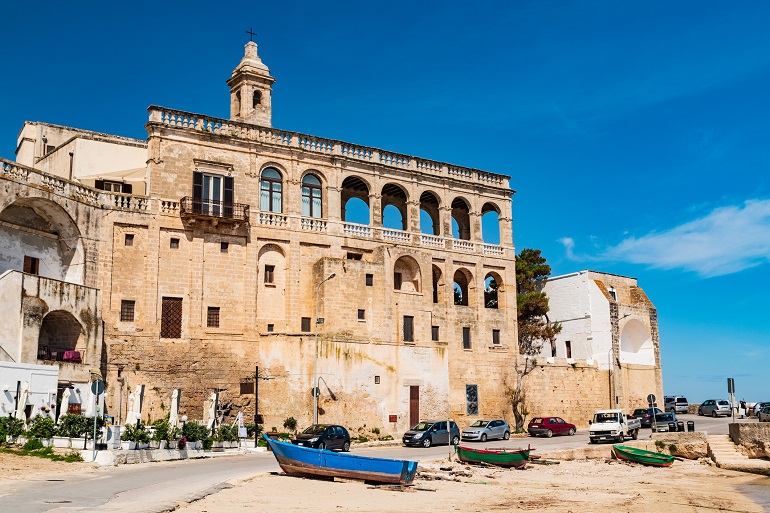
Standing in splendid isolation approximately 5 kilometres north of Polignano's centre, the Abbey of San Vito combines religious significance with architectural beauty. This coastal complex has evolved over centuries, with the current structures primarily dating from the 18th century but incorporating elements from much earlier periods. The abbey's façade features elegant Baroque detailing, with local limestone providing a warm, golden hue that contrasts beautifully with the blue sea behind. The complex includes not just the church itself but also a series of connected buildings that once housed monks and pilgrims. The interior of the church features remarkable examples of religious art, including frescoes depicting the life of Saint Vitus, to whom the abbey is dedicated. The abbey's bell tower serves as a landmark visible from considerable distances along the coast, historically guiding both pilgrims and sailors. The complex includes a charming courtyard planted with citrus trees and Mediterranean herbs, creating a peaceful cloister that offers shelter from both sun and sea winds. The abbey's position directly on the coastline meant it once served a defensive function as well as a religious one, with watchtowers incorporated into its design to spot approaching pirates or invaders. The annual festa of San Vito in June transforms this usually tranquil site into a centre of celebration, with a procession that begins at the abbey and continues into the sea, where boats decorated with flowers and lights carry the saint's statue along the coast.
Going eastward from of the Old Town
Grotta Palazzese
Perhaps the most famous of Polignano's sea caves, Grotta Palazzese is a natural limestone cathedral carved by the relentless action of the sea over thousands of years. This magnificent cavern opens to the Adriatic through a wide, arched entrance that allows both boats and natural light to penetrate its depths. The cave houses a renowned restaurant set on a natural terrace overlooking the sea – a dining venue that has been in use since the 1700s when local nobility would host elegant soirées in this dramatic setting. The interior of the cave features remarkable acoustics, with the gentle lapping of waves creating a natural symphony that resonates throughout the space. The limestone walls display subtle variations in colour and texture, from smooth, polished surfaces near the waterline to more rugged formations above. Natural skylights in the cave ceiling create dramatic shafts of light that move across the interior as the sun traverses the sky. The cave extends further than is immediately apparent, with smaller chambers branching off from the main cavern, each with its own unique characteristics and formations.
Red Bull Cliff Diving Spot
Since 2009, Polignano a Mare has hosted one of the most spectacular stops on the Red Bull Cliff Diving World Championship circuit, with the natural amphitheatre of Lama Monachile serving as both diving platform and audience arena. The competition utilises a purpose-built platform extending from one of the highest points of the eastern cliff face, suspending divers 27 metres above the sea below – nearly equivalent to an eight-storey building. The geological formation of the cove creates ideal conditions for this extreme sport, with sufficient water depth to safely absorb the impact of divers who reach speeds of approximately 85 kilometres per hour during their three-second descent. The surrounding cliffs create natural viewing galleries where thousands of spectators gather to witness these displays of athletic prowess. Outside of competition days, the spot remains a powerful reminder of the harmonious relationship between human courage and natural beauty that characterises much of Polignano's appeal. The diving location has become so iconic that it features in the town's contemporary identity, appearing on postcards and promotional materials alongside more traditional landmarks. Local legends claim that cliff jumping for pleasure has ancient roots in Polignano, with young men historically proving their courage through similar, if less technically sophisticated, dives. The annual competition has inspired a renewed interest in the town's relationship with its dramatic coastal geography, encouraging both residents and visitors to appreciate the cliffs not just as a scenic backdrop but as a dynamic space for human interaction with the natural environment.
Top Museums
Fondazione Museo Pino Pascali
The Fondazione Museo Pino Pascali, also known as the Pino Pascali Museum Foundation or the Museum of Contemporary Art Pino Pascali, is the crown jewel of Polignano a Mare's cultural offerings. This museum holds a special place in the region's artistic landscape, as it is the only permanent contemporary art museum in all of Puglia.
History and Location
The museum was founded in 1998, following an important donation of works and relics from the family of Pino Pascali, a renowned Italian artist. In 2010, it was transformed into the Pino Pascali Foundation. The museum is housed in a renovated former abattoir, creating an intriguing contrast between historic architecture and modern art. Its location in the southern area of the town, overlooking the sea, adds to its allure.
Collection and Exhibitions
The Fondazione Museo Pino Pascali houses a diverse collection of contemporary artworks, showcasing both local and international talents. The museum's collection includes:
- Works by Pino Pascali: A significant number of pieces by the museum's namesake, Pino Pascali, who was one of the most important representatives of Italian and international art in the 1960s.
- Apulian Artists: The museum exhibits works by some of the most relevant artists from the Puglia region.
- Pino Pascali Award Winners: Pieces by artists who have been granted the prestigious Pino Pascali Award are also on display.
- Temporary Exhibitions: The museum regularly hosts temporary exhibitions, ensuring that each visit offers a fresh and exciting experience.
Significance of Pino Pascali
Pino Pascali, born in Bari in 1935, was a sculptor, set designer, and performer who became one of the most celebrated Italian artists of the 1960s. Known for his unique style, Pascali consciously used different materials and themes for each of his exhibitions. His works often incorporated elements of Mediterranean culture, such as fields, the sea, land, and animals, presented through a playful artistic lens.
Cultural Impact
The Fondazione Museo Pino Pascali plays a crucial role in Polignano a Mare's cultural scene. It not only preserves and promotes the legacy of Pino Pascali but also contributes to the contemporary art discourse in the region. The museum organises cultural events, including the annual Pino Pascali Prize, which was established in 1969 and is awarded to an artist by a panel of art critics and experts.
In conclusion, while Polignano a Mare may not have a multitude of museums, the Fondazione Museo Pino Pascali stands as a beacon of contemporary art in the region. Its unique collection, dedication to both local and international artists, and its role in preserving the legacy of Pino Pascali make it a must-visit destination for art enthusiasts exploring this picturesque Italian town.
Local Cuisine
Polignano a Mare offers an extraordinary culinary experience celebrating the flavours of Puglia, with an emphasis on fresh seafood and traditional preparations. Visitors should not miss the opportunity to sample orecchiette with turnip tops, a classic Puglian pasta dish, and the delightful panzerotto, a fried pastry filled with tomato and mozzarella. The town is renowned for its Pescaria sandwich, a celebrated fish sandwich that draws queues of eager patrons. Seafood enthusiasts will delight in grilled octopus, cavatelli with mussels and clams, and potatoes, rice and mussels, all prepared with the day's fresh catch. For a true taste of local indulgence, try the creamy stracciatella, softer than burrata and famous in the Puglian region, or sample the special coffee, a unique concoction made with coffee, sugar, lemon zest, cream and amaretto that's a speciality of Il Super Mago del Gelo Bar. Finish your culinary exploration with a sweet pasticciotto, an Apulian pastry filled with luscious custard, or artisanal gelato made with the freshest ingredients.
Getting There & Around
Polignano a Mare is most conveniently reached by train from Bari (30 minutes, €3) or Monopoli (12 minutes, €1), with the nearest airports being Bari (50 km) and Brindisi (80 km). Whilst driving via the SS16 highway is possible, be mindful of limited parking. Taxis from Bari Airport cost approximately €80, and pre-booked transfers €95. The charming historic centre is compact and best explored on foot, with all attractions within a 10-minute walk radius. For those seeking convenience, inexpensive Tuk-Tuks are popular amongst visitors, offering delightful coastal tours of this picturesque Adriatic town.