


| Contents |
|---|

Introduction
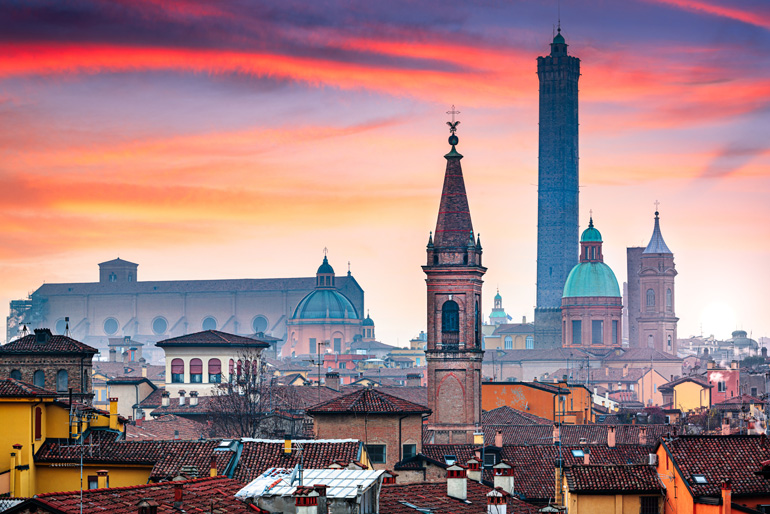
Bologna, the medieval gem of northern Italy's Emilia-Romagna region, stands as a captivating blend of historical grandeur and modern vitality. This remarkable city is renowned for its striking terracotta-hued architecture, featuring nearly 40 kilometres of elegant porticoed walkways that shelter pedestrians from the elements. As Italy's gastronomic capital, Bologna has gifted the world with beloved culinary treasures like tortellini, mortadella, and the authentic ragù alla bolognese. The city's intellectual heritage shines through the University of Bologna, Europe's oldest university, which has been nurturing minds since 1088. Visitors are drawn to its iconic Two Towers, which dominate the skyline as enduring symbols of the city's medieval power, whilst the magnificent Piazza Maggiore serves as the beating heart of local life, surrounded by stunning architectural masterpieces.
Interesting Facts about Bologna
- Bologna is home to the University of Bologna, the oldest continuously operating university in the world, founded in 1088
- The city boasts over 38 kilometres of historic porticoes, recognised as a UNESCO World Heritage Site in 2021
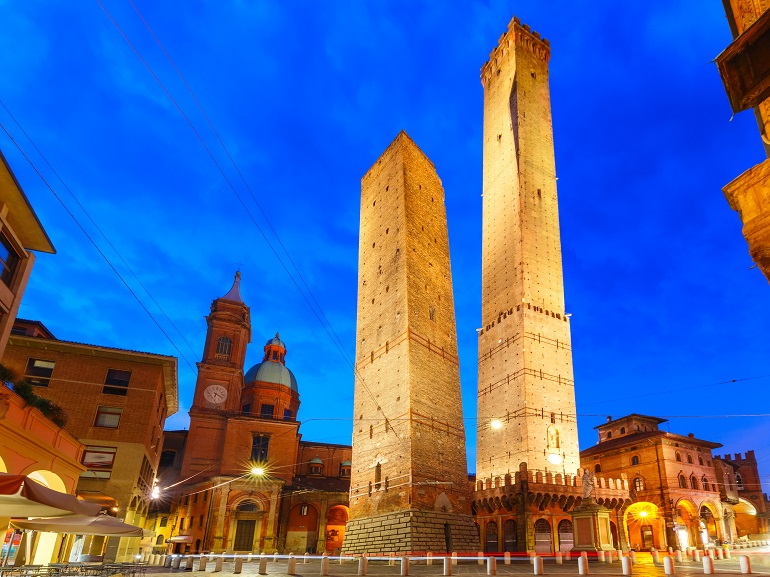
- Bologna's iconic Two Towers, Asinelli and Garisenda, are leaning medieval structures that symbolise the city's skyline
- It earned the nickname "La Grassa" (The Fat One) for its rich culinary tradition, including inventions like tagliatelle al ragù and mortadella
- Hidden underground canals beneath the city centre can be glimpsed through the "Little Venice" window on Via Piella
- The Anatomical Theatre in Palazzo dell'Archiginnasio features a striking 17th-century wooden dissection platform used for medical lectures
- Piazza Maggiore's Basilica di San Petronio houses the world's longest indoor sundial, stretching 66.8 metres along the floor
- Bologna was originally called Felsina by the Etruscans before becoming the Roman colony of Bononia in 189 BC
- The Portico di San Luca, stretching 3.8 km with 666 arches, is the world's longest portico connecting the city to a hilltop sanctuary
- Bologna's silk industry dominated European textile production until the 18th century, powered by an advanced hydraulic system
History
Bologna's history spans over three millennia, beginning with Bronze Age settlements and evolving through distinct civilizations. The Villanovian culture first inhabited the area around 1000 BCE, followed by the Etruscans who established the city of Felsina. The Romans later conquered the settlement in 196 BCE, renaming it Bononia, which eventually evolved into the modern name Bologna.
The city's golden age emerged in the Middle Ages, marked by the establishment of the University of Bologna in 1088, widely recognised as the world's oldest university in continuous operation. This period saw the construction of Bologna's most distinctive architectural features, including the famous towers. Of the original 180 towers built by wealthy families during medieval times, fifteen remain standing today, with the Two Towers (Due Torri) - Asinelli and Garisenda - serving as the city's most iconic symbols.
Between the 14th and 18th centuries, Bologna transformed from a medieval city into a Renaissance and Baroque centre of culture. The city came under Papal control in 1506, leading to the construction of numerous churches and convents, along with the expansion of the university, including the creation of one of Europe's oldest botanical gardens in 1568. After a brief Napoleonic period, Bologna joined the unified Kingdom of Italy in 1860, eventually developing into one of Italy's leading industrial centres and earning an international reputation for its culinary excellence.
Main Attractions
Piazza Maggiore
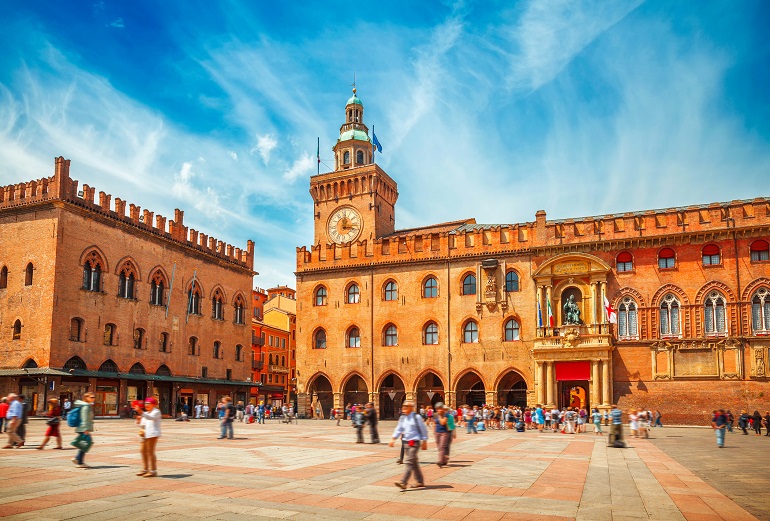
This magnificent square serves as Bologna's beating heart, surrounded by grand medieval buildings that tell tales of the city's rich past. The plaza began as the "platea communis," where citizens gathered and markets thrived. Today, it remains the preferred meeting spot for locals and visitors alike, bordered by the impressive Palazzo del Podestà (dating back to 1200), the majestic Palazzo d'Accursio (the former Town Hall), and the elegant Palazzo dei Notai.
Basilica di San Petronio
This remarkable church dominates Piazza Maggiore with its distinctive half-finished façade—ornate marble below and stark brick above. Construction began in 1390, and the basilica stands as one of Europe's largest churches. The interior houses numerous artistic treasures, including the world's longest sundial and exquisite stained glass windows. The basilica was finally consecrated in 1954 and has held the relics of Bologna's patron saint since 2000.
The Two Towers (Due Torri)
These iconic towers, Asinelli and Garisenda, stand as enduring symbols of medieval Bologna. The Asinelli Tower, built between 1109 and 1119, reaches an impressive height of 97 metres. Its companion, the Garisenda Tower, stands at 47 metres and is famous for its pronounced lean. Currently, both towers are closed for extensive restoration work, with the project estimated to take 10 years and cost 20 million Euros.
The Jewish Ghetto
This atmospheric quarter, established in 1555 by papal decree, lies between Via Zamboni and Via Oberdan in the medieval heart of Bologna. The area features a maze of narrow, winding alleys and craft workshops that offer glimpses into the city's past. While the original gates that once sealed the ghetto have largely disappeared, one can still see traces of the historical Jewish presence, including a commemorative plaque at Via dell'Inferno 16, where the synagogue once stood.
Hidden Canals
Bologna's fascinating underground canal network dates back to the Roman Empire, when the city was known as "Bononia." Once earning the city the nickname "Little Venice," these waterways powered silk, paper, and leather factories while providing vital transportation routes. Today, while most canals are hidden beneath the streets, visitors can catch a glimpse of the Canale di Reno through the famous "little window" on Via Piella. The canal system continues to protect the city from flooding and stands as a testament to Roman engineering prowess.

Santo Stefano Complex
Known locally as the "Seven Churches Complex," this remarkable religious ensemble represents one of Bologna's most significant sacred sites. Built upon the ruins of an ancient temple dedicated to Isis, the complex was initiated by Bishop Petronius in the 5th century CE as a simulacrum of Jerusalem's Holy Sepulchre. The interconnected buildings showcase a fascinating mix of Roman, Byzantine, Lombard, and Romanesque architectural styles, creating a unique journey through different historical periods.

Sanctuary of San Luca
Perched majestically atop the Colle della Guardia, this sanctuary holds deep significance in Bolognese culture. The church houses a revered Byzantine icon of the Madonna and Child, which arrived in Bologna in the late 13th century. The sanctuary is connected to the city by the world's longest portico, featuring 666 arches. Every May, a traditional procession carries the venerated icon down the mountain and into the city, maintaining a centuries-old tradition.

Top Museums
Art Museums
Pinacoteca Nazionale (National Art Gallery)
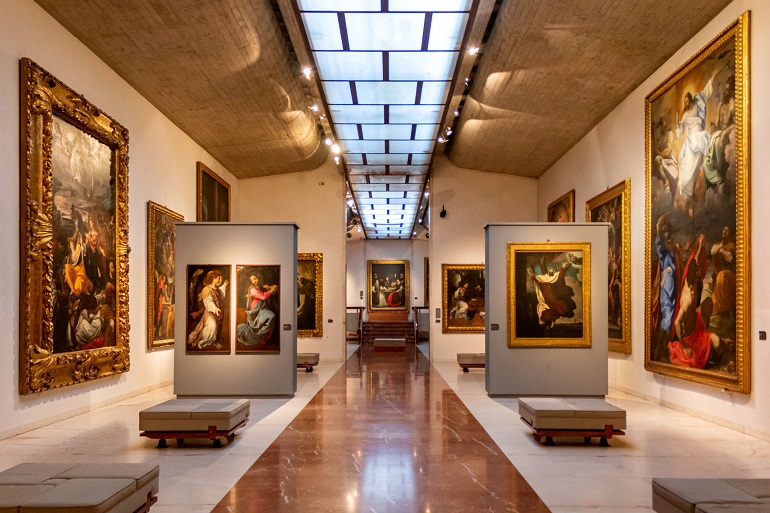
The Pinacoteca Nazionale, housed in the former Jesuit novitiate of St. Ignatius, is a treasure trove of Italian art spanning from the 14th to the 18th centuries. Opened to the public in 1885 and thoroughly renovated in 1997, it now stands as one of the most modern and significant national galleries in Italy.
The museum's collection showcases masterpieces by leading Italian artists of the Renaissance, Mannerism, and Baroque periods. Visitors can admire works by renowned painters such as Raphael, Perugino, Tintoretto, Titian, the Carraccis, Guercino, and Reni. The gallery's crown jewel is Raphael's "The Ecstasy of St. Cecilia", a stunning depiction of the patron saint of music.
In addition to its permanent collection, the Pinacoteca hosts temporary exhibitions, educational activities, seminars, and conventions. The palace also houses the Academy of Fine Arts and the Superintendence for Historic, Artistic, and Ethno-Anthropological Heritage, combining the display, safeguarding, preservation, and study of Bologna's cultural legacy.
MAMbo (Museum of Modern Art)
MAMbo, the Museo d'Arte Moderna di Bologna, is a cornerstone of modern art in Italy. Opened in 2007, it is housed in the former Forno del Pane, an industrial bread oven, reflecting Bologna's commitment to intertwining its industrial past with cultural innovation.
The museum offers visitors a rich exploration of Italian art from the post-World War II period to the present day. Its permanent collection is a treasure trove for enthusiasts of modern Italian art, showcasing works that highlight the nation's artistic journey. Visitors can explore pieces ranging from Arte Povera to Transavanguardia, featuring prominent artists such as Lucio Fontana, known for his spatial concepts and iconic slashed canvases, and Alberto Burri, whose abstract pieces explore materiality and transformation.
MAMbo also features works by other notable artists like Mario Schifano and Renato Guttuso, with his popular work "I Funerali di Togliatti". The collection provides insight into Italy's post-war creativity and the ever-evolving artistic dialogues of the 20th century.
Historical Museums
Museo Civico Archeologico (Archaeological Museum)
The Museo Civico Archeologico, one of Bologna's most prestigious museums, is located in the 15th-century Palazzo Galvani, just a few steps from Piazza Maggiore. Opened to the public in 1881, it is renowned for its Egyptian collection, which is the third largest in Italy and among the most important in Europe.
The museum's Roman, Greek, and Etruscan-Italic sections are also well-stocked. The Etruscan-Italic collection, in particular, constitutes the most important part of the museum, documenting the development of Felsina, the Etruscan name for Bologna. Visitors can also explore a newly-refurbished Gallery of plaster casts, a Gallic section, and one of the main numismatic collections in Italy.
Museo della Storia di Bologna (Museum of the History of Bologna)
Housed in the medieval Palazzo Pepoli, the Museo della Storia di Bologna opened its doors in 2012, offering visitors a comprehensive journey through the city's long and rich history. The museum features a large permanent exhibition spread across 35 main rooms and three additional multimedia spaces.
The museum's architecture beautifully combines historic structures dating back to the Middle Ages with modern elements designed by Italian architect Mario Bellini. A highlight of the museum is a transparent volume placed inside the covered hall that once served as the Palace courtyard. This space acts as both a connection between the two levels of the museum and an additional exhibition area, where visitors can interact with a multimedia installation illustrating the history of the University of Bologna, widely regarded as the world's oldest university still in operation.
Specialised Museums
Museo Ducati
Located at the Ducati factory, this museum is dedicated to the iconic motorcycle brand. It showcases a collection of Ducati motorcycles and early non-automotive products, illustrating the company's rich history and technological advancements. The museum's permanent exhibition is set up in seven rooms, each focusing on different aspects of Ducati's history, from its early days with "Il Cucciolo" to its success in the World Superbike Championship and MotoGP.
Museo Internazionale e Biblioteca della Musica (International Museum and Library of Music)
Housed in the Palazzo Sanguinetti, a mid-16th-century palace, this museum offers more than just a collection of antique musical instruments. It contains a library of historical musical documents, tracing its origins to Giovanni Battista Martini (1706-1784), a Franciscan monk who was also a talented composer, music theorist, historian, and teacher to Mozart and J.C. Bach.
Visitors can explore rooms decorated with frescoes and filled with historic instruments and musical literature. Some rooms also feature classical paintings, including works originally owned by Father Martini. With over 100,000 documents, including unique and rare works, the museum serves both as a showcase of musical history and an important resource for scholarly research.
Museo di Palazzo Poggi
The Palazzo Poggi Museum, part of Bologna's ancient university, houses an eclectic mix of exhibits based on the laboratories and collections of the Institute of Sciences and Arts, dating from the 18th century. The museum's collections cover a wide range of subjects, including natural history, military architecture, historic ship models, physics, human anatomy, and obstetrics.
The Natural History section gives visitors an idea of what museums were like in the 18th century, with exhibits on geology, mineralogy, and zoology. The museum also boasts impressive large ship models from the 17th and 18th centuries, adding to its diverse and fascinating collection.

Local Cuisine
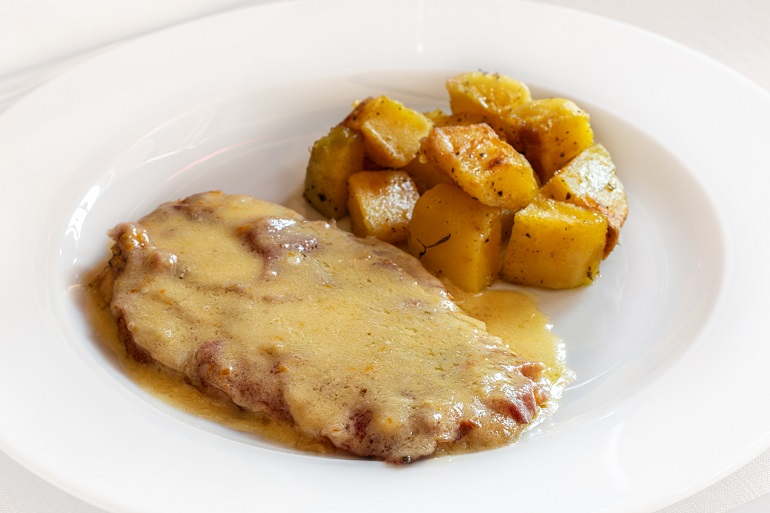
Bologna, affectionately known as "Bologna the Fat," stands as Italy's culinary capital, celebrated for its rich gastronomic heritage. The city's traditional cuisine centres around hearty, meaty dishes, with fresh egg pasta taking pride of place in iconic preparations such as tagliatelle al ragù, tortellini in brodo, and lasagna Bolognese. The authentic tagliatelle al ragù, often misconstrued abroad as spaghetti Bolognese, features fresh egg pasta ribbons with a slow-cooked sauce of minced pork and veal. The city is equally renowned for its exceptional charcuterie, particularly mortadella, a delicate pork sausage studded with pistachios, and its world-famous Parmigiano Reggiano cheese. Local trattorias and osterias serve these delicacies alongside regional specialities like gramigna alla salsiccia (curly pasta with sausage sauce) and cotoletta petroniana (a sophisticated breaded veal cutlet).
Shopping
Bologna's historic centre is a shopping paradise, with the elegant Via dell'Indipendenza serving as the main retail thoroughfare, lined with designer boutiques, high-street favourites and local Italian brands. The medieval Quadrilatero district, just off Piazza Maggiore, is a charming maze of narrow streets where shoppers can discover traditional food shops selling regional specialities like mortadella, Parmigiano Reggiano, and handmade pasta. For a truly authentic experience, the Mercato delle Erbe, Bologna's oldest covered market, offers fresh produce, local delicacies, and small eateries where visitors can sample the city's renowned culinary offerings.
Nature in and around Bologna
Bologna and its surroundings offer diverse natural attractions, from urban parks to protected wilderness areas. The city features the historic Giardini Margherita with its English-style design, tree-lined avenues and a lake set amongst gypsum rocks. In the immediate outskirts lies Villa Ghigi Park, spanning 28 hectares of hillside with wild plants, orchids and fruit trees. The region encompasses several significant protected areas, including the Gessi Bolognesi Park with its unique karst formations and cave systems, the Lakes Suviana and Brasimone Regional Park featuring two artificial lakes perfect for water sports, and the Corno alle Scale Park with its spectacular seven-tiered Dardagna waterfalls. The area is crisscrossed by numerous hiking and cycling trails, including the 500-kilometre Alta Via dei Parchi, where visitors can observe local wildlife such as deer, roe deer and wild boars.
Giardini Margherita
Bologna's largest and most beloved park spans 26 hectares of meticulously landscaped grounds. Designed by Count Sambuy and inaugurated in 1879, the park features an artificial lake, historic monuments, and a rich variety of botanical specimens including cedar trees, pines, horse chestnuts, and even a sequoia. During construction, workers discovered an Etruscan necropolis, some of whose marble tombs remain visible in the park. The park's historic greenhouses have been transformed into a vibrant cultural hub, hosting exhibitions, educational activities, and a popular bistrot.
Getting Around
Bologna, strategically located in northern Italy, is easily accessible by various modes of transport. The city's Guglielmo Marconi Airport, situated just 10 km from the centre, is well-connected to major European destinations. From the airport, travellers can reach the city centre via the Marconi Express monorail in a mere 7 minutes. Bologna's central train station serves as a major hub for high-speed trains, connecting the city to other Italian metropolises like Florence, Venice, and Milan. For those driving, Bologna is conveniently situated along major motorways. Once in the city, an extensive bus network operated by TPER covers virtually every corner, with key routes running frequently. Visitors can purchase tickets from tobacco shops or via smartphone apps, with a single-use ticket costing €1.50. For a more eco-friendly option, the Mobike bike-sharing service is available, while car-sharing services like Enjoy and Corrente offer flexibility for longer journeys. With its efficient public transport system and various alternatives, getting around Bologna is both convenient and cost-effective for tourists.
Best Time to Visit
The best time to visit Bologna is during the shoulder seasons of spring (April to June) and early autumn (September to October). During these periods, the weather is mild and pleasant, with temperatures ranging from 10°C to 25°C, making it ideal for sightseeing and outdoor activities. The city is less crowded than in the peak summer months, allowing visitors to explore its historic streets and renowned cuisine at a leisurely pace. Spring brings blooming flowers and a rejuvenated atmosphere, whilst autumn adorns the city in beautiful fall colours. These seasons offer a perfect balance of comfortable weather, fewer tourists, and the opportunity to fully appreciate Bologna's charm without the stifling heat of summer or the chilly temperatures of winter.