


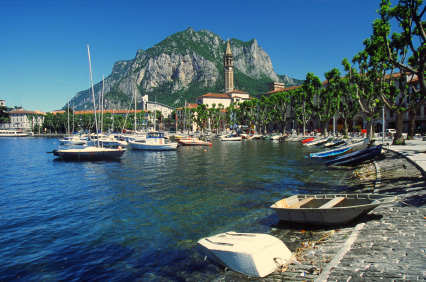
View of Lecco and Lake Como, Lombardy.
Introduction
Lake Como (Lago di Como in Italian, also known as Lake Lario from its Latin name) is the most beautiful and spectacular of the Italian lakes. Constrained on all sides by steep mountains flanks, Lake Como is shaped like an inverted Y, with the romantic village of Bellagio nestled at the junction of the branches.
In the backdrop of the snow-capped Rhaetian Alps, Lake Como is bestrewn with fruits trees, palatial villas, manicured gardens and idyllic belvedere terraces. Nature here combines the organised elegance of the Italian Renaissance with the wilderness of Victorian gardens.
Wordsworth, who visited the lake in 1790, regarded it as "a treasure which the earth keeps to itself". The French writer Stendhal came here in 1818. In The Charterhouse of Parma, he described Como as the most enchanting and beautiful place on earth. Virgil simply called it "our greatest lake".
With a depth of 410 metres (1,345 ft) Lake Como is Europe's deepest lake outside Norway. 46 km long from north to south and covering 146 km², it is the third largest lake in Italy after Lake Maggiore and Lake Garda.
Geography and Climate
Lake Como is renowned for its distinctive inverted 'Y' shape, which creates three branches stretching towards Como, Lecco, and Colico. This unique formation not only provides diverse vistas but also influences the local economy and transportation systems.
The lake's climate is generally mild, with average temperatures ranging from 4°C in January to 25°C in July. However, recent years have seen a shift towards warmer winters and hotter summers due to climate change.
Best Time to Visit
The most popular time to visit Lake Como is during the summer months (June to August) when the weather is warm and perfect for outdoor activities. However, spring (April to May) and autumn (September to October) offer milder temperatures and fewer crowds, making them ideal for a more relaxed experience.
History and Culture
The area around Lake Como has been inhabited since prehistoric times, with evidence of human settlement dating back to the Bronze Age. The Romans recognised its strategic importance, and Julius Caesar founded the town of Novum Comum (modern-day Como) in 59 BCE.
Throughout history, Lake Como has been a favoured retreat for aristocrats and wealthy individuals. An inordinate number of celebrities have had homes on the shores of Lake Como since the Roman Antiquity (chronologically): Virgil, Pliny the Elder and the Younger, Stendhal, Franz Liszt, Gianni Versace, Sylvester Stallone, Richard Branson, Madonna, George Clooney, Brad Pitt, Ronaldinho, and Ben Spies. Matthew Bellamy, lead singer of Muse, has a recording studio on the shores of the lake used for their album The Resistance in 2009.
Local Cuisine
The culinary traditions of Lake Como blend Italian classics with unique local specialities:
- Risotto con Pesce Persico: A creamy risotto dish featuring locally caught perch.
- Missoltini: Sun-dried shad fish, typically grilled and served with polenta.
- Polenta: A versatile cornmeal dish often served with various accompaniments.
Don't forget to sample the local wines, such as Domasino, a white wine from nearby Domaso.
Natural Beauty and Outdoor Activities
Lake Como's natural splendour provides ample opportunities for outdoor enthusiasts:
- Hiking: The surrounding mountains offer numerous trails with varying difficulty levels.
- Water Sports: Kayaking, paddleboarding, windsurfing, and sailing are popular activities on the lake.
- Boat Tours: A cruise on the lake is an excellent way to appreciate the stunning scenery and visit multiple towns.
Interesting Facts
- Lake Como is known for having the highest rainfall in Italy, which contributes to its lush vegetation.
- The area around Lake Como is famous for silk production, with high-quality fabrics available in local shops.
- Several scenes from famous films, including 'Star Wars: Episode II - Attack of the Clones' and 'Casino Royale', were shot at locations around Lake Como.
Getting Around
Ferries and water taxis are the most scenic and efficient way to explore the lake's towns and attractions. A comprehensive ferry network connects major towns like Como, Bellagio, and Varenna.
Attractions
Attractions are listed geographically, from west to east (left to right) and north to south (top to bottom).
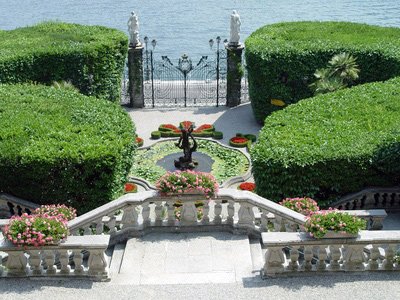
 Tremezzo is renowned for its magnificent villas, particularly Villa Carlotta with its art collections and botanical gardens. Beyond its aristocratic façade, Tremezzo offers splendid hiking opportunities, including an exciting excursion to Mount Crocione, and houses the fascinating Lake Como Landscape Museum in Villa Mainona, which showcases historical prints of the lake.

 Argegno
 Comacina Island
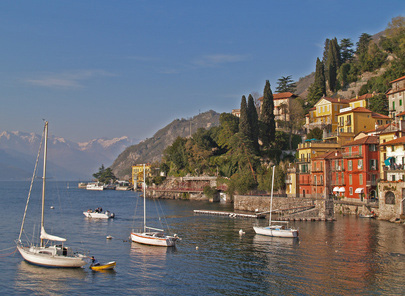
 Varenna gained prominence in 1169 when it welcomed refugees from the destroyed Comacina Island. The town's iconic 'Lovers Walk' (Passeggiata degli Innamorati) offers stunning lakeside views and connects the ferry terminal to the town centre, lined with pastel-coloured buildings and a distinctive red railing. Notable attractions include Villa Monastero, a former Cistercian convent turned museum with spectacular botanical gardens, and the medieval Castello di Vezio perched atop a hill, offering panoramic lake views. Interestingly, the town maintains a unique tradition where church bells ring precisely sixty-seven times at 7 am and 7 pm as a special devotion.

 Bellagio, affectionately known as the "Pearl of Lake Como," sits majestically at the intersection where Lake Como splits into two branches at Punta Spartivento, meaning "the point where the wind divides". This enchanting Italian town features charming cobbled streets called 'Salite' that wind upward from the lakefront, with Salita Serbelloni being the most photographed for its postcard-perfect views. The town's rich cultural heritage is evident in its historic villas, including Villa Melzi with its splendid botanical gardens, built as a summer residence for the vice president of the Italian Republic in the early 1800s.