


Sabbioneta
Introduction
Nestled in the heart of Lombardy, Sabbioneta is a small yet extraordinary town that embodies the ideals of Renaissance urban planning. This UNESCO World Heritage Site, often referred to as the "Little Athens of the Renaissance", offers visitors a unique glimpse into 16th-century Italian architecture and culture.
Interesting Facts
- Sabbioneta's urban layout resembles a six-pointed star, with streets arranged in an orthogonal grid.
- The town's design incorporates alchemical symbolism, with the numbers 6 and 12 recurring throughout its architecture.
- Sabbioneta holds multiple accolades, including recognition as one of Italy's most beautiful villages and the Orange Flag from Touring Club Italiano.
- The town's name, meaning "sandy" in Italian, refers to its location on a sandy bank of the Po River.
History
Sabbioneta was the brainchild of Vespasiano I Gonzaga, who founded the town in the late 16th century as his personal fortress and residence. Unlike many other Italian cities that evolved organically over centuries, Sabbioneta was meticulously designed as an ideal Renaissance city from the ground up. Its perfectly preserved state makes it an exceptional example of Renaissance urban planning theories put into practice.
Main Attractions
Teatro all'Antica
One of Sabbioneta's crown jewels is the Teatro all'Antica, also known as the Teatro Olimpico. Designed by Vincenzo Scamozzi and completed in 1590, it is considered the first purpose-built theatre in Europe. The theatre's unique design and exceptional acoustics make it a must-visit for architecture and performing arts enthusiasts.
Palazzo Ducale
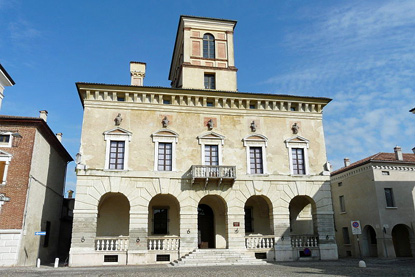
The Ducal Palace, now serving as the Town Hall, was once the seat of government for Vespasiano Gonzaga. Its impressive rooms and exhibition spaces offer a glimpse into the opulent lifestyle of Renaissance nobility.
Galleria degli Antichi and Palazzo del Giardino
These two connected buildings showcase the grandeur of Renaissance architecture. The Galleria degli Antichi, with its 97-metre-long arcaded walkway, once housed Vespasiano's collection of ancient marbles. The adjacent Palazzo del Giardino features beautifully frescoed rooms and a charming garden.
Chiesa della Beata Vergine Incoronata
This 16th-century octagonal church serves as the mausoleum of Vespasiano Gonzaga. Its lavish interior decorations are a testament to the artistic prowess of the Renaissance period.
Jewish Heritage
Sabbioneta boasts a fascinating Jewish history, evident in its historic Jewish Ghetto and active synagogue dating back to the 1800s. The town was also known for its Hebrew printing press, established by Tobias Foa in 1551, which played a significant role in the dissemination of Jewish texts.
Local Cuisine
No visit to Sabbioneta would be complete without sampling the local culinary delights. Two dishes stand out:
- Tortelli di Zucca: A type of pasta filled with pumpkin, showcasing the region's agricultural bounty.
- Risotto alla Mantovana: Also known as Riso alla Pilota, this hearty rice dish incorporates salami and other local ingredients.