Spain Guide  |
|---|
|
| | Top Spanish Cities |
|---|
|
| | Spanish Regions |
|---|
|
| | Europe Guide |
|---|
|
| | Travel Tools |
|---|
|
|
|
|
Basque Country Travel Guide
 San Sebastian, Basque Country. San Sebastian, Basque Country.
Introduction

Land of Western Europe's only native population of non-Indo-European speakers, the Basque Country (Euskadi in Basque), as its name suggests, feels like a different place from Spain altogether. A wooded, mountainous region with an oceanic climate, the Basque Country has one of the most unique and well-established regional cultures in Europe. This has led many Basques to believe that they ought to be an independent nation of their own. Culturally and ethnically, the greater Basque Country (known as Euskal Herria in Basque) also comprises the autonomous community of Navarre and the French Basque Country in southern Aquitaine.
Basque people are believed to be descended directly from the Mesolithic and/or Neolithic inhabitants of Iberia. Genetic studies did indeed confirm the Basques as a population isolate, but also revealed considerable admixture with neighbouring populations. What is almost certain is that their language (Euskera) predates the arrival of Indo-European speakers in Western Europe in the Bronze and Iron Ages.
The Basque Country has a population of 2.1 million, similar to Slovenia or the U.S. state of New Mexico. Third smallest autonomous community in mainland Spain, it has a land area of 7,234 km2 (2,793 sq mi), bit smaller than Corsica, and slightly larger than the U.S. state of Delaware.
The Basque Country is by far the wealthiest Spanish region, with a GDP per capita at PPP 30% above the national average and comparable to that of Denmark or the Netherlands, and above that of France or Germany. The biggest Basque company is the Mondragon Corporation, the world's largest worker cooperative, active in finance, industry, retail, and education.
Famous people from the Basque Country include (chronologically): the explorer Juan Sebastián Elcano (the first man to circumnavigate the world), the conquistador Lope de Aguirre, the religious leader Ignatius of Loyola (founder of the Jesuits), the celebrity chefs Juan Mari Arzak and Martín Berasategui, and the composer Alberto Iglesias.
Cuisine
Basque cuisine, and particularly the new movement influenced by the French nouvelle cuisine and molecular gastronomy, is highly praised by gourmets on the international scene. The Michelin Red Guide awarded a total of 15 stars for restaurants in San Sebastian in 2012, placing it in the top 10 of European cities. More amazingly, three restaurants obtained the highest gastronomic accolade of 3 Michelin stars, a feat only excelled by Paris.
Basque culinary specialties vary considerably in each of the three provinces, with fish and seafood being omnipresent in Vizcaya and Guipúzcoa, while meat and cheese is the norm in landlocked Álava.
Noteworthy dishes include the marmitako (tuna pot), txangurro a la Donostiarra (stuffed spider crab), bacalao a la vizcaina (cod with dried peppers and onions), bacalao al pil-pil (cod with pil pil sauce), almejas en salsa verde (clams in green sauce), enguinar (stuffed artichokes), goxua (liqueur-soaked cake with custard and caramel sauce), and talo (corn tortilla). Among other notable culinary products, let's note the Idiazabal sheep cheese, the Rioja Alavesa wines, the Txakoli (a very dry sparkling white wine with high acidity), and sagardotegi (Basque cider). Bilbao is famous for its canutillos (custard horns). Tapas are called pintxo in the Basque Country.
Attractions
West
| Bilbao (Bilbo) |
|---|

 Founded over 700 years ago as a fishing and market gardening settlement, Bilbao has evolved into a major cultural hub in the Basque Country. The city's historic Casco Viejo (Old Quarter) comprises Seven Streets filled with shops, bars and restaurants, having rebounded remarkably after devastating floods in 1983. The area features notable landmarks including the Santiago Cathedral and San Antón Church, earning it Historic-Artistic Monument status in 1972. Modern Bilbao is anchored by the iconic Guggenheim Museum and the striking red Carola Crane, whilst the Romantic-style Doña Casilda Park serves as the city's green lung with over 1,500 plant species. The city is renowned for its distinctive Basque cuisine, particularly its pintxos (tapas), bacalao pil-pil (cod in emulsion sauce), and txangurro (stuffed spider crab). The medieval city flourished through iron trade and maritime commerce, especially with Flanders and Great Britain, after being granted special trading privileges and free port status in 1372. |
| Portugalete |
|---|

 Portugalete sits at the mouth of the Nervión River and forms part of Bilbao's metropolitan area. Its most remarkable feature is the Vizcaya Bridge, a UNESCO World Heritage site built in 1893 that connects the town to Las Arenas via a unique suspended transport system. The town was founded in 1322 by María Díaz de Haro, and despite its name, it has no connection to Portugal - rather, its name derives from the Basque 'Portu-Ugaldeta' meaning 'edges of the port'. The densely populated municipality is home to several industrial establishments, including metalworks and a soybean-processing plant. The old town features medieval arches and streets, whilst the local cuisine follows the renowned Basque culinary tradition. During the San Roque Festivals in mid-August, locals gather to sing 'La Diana Portugaluja' outside the Town Hall. |
Centre & East
| San Sebastián (Donostia) |
|---|
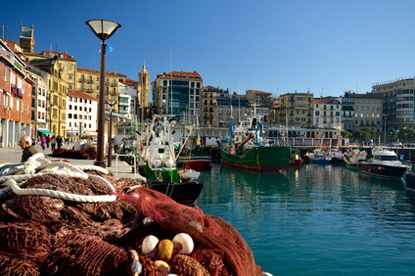
San Sebastián, also known as Donostia in the Basque language, is a coastal gem situated on the Bay of Biscay. The city is particularly renowned for its exceptional culinary scene, boasting one of the highest concentrations of Michelin-starred restaurants per capita globally and is famous for its 'pintxos' - the local version of tapas served on bread with a stick through the middle. The city comprises three main districts: Casco Antiguo (Old Town), Gros, and Amara, with the Old Town featuring a maze of medieval streets and the Gothic Cathedral of San Vicente. The area's gastronomy relies heavily on fresh seafood from the Cantabrian Sea and local produce, with signature dishes including bacalao al pil-pil (cod in garlic sauce) and txangurro (stuffed spider crab). Beyond cuisine, San Sebastián's landscape is marked by stunning beaches, including the surfing hotspot Zurriola Beach, whilst the Kursaal Congress Centre and the San Telmo Museum showcase both modern and traditional architecture. |
| Vitoria (Gasteiz) |
|---|
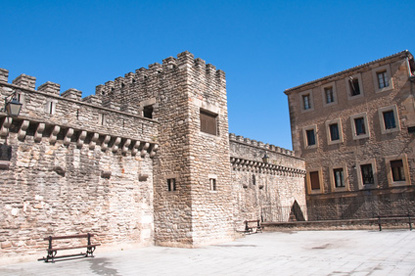
Vitoria-Gasteiz, the capital of the Basque Country, boasts one of the best-preserved medieval quarters in Spain, featuring an distinctive almond-shaped layout known as Almendra Medieval. The city earned the European Green Capital title in 2012 and the UN Global Green City Award in 2019, with a remarkable 47-kilometre green ring encompassing parks, wetlands and forests. Home to world-class museums, including the Artium Museum housing works by Picasso and Dalí, and the Museum of Natural Science featuring rare fossils from the ancient Álava Sea. The city's rich culinary scene earned it the title of Spanish Gastronomy Capital in 2014, famous for its pintxos (Basque tapas) and unique regional dishes like Piperrade, which mirrors the colours of the Basque flag. The area is also renowned for its Txakoli, a distinctive dry wine made from green grapes, and Idiazábal, a locally-produced smoked cheese. Historically significant, the city was the site of a pivotal Napoleonic Wars battle that inspired Beethoven's Opus 91, "Wellington's Victory". |
|


 : Local interest
 : Moderately interesting
 : Outstanding place
 : Must-see in the country
 : Top cities in Europe