Spain Guide  |
|---|
|
| | Top Spanish Cities |
|---|
|
| | Spanish Regions |
|---|
|
| | Europe Guide |
|---|
|
| | Travel Tools |
|---|
|
|
|
|
 Lago de La Ercina, Los Lagos de Covadonga, Asturias. Lago de La Ercina, Los Lagos de Covadonga, Asturias.
Introduction

Secluded from the rest of Spain by the Cantabrian mountain range, the small autonomous community of Asturias is often undeservingly overlooked by tourists, which makes it an ideal off-the-beaten-track destination.
Asturias is the greenest (which also means rainiest) part of Spain and is particularly famous for the majestic Picos de Europa, whose beauty was consecrated in 1918 when the area became Spain's first national park.
The region evolved from the Kingdom of Asturias, the first medieval kingdom to be founded after the Moorish conquest of Iberia in 711. In honour to this illustrious past, the modern region is officially known as the Principality of Asturias (Principado de Asturias in Spanish). The title of Prince of Asturias is bestowed to the heir to the Spanish throne, just like the title of Prince of Wales in the United Kingdom.
The flag of Asturias shows the Victory Cross (Cruz de la Victoria), said to have been carried by King Pelagius of Asturias at the Battle of Covadonga in 722 - the first significant victory by the Christians against the Moors, which assured the independence of the Kingdom of Asturias. The cross is a popular symbol of the region and is often displayed on car stickers.
The Asturian language, closely related to Leonese, is understood by approximately 550,000 people, including 100,000 native speakers. It is a recognised and protected language, although not one of the five official languages of Spain.
Famous people from Asturias include (chronologically): the explorer Pedro Menéndez de Avilés, the biochemist Severo Ochoa (Nobel Prize in Physiology or Medicine), and the F1 champion Fernando Alonso.
Cuisine
Asturian cuisine is highly regarded within Spain. It is especially known for its river salmon and seafood, notably squid, crab, shrimp, bonito and sea bass. There are over 100 different types of cheese in Asturias, each being produced in its own village. The most famous cheese is Cabrales, produced with unpasteurised cows milk in the mountains of the Picos de Europa.
The Asturians have a long tradition for producing apple cider. Asturian cider contrasts with the French and English ones by being drier and using mostly acidic apples instead of sweet or bittersweet ones.
The most emblematic regional dish is the fabada asturiana, a rich stew made with white beans, pork shoulder, morcilla (black pudding), chorizo, and saffron, and most commonly eaten during winter.
Among other typical dishes, let's note cachopo (fried meat with ham and cheese, similar to Cordon Bleu), caldereta asturiana (seafood casserole), merluza a la sidra (hake in cider), frisuelos (crêpes similar to those from Brittany), tocinillo de cielo (a sweet made with egg yolk and sugar), and arroz con leche (rice pudding dessert).
Attractions
| Oviedo ※ |
|---|
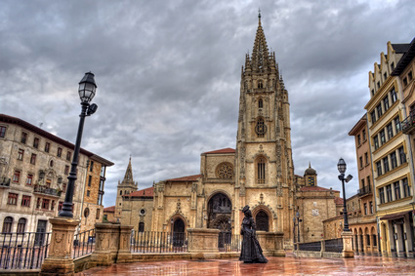
 Oviedo, the capital of Asturias in northern Spain, was founded in the 8th century by King Fruela I and has since evolved into a city of remarkable contrasts. The city's historic centre features unique pre-Romanesque architecture, including the UNESCO-protected Holy Chamber and the Cathedral of San Salvador. As Spain's Gastronomic Capital for 2024, Oviedo boasts six Michelin-recognised restaurants and is particularly renowned for its local specialities, including fabada asturiana (bean stew), an extensive selection of over 40 regional cheeses, and traditional cider that is distinctively poured from a height. The city's cultural landscape is centred around the bustling El Fontán Market, housed in a 19th-century glass-and-iron structure, where locals gather to shop and socialise. Notably, Oviedo holds historical significance as the starting point of the first documented journey along the Camino Primitivo to Santiago de Compostela, initiated by King Alfonso II in the ninth century. |
| Avilés |
|---|

 Avilés, the third-largest city in Asturias, evolved from an ancient fishing village into a vibrant cultural hub whilst maintaining its medieval charm. Its historic centre, declared a Historic-Artistic Site in 1955, spans two square kilometres of arcaded streets showcasing Romanesque, Gothic, Baroque and Modernist architecture. The city features notable landmarks like the 17th-century Palacio de Ferrera, the Palacio de Camposagrado (fortified against English pirates), and the Oscar Niemeyer International Cultural Centre. The pedestrian streets of Galiana and Rivero are particularly noteworthy, with Galiana Street preserving its original double pavement - one for livestock and another for pedestrians. The city's gastronomic scene centres around its fishing port, offering excellent seafood dishes, whilst local specialities include La Peral and Gorfoli cheeses. The Fuero de Avilés of 1155, a significant medieval Spanish law document, marked the city's liberation from feudal ties. |
| Gijón |
|---|
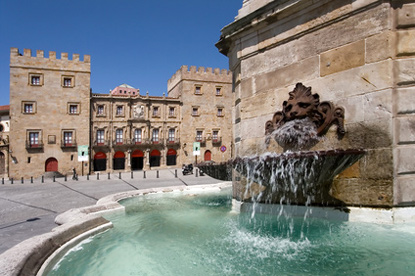
Gijón, the largest city in Spain's Asturias region with 271,000 inhabitants, began as a fishing village 3,000 years ago and served briefly as the capital of the Kingdom of Asturias until 791. The city boasts the impressive Laboral City of Culture, Spain's largest building, alongside Roman baths from the 1st century and the historic Cimadevilla quarter with its winding medieval streets. Nature enthusiasts can explore the Jardín Botánico Atlántico, home to over 30,000 plant species, or visit the curved San Lorenzo beach, unique for its high tides that completely submerge the sand. The city is renowned for its Asturian cuisine, particularly cachopo (breaded veal stuffed with ham and cheese) and fabada (bean stew), whilst its traditional cider houses showcase the distinctive local pouring technique where cider is poured from a height to aerate the drink. Cultural highlights include the Evaristo Valle Museum, displaying works of the celebrated Asturian artist, and the iconic Elogio del Horizonte sculpture by Eduardo Chillida, offering panoramic views from Santa Catalina headland. |
| Picos de Europa National Park |
|---|

 The Picos de Europa National Park offers visitors a remarkable combination of natural beauty and cultural heritage. As Spain's first National Park, established in 1918, it features breathtaking limestone landscapes with razor-sharp peaks, the highest being Torre Cerredo at 2,650 metres. The park is home to diverse wildlife including brown bears, Iberian wolves, chamois goats and bearded vultures. Visitors can explore over 30 self-guided routes, numerous viewpoints, and enjoy free guided tours available from July to September. Beyond natural wonders, the area boasts rich cultural treasures including prehistoric cave paintings, Roman archaeological remains, traditional stone architecture, and significant religious sites such as the Basilica of Covadonga and Santo Toribio de Liebana monastery, which houses one of the largest fragments of Christ's Cross. The park's unique status as Spain's only inhabited National Park allows visitors to experience authentic rural life alongside exceptional gastronomic offerings like Cabrales cheese and Asturian cider. |
| Somiedo Natural Park |
|---|

 Somiedo Natural Park, established in 1988 in northern Spain's Cantabrian Mountains, spans 283 square kilometres across five valleys and was designated a UNESCO Biosphere Reserve in 2000. The park is renowned for hosting one of Europe's largest populations of free-roaming brown bears and features more than 100 bird species, including golden eagles and capercaillies. Its dramatic landscape includes glacial lakes, with the Lago del Valle being Asturias' largest lake at 280 metres in radius and up to 50 metres deep. The park preserves unique cultural heritage through its traditional 'braña' system of transhumance farming, where locals move cattle between elevations seasonally, and visitors can explore more than 500 traditional stone huts with distinctive broom-thatched roofs scattered throughout the mountains. The Prince's Viewpoint, situated at 1,380 metres altitude near the village of La Peral, offers panoramic views of the entire park. |
| Llanes |
|---|
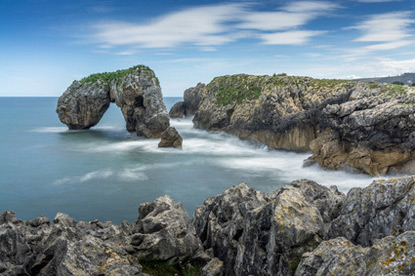
 Llanes is a historic coastal town nestled between the Cantabrian Sea and the limestone Sierra del Cuera mountains, which rise over 1,100 metres. The town's official history dates to the 13th century when it received its independence charter under Alfonso IX, and it flourished as a significant fishing port between the 15th and 18th centuries. Today, Llanes boasts 32 white sand beaches along its 30-kilometre coastline, with notable attractions including the medieval defensive walls, the 13th-century tower, and the port's distinctive 'Cubes of Memory' artwork by Basque artist Augustín Ibarrola. The town is renowned for its seafood cuisine, particularly its spider crabs, scorpion fish, and semi-preserved anchovies, whilst inland specialities include wild boar and traditional maize-based dishes like tortos and pantruque. The area features unique geological formations called 'bufones' (jesters), which are natural coastal blowholes7, and the nearby Picos de Europa National Park offers additional outdoor activities. |
Other attractions
Redes Natural Park
|


 : Local interest
 : Moderately interesting
 : Outstanding place
 : Must-see in the country
 : Top cities in Europe