


| Contents |
|---|

Introduction
Ronda (pop. 35,000), one of the oldest towns in Spain, is perched dramatically on a plateau in the Serranía de Ronda mountains of Andalusia, 750 metres above sea level. Originally named Arunda, this historic town dates back to prehistoric times and has been shaped by Roman, Moorish and Christian influences throughout its rich history. The town is spectacularly divided by the El Tajo gorge, a 100-metre deep chasm carved by the Guadalevín River, with three bridges connecting the old Moorish quarter (La Ciudad) to the newer parts of town. The most famous of these, the 18th-century Puente Nuevo, has become Ronda's defining landmark. Visitors are drawn to Ronda's impressive Arab Baths, Spain's second oldest bullring (considered the birthplace of modern bullfighting), historic city walls and whitewashed buildings. With a population of approximately 35,000, Ronda offers a remarkable blend of natural beauty, architectural splendour and cultural heritage that has inspired numerous writers and artists, including Ernest Hemingway.
Interesting Facts about Ronda
- Ronda is dramatically situated across the 100-metre deep El Tajo gorge, which divides the city into two distinct halves.
- The iconic Puente Nuevo (New Bridge), built in 1761, stands 300 feet (90 metres) high and is one of three bridges spanning the gorge.
- Ronda is considered the birthplace of modern bullfighting, with Spain's oldest bullring, a stone Neoclassical structure from around 1785, now serving as a museum.
- The town was occupied by the Moors from the 8th to the 15th century before being reconquered by Ferdinand and Isabella on 20th May 1485.
- Ronda is the third most-visited destination in southern Spain, attracting thousands of honeymooners each year.
- The area surrounding Ronda has been used for wine-making since Roman times, with the Serrania de Ronda region particularly known for its delicious red wines.
- Ronda features well-preserved Arab baths and historic city walls that offer panoramic views of the surrounding countryside.
- The Mondragón Palace, built in Gothic, Mudejar and Renaissance styles, is considered one of the greatest treasures in the Serranía de Ronda mountains.
- The architect who created the Puente Nuevo, Martin de Aldehuela, is said to have committed suicide by jumping off the bridge, fearing he would never again build something so beautiful.
- Ronda is home to what is claimed to be Malaga's oldest living tree, El Castaño Santo (the holy chestnut tree), measuring an impressive 14 metres in circumference.
- The town was a favourite destination of celebrities like Orson Welles and Ernest Hemingway, who visited Ronda repeatedly.
- Ronda's bullring was once used as a football field.
- Vicente Espinel (1550-1624), a citizen of Ronda, added the fifth string to the Renaissance guitar, thereby creating the Spanish guitar as we know it today.
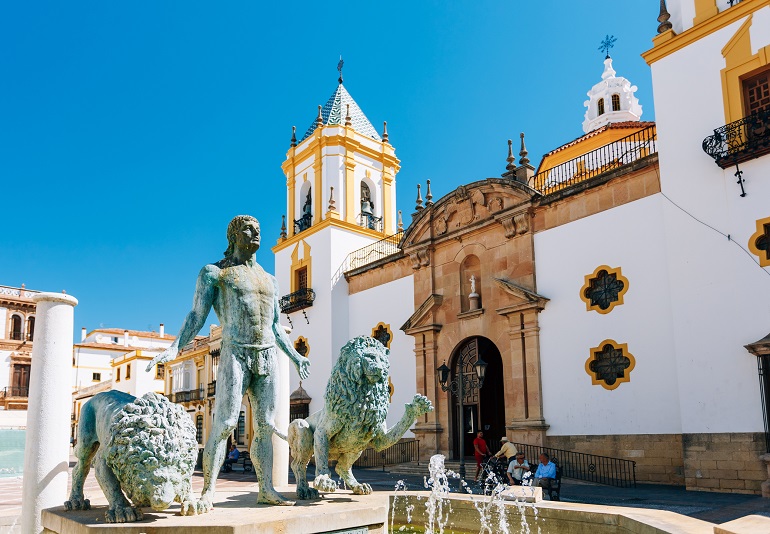
History
Ronda is one of Spain’s oldest continuously inhabited settlements. Evidence of Neolithic communities emerges in the Cueva de la Pileta, where cave paintings depict animals and abstract forms, offering a glimpse into early human activity in the region. By the 6th century BCE, Celtic tribes established the settlement of Arunda on the present-day site, while Phoenician colonists developed the nearby town of Acinipo (modern Ronda la Vieja), renowned for its wine production and Roman-era theatre. Roman dominance arrived in the 2nd century BCE following the Second Punic War, with Ronda serving as a strategic military outpost. The adjacent Acinipo flourished as a municipium under Julius Caesar, minting its own coins and hosting a 2,000-seat amphitheatre, though it was abandoned by the 6th century CE as Visigothic rule waned.
The 8th-century Moorish conquest ushered in Ronda’s golden age as Izn-Rand Onda (“City of the Castle”), a fortified capital controlling the Takurunna province. Under the Umayyads and later the autonomous Taifa of Ronda (11th century), the city became a hub of Islamic architecture and philosophy. Landmarks like the Arab Baths – among Spain’s best-preserved – and the labyrinthine Mondragón Palace exemplify this era, while the Puente Árabe bridge and fortified walls underscore its military significance. Following the Caliphate of Córdoba’s collapse, Ronda’s independence as a Taifa kingdom attracted scholars and artists, though its strategic clifftop position also made it a target during the Christian Reconquista. The city’s Islamic era ended abruptly in 1485 when forces breached its defences after a prolonged siege, leading to the conversion of mosques into churches and the expulsion or assimilation of Muslim residents.
Post-Reconquista, Ronda evolved into a frontier town blending Christian and Moorish influences, epitomised by the Puente Nuevo (1788), a 98m-high engineering marvel spanning the gorge. The 18th-century Real Maestranza de Caballería bullring – birthplace of modern bullfighting – cemented Ronda’s cultural identity, attracting Romantic-era travellers like Washington Irving and Ernest Hemingway, who immortalised its bandit-haunted sierras. Remnants of its tumultuous past persist in the Bandolero Museum, chronicling 19th-century highwaymen, while annual Feria Goyesca festivities revive Regency-era costumes and equestrian displays. Today, Ronda’s layered history – from Neolithic caves to Roman theatres, Moorish baths to Habsburg palaces – unfolds at every turn, offering travellers a visceral journey through Spain’s millennia-spanning narrative.
Main Attractions
Puente Nuevo (New Bridge)
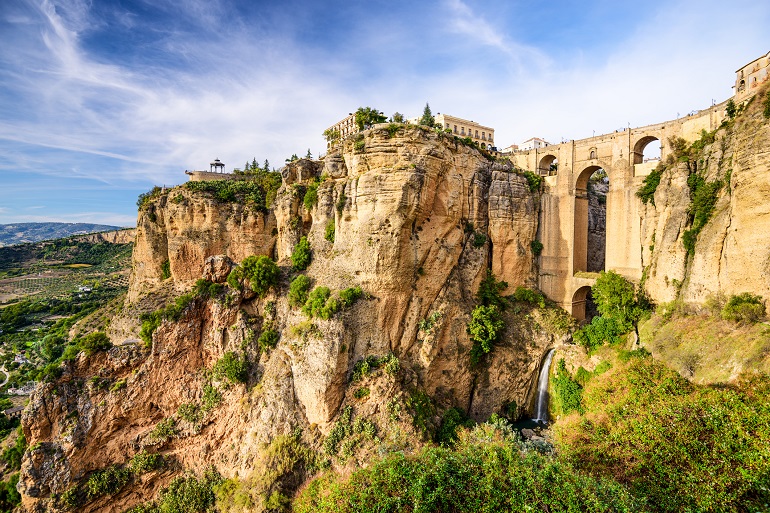
The Puente Nuevo stands as Ronda's most iconic landmark, a testament to 18th-century engineering that spans the 100-metre-deep El Tajo gorge. Completed in 1793 after four decades of construction, this impressive structure connects the old and new towns of Ronda. The bridge's central arch rises 66 metres above the canyon floor, offering visitors breathtaking views of the surrounding landscape and the Río Guadalevín below. The stone used in its construction was quarried from the gorge itself, lending the bridge a natural harmony with its surroundings. A chamber above the central arch, once used as a prison, now houses a small exhibition on the bridge's history and construction.
Puerta de Almocábar
The Puerta de Almocábar is one of the original gates in Ronda's ancient walls, providing a tangible link to the city's defensive past. Constructed in the 13th century during the Moorish period, this imposing gate features horseshoe arches flanked by two semi-circular towers. The name 'Almocábar' is derived from the Arabic word for cemetery, as it once led to the city's Moorish burial grounds. The gate was later modified by the Christian monarchs, who added their coat of arms above the entrance, symbolising the transition from Islamic to Christian rule.

La Ciudad (Old Moorish Town)
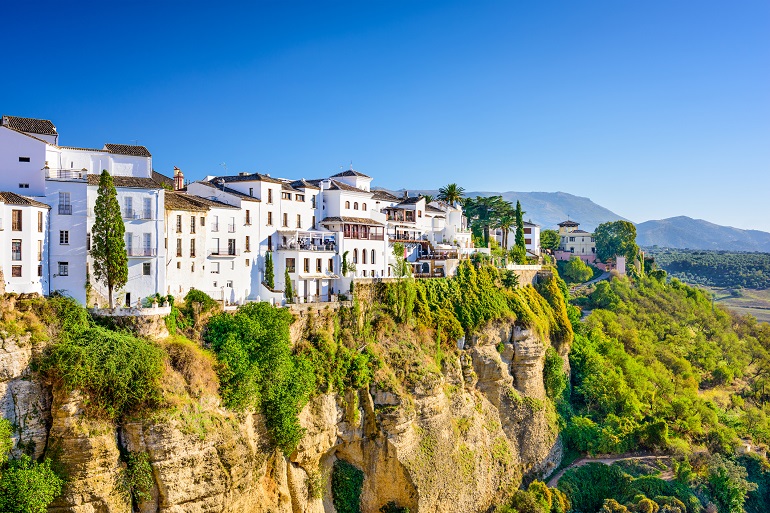
La Ciudad, Ronda's old Moorish quarter, offers visitors a journey through time with its narrow, winding streets and whitewashed buildings. This area retains much of its medieval Islamic urban planning, with small squares and hidden courtyards revealing themselves as one explores. The architecture here showcases a blend of Moorish and Renaissance styles, with many buildings featuring intricate ironwork balconies and ornate doorways. Notable structures in La Ciudad include the Mondragón Palace, once home to Moorish kings, and the Casa del Gigante, named for a Roman statue found in its garden.
Alameda del Tajo
The Alameda del Tajo is a beautiful historic park and promenade located on the western edge of Ronda, Spain, established in 1806 by order of King Ferdinand VII. Originally named Alameda de San Carlos, this elegant public garden spans approximately 27,000 square metres and sits adjacent to the Plaza de Toros (the oldest bullring in Spain). The park features five landscaped avenues lined with mature trees—some over 200 years old—including Himalayan cedars, stone pines, and honey locusts. The Alameda features several fountains and sculptures, a duck pond, bird enclosures and a children's playground. The Alameda is particularly lively in the evenings when locals gather for the traditional paseo, or evening stroll.
The main promenade leads to several viewing balconies, including the famous 'Balcón del Coño', which offer breathtaking panoramic views over El Tajo Gorge, the Guadalevín River, and the surrounding Serranía de Ronda mountains. Other notable observation deck include the Mirador de Aldehuela and the Mirador de Ronda with its gazebo. Both are stone balconies that jut out over the cliff edge, providing vertigo-inducing views of the gorge below.

La Casa del Rey Moro
Despite its name suggesting a Moorish king's residence, La Casa del Rey Moro is actually a more recent construction with a fascinating feature: a water mine cut into the living rock of the gorge. The property includes terraced gardens designed in the early 20th century by French landscape architect Jean-Claude Nicolas Forestier. The gardens offer panoramic views across the Serranía de Ronda. The water mine, dating back to the 14th century, consists of 365 steps leading down to the bottom of the gorge, where a mechanism once raised water from the river to supply the town during sieges.
Baños Árabes (Moorish Baths)
The Baños Árabes of Ronda are among the best-preserved Moorish baths in Spain. Dating back to the 13th century, these baths offer insight into the daily life and customs of Islamic Ronda. The complex features three main rooms - cold, warm, and hot - typical of Roman-style baths adopted by the Moors. The baths are notable for their star-shaped light openings in the vaulted ceilings, which allowed steam to escape and created a serene, dappled light effect. The hydraulic system that heated and circulated water through the baths is still visible, showcasing the advanced engineering of the time.
Santa María la Mayor Church
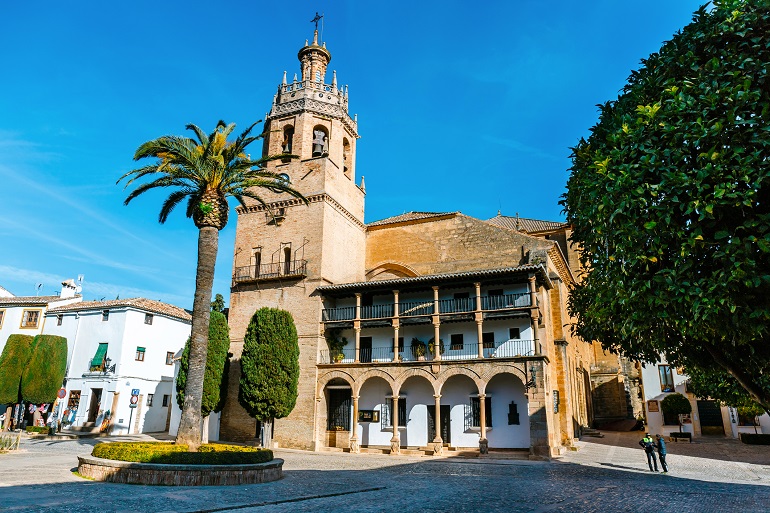
Santa María la Mayor Church stands as a testament to Ronda's rich religious history. Originally constructed as a mosque in the 14th century, it was transformed into a Christian church following the Reconquista. The building showcases a fascinating blend of architectural styles, with its minaret converted into a bell tower and Gothic and Renaissance elements added over the centuries. The church's interior features an ornate altar, intricate ceiling work, and a choir with elaborately carved wooden stalls. Of particular note is the church's organ, considered one of the most valuable in Spain.
Plaza de Toros
Ronda's Plaza de Toros holds the distinction of being Spain's second oldest bullring and is widely considered the birthplace of modern bullfighting. Inaugurated in 1785, the arena's neoclassical design features two tiers of seating supported by 136 Tuscan columns. The bullring is closely associated with the Romero family, particularly Pedro Romero, who pioneered many of the techniques still used in bullfighting today. The arena's sand floor measures 66 metres in diameter, providing ample space for the dramatic encounters between matador and bull. Even for those who do not attend a corrida, the architecture and historical significance of the Plaza de Toros make it a compelling attraction.
Jardines de Cuenca
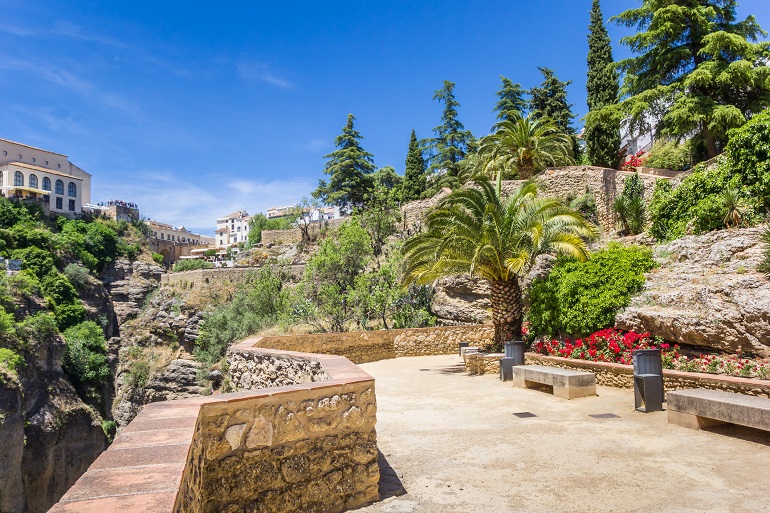
The Jardines de Cuenca, or Cuenca Gardens, offer a unique perspective on Ronda's dramatic landscape. These terraced gardens cling to the eastern side of the El Tajo gorge, providing spectacular views of the Puente Nuevo and the surrounding countryside. Created in 1975, the gardens are named after the city of Cuenca, which like Ronda, is known for its dramatic cliff-side setting. Visitors can descend a series of zigzagging paths and stairs, enjoying different vantage points of the gorge and the old town above. The gardens are planted with a variety of native flora, creating a lush, green contrast to the stark rock face of the gorge.
Casa Don Bosco
Casa Don Bosco, perched on the edge of El Tajo gorge, offers visitors a glimpse into the lifestyle of Ronda's upper class in the early 20th century. This modernist house, built in 1908, features a peaceful courtyard garden with unparalleled views of the Puente Nuevo and across the Serranía de Ronda. The interior of the house is notable for its well-preserved period furnishings and decorative elements, including colorful ceramic tiles, ornate ceilings, and elegant wooden furniture. The house takes its name from Saint John Bosco, to whom it was dedicated by its original owner.
Felipe V Arch
The Felipe V Arch, a neoclassical monument, commemorates King Felipe V's visit to Ronda in the 18th century. Constructed in 1742, the arch features Corinthian columns and ornamental details representative of the Spanish monarchy. The structure serves as a grand entrance to the Calle Nueva, leading from the old town to the newer part of Ronda. The arch's design, with its classical proportions and decorative elements, reflects the architectural tastes of the Spanish Enlightenment period. It stands as a symbol of Ronda's historical connection to the Spanish crown and the town's importance during the 18th century.
Top Museums
Historical Museums
Mondragon Palace and Museum
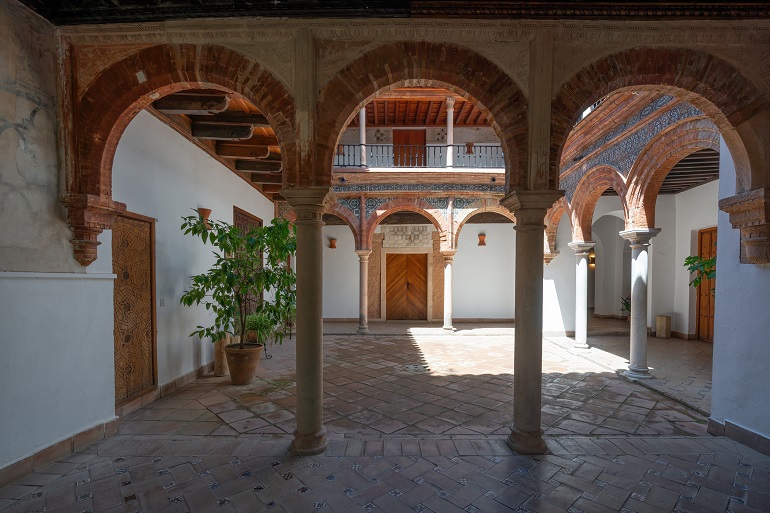
The Mondragon Palace, also known as the Palace of the Marquis of Villasierra, is one of Ronda's most significant civil monuments. Built in the 14th century, it was originally an Andalusian residence reportedly inhabited by Abbel Malik, son of the Sultan of Morocco. After the Christian conquest in 1485, the palace was named after Captain Melchor de Mondragón. The building showcases a fascinating blend of Mudejar, Renaissance, Gothic and Baroque architectural styles, featuring several impressive courtyards, intricate tilework, wooden coffered ceilings and beautiful water gardens that overlook the Tajo gorge. Since the early 1990s, the palace has housed the Municipal Museum of Ronda, which offers a permanent collection chronicling the city's history from the Stone Age to the present day. Visitors can explore exhibits about life in Ronda throughout the centuries, along with historical artefacts that provide insight into the region's rich cultural heritage.
Museo Arqueológico Municipal
Housed in the magnificent Palacio de Mondragón, this archaeological museum offers a fascinating journey through Ronda's ancient past. The collection spans from prehistory to Roman times, featuring statues, coins and various archaeological finds. The museum is organised chronologically, guiding visitors through the Stone Age, Iron Age, Roman period and Moorish Ronda. A highlight includes a reconstruction of the Pileta Cave, showcasing the region's prehistoric heritage. The palace itself, with its splendid Mudejar and Renaissance architectural styles, adds to the overall experience.
Museo Lara
Located in the historic Casa Palacio de los Condes de las Conquistas in Ronda's Old Town, the Museo Lara houses an eclectic collection of artefacts from different periods and cultures. This unique museum features 12 thematic rooms displaying antique scientific instruments, ancient weapons, magnificent clocks, and exhibitions on photography and cinema. One of the most intriguing sections is dedicated to the Holy Inquisition, featuring torture instruments and objects related to witchcraft practices. The museum is particularly popular with children and offers a journey through the scientific history of the past few centuries.
Museum of the Bandolero
This original museum, established in 1995, is dedicated to the social phenomenon of banditry in Spanish, Andalusian and specifically Ronda's history. It's the only museum in Spain with such an extensive collection of references to banditry, featuring numerous photographs, documents, paintings, costumes and weapons from the period.
Art and Cultural Museums
Joaquin Peinado Museum
Art enthusiasts will appreciate the collection at the Museo Joaquin Peinado, which offers a glimpse into Ronda's artistic heritage. The museum showcases works that reflect the town's cultural identity and artistic traditions.
Don Bosco House Museum
Located in the Palacio de Ronda, a stately mansion dating back to 1850, this museum was formerly a private home donated to the Salesians in 1939. The interior retains its original Art Nouveau style, while the garden terrace offers panoramic views of the valley and surrounding countryside. The museum presents rich local culture and history through tapestries, tiles and hand-carved furniture.
Specialised Museums
Real Maestranza Bullfighting and Cavalry Museum
Located under the stalls of Ronda's bullring, this museum charts the history of bullfighting from its early days to the present. It was here that the Romero family created the modern Rondeño form of bullfighting. The museum also covers the training of cavalry, which is the actual purpose of the Real Maestranza, and includes exhibits of weaponry and armour used through the ages.
Hunting Museum
Located on Calle Armiñan, this museum caters to those interested in hunting traditions and practices in the region.
Wine Museum
For oenophiles, Ronda offers a museum dedicated to wine, showcasing the region's viticultural heritage and wine-making traditions.
Local Cuisine
Ronda's cuisine is a reflection of its diverse cultural heritage, blending Arab, Roman and traditional Andalusian influences. Set in a region blessed with an exceptional climate, Ronda offers dishes that celebrate local, seasonal ingredients. Visitors should sample the iconic rabo de toro (oxtail stew), refreshing cold soups like gazpacho and ajo blanco, and game dishes such as conejo a la rondeña (Ronda-style rabbit). The local produce shines in dishes like habas con jamón (broad beans with Serrano ham) and migas rondeñas (fried bread crumbs), while wild mushrooms from the surrounding mountains feature prominently in autumn meals. Finish with Arabic-influenced sweets such as pestiños (honey fritters) or yemas del Tajo (candied egg yolks), all best enjoyed with locally-produced red wines.
Getting There & Around
Ronda is well-connected to major Andalusian cities by various transport options. Trains provide scenic journeys from Malaga (2 hours, 12€), Seville (3.5 hours via Cordoba, 25-50€), and Algeciras (90 minutes). Buses offer economical alternatives from Malaga (2 hours, 10€) and Seville (2.15 hours, 10-20€). Driving takes approximately 1-2 hours from nearby cities with parking available outside the historic centre. Once in Ronda, the compact size makes exploring on foot ideal, though local buses (1€ per journey) and taxis (1.94€ per kilometre, minimum 6.40€) are available for those wanting to rest their legs whilst navigating the city's hilly terrain.