


| Contents |
|---|

Introduction
Úbeda (pop. 35,000) is a compact, walkable city located on the southern ridge of the Loma de Úbeda between the Guadalquivir and Guadalimar river beds. Recognised as a UNESCO World Heritage Site in 2003 alongside neighbouring Baeza, Úbeda is distinguished by its remarkable collection of Italian-inspired Renaissance architecture, featuring 48 notable monuments and over a hundred other buildings of historical interest. The city flourished during the 16th century under Emperor Charles V, when many of its impressive palaces and churches were constructed. Key attractions include the monumental Plaza Vázquez de Molina, the Sacred Chapel of the Salvador, the Hospital de Santiago, the Palacio de las Cadenas, and the 13th-century Synagogue of Water. Beyond its architectural treasures, Úbeda is known for its olive oil production, local cuisine, and cultural events that continue to enrich this ancient settlement whose history spans six millennia.
Interesting Facts about Úbeda
- The city is known as one of Spain's Renaissance gems, with possibly more richly decorated and perfectly conserved buildings per city block than anywhere else on the Iberian peninsula.
- The town was originally an Iberian settlement, later occupied by the Arabs in 711 CE, and reconquered by Ferdinand III of Castile in 1234.
- Úbeda's Renaissance transformation was largely made possible by the Molina family's commissions, particularly Francisco de Los Cobos y Molina who was King Charles V's privy secretary.
- The city possesses 48 monuments and more than a hundred other buildings of interest, almost all of Renaissance style.
- In 1975, Úbeda received the appointment from the Council of Europe as "Exemplary City of the Renaissance".
- The historic Casa Cuna or "Cradle House" once featured a turnstile where unwanted babies could be anonymously deposited in centuries past.
- Úbeda lends its name to a common Spanish idiom, "andar por los cerros de Úbeda" (literally "to walk around the hills of Úbeda"), meaning "to go off at a tangent".
History
Úbeda’s history stretches back over six millennia, making it one of Western Europe’s oldest continuously inhabited cities. Archaeological evidence at Cerro del Alcázar reveals Copper Age settlements, while local legend attributes its founding to Tubal, a descendant of Noah. The Romans, who named the city Betula, established it as a regional hub after their victory at the Battle of Ilipa in 206 BCE, though later Visigothic and Vandal invasions forced inhabitants to consolidate into Bétula Nova. The city’s strategic position drew Carthaginian and Greek traders before Islamic rule transformed it into Ubbadat Al-Arab under Abderramán II in the 9th century, a flourishing Moorish stronghold famed for craftsmanship and fortified walls. This golden age ended in 1234 when Ferdinand III of Castile captured Úbeda during the Reconquista, integrating it into Christian Spain and expanding its territories across Jaén’s rugged landscapes.
The 16th century marked Úbeda’s Renaissance zenith, as aristocratic families like the Vázquez de Molinas and Cobos clan leveraged their influence in Charles V’s court to transform the city into an architectural marvel. Patrons commissioned master builders such as Andrés de Vandelvira, whose Plateresque designs grace the Sacra Capilla del Salvador and Vázquez de Molina Palace—landmarks that earned Úbeda its UNESCO World Heritage status alongside Baeza in 2003. This era also saw Úbeda become a crucible of cultural exchange, blending Christian, Islamic, and Jewish traditions until the Catholic Monarchs suppressed noble rivalries and expelled non-Christian communities, catalysing a decline exacerbated by 17th-century economic crises. Yet the legacy of this “cradle of Spanish Renaissance” endured, with Vandelvira’s treatises on stonemasonry influencing colonial architecture across Latin America.
Modern Úbeda’s labyrinthine old town safeguards 48 Renaissance monuments, including the basilica-studded Plaza Vázquez de Molina and the Hospital de Santiago, now a congress centre. UNESCO recognition has preserved its dual identity: a living museum of arched sandstone facades and a vibrant community where artisans continue centuries-old pottery traditions. Visitors tracing its cobbled lanes encounter layers of history—from the 13th-century Sinagoga del Agua, hidden beneath medieval shops, to the Mirador del Mercado’s panoramas overlooking terraces unchanged since Habsburg times. As the adage andar por los cerros de Úbeda whimsically warns, this city’s tales could divert one endlessly—a testament to its enduring allure as a crossroads of civilisations.
Main Attractions
Plaza Vázquez de Molina
The Plaza Vázquez de Molina, often referred to as Plaza Andalucía, stands as the magnificent epicentre of Úbeda's Renaissance splendour. This expansive square, sometimes referred to as the Sacred Square, brings together the city's most impressive architectural achievements in a harmonious ensemble. The plaza was designed to showcase the power and wealth of the noble families who commissioned these buildings, particularly the Molina and Cobos families who were influential in the Spanish court during the 16th century. The square's elegant proportions and the balanced arrangement of its buildings create a sense of perfect Renaissance harmony, making it one of the most complete Renaissance squares in Spain. The square boasts several notable buildings, including the Palacio Vázquez de Molina (now the town hall), the Palacio del Marqués de Mancera, the Basílica de Santa María de los Reales Alcázares, and the Sacra Capilla del Salvador.
Palacio de las Cadenas (Vázquez de Molina Palace)
The Palacio de las Cadenas, currently serving as Úbeda's Town Hall, represents one of the finest examples of Spanish Renaissance civil architecture. Designed by Andrés de Vandelvira in the mid-16th century for Juan Vázquez de Molina, secretary to King Philip II, this palace takes its popular name from the decorative chains that once adorned its façade. The building features a magnificent façade with two levels of windows, elegant columns, and a central balcony topped by the coat of arms of the Molina family. The interior courtyard, with its double gallery of arches supported by slender columns, exemplifies the classical proportions that define Renaissance architecture. The palace's stonework displays exceptional craftsmanship, with intricate details carved into the limestone that has weathered to a warm golden hue over the centuries.

Basílica de Santa María de los Reales Alcázares
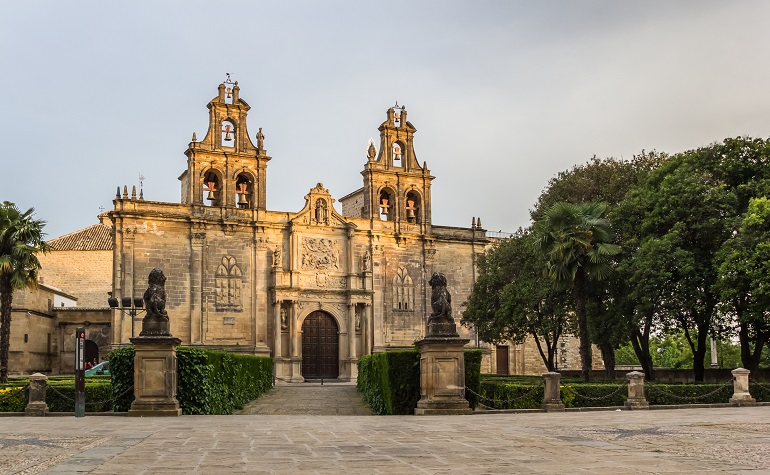
Built upon the foundations of a former mosque, the Basílica de Santa María represents a fascinating architectural palimpsest that reflects Úbeda's layered history. Its construction began in the 13th century but continued well into the 16th century, resulting in a blend of Gothic, Renaissance, and Baroque elements. The north façade, designed by Vandelvira, features classical motifs and exemplifies Renaissance principles. Inside, the basilica reveals its Gothic origins with ribbed vaults and pointed arches, while later Renaissance additions include the choir and several ornate chapels. Of particular note is the intricate plateresque doorway known as the Puerta del Perdón (Door of Forgiveness), which displays a wealth of decorative elements including medallions, cherubs, and fantastical creatures.
Capilla del Salvador (Holy Chapel of the Saviour)
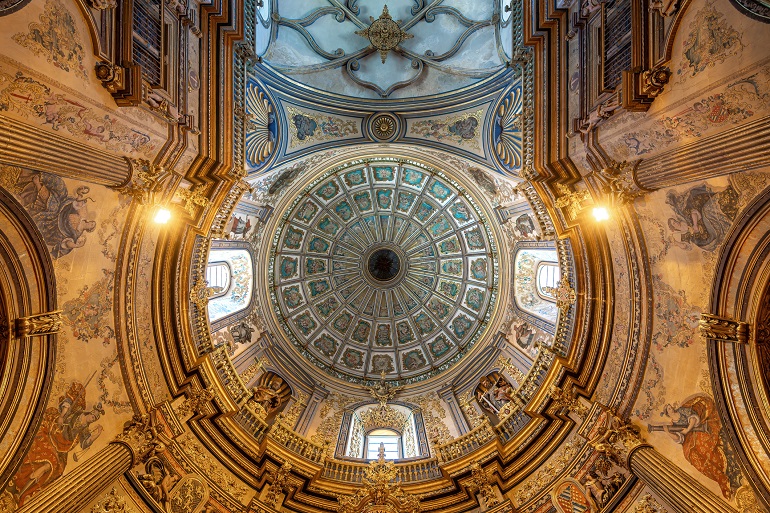
The Capilla del Salvador stands as Andrés de Vandelvira's masterpiece and one of Spain's most significant Renaissance buildings. Commissioned by Francisco de los Cobos, secretary to Emperor Charles V, as a funerary chapel, it represents the pinnacle of Spanish Renaissance architecture. The façade is a symphony of classical elements, featuring Corinthian columns, ornate friezes, and medallions depicting biblical scenes. The central tympanum portrays the Transfiguration of Christ, giving the chapel its name. The interior is equally impressive, with a central octagonal space crowned by a magnificent dome. The sacristy features an elaborately coffered ceiling and walls adorned with grotesque decorations inspired by Roman models. The chapel's metalwork screens, crafted by Bartolomé de Jaen, represent some of the finest ironwork of the period, combining religious imagery with Renaissance decorative motifs.
Palacio del Marqués de Mancera
The Palacio del Marqués de Mancera represents another fine example of Renaissance civil architecture in Úbeda. Built for Antonio Sebastián de Toledo, who served as Viceroy of Peru in the 17th century, the palace combines Renaissance principles with elements that anticipate the Baroque style. The façade features a central portal framed by columns and topped by the family coat of arms, with a regular arrangement of windows that reflects Renaissance ideas about symmetry and proportion. The building is distinguished by its corner towers, which were both decorative and symbolic of the owner's status. The interior is organised around a central courtyard with galleries that provided access to the palace's various rooms. The building's stonework displays exceptional craftsmanship, with intricate carvings of grotesques, mythological figures, and plant motifs that demonstrate the sophisticated artistic tastes of Úbeda's aristocracy.
Palacio del Deán Ortega
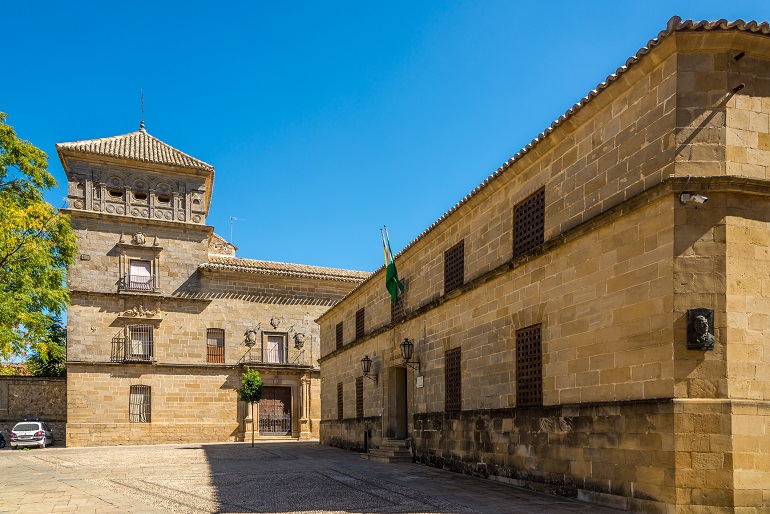
The Palacio del Deán Ortega, now functioning as a Parador (state-run hotel), represents another masterpiece by Andrés de Vandelvira. Built in the mid-16th century for Fernando Ortega, Dean of the Cathedral of Málaga, the palace exemplifies the refined architectural taste of Úbeda's ecclesiastical elite. The façade features a central portal framed by Ionic columns and topped by a balcony with an elaborate decorative surround. The building is organised around a central courtyard with two levels of arcades supported by slender columns with finely carved capitals. The palace's interior spaces feature coffered wooden ceilings and ornate plasterwork that demonstrate the high level of craftsmanship available in Renaissance Úbeda. The conversion of this historic building into a hotel has been carried out with great sensitivity to its architectural significance, allowing visitors to experience Renaissance splendour while enjoying modern comforts.
Around Calle Real and Calle de la Parras
Palacio de los Condes de Guadiana
The Palacio de los Condes de Guadiana exemplifies the sophisticated urban palaces built by Úbeda's nobility during the city's golden age. Constructed in the mid-16th century, the palace features a symmetrical façade with an elegant central portal flanked by windows adorned with classical motifs. The building is organised around a central courtyard with two levels of arcades supported by slender columns with intricately carved capitals. The palace's interior spaces feature coffered wooden ceilings and ornate plasterwork that demonstrate the high level of craftsmanship available to wealthy patrons in Renaissance Úbeda. Throughout the building, heraldic symbols remind visitors of the noble lineage of its original owners, who were among the most prominent families in the region and maintained close connections to the royal court.
Palacio de los Porceles
The Palacio de los Porceles, located on Calle Las Parras, belonged to Don Pedro Messía and follows Vandelvirian designs despite being built in the 17th century. Its lintel doorway is decorated with geometric elements and Tuscan columns, with a balcony flanked by sculptures of Apollo and Mercury.
Sinagoga del Agua (Water Synagogue)
The Sinagoga del Agua represents a remarkable archaeological discovery that sheds light on Úbeda's medieval Jewish community. Uncovered during renovation work in the early 21st century, this structure is believed to date from before the expulsion of the Jews from Spain in 1492. The synagogue takes its name from the mikveh (ritual bath) found in its lower level, which was fed by an underground spring. The building features several rooms arranged around a central patio, including a prayer hall with niches that once held Torah scrolls. Archaeological evidence suggests that the synagogue was hastily converted to other uses when the Jewish community was forced to convert or leave Spain. The site offers a rare glimpse into the religious practices of medieval Spanish Jews and stands as a testament to the multicultural heritage of Úbeda before the era of religious uniformity imposed by the Catholic Monarchs.
Palacio Vela de los Cobos
Another significant Renaissance building in Úbeda is the Palacio Vela de los Cobos, designed by renowned architect Andrés de Vandelvira in 1551. This palace, which remains inhabited, features an impressive façade with Corinthian columns, Ionic balconies, and Telamon warriors holding the original owner's coat of arms. The interior, refurbished in the 19th century, houses an art collection, a library, and historical archives. Visitors can explore this blend of Renaissance architecture and 19th-century refinement through guided tours.
Plaza del Primero de Mayo
The Plaza del Primero de Mayo, formerly known as Plaza del Mercado (Market Square), has served as Úbeda's commercial heart since medieval times. This spacious square is surrounded by arcaded buildings that once housed shops and workshops, creating a sheltered space for merchants and customers. The square's irregular shape contrasts with the geometric precision of the Plaza Vázquez de Molina, reflecting its organic development as a commercial centre rather than a planned monumental space. The buildings surrounding the plaza display a variety of architectural styles, from simple vernacular structures to more elaborate Renaissance façades, creating an interesting architectural ensemble that tells the story of Úbeda's development over the centuries. Today, the plaza continues to serve as a gathering place for locals and visitors alike, hosting markets, festivals, and everyday social interactions that maintain its historical role as the city's commercial and social hub.
In other parts of the Old Town
Hospital de Santiago
The Hospital de Santiago, often called 'El Escorial of the South', was commissioned by Diego de los Cobos, Bishop of Jaén, in the late 16th century. This monumental complex was designed to serve multiple functions: hospital, church, and palace. The imposing façade features a central portal flanked by columns and topped by a sculpture of Santiago Matamoros (St. James the Moor-slayer), the patron saint of Spain. The building is organised around a magnificent central courtyard with two levels of elegant arcades supported by slender Carrera marble columns. The hospital's church features a Latin cross plan with a dome at the crossing and contains several notable altarpieces. The building's interior spaces are adorned with Mannerist decorations, including grotesques and mythological figures that reflect the sophisticated artistic tastes of Renaissance Spain.

Casa de las Torres
The Casa de las Torres (House of Towers) is a formidable urban palace that combines defensive elements with Renaissance elegance. Built in the early 16th century for the wealthy Dávalos family, the building features a fortress-like exterior with four corner towers that give the palace its name. The imposing façade is constructed from golden sandstone and features a magnificent entrance portal framed by columns and topped by the family coat of arms. Despite its somewhat austere exterior, the building incorporates numerous decorative elements that reflect Renaissance aesthetics, including medallions depicting Roman emperors and mythological figures. The interior is organised around a central courtyard with galleries supported by columns. The Casa de las Torres represents an interesting transitional style between the defensive architecture of the late medieval period and the more open, classical designs of the full Renaissance.
Palacio de los Orozco
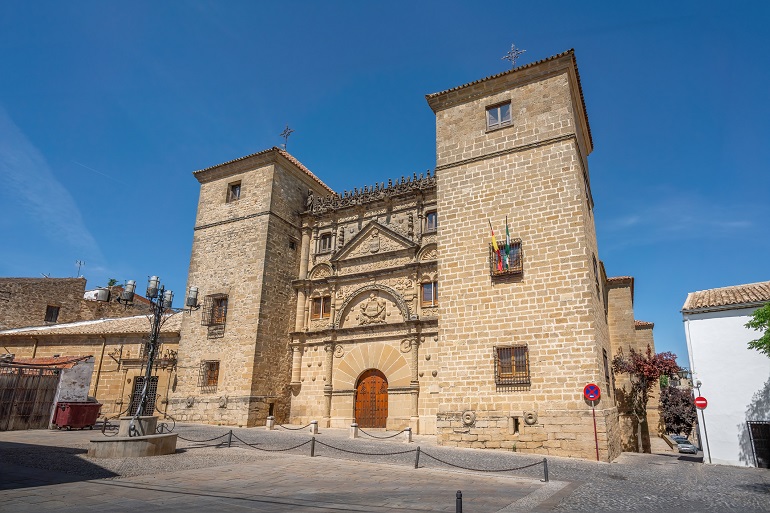
The Palacio de los Orozco stands as Úbeda's only example of 19th-century palatial architecture, featuring French influences and modernist touches. It displays distinctive carpanel arches in its doors and windows, garland decorations, and beautiful balusters. The palace formerly served as the chapel of the College of the Carmelite Sisters of Charity.
City Walls and Gates
Úbeda's medieval origins are evident in the remnants of its city walls and gates, which once completely encircled the town. The most significant surviving gate is the Puerta de Sabiote, which features a horseshoe arch that clearly demonstrates the Moorish influence on the city's early architecture. This gate was part of the defensive system that protected Úbeda during the turbulent period of the Reconquista, when the city changed hands several times between Christian and Muslim rulers. Other sections of the wall can be seen at various points around the old town, particularly on the northern side. These defensive structures, built primarily of local sandstone, have been incorporated into later buildings in many cases, creating an interesting architectural palimpsest that reveals the city's layered history. The walls offer visitors a glimpse into Úbeda's strategic importance as a frontier town during the medieval period, before it transformed into a Renaissance jewel in the 16th century.
Top Museums
Archaeological Museum of Úbeda (Museo Arqueológico)
Housed in a stunning 14th-century Mudejar house, this museum offers a comprehensive overview of the region's archaeological history. The building itself, discovered during construction works in 1964 and opened as a museum in 1973, is organised around a central courtyard and represents fine domestic Mudejar architecture.
The collection spans from prehistoric times to the Muslim era, featuring artefacts from various historical periods. In the interior courtyard, visitors can observe parts of an ancient mill and two beautiful Iberian lions from Ubeda La Vieja, while the remainder of the museum is dedicated to Roman remains.
Notable exhibits include prehistoric material from La Calera, Iberian period pieces from Castellones de Ceal, and Iberian votive offerings of bronze and terracotta. The museum provides valuable context to understand the rich cultural heritage of Úbeda and its surroundings.
Museo de Alfarería (Pottery Museum)
Ranked as the top museum in Úbeda, the Pottery Museum is situated in a former factory in an industrial neighbourhood dating back to the late 19th and early 20th centuries. The museum serves as a testament to the traditional pottery wealth of the local population.
The "Paco Tito" Pottery Museum brings together the most important works produced by the potter Paco Tito and walks visitors through the history of Úbeda pottery. The collection includes traditional pieces such as oil cans, pots, and jugs, alongside decorative sculptures and large works. Particularly noteworthy are the enormous plates, Alhambra vases, and the famous collection of quijotes, predominantly featuring green, brown, and black colours.
Centro de Interpretación Olivar y Aceite
Located in the historic Casa de la Tercia building, this unique tourist and museum centre is dedicated to the dissemination of virgin olive oil, a product deeply rooted in the culture and economy of the region. Visitors can learn about the history, production, and uses of this valuable product in a beautiful and historic setting.
Casa Arte Andalusí
This museum features one of the oldest cellars in the city with an angular vault. The homage room on the upper floor contains magnificent 16th-century furniture, including a coffered ceiling, litter bins, an embossed silver cabinet, and a book collection. The museum also boasts a crafts yard with facilities for blacksmithing, carpentry, pottery, and stonework, as well as a saddlery with a 19th-century horse carriage.
Museum John of the Cross
Ranked third among Úbeda's museums, this institution is dedicated to the Spanish mystic poet and Roman Catholic saint. Though details are limited in the search results, it likely focuses on his life, works, and religious significance.
Casa Museo Andalusí
Completing the top five museums in Úbeda, this house museum offers visitors an immersive experience of Andalusian culture and heritage. While specific details are not provided in the search results, it likely showcases traditional Andalusian architecture, art, and lifestyle.
Local Cuisine
Among the local specialities, andrajos stands out—a comforting stew made with rag-shaped pasta, vegetables, and meats, ideal for chilly days. Another must-try is ochíos, orange-glazed bread rolls often paired with morcilla en caldera, a savoury blood pudding pâté. For a unique taste experience, savour caracoles a la andaluza, snails slow-cooked in a spicy broth and served with toothpicks for easy eating. Sweet lovers will delight in candied almonds, caramelised to perfection during festive occasions. Úbeda is also renowned for its high-quality olive oil, a staple in its cuisine and an essential souvenir for visitors.
Getting There & Around
Úbeda is best reached by ALSA buses from Baeza (€2, 15 minutes), Jaén (€6, 1 hour), Granada (€8-13, 2½ hours), and Madrid (€24, 3½ hours), with the central bus station located near the historic quarter. Rail travellers can use Linares-Baeza station (26km away), connected to Úbeda by taxi (20-30 minutes) or bus (50 minutes), whilst motorists can access the town via the A-32 from Linares or A-316 from Jaén. The nearest airports are in Granada (140km) and Málaga (250km). Within Úbeda, the charming historic centre is best explored on foot, with two local bus routes serving major attractions until evening. Taxis and ride-hailing apps offer convenient alternatives, but private cars are discouraged due to scarce parking and limited access to historical sites.