


| Contents |
|---|
Introduction
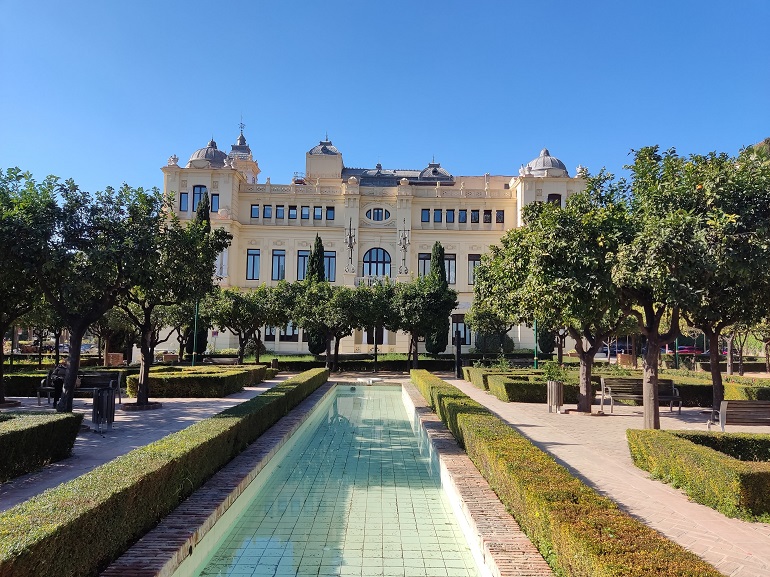
Málaga (pop. 592,000) is a vibrant port city located on Spain's southern coast along the Mediterranean Sea, serving as the capital of the Costa del Sol region in Andalusia. The city boasts a subtropical Mediterranean climate with over 300 days of sunshine annually, making it a year-round destination for visitors. Málaga's rich history spans over 2,800 years, evident in its well-preserved Roman theatre, Moorish Alcazaba fortress, and Renaissance cathedral, whilst its modern identity is equally compelling as the birthplace of Pablo Picasso and home to numerous world-class museums including the Picasso Museum and Centre Pompidou Málaga. The city serves as both a gateway to the popular beach resorts of the Costa del Sol and a destination in its own right, offering visitors a blend of historical architecture, contemporary art, traditional Andalusian culture, and a thriving culinary scene centred around its bustling old town and picturesque harbour area.
Interesting Facts about Malaga
- Málaga is one of the world's oldest cities, with evidence of human settlement dating back to the Phoenicians around 770 BCE, when it was called "Malaka".
- The city is the sixth-largest in Spain with a population of over 577,000 people.
- Pablo Picasso, one of the most famous artists of the 20th century, was born in Málaga in 1881.
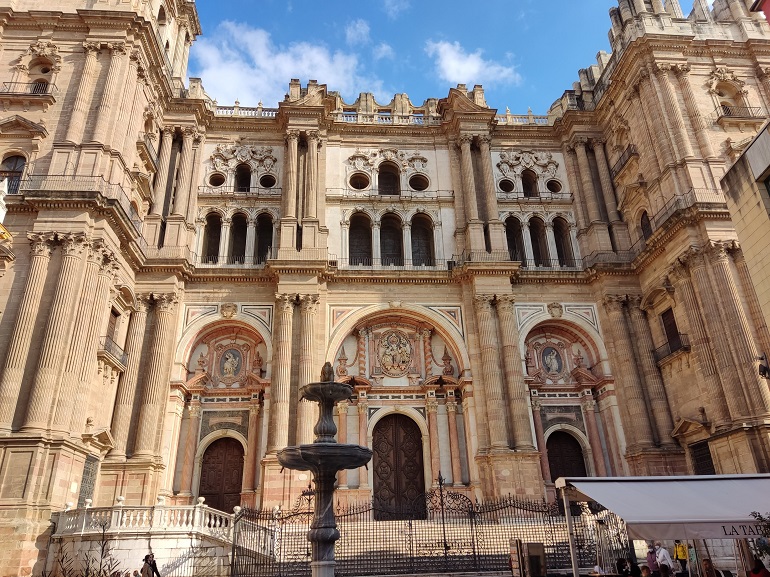
- The city's cathedral is affectionately nicknamed "La Manquita" (the one-armed lady) because it has only one completed tower, breaking traditional architectural symmetry.
- Locals from Málaga are commonly known as "boquerones" (anchovies), and these fish are indeed a beloved local delicacy.
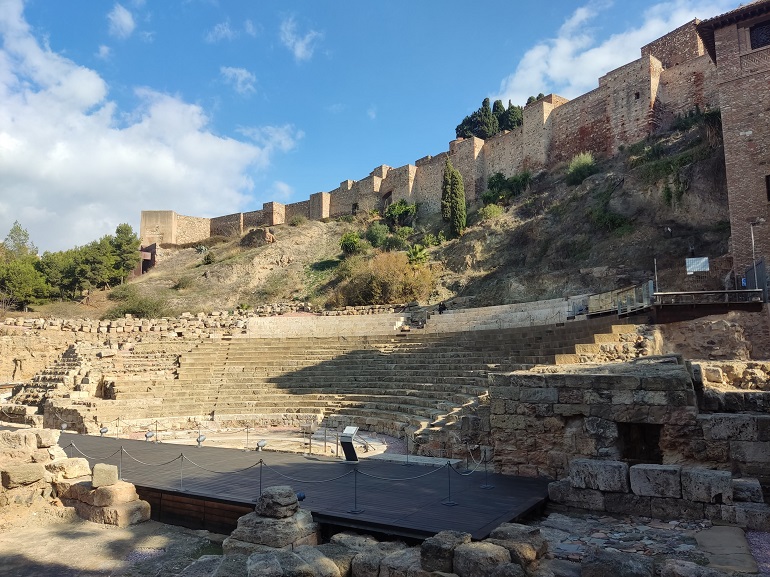
- The remarkably well-preserved Roman Theatre of Málaga dates back to the 1st century CE and still hosts performances today.
- The impressive Alcazaba, an 11th-century Arab fortress perched atop a hill, stands as one of Andalusia's finest examples of Islamic architecture.
- Málaga enjoys over 300 sunny days per year, making it one of Europe's sunniest destinations.
- In Moorish times, the Mediterranean Sea reached as far inland as the current Atarazanas Market area, showing how much land the city has reclaimed from the sea.
- The city is famous for its sweet wine called "Málaga Dulce," made from Moscatel grapes.
- La Farola de Málaga is one of the few lighthouses in Spain with a feminine name and dates back to the 19th century.
- Hollywood actor Antonio Banderas is also from Málaga and even owns the Soho CaixaBank theatre in the city.
- The English Cemetery in Málaga, established in 1831, was the first Protestant cemetery built on mainland Spain.
- The vibrant Málaga Fair takes place for an entire week every August, featuring flamenco dancing, live music, and traditional celebrations.
- The city is surrounded by the stunning Montes de Málaga Natural Park, which is home to two-thirds of Spain's local fauna.
History
Málaga boasts one of the most ancient and fascinating histories in Europe, with evidence of continuous habitation spanning nearly 3,000 years. The Phoenicians from Tyre founded the settlement around 770 BCE, establishing a trading post they called Malaka (meaning "fish salting place" or derived from "malac - to salt"). This strategic location controlled access to the Guadalmedina River and served as a crucial waypoint on trade routes between Phoenicia and the Strait of Gibraltar. Following Phoenician decline, the city fell under Carthaginian rule during the 6th or 5th century BCE, before the Romans conquered it in 218 BCE after the Punic Wars. Under Roman governance, the city flourished as Malaca, operating under special municipal law called the Lex Flavia Malacitana, which granted free-born residents the privileges of Roman citizenship. The Romans constructed a theatre that remains visible today, making it one of the oldest in all of Hispania. After Rome's fall, the Visigoths controlled the city until the Byzantines briefly seized it in 552 CE, making Málaga a principal city of the short-lived Byzantine Provincia Spaniae until 624 CE.
The Moorish conquest in 711 CE marked the beginning of Málaga's golden age as Mālaqah, transforming it into one of Al-Andalus's most important ports and commercial centres. The city was encircled by impressive walls with five massive gates, and flourished with distinct quarters for Genoese merchants and Jewish communities. Under Moorish rule, Málaga served as the principal maritime port for Granada, renowned for its figs and wine trade. The magnificent Alcazaba palace was constructed in 1035, whilst the Gibralfaro fortress was built later by Yusuf I as defence against Christian forces. However, after centuries of prosperity, Málaga became one of the last Moorish strongholds to fall during the Reconquista. The Catholic Monarchs Isabella and Ferdinand laid siege to the city in 1487, resulting in one of the longest and most bitter sieges of the entire Reconquista campaign. The city finally surrendered on 19th August 1487, with the Muslim population facing enslavement or death as punishment for their fierce resistance. The conquest proved a devastating blow to the Nasrid Kingdom of Granada, which lost its principal maritime port.
Following the Christian conquest, Málaga entered a period of significant decline that lasted well into the 18th century. The expulsion of converted Moors in 1568, combined with devastating natural disasters including major floods in 1580, 1621, and 1661, earthquakes in 1494 and 1680, and plague outbreaks including the bubonic plague of 1637, severely weakened the city. The yellow fever epidemic of 1803 further decimated the population. However, the 19th century marked a remarkable transformation as Málaga became Spain's first industrialised city, pioneering the Industrial Revolution on the Iberian Peninsula. The city played a crucial role in Spanish liberalism and political upheaval, including the proclamation of the Canton of Málaga during the Cantonal Revolution on 22nd July 1873. Notable infrastructure developments included the Córdoba-Málaga railway in 1862, the iconic Calle Marqués de Larios in 1891, and the bullring Plaza de toros de La Malagueta in 1876. The 20th century brought international recognition when Pablo Picasso was born in the city in 1881, whilst Málaga Airport opened in 1919, laying foundations for the modern tourism industry. Today, Málaga stands as one of Spain's largest cities, boasting the country's second-largest harbour and serving as a premier tourist destination on the Costa del Sol.
Main Attractions
Alcazaba
The Alcazaba is a palatial fortification built by the Hammudid dynasty in the early 11th century. Situated on a hill overlooking the city, it served as the citadel for the city's rulers. Its design features a double-walled perimeter and fortified gateways, making it a formidable defensive structure in its time. Internally, the complex is organised around a series of courtyards, known as patios, which are decorated with fountains, and surrounded by gardens. Visitors can walk through the restored Nazari Palace within its walls, which provides insight into the architecture and lifestyle of the Moorish period in southern Spain.

Castillo de Gibralfaro (Gibralfaro Castle)
Constructed in the 14th century on the hill of the same name, the Castillo de Gibralfaro was built to house troops and protect the Alcazaba, to which it is connected by a walled corridor. Its primary function was military, and its elevated position provided a strategic vantage point over the port and the Mediterranean Sea. The castle is best known today for its extensive ramparts, which visitors can walk along to gain panoramic views of Málaga and the surrounding coastline. An interpretation centre inside the former powder keg building details the castle's history as a military garrison.
Málaga Cathedral ("La Manquita")
Construction on the Cathedral of Málaga began in the 16th century on the site of a former mosque, blending Renaissance and Baroque architectural styles over its long building period. It is famously known as "La Manquita," or "The One-Armed Lady," because its south tower was never completed due to a lack of funds. The interior is noted for its grand scale, featuring an ornate choir stall carved from mahogany and cedar. The cathedral offers public access that includes guided tours of the main building and an opportunity to climb the 200 steps to the rooftop for extensive views across the historic centre.
Roman Theatre
Located at the foot of the Alcazaba hill, the Roman Theatre is the oldest monument in Málaga, dating back to the 1st century BCE during the reign of Emperor Augustus. It was used for theatrical performances for several centuries before falling into disuse and being buried under debris for almost 500 years. The theatre was rediscovered in 1951 during civic construction work and has since been partially excavated and restored. Today, the site is open to the public, with a modern visitor centre explaining its history, and the theatre's stage and tiered seating are occasionally used for open-air performances.
Historic Centre
Málaga's historic centre is a largely pedestrianised area characterised by a dense network of narrow streets and open squares that reflect its long history. The main thoroughfare, Calle Marqués de Larios, is a wide 19th-century street known for its high-end shops and architectural uniformity. Surrounding it are labyrinthine lanes from the Moorish period, along with numerous plazas such as Plaza de la Constitución and Plaza de la Merced. The area contains a high concentration of cafes, tapas bars, and independent shops, set amongst buildings that showcase a mix of Baroque, Renaissance, and modern architectural styles.
Puerto de Málaga (Port of Málaga) and Muelle Uno
The Port of Málaga has been redeveloped into a major commercial and leisure hub. A key part of this transformation is Muelle Uno (Quay One), a contemporary open-air shopping and dining complex that runs along the eastern side of the port. This waterfront promenade offers views of the city's skyline, the Alcazaba, and the marina's yachts. Muelle Uno is also the departure point for various boat tours and catamaran cruises, and it houses a cultural venue, the Centre Pompidou Málaga, distinguished by its multi-coloured glass cube.
Atarazanas Market
The Mercado Central de Atarazanas is the city's main fresh food market, housed in a 19th-century iron structure. The building incorporates a monumental 14th-century Moorish archway, which was the original entrance to the Nasrid shipyard that once stood on the site—atarazanas being the Arabic word for shipyard. The market's most striking feature is its large stained-glass window depicting historical scenes of the city. Inside, stalls are organised into sections for fish, meat, and produce, offering a wide array of local and seasonal goods. It is also a popular spot for informal lunches, with several small bars serving tapas made with ingredients from the market.
Parador de Málaga (Viewpoint)
The Parador de Málaga Gibralfaro is a state-run hotel situated adjacent to the Gibralfaro Castle. While it functions as tourist accommodation, its terrace and cafe are accessible to the general public and are widely regarded as one of the finest viewpoints in the city. Located high on the Gibralfaro hill, it provides an unobstructed, panoramic perspective of the Port of Málaga, the bullring, La Malagueta beach, and the cityscape against the backdrop of the sea. It is particularly popular at sunset and can be reached via a steep but scenic path from the city or by road.
Top Museums
Picasso's Legacy
Museo Picasso Málaga
Housed in the beautifully restored 16th-century Palacio de Buenavista, the Museo Picasso Málaga charts Pablo Ruiz Picasso’s protean career through a permanent collection of 285 works donated by his family. Visitors progress chronologically from early academic studies and cubist experiments to ceramics and late-period reinterpretations of Old Masters. The museum’s integration of Renaissance architecture with contemporary interventions creates an evocative setting in the city centre, mere steps from Picasso’s birthplace and the cathedral.
Fundación Museo Picasso. Museo Casa Natal
In the birthplace of Pablo Picasso on Plaza de la Merced, this intimate house-museum presents personal artefacts, early sketches and family photographs. The modest domestic rooms evoke Picasso’s formative years and illustrate the provenance of his enduring attachment to Málaga.
Spanish & Andalusian Art
Museo de Málaga
Situated in the grand Neoclassical Palacio de la Aduana, the Museo de Málaga merges fine art and archaeology under one roof. Its archaeological galleries display artefacts spanning Phoenician, Roman, Visigothic and Islamic civilisations, while the fine-arts wing exhibits 19th- and 20th-century Andalusian painting. As the largest museum in Andalusia, it offers a comprehensive survey of regional heritage from antiquity to modernity.
Museo Carmen Thyssen Málaga
Set in a former tobacco factory near the Alcazaba, this museum showcases over 230 paintings from the collection of Baroness Carmen Thyssen-Bornemisza. Focusing on 19th-century Spanish art—particularly Andalusian costumbrismo and landscapes—the galleries feature luminaries such as Sorolla, Zuloaga and Aureliano de Beruete. The museum’s elegant galleries and rotating special exhibitions highlight the evolution of Spanish painting from Romanticism to early Modernism.
Museo Revello de Toro
Dedicated to the 20th-century portraitist Félix Revello de Toro, this municipal museum occupies a restored 17th-century residence in Soho. It displays over 150 works—portraits of Andalusian personalities, devotional compositions and self-portraits—that reflect Revello de Toro’s academic technique and nuanced realism. The intimate galleries and reconstructed period rooms highlight his enduring connection to Málaga’s society and traditions.
Contemporary & International Art
Centre Pompidou Málaga
Installed in the striking multicoloured “Cubo” at Muelle Uno, the Centre Pompidou Málaga is the first permanent overseas outpost of Paris’s Centre Pompidou. Over 80 masterpieces drawn from its collection—by Picasso, Miró, Magritte, Giacometti and others—are arranged around thematic axes such as metamorphosis, the fragmented body and modern utopias. Periodically refreshed, the exhibition explores 20th- and 21st-century art through sculpture, painting, design, photography and video.
CAC Málaga (Centro de Arte Contemporáneo)
Born of Málaga City Council’s initiative in 2003, CAC Málaga occupies a repurposed wholesale market building on Calle Alemania. Emulating the German Kunsthaus model, it presents cutting-edge Spanish and international art since the 1970s. Five exhibition halls host dynamic temporary shows, while the expanding permanent collection reflects trends in painting, sculpture, installation, photography and video. Complementary lectures, workshops and educational programmes foster an open dialogue on contemporary practice.
Museum Jorge Rando
As Spain’s sole museum devoted to Expressionism, the Museum Jorge Rando explores the spiritual and humanistic facets of the movement through the works of Málaga-born painter Jorge Rando. Within four naturally lit galleries, Rando’s thematic cycles—ranging from African scenes and religious passion to landscapes and maternity—are interwoven with temporary exhibitions of national and international Expressionist and Neo-Expressionist artists. The museum’s motto, “Doors always open… so that people go in and museum goes out,” underpins its free-entry ethos and its role as a living forum for art and ideas.
Russian Museum Collection, Málaga
This branch of the State Russian Museum in Saint Petersburg occupies a restored tobacco factory near the port. It presents a rotating selection of some 70 works—icon paintings, Impressionist canvases and Soviet-era pieces—tracing Russian art from the 18th century to the avant-garde. The industrial-chic galleries offer a distinctive counterpoint to Málaga’s Andalusian setting.
Thematic Museums
Museo del Vidrio y Cristal de Málaga
Housed in an 18th-century palace on Calle Luz, the Glass and Crystal Museum explores the history of glassmaking from Roman times to the present. Its collection of over 2,000 pieces—vases, chandeliers, stained-glass panels and millefiori objects—demonstrates technical innovations and decorative styles across Europe. The museum’s period interiors and ornate patios enhance the display of this fragile art form.
Museo del Vino
Located in an 18th-century merchant’s house in the historic centre, the Wine Museum traces Málaga’s viticultural heritage. Corked bottles, antique presses and vintage labels illustrate the production of sweet and fortified wines that have shaped the region’s economy and culture. The museum’s sensory installations and interpretive panels deliver an immersive oenological experience.
Local Cuisine
The city’s signature dish is espeto de sardinas, fresh sardines skewered and grilled over open flames on the beach, while the fritura malagueña features a tempting assortment of crisp, fried fish such as anchovies, calamari, and red mullet. For something refreshing, try a Malaga salad—a unique combination of potatoes, oranges, olives, onions, and flaked cod dressed with olive oil. Other must-try specialities include the hearty plato de los montes (a mountain plate of pork loin, chorizo, fried egg, and potatoes), the cold almond and garlic soup known as ajoblanco, and berenjenas con miel, delicious aubergine slices drizzled with cane honey. Malaga’s food scene artfully blends sea and land, tradition and innovation, ensuring there’s a memorable taste for every palate.
Shopping
Strolling through Málaga’s historic centre, visitors will find a mix of high-street brands and independent boutiques along pedestrianised streets such as Calle Larios and Calle Nueva, where shops generally open from 10 am to 9 pm. Food markets like Atarazanas and Mercado de Salamanca, open Monday to Saturday until mid-afternoon, offer fresh produce, seafood and local delicacies beneath ornate 19th- and early 20th-century façades. The waterfront area at Muelle Uno combines open-air shopping with cafés and dining spots, while larger suburban centres—Larios Centro, Vialia María Zambrano and Plaza Mayor—provide over 80 international stores, leisure facilities and ample parking, making Málaga a versatile destination for both boutique browsing and mall-style retail therapy.
Nature in and around Malaga
Several natural attractions lie in and around Málaga. The Montes de Málaga Natural Park spans nearly 5,000 hectares of pine and oak woodland north of the city, through which a network of river valleys and marked trails allow visitors to explore its terrain. Near El Chorro, the Caminito del Rey features a 7.7-kilometre route suspended on steel walkways along the walls of the Gaitanes Gorge overlooking the Guadalhorce reservoir. To the east, the Cueva de Nerja cave complex extends over 6 kilometres and contains prehistoric wall paintings in its inner chambers. Southwest of Málaga, the El Torcal de Antequera reserve displays distinctive limestone karst formations formed by erosion over millennia. On the Mediterranean coast, the Playa de la Malagueta and Playa de Burriana offer sandy beaches and calm waters adjacent to local promenades. Together, these sites showcase the diversity of landscapes available for hiking, caving and seaside activities within short distances of Málaga.
Beaches
La Malagueta Beach
La Malagueta is the main urban beach of Málaga, located just east of the port and within a short walk from the city centre. Its wide stretch of dark sand is man-made, created with sand imported to establish the shoreline. The beach is a popular destination for both locals and tourists, equipped with facilities such as showers, sunbed and umbrella hire, and children's play areas. It is bordered by the Pablo Ruiz Picasso promenade, which is lined with palm trees and features numerous chiringuitos (beachside restaurants) serving fresh seafood and traditional dishes.
Pedregalejo and Huelin Beaches
To the east of the city centre lies Pedregalejo, a district that retains the character of its origins as a fishing village. The beachfront is distinctive for its series of small, sheltered coves protected by rock barriers, creating calm waters suitable for bathing. The promenade is renowned for its high concentration of seafood restaurants, where grilled sardines (espetos) are a local specialty. Further west of the port is Huelin beach, a wide and spacious area popular with local families. It features a long, modern boardwalk, sports facilities, and a less tourist-focused atmosphere than the central city beaches.
Parks & Gardens
Paseo del Parque
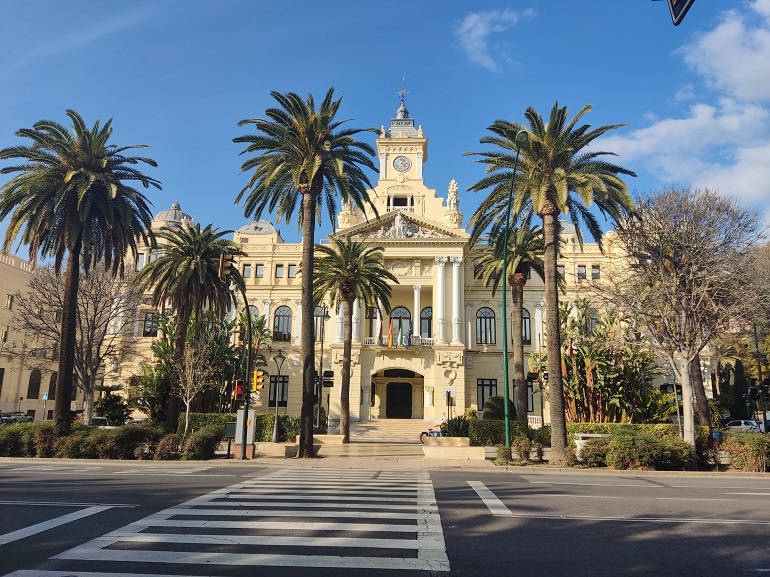
Stretching between the historic centre and the port, the Paseo del Parque is a long botanical park designed in the late 19th century. It functions as a verdant corridor and is planted with a diverse collection of tropical and subtropical flora from around the world, making it one of the most important public parks of its kind in Europe. Shaded pathways, ornate fountains, and statues are found throughout its length, providing a tranquil space for walking and relaxation. The park is flanked by significant buildings, including the City Hall and the Bank of Spain.
Jardín Botánico-Histórico La Concepción
Established in the mid-19th century by an aristocratic family, the La Concepción Botanical-Historical Garden is located in the northern outskirts of Málaga. It was created as a private estate garden and later opened to the public, eventually being declared a garden of historical and artistic interest. The grounds contain over 50,000 plants, including a significant collection of palms, bamboos, and aquatic plants, organised into themed areas. Its design features romantic landscaping with winding paths, waterfalls, and neoclassical sculptures, offering a different character to the city's public parks.

Natural Park
Montes de Málaga Natural Park
Covering a large area of mountains directly north of the city, the Montes de Málaga Natural Park was established primarily to protect the region from flooding by reforesting the catchment area of the Guadalmedina river. The park is now a vast expanse of Aleppo pine forest, with a diverse ecosystem of flora and fauna. It is accessible via a network of forest tracks and trails used for hiking, mountain biking, and wildlife observation. Several viewpoints (miradores) within the park offer vistas over the mountains and down towards the Mediterranean coast.
Getting There & Around
Getting to Málaga, the vibrant coastal city in southern Spain, is straightforward with several excellent transport options available. By train, you can travel via high-speed AVE services from Madrid (approximately 2.5 hours) or regional trains from other Spanish cities, with Málaga's main railway station, María Zambrano, conveniently located in the city centre and well-connected to the airport via the suburban train line. By coach, numerous operators provide comfortable long-distance services from major Spanish cities and international destinations across Europe, with coaches arriving at the central bus station that offers easy onward connections throughout the city. By car, Málaga is accessible via the excellent Spanish motorway network, particularly the A-7 coastal motorway (Autopista del Sol) and the A-45 from Madrid, though be aware that parking in the city centre can be challenging, so consider staying at accommodation with parking facilities or using the park-and-ride services available on the outskirts.
Best Time to Visit
The best time for a holiday in Málaga is during the spring, from April to May, or in the autumn, between September and October. During these months, the weather is pleasantly warm and sunny, perfect for exploring the city's historic streets or relaxing by the sea without the intense heat of the summer. You'll also find fewer crowds and more reasonable prices for accommodation and flights compared to the peak season. While the summer months of June to August offer guaranteed sunshine and a vibrant atmosphere, they can be uncomfortably hot and are significantly busier. Winter, though mild, can bring rain, but it is the ideal time for budget-conscious travellers looking to enjoy Málaga's world-class museums and galleries without the queues. Ultimately, for the ideal balance of glorious weather and a relaxed pace, spring and autumn are the prime seasons to experience the best of this Andalusian gem.