


| Contents |
|---|

Introduction
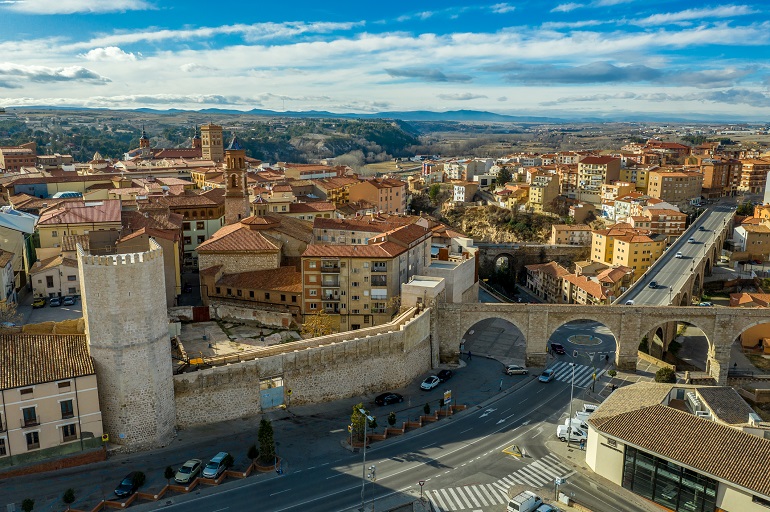
Teruel sits at 915 metres above sea level and is home to approximately 35,900 residents, making it Spain's least populated provincial capital. The city is distinguished by its UNESCO-listed Mudéjar architecture, a unique blend of Islamic and Gothic styles visible in its remarkable towers of San Martín, El Salvador and San Pedro, as well as the Cathedral of Santa Maria de Mediavilla. Known for its harsh climate with significant daily temperature variations, Teruel offers visitors a compact medieval centre with Renaissance and Modernist buildings surrounding Plaza del Torico, the main square. The city is famous for its excellent jamón serrano (cured ham), local pottery, nearby dinosaur remains and archaeological sites, and two notable annual celebrations: Las Bodas de Isabel de Segura in February, which recreates the legendary tale of the "Lovers of Teruel", and La Vaquilla del Ángel festivities in July. The Lovers' Mausoleum, Provincial Museum and Dinópolis palaeontological park are among the city's principal attractions.
Interesting Facts about Teruel
- A campaign group with the slogan "Teruel existe" ("Teruel exists") was founded in 1999 to press for greater recognition and investment in the town.
- Teruel remains the only provincial capital in peninsular Spain without a direct road or railway link to Madrid.
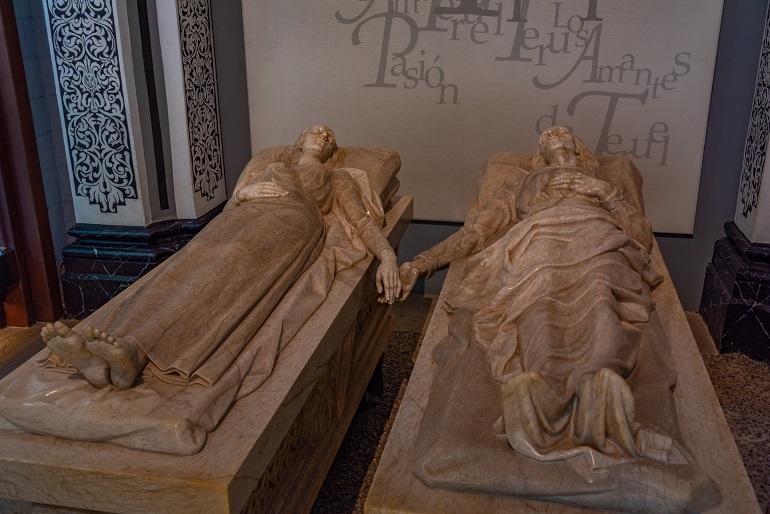
- The city houses the tombs of the famous "Lovers of Teruel," Diego and Isabel, whose tragic love story predates Romeo and Juliet by 350 years.
- Teruel was originally an Iberian settlement called Turba, which was destroyed by the Romans.
- The city features impressive structures from the 16th century, including a cathedral (begun in 1248 but altered between 1596-1614) and an aqueduct built by Pierre Bedel.
- Teruel sits high in the Aragon mountains and was once a walled city, with some remains still visible today.
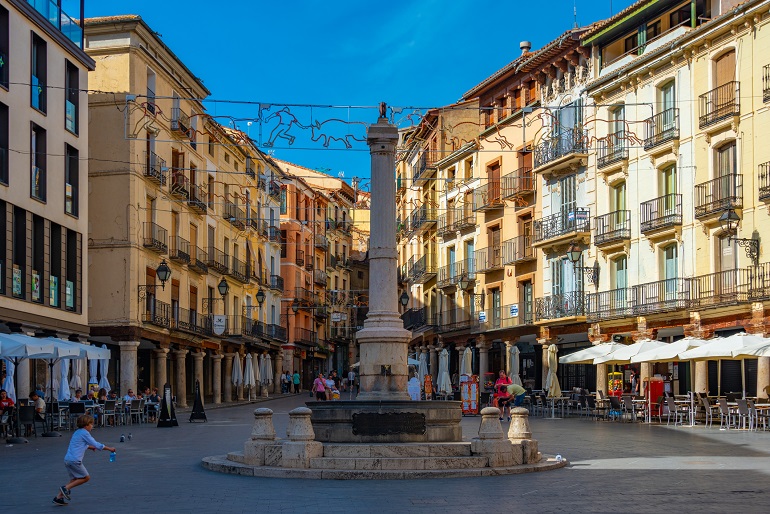
- The city's emblem is "El Torico" (the little bull), which is featured as a sculpture on a stone column above a central water fountain in Plaza del Torico.
History
Nestled in the mountainous terrain of Spain’s Aragón region, Teruel’s history is a rich tapestry woven from Iberian, Roman, Islamic, and Christian threads. The city’s origins trace back to the ancient Iberian settlement of Turba, which was destroyed by the Romans in 218 BCE during the Second Punic War as retribution for the Carthaginian general Hannibal’s sack of Saguntum. Following the Roman era, Teruel emerged as a strategic Moorish stronghold after the 8th century, thriving under Islamic rule until its reconquest by Alfonso II of Aragon in 1171. This pivotal moment marked the beginning of a unique cultural synthesis, as the city retained its Muslim population under Christian governance, fostering the development of the Mudéjar architectural style—a harmonious blend of Islamic craftsmanship and Gothic structural principles. The legacy of this period is etched into Teruel’s skyline, most notably through its iconic brick towers and the intricate wooden ceiling of the cathedral, which became a UNESCO World Heritage Site in 1986.
The 13th to 15th centuries heralded Teruel’s golden age as a centre of Mudéjar innovation, with masterpieces such as the Torre de San Salvador (1315) and the Torre de San Martín (14th century) redefining its urban landscape. These towers, characterised by geometric brickwork, glazed ceramic tiles, and horseshoe arches, exemplify the fusion of Islamic decorative motifs with Christian ecclesiastical architecture. The Cathedral of Santa María de Mediavilla, originally a 12th-century Romanesque structure, was transformed during this period with the addition of a Mudéjar tower (1257) and a breathtaking painted ceiling depicting medieval life, biblical scenes, and Islamic-inspired patterns. This artistic flourishing was not merely aesthetic but symbolic of the coexistence of Jewish, Muslim, and Christian communities, whose collaboration underpinned Teruel’s status as a beacon of cultural pluralism in medieval Spain.
Teruel’s historical narrative is also coloured by its poignant legends and modern struggles. The 13th-century tale of the “Lovers of Teruel”—star-crossed lovers Diego de Marcilla and Isabel de Segura, whose thwarted romance ended in tragedy—remains etched in local lore, immortalised in literature and enshrined in the Mausoleo de los Amantes within the Church of San Pedro. By the late 20th century, Teruel faced challenges of depopulation and neglect, prompting the grassroots movement “Teruel existe” (“Teruel Exists”) in the 1990s to demand greater infrastructural investment. This campaign underscored the city’s resilience, mirrored in landmarks like the Escalinata del Óvalo (1921), a neo-Mudéjar staircase bridging the historic centre with the railway station, symbolising Teruel’s enduring connection to its past while striving for modernity. Today, Teruel stands as a testament to the enduring legacy of cross-cultural dialogue, its history alive in every brick and tile of its UNESCO-listed monuments.
Main Attractions
Mudéjar Towers
Torre de El Salvador
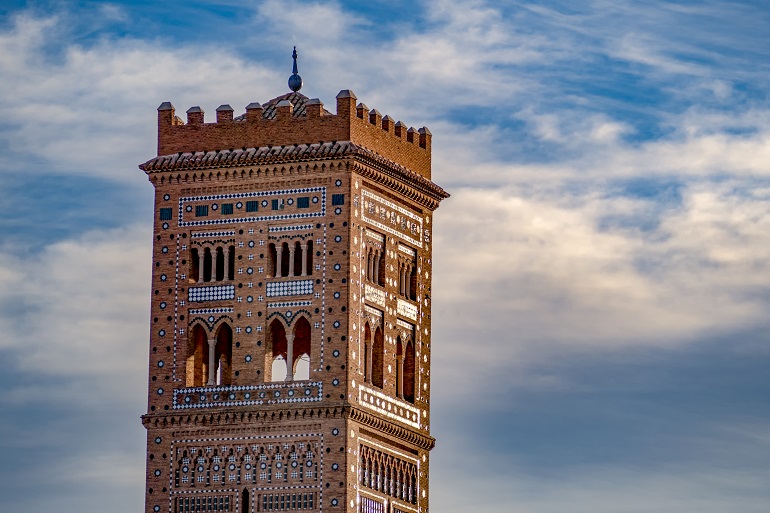
The Torre de El Salvador stands as one of Teruel's most magnificent examples of Mudéjar architecture, a style that earned UNESCO World Heritage status for the city. Constructed in the 14th century, this impressive tower rises 40 metres above the streets of Teruel, commanding attention with its intricate brickwork patterns and ceramic decorations. The tower features geometric designs and star-shaped motifs that reflect the Islamic influence on Spanish architecture during this period. Visitors who climb the internal staircase are rewarded with breathtaking panoramic views of Teruel's historic centre and the surrounding countryside. The tower's exterior is particularly striking when illuminated at night, highlighting the detailed craftsmanship that has survived for over six centuries.
Torre de San Martín
The Torre de San Martín, dating from 1316, represents another stunning example of Teruel's Mudéjar heritage. Slightly older than El Salvador, this tower is immediately recognisable by its slight lean, which adds to its character and charm. The tower features an octagonal structure adorned with elaborate ceramic work and intricate geometric patterns. Its brickwork displays a mesmerising array of designs, including the characteristic diamond patterns and interlacing arches typical of Mudéjar style. While the interior is not accessible to visitors, the exterior offers ample opportunity to appreciate the detailed craftsmanship. The tower stands at the entrance to the old town, serving as both a historical landmark and an artistic masterpiece that has influenced architectural styles throughout Spain.
Torre de San Pedro
The Torre de San Pedro holds the distinction of being the oldest of Teruel's celebrated Mudéjar towers. Attached to the Iglesia de San Pedro, this tower represents the earliest development of the Mudéjar style in the region. Its construction techniques and decorative elements show the evolution of this unique architectural tradition. The tower features less elaborate ornamentation than its younger counterparts but compensates with a sense of historical gravitas. The brickwork displays simple yet elegant geometric patterns that would later evolve into the more complex designs seen in the city's other towers. Visitors can access the tower for a modest fee, allowing them to appreciate both the historical significance and the architectural innovation it represents in the development of Teruel's distinctive skyline.
Religious Sites
Catedral de Santa Maria de Mediavilla
The Catedral de Santa Maria de Mediavilla stands as Teruel's spiritual heart and architectural jewel. This UNESCO-listed cathedral dates primarily from the 12th and 13th centuries, though it has undergone numerous modifications throughout its history. The cathedral's most remarkable feature is its spectacular wooden ceiling, considered one of the finest examples of Mudéjar craftsmanship in existence. This coffered ceiling, painted in the 14th century, depicts an extraordinary array of scenes from daily medieval life, religious imagery, and fantastical creatures, all rendered in vibrant colours that have remarkably maintained their brilliance over the centuries. The cathedral's bell tower, another Mudéjar masterpiece, rises majestically above the city. Inside, visitors will find a blend of architectural styles, from Romanesque elements to Gothic features, all harmoniously integrated. The cathedral houses several notable artworks, including a 16th-century alabaster altarpiece and various religious sculptures that span several centuries of artistic development.

Iglesia de San Pedro
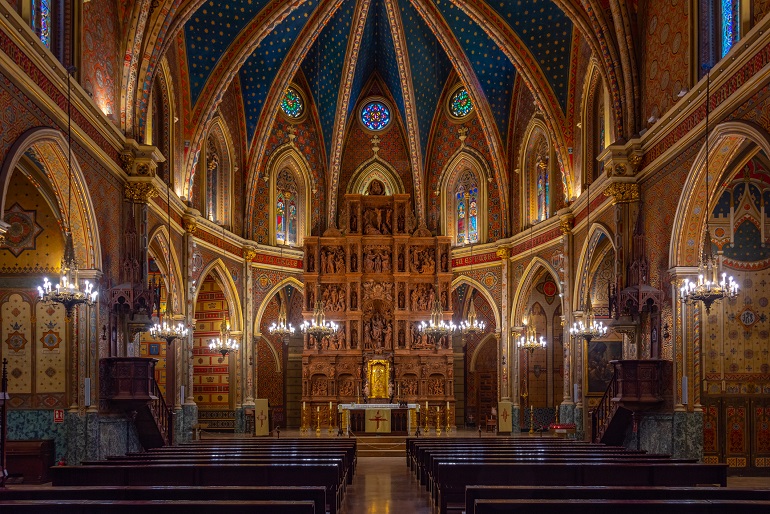
The Iglesia de San Pedro combines architectural significance with romantic legend, making it one of Teruel's most emotionally resonant sites. This 14th-century church features an unusual Modernista-style ceiling added in the 1890s, covered in gold stars against a deep blue background that creates a celestial atmosphere within the sacred space. The church's architecture represents a fascinating blend of styles, with its Mudéjar tower contrasting with Gothic elements in the main structure. The church gained additional fame as the setting for part of the legendary tale of the Lovers of Teruel, whose mausoleum is housed within the complex. The interior features several notable chapels with period artwork, and the church's stained glass windows cast colourful patterns across the stone floors when sunlight streams through them. The combination of architectural beauty and romantic association makes this church particularly atmospheric and evocative of Teruel's rich cultural heritage.
Other Attractions
Mausoleum of the Amantes
The Mausoleum of the Amantes (Lovers) houses what is perhaps Teruel's most famous cultural legacy—the tombs of Diego de Marcilla and Isabel de Segura, whose tragic love story has captivated imaginations for centuries. According to legend, these star-crossed lovers died in the 13th century when Diego returned from seeking his fortune (a condition for marrying Isabel set by her father) only to find her married to another. When she refused his request for a kiss, he died of heartbreak on the spot. Isabel, attending his funeral, granted the posthumous kiss and then herself died of grief. The mausoleum, redesigned in 2005 by architect Alejandro Cañada, presents their alabaster tombs in a dignified, modern setting that honours the emotional power of the legend. The tombs themselves, sculpted by Juan de Ávalos in 1955, show the lovers reaching toward each other yet unable to touch—a poignant representation of their tragic story. The mausoleum complex includes an interpretive centre that explores the historical context of the legend and its cultural impact throughout the centuries, including its influence on literature, art, and even comparisons to Shakespeare's Romeo and Juliet.
Plaza del Torico
Plaza del Torico serves as Teruel's vibrant heart, a gathering place where locals and visitors alike come together under the watchful eye of the small bronze bull (El Torico) that gives the square its name. This charming plaza dates back to medieval times and has been the centre of city life for centuries. The square is surrounded by colourful modernist buildings, many featuring elaborate façades with floral motifs, wrought ironwork, and decorative ceramic tiles. The most striking of these is Casa El Torico, an extravagant Modernist building constructed in 1912 that showcases the influence of Catalonian architects on Teruel's urban landscape. The plaza's centrepiece is the column topped by the diminutive bull statue, which has become the unofficial symbol of the city. The square transforms throughout the day, from a quiet morning coffee spot to a lively evening venue where families stroll and socialise. During festivals, particularly the Fiestas de la Vaquilla del Ángel in July, the plaza becomes the epicentre of celebrations, filled with music, traditional dances, and festivities that showcase Teruel's cultural vibrancy.
La Escalinata del Óvalo
La Escalinata del Óvalo represents one of Teruel's most impressive architectural achievements of the early 20th century. This monumental neo-Mudéjar staircase was constructed between 1920 and 1921 to connect the elevated old town with the railway station below, bridging the city's medieval past with its modern development. Designed by architect José Torán, the staircase features 140 steps arranged in several flights and incorporates numerous decorative elements that pay homage to Teruel's architectural heritage. The structure is adorned with the town's coat of arms and includes sculptures depicting the legendary Lovers of Teruel at its base. The staircase's brickwork displays intricate geometric patterns inspired by the city's Mudéjar towers, creating a harmonious visual connection between this newer structure and Teruel's medieval landmarks. Flanking the stairs are two towers that echo the design of the city's historic Mudéjar towers, further reinforcing this architectural continuity. Beyond its practical function, La Escalinata has become an iconic landmark and a popular meeting point, offering impressive views of the newer parts of the city as visitors ascend or descend its ornate steps.

Plaza de San Juan
Plaza de San Juan offers visitors a tranquil counterpoint to the more bustling Plaza del Torico. This elegant square houses most of Teruel's civic buildings and provides a glimpse into the administrative heart of the city. The plaza is framed by impressive structures including the Provincial Government Building, which displays a harmonious blend of traditional and modern architectural elements. Mature trees provide welcome shade during summer months, creating a pleasant atmosphere for both locals conducting business and visitors seeking a moment of repose. Several cafés with outdoor seating areas allow visitors to enjoy the square's ambiance while observing daily life in Teruel. The plaza's open layout and architectural uniformity create a sense of formal elegance that contrasts with the more medieval character of other parts of the old town. During official ceremonies and civic celebrations, Plaza de San Juan takes on additional significance as the formal gathering place for the city's authorities and citizens, continuing its centuries-old role as a centre of public life.
Plaza de la Catedral
Plaza de la Catedral, with its irregular shape typical of medieval urban development, provides one of Teruel's most atmospheric settings. This square, nestled in the heart of the old town, offers excellent views of the Cathedral's Mudéjar tower and the Renaissance town hall that anchors one side of the plaza. The square's uneven dimensions and the varied heights of surrounding buildings create a sense of historical authenticity that transports visitors back through the centuries. The plaza serves as a natural gathering point before or after visiting the Cathedral, with several small establishments offering refreshments. The town hall (Ayuntamiento) dates from the 16th century and features an impressive façade with classical elements that contrast with the Mudéjar architecture visible elsewhere in the square. During evening hours, subtle lighting enhances the textural qualities of the historic buildings, creating a particularly magical atmosphere. The plaza hosts occasional cultural events and performances, particularly during summer months, when the historic setting serves as a dramatic backdrop for concerts and theatrical presentations that connect contemporary cultural expression with Teruel's rich heritage.
Aqueducts
Los Arcos Aqueduct
Los Arcos Aqueduct stands as a testament to Teruel's historical ingenuity in addressing the practical challenges of urban water supply. Constructed between 1537 and 1558 under the direction of French engineer Quinto Pierres Vedel, this remarkable two-level structure was built to bring water from nearby hills into the city. The aqueduct features a series of monumental arches that span a natural depression in the landscape, creating a striking architectural silhouette against the sky. The lower level, consisting of seven arches, continues to serve as a pedestrian overpass, allowing visitors to walk along the same path that once carried life-sustaining water to Teruel's residents. The upper level, with its smaller arches, originally contained the water channel. The aqueduct's construction demonstrates the sophisticated engineering capabilities of Renaissance Spain and represents an important piece of Teruel's civil infrastructure history. The structure's elegant proportions and functional design exemplify how utility and aesthetic appeal were harmoniously combined in historical public works.
Viaducto de Fernando Hué
The Viaducto de Fernando Hué represents a more modern addition to Teruel's architectural landscape, though one no less impressive than its historical counterparts. Completed in 1929 and designed by engineer Fernando Hué de la Barrera, this striking viaduct spans the deep ravine that previously isolated the old town from areas of urban expansion. The structure stretches 79 metres in length and rises 23 metres above the valley floor, featuring a series of graceful arches that create a rhythmic visual pattern. The viaduct's construction marked a significant moment in Teruel's development, physically connecting the historical centre with newer neighbourhoods and symbolically bridging the city's past and future. The structure's design incorporates elements that harmonise with Teruel's architectural heritage while employing modern construction techniques of the early 20th century. Today, the viaduct serves not only as a crucial transportation link but also as an impressive viewpoint from which to appreciate the dramatic topography that has shaped Teruel's urban development throughout its history.
Top Museums
Provincial Museum of Teruel
Housed in a magnificent 16th-century Renaissance palace, the Provincial Museum of Teruel is a cultural treasure that begins impressing visitors before they even step inside. This impressive museum spans six floors and takes you on a comprehensive journey through the region's history from prehistory to the present day.
The museum features excellent exhibitions on Iberian and Roman civilisations, as well as the Middle Ages, offering insight into what daily life was like throughout the centuries. The collections are primarily dedicated to prehistory and archaeology, alongside valuable ethnographic pieces that illustrate life in the province over recent centuries.
On the top floor, visitors can admire a large Roman mosaic and enjoy magnificent panoramic views across Teruel. The museum also hosts contemporary art exhibitions and displays on loan from other national museums.
Dinópolis
Dinópolis is one of the largest palaeontology museums in the world and has been combining scientific education with entertainment for over 20 years. The museum comprises three main exhibition halls and a research laboratory.
The palaeontological museum houses more than 1,000 pieces, including complete skeletons of dinosaurs such as the Tyrannosaurus Rex and the Turiasaurus Riodevensis (the largest dinosaur found in Europe). Observing these impressive specimens up close is a remarkable experience for visitors of all ages.
The exhibition halls include:
- Aquatic Life Hall
- Dinosaur Hall
- Mammal Hall
- Hall of Meteorites
Dinópolis is actually part of a larger network called Territorio Dinópolis, which includes seven other natural history museums and parks throughout the Teruel province.
Museum of Sacred Art
Located across from the cathedral and typically included in your cathedral entry, the Museum of Sacred Art houses important Medieval works as well as more modern pieces. The museum is situated in the episcopal palace, a beautiful building dating from the 1500s. Even if you're not particularly interested in Christian art, the museum offers an interesting glimpse into the region's religious heritage and artistic traditions.
Escucha Mining Museum
Located in the town of Escucha, this unique museum is set in the galleries of an old mine, excavated 100 metres deep. It offers visitors an authentic mining experience, as they access the museum using personnel carts and protective equipment, just as miners did when the mine was active.
The museum contains machinery and tools that were used throughout the history of the installation, and features life-size figures representing the different activities that miners carried out to extract coal. This museum provides valuable insight into the mining industry that was once vital to the economy of the Lower Aragon region of Teruel.
Local Cuisine
The undisputed star of Teruelian gastronomy is Jamón de Teruel, a locally-produced ham known for its intense flavour and exceptional quality. Meat lovers will also appreciate ternasco, a tender roasted lamb that showcases the premium quality of local livestock. Traditional dishes include caldereta de pastor, a hearty lamb stew with potatoes and vegetables cooked in a clay pot, and madejas de cordero, crispy fried lamb intestines that are a popular tapa. For bread enthusiasts, sollapas (a flat bread made without yeast) and regañaos (oval-shaped bread topped with ham, peppers or other ingredients) offer a taste of local baking traditions. Vegetable specialties include borrajas (borage) and cardo (thistle), typically served with almond sauce. The region also produces excellent Tronchón cheese, made from sheep's milk, and sweet Melocotón de Calanda (Calanda peaches), known for their exceptional juiciness and flavour.
Getting There & Around
Teruel is well-connected by train, with regular services from Zaragoza (approximately 2 hours 15 minutes, from 15€) and Valencia (about 2 hours 30 minutes, around 30€ return). Bus services offer another convenient option, with journeys from Valencia taking 2 hours, Zaragoza 2.5 hours, and Madrid 4 hours. For travellers flying in, Valencia Airport is the recommended gateway, being closer than Zaragoza and offering more connections; from there, it's a 1.5-hour journey to Teruel. By car, Teruel is 145km from Valencia, 170km from Zaragoza, 300km from Madrid, and 410km from Barcelona. Once in Teruel, the compact city centre is easily explored on foot, with most attractions reachable within a 20-minute walk. For longer distances, local bus services connect the main areas, including the university campus, while taxis equipped for mountainous terrain are readily available through services like Taxi Teruel or monTransport.com.