


| Contents |
|---|

Introduction
Capital of the ancient Roman province of Hispania Tarraconensis during 500 years, Tarragona (pop. 141,000) boasts layer upon layer of history, from its UNESCO-listed Roman ruins—including one of Spain's most well-preserved amphitheatres—to its medieval alleyways and cobblestone streets. The impressive Romanesque-Gothic cathedral stands at the highest point of the city, whilst the Mediterranean Balcony offers spectacular views over the sea and golden beaches below. Visitors can explore the atmospheric El Serrallo quarter, which preserves the character of the original fishing village, sample fresh seafood at waterfront restaurants, and enjoy the vibrant cultural scene with its traditional festivals and events. Tarragona blends ancient heritage with modern city life, all set against the backdrop of the sparkling Mediterranean Sea.
Interesting Facts about Tarragona
- Tarragona is home to one of the most important and best-preserved Roman archaeological sites in Spain, which was declared a UNESCO World Heritage Site in 2000.
- The Roman Circus of Tarragona is one of the oldest and best-preserved circuses in the world, where thrilling chariot races once entertained tens of thousands of spectators.
- Tarragona's Roman Amphitheatre is dramatically carved into the rock beside the Mediterranean Sea, where gladiator battles were once held.
- The city features the "Devil's Bridge" (Ferreres Aqueduct), an impressive Roman engineering feat spanning nearly 250 metres and standing 27 metres high.
- Touching the railing at Tarragona's Mediterranean Balcony, which offers breathtaking sea views, is said to bring good luck.
- Tarragona Cathedral is a stunning mixture of Romanesque and Gothic architecture that houses a mysterious labyrinth carved into one of its chapels.
- The city was nicknamed "the city of the Jews" by Muhammad al-Idrisi during the Muslim rule period when the Jewish community prospered.
- Tarragona is famous for its "castells" (human towers), a tradition that symbolises the strength, balance and courage of the Catalan people, which received UNESCO recognition in 2010.
- The city hosts vibrant festivals throughout the year, including the Santa Tecla Festival and the International Fireworks Competition.
- Tarragona was once a major centre for gold mining during Roman times, with nearby rivers containing precious nuggets.
- In the 16th century, Tarragona was frequently targeted by pirate attacks, leading to the construction of extensive fortifications around the city.
- Tarragona is home to one of the largest ports in Spain, serving as a major export hub for the Spanish car industry.
- The city's culinary claim to fame is "xató", a traditional salad made with anchovies, tuna and a unique nut-based sauce.
History
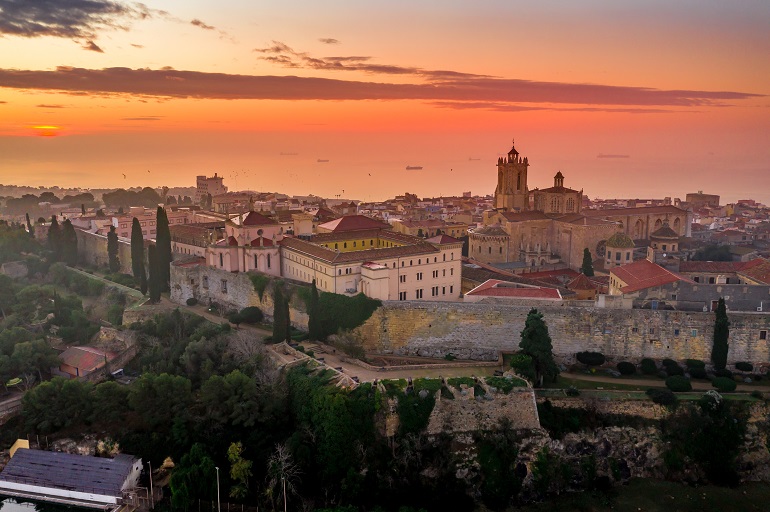
Tarragona's rich history stretches back over 2,200 years, beginning with Iberian settlements in the 5th century BCE when the area was known as Kese. The city's golden age commenced in 218 BCE during the Second Punic War, when Roman general Scipio Africanus established a military base that evolved into Tarraco - capital of Hispania Citerior. Emperor Augustus resided here from 27-25 BCE, spurring monumental construction projects including an amphitheatre seating 15,000 spectators, an expansive circus complex, and the formidable Ponte del Diablo aqueduct. These architectural marvels formed part of the Archaeological Ensemble of Tarraco designated a UNESCO World Heritage Site in 2000, making the city an open-air museum of Roman civilisation.
Following the collapse of the Roman Empire in the 5th century, Tarragona fell under Visigothic control until the Umayyad conquest in 714. During Muslim rule between the 8th and early 12th centuries, the city was nicknamed "the city of Jews" as its Jewish community flourished. After 1119, Tarragona became a vital city in the Spanish kingdom of Aragon, and it was from here that King James I organised the conquest of Majorca in 1229, further cementing its strategic importance in the Mediterranean region. The 12th century saw a cultural renaissance under Archbishop Oleguer and Norman mercenary Robert Bordet, who initiated the city's repopulation and commissioned the iconic cathedral blending Romanesque and Gothic styles. This medieval flourishing was tragically interrupted by the Black Death's devastation in the 14th century, which decimated the population and left the city vulnerable to prolonged conflict during the Catalan civil wars. The preserved medieval walls and labyrinthine streets of the Part Alta quarter testify to this turbulent yet artistically rich period.
Tarragona's strategic coastal position ensured its centrality in conflicts from the 17th-century Reapers' War to the War of Spanish Succession (1705-1713). The 18th and 19th centuries brought modernisation through expanded port facilities and industrial growth, while the early 20th century introduced striking Modernist architecture by Josep Maria Jujol. Today, visitors explore this layered heritage through remarkably preserved Roman ruins, the medieval cathedral's cloisters, and Modernist gems like the Metropol Theatre, all set against the colour-saturated backdrop of the Costa Daurada's sparkling Mediterranean waters.
Main Attractions
Ruins of Roman Tarraco
Roman Amphitheatre
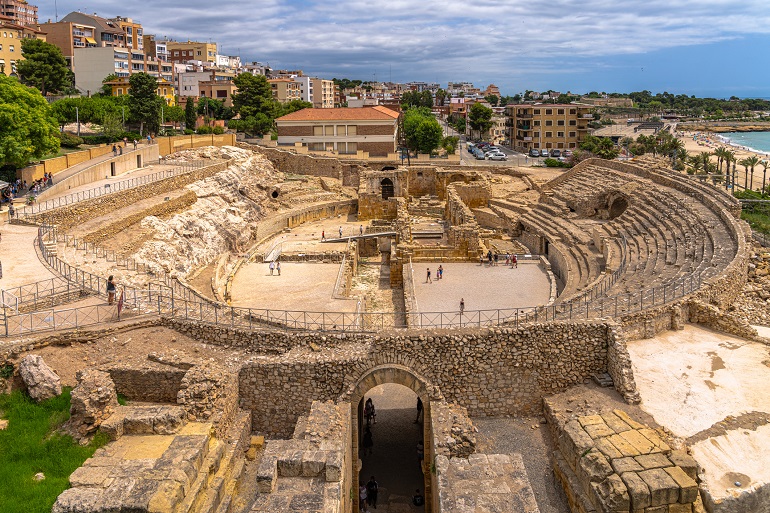
The Roman Amphitheatre of Tarragona stands as one of the most impressive remnants of the city's ancient past. Constructed in the 2nd century CE during the reign of Emperor Augustus, this elliptical structure was designed to host gladiatorial contests and public executions. The amphitheatre could accommodate approximately 14,000 spectators across its tiered seating arrangement. What makes this particular amphitheatre especially remarkable is its dramatic setting overlooking the Mediterranean Sea, creating a stunning backdrop that enhances the historical atmosphere. The structure was built partially by excavating the natural slope of the hill and partially through constructed vaults and corridors. Beneath the main arena, visitors can explore the hypogeum—a network of underground chambers and passages once used to house animals and gladiators before their appearances. The amphitheatre also contains the remains of a 6th-century Visigothic basilica and a 12th-century medieval church, representing the site's continued importance through different historical periods. The juxtaposition of these structures from various eras creates a fascinating architectural palimpsest that tells the story of Tarragona's evolution through the centuries.
Roman Circus
The Roman Circus of Tarragona ranks among the best-preserved Roman circuses in the Western world. Built in the 1st century CE, this massive structure measured approximately 325 metres long and 100 metres wide, designed specifically for chariot races—the most popular spectacle in Roman times. Unlike many other Roman cities where circuses have been built over, Tarragona's circus remains remarkably intact, with significant portions of the original structure visible throughout the modern city. The circus could accommodate up to 30,000 spectators who would gather to watch the quadrigae (four-horse chariots) race around the central spina. Visitors today can explore the vaulted galleries that supported the seating areas, walk through the ancient tunnels, and view the starting gates (carceres) where chariots would have awaited the beginning of races. The circus formed part of the Provincial Forum complex, demonstrating how Roman urban planning integrated entertainment venues into the broader civic landscape. The preservation of the circus's architectural elements provides invaluable insights into Roman engineering techniques and the social importance of public games in ancient Hispania.
Roman Walls
The Roman Walls of Tarragona represent one of the earliest examples of Roman military architecture outside Italy. Construction began in the 3rd century BCE during the Second Punic War, making these fortifications among the oldest Roman structures in the Iberian Peninsula. The original perimeter extended approximately 3,500 metres, enclosing an area of about 60 hectares. Today, visitors can explore a well-preserved 1,000-metre section of the wall, which reaches heights of up to 12 metres and thicknesses of 6 metres in some places. The megalithic construction technique used in the lower sections—featuring massive stone blocks weighing several tonnes each—reflects Etruscan influence on early Roman architecture. Three towers have survived the centuries: the Tower of Cabiscol, the Tower of Minerva (featuring the oldest Roman relief in Spain), and the Archbishop's Tower. The walls underwent several phases of construction and renovation, with the most significant expansions occurring during the 2nd century BCE. These fortifications not only protected the ancient city but also served as a powerful symbol of Roman authority in the newly conquered territories of Hispania.
Paseo Arqueológico
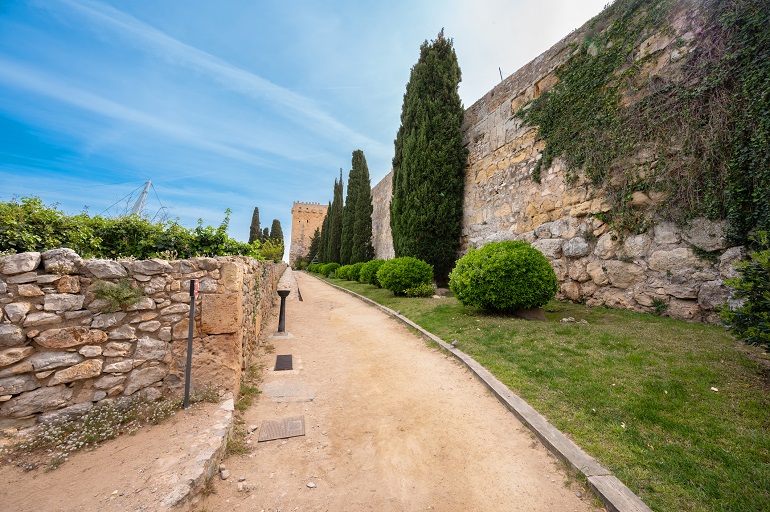
The Paseo Arqueológico (Archaeological Promenade) offers a unique walking experience along the base of Tarragona's Roman walls. This carefully landscaped pathway stretches for approximately 800 metres, guiding visitors through a tranquil garden setting adorned with Mediterranean vegetation including towering cypresses, fragrant pines, and ancient olive trees. Created in the early 20th century by the architect Jeroni Martorell, the promenade was designed to showcase the Roman walls while creating a pleasant public space. Along the route, visitors encounter various archaeological elements including foundation remains of towers, sections of the original Roman road, and water cisterns that once served the ancient city. The pathway provides exceptional views of the megalithic construction techniques employed by Roman engineers, with informative panels explaining the different building phases visible in the wall's structure. The promenade also features several lookout points offering panoramic views of the modern city, creating a striking contrast between ancient and contemporary Tarragona. This peaceful green corridor serves as both an open-air museum and a refreshing retreat from the urban environment.
Pont del Diable
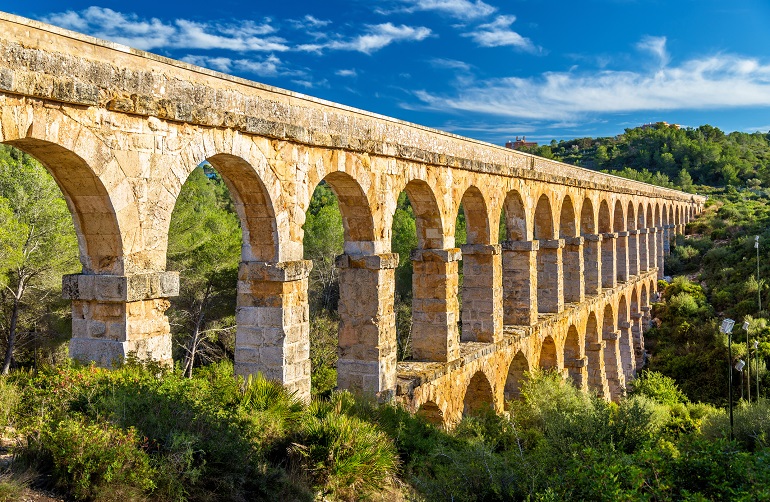
The Pont del Diable (Devil's Bridge), also known as Les Ferreres Aqueduct, stands as a magnificent example of Roman hydraulic engineering. Constructed during the reign of Emperor Augustus in the 1st century CE, this impressive structure formed part of the complex water supply system that served ancient Tarraco. The aqueduct spans 217 metres across the Francolí River valley, reaching a maximum height of 27 metres. Its most striking feature is the double tier of arches—11 in the lower level and 25 in the upper—creating a rhythmic architectural harmony that has withstood the test of time. Built without mortar, the structure relies entirely on the precise cutting and placement of massive stone blocks, demonstrating the remarkable precision of Roman engineering. The nickname "Devil's Bridge" derives from a medieval legend claiming that the structure was built overnight by the devil in exchange for the soul of a local girl—a common folktale attributed to many impressive ancient structures throughout Europe. The surrounding area has been developed into an ecological park with walking trails that allow visitors to appreciate the aqueduct from various angles and distances. The preservation of this structure provides valuable insights into Roman water management techniques and the infrastructure required to sustain urban life in ancient Hispania.
Part Alta (Old Town)
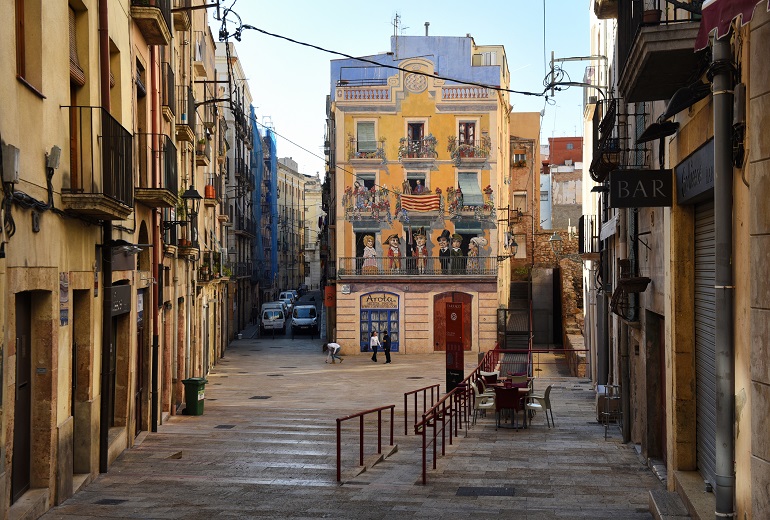
The Part Alta constitutes Tarragona's historic core, a labyrinthine district of narrow medieval streets built directly atop the former Roman acropolis. This atmospheric neighbourhood represents a remarkable example of urban continuity, with over two thousand years of continuous habitation visible in its architectural palimpsest. Wandering through these streets, visitors encounter Roman walls incorporated into medieval buildings, Gothic archways spanning between Renaissance façades, and Baroque balconies overlooking ancient stone steps. The district follows the original Roman street plan, with Carrer Major (Main Street) corresponding to the ancient decumanus maximus. Throughout the Part Alta, unexpected plazas open suddenly between tightly packed buildings, creating tranquil oases adorned with fountains and outdoor café seating. Plaça del Rei preserves the medieval character of the city with its well-preserved Gothic and Renaissance buildings, while Plaça del Fòrum occupies the site of the ancient Roman forum, with archaeological remains visible beneath modern pavement. The district contains numerous noble houses from the 14th to 18th centuries, identifiable by their imposing stone portals and family coats of arms. The narrow streets provide natural cooling during summer months, with the tall buildings creating shade and channelling refreshing sea breezes through the district—an early example of climate-adaptive urban design that remains effective today.
Catedral de Tarragona
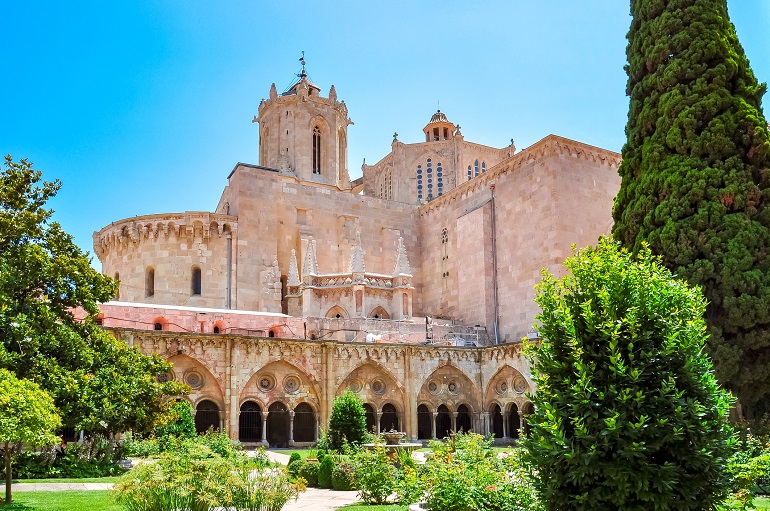
The Cathedral of Tarragona dominates the city's skyline from its commanding position at the highest point of the old town. Construction began in 1171 on the site of a former Roman temple dedicated to Emperor Augustus and later a Moorish mosque, reflecting the layered religious history of the region. The cathedral represents a masterful transition between Romanesque and Gothic architectural styles, with the lower sections exhibiting robust Romanesque features while the upper portions display the soaring elegance of early Gothic design. The main façade features an impressive rose window measuring 11 metres in diameter, adorned with intricate tracery that creates a mesmerising effect when sunlight streams through the coloured glass. Inside, the cathedral houses a wealth of artistic treasures, including the magnificent alabaster altarpiece of Saint Tecla, the city's patron saint, created by Pere Johan in the 15th century. The cloister represents one of the cathedral's most serene spaces, with delicately carved capitals depicting biblical scenes and fantastical creatures surrounding a tranquil garden. The cathedral's bell tower, reaching a height of 70 metres, offers those willing to climb its narrow stairs spectacular views across the city and Mediterranean beyond.
El Serrallo
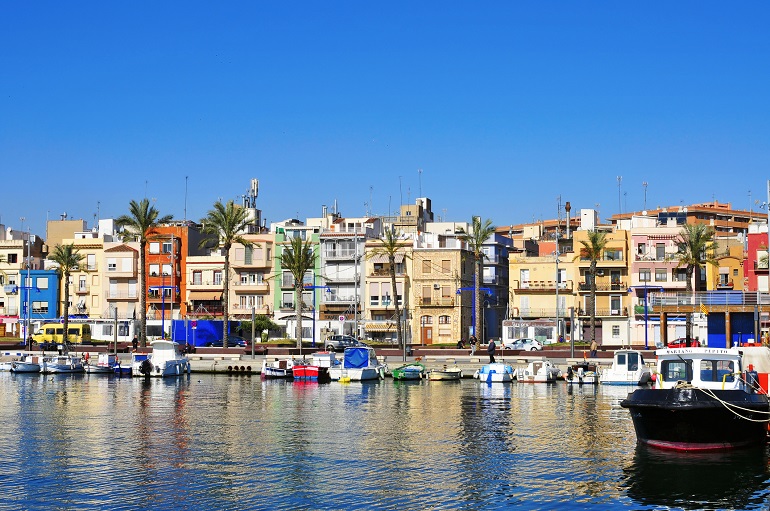
El Serrallo represents Tarragona's traditional fishing quarter, maintaining its authentic maritime character despite the city's modernisation. Dating back to the 18th century, this distinctive neighbourhood grew around the fishing port, with narrow streets designed to provide shelter from the strong sea winds. The district's architecture reflects its working-class origins, featuring modest two-storey houses painted in warm Mediterranean colours, many adorned with nautical decorations and religious shrines dedicated to the Virgin Carmen, protector of seafarers. The heart of El Serrallo remains the fishing port, where visitors can observe the daily fish auction as the day's catch arrives—a tradition that has continued largely unchanged for generations. The neighbourhood's strong connection to the sea is evident in its numerous seafood restaurants, many family-owned for decades, serving dishes prepared according to traditional recipes passed down through generations. These establishments specialise in romesco sauce, a distinctive Tarragonan condiment made with local hazelnuts, almonds, and nyora peppers that perfectly complements the fresh seafood. Throughout El Serrallo, maritime elements decorate the public spaces, including anchors, nets, and boat parts repurposed as street furniture, preserving the area's fishing heritage.
Rambla Nova
Rambla Nova serves as Tarragona's social backbone—a wide, tree-lined boulevard stretching for over one kilometre through the heart of the city. Constructed in the mid-19th century following the demolition of the medieval walls, this elegant promenade was designed to connect the old town with the expanding modern districts. The boulevard measures 40 metres in width, with a central pedestrian walkway flanked by traffic lanes and lined with impressive plane trees that provide welcome shade during summer months. Along its length, visitors encounter numerous monuments including the striking statue of Roger de Llúria (a medieval Catalan admiral) and the Monument als Castells (celebrating the human tower tradition unique to this region of Catalonia). The Rambla features several distinctive sections, each with its own character—from the commercial upper section with its fashion boutiques and department stores to the more leisurely lower portion with outdoor cafés and ice cream parlours. The boulevard culminates at the Mediterranean Balcony, creating a natural progression from urban energy to coastal tranquillity. Throughout the year, the Rambla hosts various markets, festivals and public celebrations, functioning as Tarragona's communal living room where locals participate in the traditional evening paseo (stroll), maintaining the Mediterranean tradition of public social interaction.
Modernist Buildings
While Tarragona is primarily known for its ancient Roman heritage, the city also boasts an impressive collection of Modernist architecture from the late 19th and early 20th centuries. Casa Salas, located on Rambla Nova, exemplifies the Catalan Modernist style with its ornate façade featuring floral motifs, wrought iron balconies, and decorative ceramics. Designed by architect Ramon Salas in 1907, the building showcases the wealth and cultural aspirations of Tarragona's bourgeoisie during this period of economic prosperity. The Central Market, completed in 1915 by Josep Maria Pujol, represents a masterful combination of functionality and artistic expression, with its distinctive metal framework supporting large windows that flood the interior with natural light. The market's façade incorporates colourful ceramic panels depicting local agricultural products, celebrating the region's culinary heritage. Casa Ximenis, built in 1914, features an asymmetrical façade with curved balconies and ornamental stonework that demonstrates the playful creativity characteristic of the Modernist movement. The Teatro Metropol, designed by the renowned architect Josep Maria Jujol (a collaborator of Antoni Gaudí), presents a more restrained interpretation of Modernism, with its elegant curved forms and innovative use of space. These buildings reflect Tarragona's participation in the broader cultural renaissance that swept through Catalonia during this period, creating a fascinating architectural contrast with the city's ancient Roman structures.
Balcón del Mediterráneo
The Balcón del Mediterráneo (Mediterranean Balcony) provides one of Tarragona's most breathtaking vantage points. Situated at the southern end of Rambla Nova, the city's elegant main boulevard, this expansive terrace stands atop a cliff approximately 40 metres above sea level. Created in the late 19th century as part of Tarragona's urban expansion, the balcony features a distinctive white iron railing that frames the panoramic seascape. From this privileged position, visitors enjoy uninterrupted views across the azure waters of the Mediterranean, with fishing boats and pleasure craft creating a constantly changing tableau. On clear days, the vista extends to the distant mountains of the Delta del Ebro to the south. The balcony is flanked by two levels of gardens that cascade down the cliff face, planted with salt-resistant species that thrive in the coastal environment. This popular gathering spot has inspired generations of poets and artists, with the interplay of light on water creating different moods throughout the day. At sunset, the balcony becomes particularly magical as the setting sun transforms the sea into a canvas of gold and crimson hues.
Playa del Milagro
Playa del Milagro (Miracle Beach) stretches for nearly one kilometre along Tarragona's urban coastline, offering a remarkable juxtaposition of natural beauty and historical significance. This golden sand beach sits directly beneath the Roman Amphitheatre, creating one of the most distinctive coastal landscapes in Spain where ancient history meets Mediterranean leisure. The beach's name derives from a medieval legend involving a miraculous vision of the Virgin Mary appearing to sailors during a violent storm. The fine-grained sand slopes gently into typically calm waters, making it suitable for swimmers of all abilities. Along the beach runs a well-maintained promenade lined with palm trees and seasonal cafés, providing shade and refreshments during the summer months. The beach's urban setting means it offers excellent facilities while maintaining a relaxed atmosphere distinct from more commercialised Mediterranean resorts. From the shoreline, bathers enjoy a unique perspective of Tarragona's historical profile, with the cathedral towers and ancient walls visible against the sky. During winter months, when swimmers are few, the beach becomes a tranquil space for contemplation, with the rhythmic waves providing a soothing soundtrack to views of the historical city.
Top Museums
Roman Heritage Museums
National Archaeological Museum of Tarragona (MNAT)
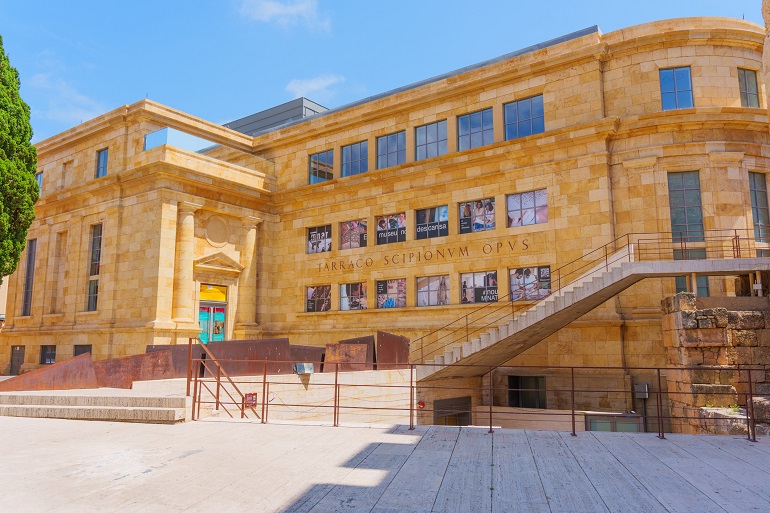
The National Archaeological Museum of Tarragona is the oldest archaeological museum in Catalonia, established in the first half of the 19th century. This prestigious institution houses an impressive collection of approximately 25,000 Roman artefacts that encapsulate eight centuries of Tarraco's history.
The museum is housed in a four-storey building constructed in 1960 by architect Francesc Monrova, with stone sourced from the same Medol quarry that the Romans used. Its collection includes remarkable Roman pottery, sculptures of emperors and gods like Venus and Minerva, and an exceptional collection of mosaics. The "Cap de Medusa" mosaic from the second century is particularly noteworthy, considered one of the most perfect Roman mosaics in Spain.
One of the most iconic pieces in the collection is the Ivory Doll, dating from the third or fourth century CE, discovered in a girl's tomb in Tarragona's Early Christian Necropolis.
Paleo-Christian Necropolis and Museum
This archaeological museum showcases an astonishing number of well-preserved Paleo-Christian tombs dating back to the 3rd century. The site offers visitors a glimpse into ancient burial practices and early Christian culture in Roman Tarraco.
Medieval and Modern Museums
Diocesan Museum of Tarragona
Located within the cathedral complex, this museum is a significant part of the Archbishopric of Tarragona. It contains collections of religious art from medieval and modern times, including stone sculptures, wood carvings, gold and wrought-iron work, textiles, and ceramics.
Casa Canals
One of the few entirely preserved stately homes in Tarragona from the Modern Era, Casa Canals features a main floor, garden, terrace with beautiful views over the Roman walls, and even contains a Civil War refuge.
Casa Castellarnau
Built in the 15th century, this historic house museum was once home to the noble Castellarnau family and even hosted Emperor Charles I during his stay in Tarragona in 1542. The ballroom is particularly impressive, featuring a ceiling adorned with mythological paintings by Provençal painter Josep Bernat Flaugier from the late 18th century.
Contemporary Museums
Museum of Modern Art
Founded in 1976 by the Tarragona Provincial Council, this museum occupies three meticulously restored 18th-century houses. It serves as a hub for the promotion, study, and understanding of modern and contemporary art.
The museum features various permanent exhibitions, including works by the painter Joan Miró and sculptor Julio Antonio. A highlight is the monumental Tarragona Tapestry measuring 2.80 x 4.20 metres, created by Joan Miró in collaboration with Josep Royo. The museum's courtyard is particularly striking, gathering natural light to illuminate the surrounding rooms.
Port of Tarragona Museum
Renovated in July 2021, this museum offers an immersive journey into Tarragona's maritime traditions. The museum features advanced interactive media that helps visitors explore the Port's history and heritage.
Casa de la Festa (Festival House)
This unique museum houses an exhibition of the Seguici Popular (Popular Retinue) from the Festival of Santa Tecla, which has been recognised for its national and regional tourist interest. Three exhibition rooms showcase the celebrations and emotions of these internationally renowned festivities, including displays about castellers (human tower builders).
Other Notable Museums
Praetorian Tower
Ranked as one of the top museums in Tarragona, this historic structure offers visitors insights into the city's Roman past.
CaixaForum Tarragona
A contemporary cultural centre that hosts various exhibitions and cultural activities throughout the year.
Local Cuisine
Tarragona's cuisine is a delightful reflection of its Mediterranean character, where the bounty of sea and mountains harmoniously combine. In the picturesque fishermen's quarter of El Serrallo, visitors can savour freshly caught seafood prepared in traditional dishes like cassola de romesco (a rich nut sauce casserole), arròs negre (rice cooked in squid ink), and arrossejat (seafood rice simmered in fish stock). The region is famous for its mar i muntanya combinations that brilliantly fuse seafood with inland ingredients, exemplified in dishes such as romescada (seafood stewed in romesco sauce). From January to April, don't miss the chance to experience calçotada, where sweet spring onions are chargrilled and dipped in the flavourful romesco sauce. Simpler delights include pa amb tomàquet (bread rubbed with tomato and olive oil) and clotxa (hollowed bread filled with herring, vegetables, and garlic). Complete your culinary journey with a glass of DO Tarragona wine and finish with menjar blanc, a delicate almond and rice starch dessert that perfectly concludes a Tarragonan feast.
Getting There & Around
Tarragona is easily accessible by train, with regular services from Barcelona and Alicante. The journey from Barcelona takes about an hour and costs around €8. For those arriving by plane, Reus Airport is just 9 km away, with taxis to the city centre costing approximately €30. Once in Tarragona, the historic centre is best explored on foot, whilst the efficient EMT bus network covers the wider city area. Single bus tickets cost €1.50, with day passes available for €3.50. Taxis are readily available, with fares starting at €5 for the first mile and €2 for each subsequent mile. For those wishing to explore the surrounding areas, car hire is available from around €15-20 per day. The city also boasts a tourist train, which offers a unique way to see the main sights, running from March to October with tickets priced at €7 for adults and €4 for children up to 12 years old.