Introduction
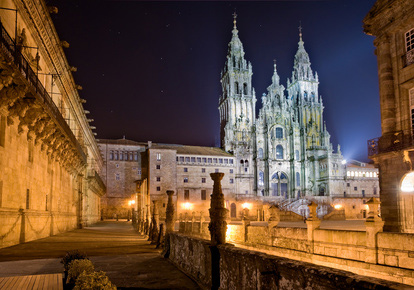
Santiago de Compostela (pop. 99,500) is one of Christianity's most significant pilgrimage sites and the final destination of the famous Camino de Santiago pilgrimage routes. The city's history dates back to the 9th century when the remains of St. James the Apostle were reportedly discovered. Its magnificent cathedral, which began construction in 1057 and can accommodate 1,200 visitors simultaneously, stands as the centrepiece of the UNESCO World Heritage Old Town. Santiago de Compostela is the capital of the Galicia region with a population of approximately 89,000 and sits 250 metres above sea level. The city features a remarkable blend of Romanesque, Gothic, Renaissance, Baroque, and Neoclassicist architecture throughout its squares and narrow streets. As the third holiest place in Christendom, it continues to attract increasing numbers of pilgrims annually, though visitors should be prepared for its notoriously rainy weather, averaging over 300 rainy days per year.
Interesting Facts about Santiago de Compostela
- The Cathedral of Santiago de Compostela, a UNESCO World Heritage site, combines Romanesque, Gothic and Baroque architectural styles after nearly a millennium of modifications.
- Legend claims the city was founded after a 9th-century shepherd discovered the remains of St James the Apostle under mysterious celestial lights, earning it the name "Compostela" (field of stars).
- Pilgrims have traditionally touched the marble Árbol de Jesé statue in the cathedral's Pórtico da Gloria for centuries, leaving visible handprints in the soft stone.
- Santiago's Hostal dos Reis Católicos, founded in 1492 by Ferdinand and Isabella, holds the Guinness World Record as the oldest continuously operating hotel.
- The 12th-century Codex Calixtinus, the world's first travel guide, provided medieval pilgrims with route advice and miracle stories for their Camino journey.
- During Holy Years (when St James' Day falls on a Sunday), pilgrims passing through the cathedral's Holy Door receive complete absolution of sins according to Catholic tradition.
- The city's iconic scallop shell symbol, carried by pilgrims since medieval times, originally helped travellers scoop water and food during their journey.
- Galicia's mythical Santa Compaña (Procession of Souls) legend originates from pre-Christian beliefs that Santiago marked where spirits gathered before crossing to the afterlife.
- Santiago's cathedral doors remained permanently open throughout the Middle Ages to accommodate pilgrims arriving at all hours for nocturnal prayer vigils.
- The city's Baroque cathedral façade appears on Spain's 1, 2 and 5-cent euro coins as a national cultural emblem.
History
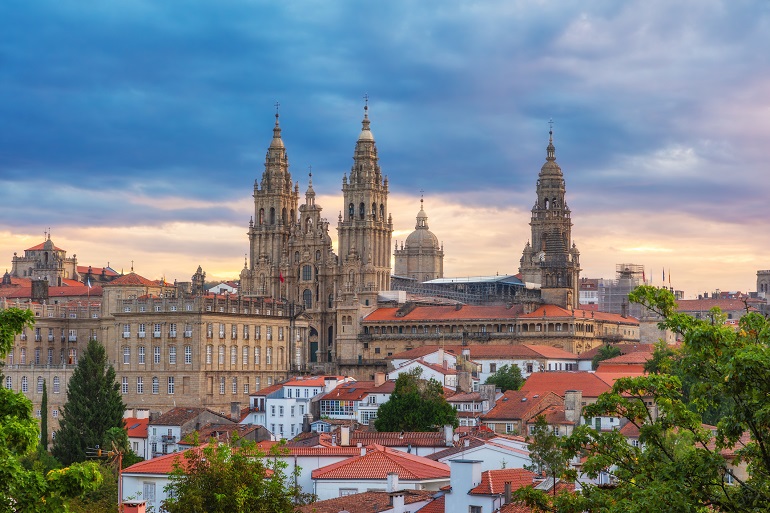
Santiago de Compostela's history dates back to the 9th century when the remains of St. James the Apostle (Santiago) were discovered by a shepherd in Galicia. This miraculous discovery led to the founding of the city and the construction of a small chapel to house the holy relics, ordered by King Alfonso II of Asturias, who became the first pilgrim to Santiago. The site quickly grew in religious significance, becoming the third holiest site in Christendom after Jerusalem and Rome.
Throughout the medieval period, Santiago de Compostela flourished as a major pilgrimage destination, attracting faithful from across Europe via the Camino de Santiago (Way of St. James). Despite being raided by the Muslim leader Almanzor in 997, who devastated the city but respectfully left the Apostle's tomb untouched, Santiago continued to develop. The 11th century saw the construction of fortified walls and the commencement of the Romanesque cathedral in 1075, which would not be completed until the 13th century. Under the guidance of Archbishop Diego Xelmírez, the city underwent its most glorious transformation in the 12th century.
The 16th to 18th centuries brought further urban development to Santiago, with the construction of many significant buildings including the former Hospital Real (now the Hostel dos Reis Catolicos), commissioned by monarchs Fernando and Isabella to care for pilgrims. The 17th century marked the city's greatest aesthetic revolution, despite a slowdown in pilgrimages, with the cathedral receiving its magnificent Baroque façade overlooking Obradoiro Square. Today, Santiago de Compostela remains a vibrant cultural and religious centre, home to one of the world's oldest universities established in the late 15th century, and continues to welcome countless pilgrims who complete the various routes of the Camino de Santiago.
Main Attractions
Cathedral of Santiago de Compostela
The Cathedral of Santiago de Compostela stands as the crowning jewel of the city, an architectural marvel that has drawn pilgrims for centuries. This magnificent structure represents the culmination of the famous Camino de Santiago pilgrimage routes, with its foundations dating back to 1075 when construction began under the reign of Alfonso VI. The cathedral's façade presents a captivating blend of Romanesque origins with later Gothic and Baroque additions, creating a harmonious yet complex visual narrative that chronicles the evolution of European architectural styles.
The western façade, known as the Obradoiro façade, presents an elaborate Baroque design completed in the 18th century, featuring statues of St. James in three different manifestations: as apostle, pilgrim, and knight. The intricate stonework demonstrates the exceptional craftsmanship that has made Galician stonemasons renowned throughout history. The cathedral's interior is equally impressive, with a Latin cross floor plan and a central nave that soars upward, creating an atmosphere of reverence and awe.
Inside, the Pórtico da Gloria represents one of the finest examples of Romanesque sculpture in Europe. This masterpiece by Master Mateo, completed in 1188, depicts over 200 figures from biblical stories and serves as a visual theological lesson. The Botafumeiro, a massive silver-plated incense burner, swings dramatically across the transept during special ceremonies, filling the cathedral with fragrant smoke while demonstrating a centuries-old tradition that combines religious ritual with mechanical ingenuity.

Plaza del Obradoiro
Plaza del Obradoiro forms the magnificent heart of Santiago, a grand open space that has witnessed countless pilgrims completing their journey. The name "Obradoiro" derives from the Galician word for "workshop," referencing the stonemasons' workshops that once occupied this space during the cathedral's construction. This expansive square serves as a natural gathering place where visitors can appreciate the full grandeur of the surrounding historic buildings while experiencing the emotional culmination of the Camino.
The plaza is framed by four emblematic buildings that represent different aspects of Santiago's historical power structures. The Cathedral dominates the eastern side, while the western flank features the Pazo de Raxoi, an elegant neoclassical palace built in the 18th century that now houses the city hall. The northern side showcases the Hostal dos Reis Católicos, and the southern boundary features the Colexio de San Xerome, a 17th-century building with a Renaissance façade that now serves as the university rector's office.
The square's granite paving stones have been worn smooth by centuries of footsteps, creating a reflective surface after rainfall that mirrors the surrounding architectural splendour. This effect, combined with Galicia's characteristic soft light, creates an almost ethereal atmosphere that photographers and artists have sought to capture throughout the ages. The plaza transforms throughout the day as light shifts across its expanse, offering different perspectives on the monumental buildings that surround it.
Old Town (Casco Histórico)
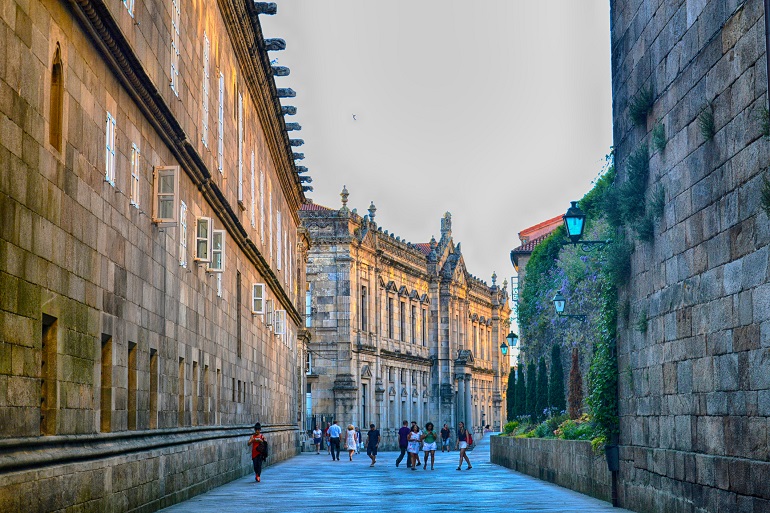
The Old Town of Santiago represents one of Europe's most well-preserved medieval urban landscapes, a labyrinthine network of granite streets and squares that has evolved organically around the cathedral since the Middle Ages. Designated a UNESCO World Heritage site in 1985, this historic district encompasses approximately 170 hectares of densely packed historic buildings, with architectural styles ranging from Romanesque and Gothic to Renaissance, Baroque, and Neoclassical, creating a visual chronicle of European architectural history.
The district's urban layout follows medieval planning principles, with narrow, winding streets that occasionally open into small squares or plazas that historically served as market spaces or gathering places. The predominant building material is local granite, which gives the old town its characteristic silvery-grey appearance. This stone darkens when wet—a common occurrence in rainy Galicia—creating dramatic visual effects as sunlight breaks through clouds to illuminate the damp surfaces. Many buildings feature distinctive glazed galleries (galerías) on their upper floors, a regional architectural feature that maximises light while providing protection from the elements.
Beyond the main squares, visitors discover a network of smaller plazas, each with its own character and history. Plaza de Cervantes features a central fountain topped with a bust of the famous Spanish writer, while Plaza de las Platerías takes its name from the silversmiths who once had workshops there. Plaza de la Azabachería references the jet stone carvers who produced pilgrim souvenirs. These specialised craft districts reflect the economic importance of the pilgrimage trade throughout Santiago's history. The old town remains a living urban environment rather than a museum piece, with residents occupying upper floors of historic buildings while shops, restaurants, and cafés animate the street level, creating a vibrant atmosphere that balances historical preservation with contemporary urban life.
Rúa do Franco and Rúa da Raíña
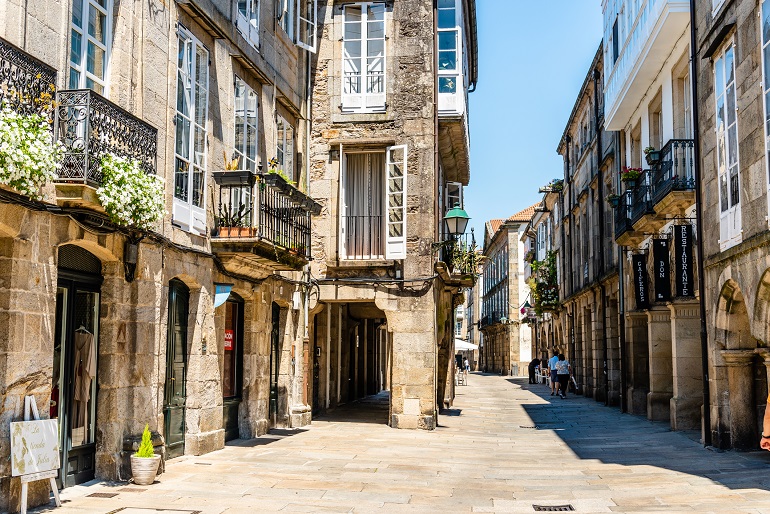
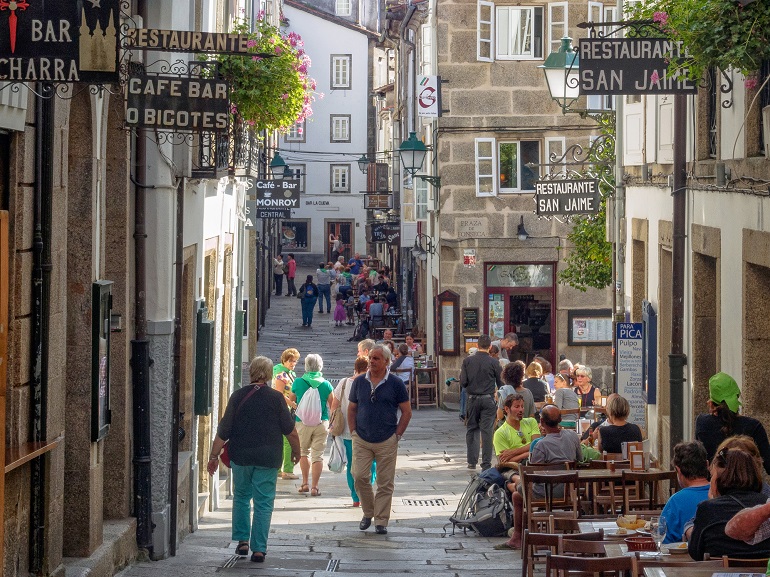
Rúa do Franco and its continuation, Rúa da Raíña, form one of Santiago's most vibrant thoroughfares, stretching from the cathedral to the Alameda Park. These streets have historically served as the main approach to the cathedral for pilgrims arriving from the south, and today they represent the gastronomic heart of the city. The name "Franco" likely derives from "French," referencing the many French pilgrims who travelled this route, while "Raíña" means "Queen" in Galician.
Both streets are lined with traditional granite buildings featuring arcades at street level, creating covered walkways that protect pedestrians from Galicia's frequent rainfall. These arcades house a dense concentration of restaurants, tapas bars, and shops selling local products and pilgrim souvenirs. The area is particularly known for its numerous tapas establishments, where visitors can experience the Galician tradition of serving a free tapa with each drink ordered. The streets come alive in the evening hours as locals and visitors engage in the social ritual of "ir de tapeo" (going for tapas), moving from one establishment to another to sample different specialities.
Despite the area's popularity with tourists, many establishments maintain authentic Galician culinary traditions, serving regional specialities such as pulpo á feira (octopus with paprika), empanada gallega (Galician pie filled with various ingredients), and Padrón peppers. The vibrant atmosphere of these streets, with their mixture of pilgrims, students, locals, and international visitors, creates a microcosm of Santiago's identity as both a pilgrimage destination and a living city with its own cultural traditions.
Hostal dos Reis Católicos
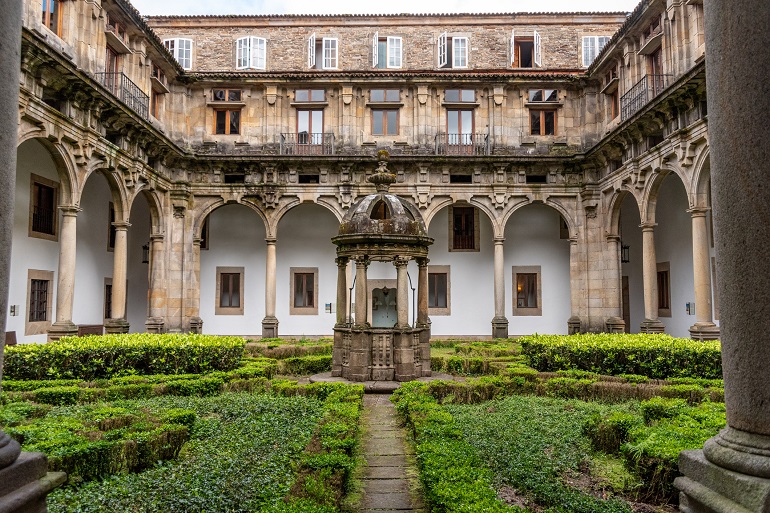
The Hostal dos Reis Católicos represents one of Europe's most significant historic buildings, commissioned by Ferdinand and Isabella (the Catholic Monarchs) in 1499 following their pilgrimage to Santiago. Originally constructed as a royal hospital to care for pilgrims who had completed the arduous journey to Santiago, this impressive building combines Gothic, Renaissance, and Baroque elements into a harmonious whole that speaks to the importance of pilgrimage in medieval European society.
The building's Plateresque façade presents an elaborate display of sculptural decoration, including medallions depicting the monarchs, religious imagery, and intricate vegetal motifs that demonstrate the skill of 16th-century stonemasons. The four interior courtyards represent different architectural periods, with the earliest dating from the original Renaissance construction and later additions showcasing Baroque sensibilities. These peaceful cloisters, with their graceful arches and central fountains, provided spaces for rest and reflection for weary travellers throughout the centuries.
The building's history reflects the changing nature of pilgrimage and healthcare over five centuries. What began as a place of respite for medieval pilgrims evolved into a modern hospital before its transformation into a luxury hotel in the mid-20th century. Despite these changes in function, the building retains its historical significance as a monument to royal patronage that helped establish Santiago de Compostela as one of Europe's most important pilgrimage destinations.
Plaza de la Quintana
Plaza de la Quintana offers a captivating study in contrasts, with its distinctive split-level design creating two distinct spaces within one square. The lower section, known as Quintana de los Muertos (Square of the Dead), earned its sombre name from its former function as a cemetery until the late 18th century. The upper level, Quintana de los Vivos (Square of the Living), rises above via a grand staircase that physically and symbolically separates these two realms, creating a unique spatial experience that reflects medieval concepts of life and death.
The western side of the square is dominated by the eastern façade of the cathedral featuring the Puerta Santa (Holy Door), which opens only during Holy Years when St. James's Day (25 July) falls on a Sunday. The square's eastern boundary is formed by the Monastery of San Paio de Antealtares, founded in the 9th century and rebuilt in the Baroque period. This former Benedictine monastery, with its austere granite façade, creates a powerful architectural dialogue with the cathedral across the square.
The plaza serves as a natural amphitheatre for cultural events and performances, with its steps providing seating for spectators. The acoustics created by the surrounding stone buildings make it particularly suitable for musical performances, from traditional Galician folk music to classical concerts. At night, subtle lighting transforms the square, highlighting the textural qualities of the granite and creating dramatic shadows that enhance the medieval atmosphere.
Praza de Abastos Fountain
In the small square outside the Mercado de Abastos stands a historic fountain that has served as a gathering point and water source since the 19th century. This granite fountain features a central column topped with a traditional cross, with water spouts arranged around its base. The fountain not only provided essential water for market activities but also created a natural meeting point where vendors and customers would exchange news and gossip, contributing to the market's social function within city life.
The fountain exemplifies the practical yet aesthetically pleasing urban infrastructure that characterises historic Santiago, where even utilitarian elements were crafted with attention to proportion and detail. The worn granite basin shows evidence of centuries of use, with smooth depressions created by countless water vessels being filled and balanced. Today, while no longer serving its original practical purpose, the fountain remains an important landmark that anchors the market square and provides historical context for understanding the development of public spaces in Santiago.
Convento de San Francisco
The Convento de San Francisco represents one of Santiago's most significant religious complexes outside the cathedral precinct. According to tradition, the monastery was founded by St. Francis himself during his pilgrimage to Santiago in 1214, though the current buildings date primarily from the 17th and 18th centuries. The complex exemplifies the Baroque architectural style that flourished in Galicia during this period, with its imposing façade featuring elaborate sculptural elements and a monumental staircase that creates a dramatic approach to the church.
The convent's church contains the tomb of Cotolay, a local man who, according to legend, assisted St. Francis in establishing the original monastery. The interior features impressive Baroque altarpieces and choir stalls that demonstrate the high level of craftsmanship achieved by Galician woodcarvers. The complex includes several cloisters with distinctive architectural characters, from the austere simplicity of the earlier structures to the more elaborate decoration of later additions.
The monastery's gardens provide a peaceful retreat from the busy streets of the old town, with formal plantings and mature trees creating shaded walkways for contemplation. These gardens historically served both practical and spiritual purposes, providing food for the community while offering spaces for meditation. Today, part of the complex functions as a hotel, allowing visitors to experience the unique atmosphere of this historic environment while supporting the preservation of the buildings.
Alameda Park
Alameda Park provides a verdant respite from the stone-dominated historic centre, offering expansive green spaces that have served as Santiago's primary recreational area since the early 19th century. This beloved park consists of three distinct sections that flow into one another: Paseo da Alameda, Carballeira de Santa Susana, and Paseo da Ferradura, each with its own character and landscape features that collectively create a diverse urban oasis.
The park's elevated position provides spectacular panoramic views of the cathedral and the old town, making it a favourite spot for both locals and visitors seeking perspective on the city's layout. The Paseo da Ferradura (Horseshoe Promenade) offers particularly impressive vistas, with its curved pathway lined with horse chestnut trees forming a natural frame for the cathedral's western façade. These views have become emblematic of Santiago, appearing in countless photographs and artistic representations of the city.
Throughout the park, visitors encounter a rich variety of tree species, including ancient oaks in the Carballeira de Santa Susana that have stood witness to centuries of the city's history. Interspersed among the greenery are numerous monuments and sculptures that commemorate important figures in Galician culture, including the famous statue of Las Dos Marías (The Two Marias), which honours two eccentric sisters who became beloved local characters in the mid-20th century. The Chapel of Santa Susana, dating from the 12th century, adds historical depth to the park, its Romanesque architecture contrasting with the natural surroundings.
Parque de la Alameda Sculptures
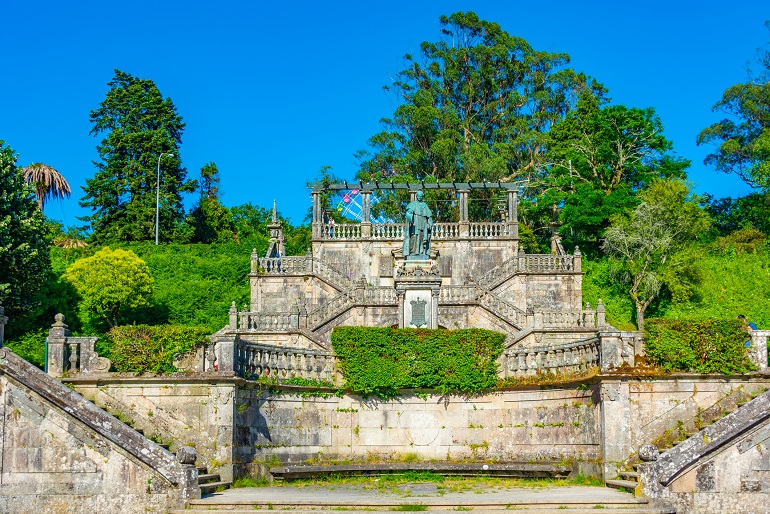
Throughout Alameda Park, visitors encounter a collection of significant sculptures that add cultural and artistic dimensions to the natural landscape. These works range from traditional commemorative monuments to more contemporary artistic expressions, collectively offering insights into Galician cultural identity and historical memory. The most beloved of these sculptures is "As Marías" (The Marys), depicting two colourfully dressed women strolling arm in arm, created by César Lombera in 1994. This work commemorates two sisters, Maruxa and Coralia Fandiño, who became iconic figures in Santiago during the mid-20th century as they took their daily promenade through the city wearing bright clothing and makeup, bringing colour and character to the post-Civil War period.
Other notable sculptures include the monument to writer Ramón María del Valle-Inclán, one of Galicia's most important literary figures, and the statue of Daniel Rodríguez Castelao, a significant Galician intellectual, artist, and politician. These works not only beautify the park but also serve as reminders of Galicia's rich cultural heritage and the important figures who have shaped its identity. The placement of these sculptures throughout the park creates a dialogue between art and nature, with the changing seasons and light conditions offering new perspectives on these permanent installations.
San Domingos de Bonaval Park
San Domingos de Bonaval Park represents a masterful transformation of sacred space, converting the former grounds of a Dominican monastery and its cemetery into a contemplative public garden that honours both the natural and cultural heritage of Galicia. This thoughtfully designed park, created through the collaboration of architect Álvaro Siza and landscape architect Isabel Aguirre in the 1990s, demonstrates how contemporary design can respectfully engage with historical sites while creating new public amenities.
The park's design incorporates three distinct terraced levels that follow the natural topography of the hillside, connected by a system of ramps and stairs that guide visitors through different landscape experiences. The lowest level features formal gardens with geometric patterns that reference the site's monastic history, while the middle section preserves elements of the former cemetery, repurposing funerary structures within a new landscape context. The upper level contains a majestic oak grove (carballeira) that provides dense shade and connects visitors to Galicia's native forest ecology.
Water plays a crucial role in the park's design, with historic fountains and channels restored to create both visual and auditory elements that enhance the contemplative atmosphere. From various vantage points throughout the park, visitors can enjoy panoramic views of Santiago's roofscape, with the cathedral towers rising above the sea of terracotta tiles. Adjacent to the park stands the former Dominican monastery, now home to the Museum of the Galician People, creating a cultural complex that celebrates both the natural and human history of the region.
Monte do Gozo
Monte do Gozo (Mount of Joy) holds special significance in the pilgrimage tradition as the hill from which travellers on the French Way first glimpse the cathedral spires after their long journey. Located about 5 kilometres from the cathedral, this elevated site has historically been a place of emotional significance, where pilgrims would experience their first visual connection with their destination, often resulting in spontaneous expressions of joy that gave the hill its name.
The site features a modern monument commemorating Pope John Paul II's visit during World Youth Day in 1989, consisting of a large sculptural group depicting two pilgrims pointing toward the city. The hill offers panoramic views not only of Santiago but also of the surrounding Galician countryside, providing context for understanding the city's geographic setting within the verdant landscape that characterises this region of Spain.
Monte do Gozo serves as a transitional space between the rural pilgrimage route and the urban environment of Santiago, allowing travellers to mentally prepare for their arrival at the cathedral. Many contemporary pilgrims maintain the tradition of pausing here before making the final approach to the city, creating a moment of reflection on their journey before entering the bustling historic centre. The site connects modern visitors to centuries of pilgrims who have experienced similar emotions at this same vantage point, creating a continuity of human experience across time.
Top Museums
Cathedral & Religious Museums
Cathedral Museum
The Cathedral Museum is arguably the most important museum in Santiago de Compostela. It provides a comprehensive journey through the Cathedral's history and art, featuring outstanding artistic works that span centuries. Visitors can explore the origins of the Cathedral, Master Mateo's stone choir, and the construction of the Romanesque cathedral. The museum also houses an impressive collection of religious art, including sculptures, paintings, and tapestries by renowned artists such as Rubens, Teniers, and Goya.
Museum of Sacred Art
Situated in the monastery of San Paio de Antealtares, this museum showcases a rich collection of sacred, liturgical, and devotional art. Highlights include precious metals dating back to the 15th century, monastic archives, and liturgical vestments from the 17th and 18th centuries. The museum also houses the ancient altar of St. James the Apostle.
San Martín Pinario Monastery and Museum
This expansive complex, second only to El Escorial in size among Spanish religious buildings, houses a museum showcasing religious art and historical artefacts. Visitors can explore the church, the museum's permanent collection, and temporary exhibitions, all of which offer insights into the monastery's rich history and cultural significance.
Culture & History Museums
Museo do Pobo Galego (Museum of the Galician People)
Housed in the former Dominican convent of San Domingos de Bonaval, this ethnographic museum is dedicated to preserving and showcasing Galician culture. The museum's collections offer a fascinating glimpse into Galician history, traditions, and way of life. Exhibits cover various aspects of Galician society, including rural and maritime life, crafts, and beliefs. A highlight of the museum is its impressive triple spiral staircase, a masterpiece of architecture.
Museum of Pilgrimages and Santiago
Located near the cathedral in Platerías square, this museum offers insights into the universal phenomenon of pilgrimage, the Camino de Santiago, and the city of Compostela as a pilgrimage destination. The museum houses a diverse collection including sculptures, paintings, engravings, and archaeological artefacts related to the Jacobean tradition.
Casa da Troia Museum
This unique museum recreates a late 19th-century student dormitory, offering visitors a glimpse into university life in Santiago during that period. Based on Alejandro Pérez Lugín's novel "La Casa de la Troya", the museum features period-accurate rooms and memorabilia, including a collection related to the university's musical groups.
Art Museums
Galician Centre of Contemporary Art (CGAC)
The CGAC, designed by renowned Portuguese architect Álvaro Siza Vieira, is a hub for contemporary art in Galicia. The centre hosts rotating exhibitions featuring both international and local artists. Its striking modernist building, constructed with traditional Galician granite, creates an interesting juxtaposition with the historic architecture of the surrounding area.
Local Cuisine
Santiago de Compostela, the capital of Galicia, has become one of the favourite destinations for lovers of gastronomic tourism in Spain. The city offers a rich culinary heritage that showcases the best of Galician produce. No visit would be complete without sampling Pulpo a la Gallega (also known as Polbo á feira), perfectly boiled octopus sprinkled with sea salt and paprika. The famous Pimientos de Padrón present a delightful culinary gamble—these small green peppers are mostly mild, but occasionally you'll encounter a spicy one! Tarta de Santiago, a moist almond cake decorated with the Cross of St. James and dusted with powdered sugar, makes for the perfect sweet treat with coffee between sightseeing. Seafood enthusiasts should try the locally caught steamed mussels, which are so fresh they need nothing more than a squeeze of lemon. For heartier fare, Caldo Gallego offers warming comfort with its combination of kale, pork, chorizo and white beans, whilst Lacón con grelos brings together pork shoulder, turnip greens and chorizo in a traditional dish that highlights the richness of local products. Don't miss the Galician empanada, a versatile pastry filled with various ingredients from tuna to scallops, perfect for enjoying at any time of day.
Shopping
Santiago de Compostela offers diverse shopping experiences across its historic Old Town and modern districts. In the Old Town, streets such as Rúa Nova, Vilar, San Pedro, and Caldeirería house traditional craft shops selling jet jewellery, silverware, ceramics, and local handicrafts. The famous Mercado de Abastos, founded over a century ago, showcases Galician produce including seafood, meats, cheeses, and wines. El Ensanche, located near the historic centre, features international brands, Spanish franchises, and Galician fashion along streets like Xeneral Pardiñas, Doutor Teixeiro, and República de El Salvador. For larger retail options, the city offers several shopping centres including Centro Comercial As Cancelas, Compostela Shopping Centre, and Area Central Shopping Centre. Department stores like El Corte Inglés provide everything from clothing to electronics. Shopping hours typically run from 10:00-14:00 and 16:30-20:00, with sales periods occurring from 7 January to 28 February and 1 July to 30 August.
Mercado de Abastos
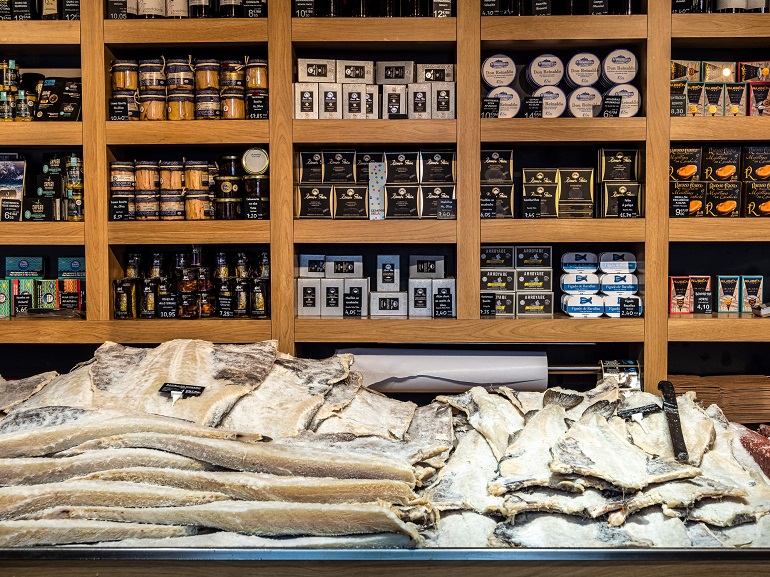
The Mercado de Abastos embodies the culinary soul of Santiago, offering a sensory journey through Galicia's gastronomic traditions within a historic market setting. Established in its current location since the mid-19th century, with the present structure dating from 1941, this market has served as the primary food source for local residents while increasingly becoming a cultural attraction that showcases the region's exceptional produce and seafood.
The market's distinctive architecture features eight granite pavilions arranged in two parallel rows, creating a covered yet airy space that allows natural light to illuminate the colourful displays of produce. Each pavilion traditionally specialises in different products: fresh seafood brought daily from Galicia's Atlantic coast, locally raised meats, regional cheeses, seasonal fruits and vegetables, fresh bread, and traditional sweets. The market's organisation reflects traditional Galician food culture, with an emphasis on fresh, seasonal ingredients sourced from the immediate region.
The atmosphere buzzes with activity as vendors call out their offerings and locals negotiate for the best products, creating an authentic slice of daily life in Santiago. The market represents more than just a commercial space; it serves as a living museum of Galician food traditions and a social hub where residents exchange news and recipes. For visitors, the market provides insight into the ingredients that form the foundation of Galician cuisine, from the famous Padrón peppers to percebes (goose barnacles), considered one of the region's most prized delicacies.
Nature in and around Santiago de Compostela
Santiago de Compostela and its surrounding areas offer a variety of natural attractions for visitors to enjoy. Within the city, Alameda Park provides a peaceful green space with diverse tree species, fountains, and scenic views of the cathedral. Just outside the city centre, Belvís Park features meadows and a small stream, while the San Domingos de Bonaval Park spans nearly 40,000 square metres of greenery, artistic monuments, and heritage sites. Nature enthusiasts can explore the Sarela River walk, a beautiful green route through the city. For those willing to venture further, the Beach of the Cathedrals on the Northern Way offers impressive stone arches visible at low tide, whilst Monte Pedroso, located just 3 kilometres from Santiago, provides panoramic views from its 460-metre summit. The Brañas do Sar ecosystem, stretching along the Sar River basin, offers another natural area of interest near the city.
Getting There & Around
Santiago de Compostela is well-connected and accessible via multiple transport options. You can fly directly to Santiago Rosalía de Castro Airport (SCQ), which offers seasonal flights from across western Europe, the UK and Ireland, as well as domestic connections from major Spanish cities like Madrid and Barcelona. From the airport, take the convenient bus line 6A that runs every 20-30 minutes between 07:00 and 23:00 for just €1, or opt for a taxi which costs around €21 and takes approximately 20 minutes to reach the city centre. Alternative airports in A Coruña, Vigo, Asturias, Porto and Madrid also provide connections to Santiago. If you prefer rail travel, frequent trains connect Santiago with Madrid (journey time approximately 3 hours), as well as with Vigo, A Coruña, and other Spanish cities. The RENFE train station is located just one kilometre south of the cathedral. For those travelling by bus, Alsa operates services from Madrid and other major cities to Santiago's bus station, which is conveniently situated next to the railway station. Of course, the most traditional way to arrive is on foot via the famous El Camino pilgrimage routes that converge at Santiago's magnificent cathedral.
Best Time to Visit
The best time to visit Santiago de Compostela, Spain, is during the shoulder seasons of spring (April to May) and autumn (September to October). These periods offer pleasant weather conditions, with comfortable temperatures ranging from 14°C to 22°C, and fewer crowds compared to the peak summer months. Whilst summer (June to August) boasts warmer temperatures and clearer skies, it also brings larger crowds of pilgrims and tourists, particularly in July when the city celebrates its patron saint. Winter months (December to February) are generally mild but can be rainy and windy, making them less ideal for sightseeing. For those planning to walk the Camino de Santiago, the shoulder seasons are also recommended, as they provide a balance of good weather and manageable crowds along the pilgrimage routes.