


| Contents |
|---|
Introduction
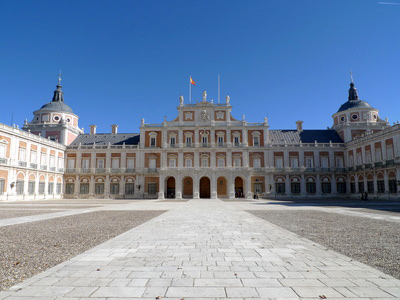
The Royal Palace of Aranjuez, located 47 kilometres south of Madrid, stands as one of Spain's most magnificent royal residences. Built between the 16th and 18th centuries, it was commissioned by King Philip II with plans drawn by Juan Herrera, though work continued through to the reign of Charles III under whom it was completed. The palace served as a spring and summer residence for the Spanish royal family and is characterised by its distinctive white stone and red brick façade. Inside, visitors can explore opulent rooms showcasing exquisite artwork, luxurious furnishings and intricate detailing, including the famous Hall of Mirrors and the Porcelain Room, which is completely lined with white porcelain and Rococo decoration. The palace is surrounded by magnificent gardens featuring fountains, statues and lush greenery, designed by renowned landscape architects. In 2001, the palace and its gardens were declared a UNESCO World Heritage Site as part of the Aranjuez Cultural Landscape.
Interesting Facts about Royal Palace of Aranjuez
- The Royal Palace of Aranjuez was initially conceived as a grand hunting lodge by King Philip II in the 16th century.
- The palace's distinctive façade features a striking combination of red brick and white limestone.
- Construction of the palace was abandoned for nearly a century after Philip II's death before being resumed by Philip V in 1700.
- King Charles III, who completed the palace in the late 18th century, also built the famous Caserta Palace in Naples.
- The palace houses a magnificent Rococo staircase and balustrade designed by Giacomo Bonavía.
- A unique Porcelain Room within the palace has walls entirely lined with porcelain.
- The palace and its surrounding gardens were declared a UNESCO World Heritage Site in 2001 as part of the Aranjuez Cultural Landscape.
- Several Spanish queens, including Elisabeth of Valois and Maria Isabel of Braganza, died within the palace walls.
- The palace briefly served as a state guest house from 1977 to 1983.
- The famous musical piece 'Concierto de Aranjuez' by Joaquin Rodrigo was inspired by the palace gardens.
History
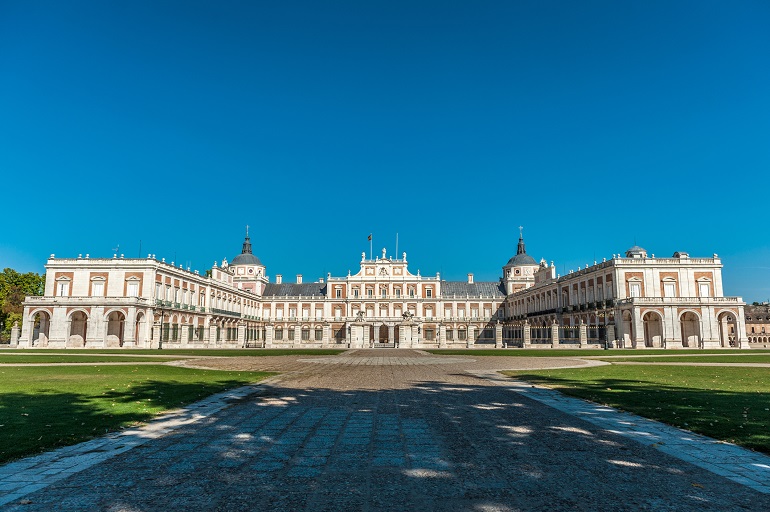
The Royal Palace of Aranjuez was commissioned by King Philip II (1527–1598) as a replacement for an existing royal hunting lodge. The palace was designed by renowned architect Juan Bautista de Toledo, with plans later refined by Juan de Herrera, who was also responsible for El Escorial. However, when Philip II died in 1598, only the chapel, south tower, and parts of the western façade had been completed, and the project was subsequently abandoned for nearly a century.
It was King Philip V, the first Bourbon monarch of Spain, who revived the construction in 1700 with ambitious plans to create a palace to rival Versailles. The king added a new north tower and completed the western façade, establishing the structure that would shape the current palace. After a devastating fire in 1748, Ferdinand VI rebuilt the palace in a late Baroque style with an imposing exterior and sumptuously furnished interior. The palace as we see it today is largely due to King Charles III, who designed the two west wings framing the central courtyard and significantly enriched both the interior and exterior decoration during the 18th century.
The palace is distinguished by its striking red brick and white limestone façade, sourced from Colmenar de Oreja. Its formal entrance features a grand portico emphasised by five symmetrical exterior arches, with statues of Philip II, Philip V and Ferdinand VI adorning the ledge. Inside, visitors can admire the magnificent Rococo staircase created by Giacomo Bonavía, the opulent Porcelain Room completely lined with white porcelain, and the extraordinary Royal Chapel. The palace was first opened as a museum in 1931, though it remains one of the official residences of the King of Spain, standing today as a UNESCO World Heritage Site that showcases the grandeur of Spain's royal history.
Description
The Palace Exterior
The Royal Palace of Aranjuez stands majestically on the banks of the Tagus River, its striking façade a harmonious blend of white Colmenar stone and red brick. This architectural masterpiece presents an impressive frontage stretching over 150 metres, creating an immediate sense of grandeur. The palace's symmetrical design features a central body flanked by two wings, crowned with slate-covered spires that add vertical elegance to the horizontal expanse.
As you approach from the main plaza, you'll notice the meticulous detailing of the stonework and the royal coat of arms proudly displayed above the main entrance. The façade is adorned with statues of Philip II, Ferdinand VI, and Charles III—the three monarchs who contributed most significantly to the palace's development. The ornate balconies and large windows reflect the palace's dual purpose as both a royal residence and a place from which to admire the surrounding landscape.
Interior Splendours
The Grand Staircase and State Rooms
Upon entering, you'll be greeted by the magnificent Rococo staircase designed by Bonavía, a masterpiece of marble with an intricate wrought-iron balustrade. The staircase leads to the principal floor, where the state rooms unfold in a dazzling sequence of opulence.
The Throne Room captivates with its crimson velvet wall coverings and gilded mouldings. The ceiling fresco by Tiepolo depicts the Spanish monarchy triumphant, surrounded by allegorical figures representing the virtues of good governance.
The Porcelain Room
Perhaps the most extraordinary chamber is the Porcelain Room, a fantastical space where the walls and ceiling are entirely covered with delicate porcelain plaques from the Royal Factory of Buen Retiro. The room presents an enchanting vision of Chinese-inspired scenes with exotic birds, flowers, and figures set against a pristine white background. The three-dimensional porcelain fruits, flowers, and vines that adorn the ceiling create a trompe l'oeil effect that must be seen to be believed.
The Arab Room and Music Room
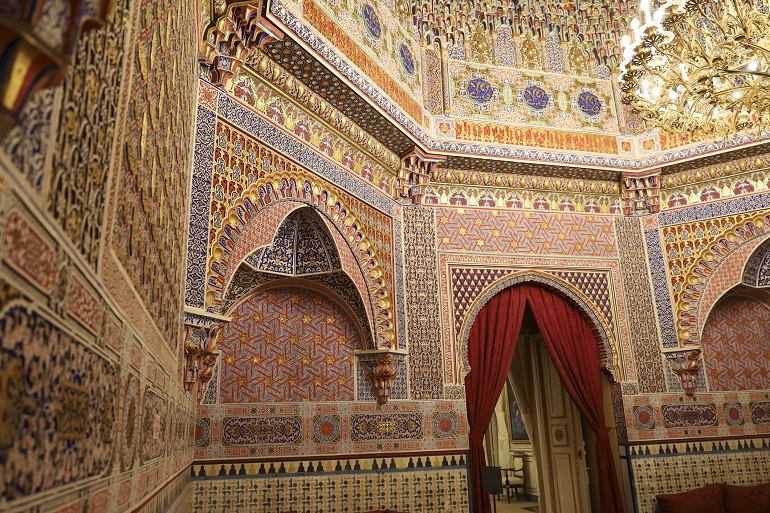
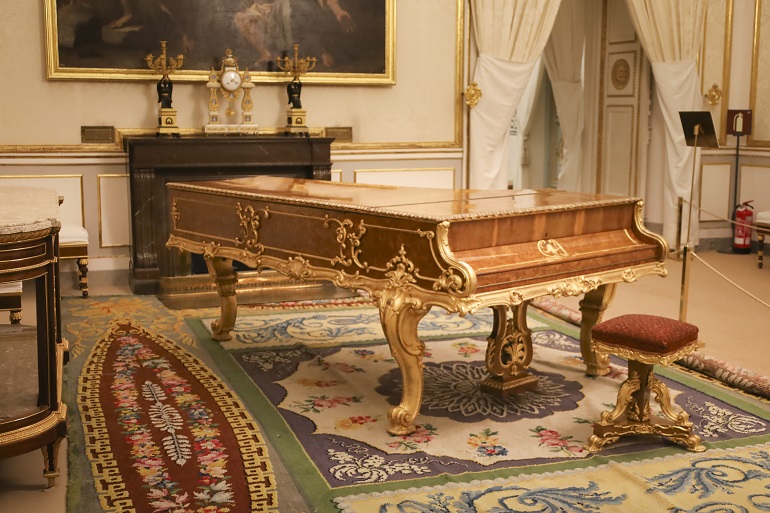
The Arab Room offers a striking contrast with its Moorish-inspired décor, featuring intricate geometric patterns, horseshoe arches, and a stunning coffered ceiling. Meanwhile, the Music Room houses an impressive collection of period instruments, including harpsichords and a pianoforte once played by Luigi Boccherini during his tenure at the court.
The Queen's Chamber and Boudoir
The Queen's Chamber showcases the feminine elegance of 18th-century royal living, with silk-upholstered walls in delicate pastel hues and furniture of exquisite craftsmanship. The adjoining boudoir features remarkable marquetry work and a collection of miniature portraits of European royalty.
The Magnificent Gardens
The Parterre Garden
The Parterre Garden, designed in the French style, extends from the eastern façade of the palace. This formal garden is a symphony of geometric precision, with meticulously trimmed boxwood hedges forming intricate patterns around vibrant flowerbeds that change with the seasons.
The garden is punctuated by magnificent fountains, including the impressive Fountain of Hercules and Antaeus, where water cascades over mythological figures carved in white marble. Elegant statues representing the four seasons stand as silent sentinels among the greenery, while carefully placed benches invite contemplation of the harmonious landscape.
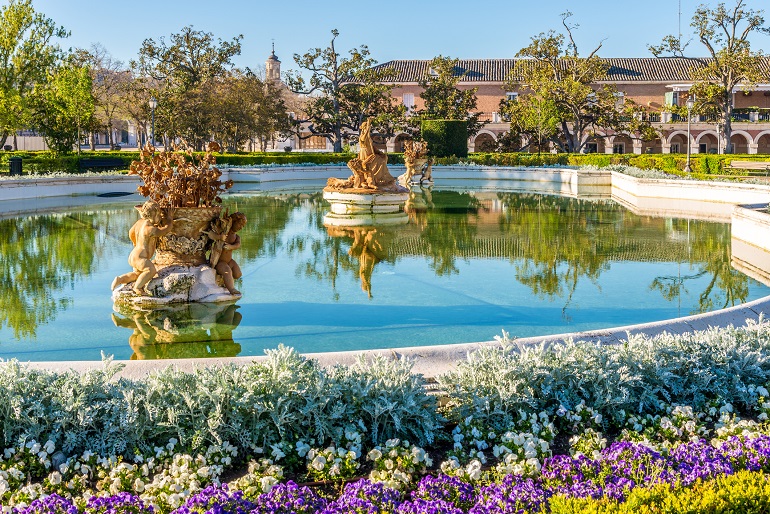
The Island Garden (Jardín de la Isla)
The Island Garden, entirely surrounded by the waters of the Tagus and an artificial canal, is a verdant paradise accessible via ornamental bridges. This Renaissance-inspired garden follows a more geometric layout with intersecting pathways creating a grid pattern.
As you wander through this enchanted island, you'll discover a collection of remarkable fountains, each telling its own mythological story. The Fountain of Apollo depicts the god in his chariot, while the Fountain of Venus shows the goddess emerging from her bath. The Fountain of Bacchus celebrates the god of wine amidst playful putti.
The garden's mature trees provide welcome shade, with species ranging from ancient plane trees to exotic specimens brought from the Americas during Spain's colonial era. Listen for the gentle splashing of water from the numerous smaller fountains that create a soothing soundtrack to your exploration.
The Prince's Garden (Jardín del Príncipe)
The vast Prince's Garden, spanning over 150 hectares, represents the pinnacle of 18th-century landscape design. Unlike the formal Parterre, this garden embraces a more naturalistic approach, with winding paths leading through wooded areas, open meadows, and along the riverbank.
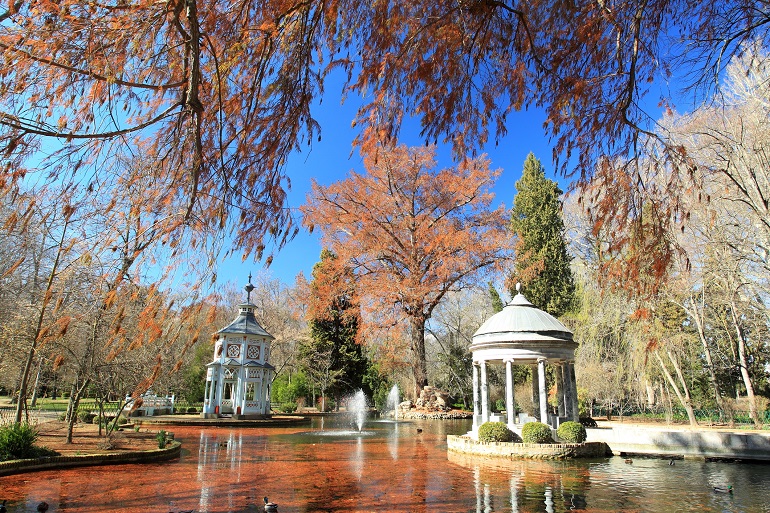
The garden is divided into distinct sections, each with its own character. The Chinese Pond (Estanque Chinesco) features a whimsical pavilion reflected in still waters, surrounded by weeping willows and ornamental bridges. Nearby, the Fountain of Narcissus depicts the mythological figure gazing at his reflection, a poetic complement to the pond's mirror-like surface.
The garden's network of tree-lined avenues creates green tunnels that offer respite from the Spanish sun. These avenues radiate outward, offering carefully framed views of fountains, pavilions, and the palace itself.
Casa del Labrador
Deep within the Prince's Garden lies the Casa del Labrador, a neoclassical "pleasure palace" that belies its modest name (literally "Farmhouse"). This small palace is a jewel box of decorative arts, with each room more sumptuous than the last.
The exterior presents a restrained elegance, but inside, the rooms dazzle with silk wall coverings, gilded mouldings, and marble floors. The Platinum Cabinet is particularly remarkable, featuring walls inlaid with platinum and mother-of-pearl in intricate designs. The Billiards Room showcases a magnificent table with ivory inlays, while the Ball Room features a ceiling fresco depicting Apollo and the Muses.
Botanical Wonders
The gardens of Aranjuez function as a living botanical collection, with an astonishing diversity of trees and plants. The palace grounds boast over 150 species of trees, many of which are centuries old. Magnificent plane trees line the avenues, their massive trunks and spreading canopies creating natural colonnades.
The estate features numerous exotic species introduced during Spain's imperial age, including American tulip trees, Lebanese cedars, and Asian ginkgos. In spring, the garden's collection of magnolias creates a spectacular display of pink and white blossoms, while the autumn brings a kaleidoscope of colours as the deciduous trees prepare for winter.
The Wider Estate
The influence of Aranjuez extends far beyond the palace walls, with tree-lined avenues radiating outward into the surrounding countryside. These green corridors, known as "calles arboladas," stretch for kilometres, creating a verdant network that transforms the entire landscape.
The most famous of these is the Calle de la Reina (Queen's Avenue), a majestic promenade lined with towering plane trees that extends for nearly three kilometres. Walking along this green cathedral, you'll experience the same sense of awe that inspired composers and poets throughout the centuries.
The estate also encompasses agricultural areas where, since the time of Philip II, experimental farming techniques were implemented. These historic orchards and market gardens continue to produce fruits and vegetables using traditional methods, maintaining a living connection to the palace's past as a place of agricultural innovation.
Riverside Splendours
The Tagus River is integral to the character of Aranjuez, winding through the estate and providing the water that sustains its lush gardens. Elegant stone bridges span the river at various points, offering picturesque views of the palace reflected in the water.
Along the riverbanks, weeping willows trail their branches in the current, while water birds nest among the reeds. Pathways follow the meandering course of the river, providing tranquil walks away from the more formal areas of the garden.
Getting There
To reach the Royal Palace of Aranjuez, located about 55 kilometres south of Madrid, visitors have several convenient options. The most straightforward method is to catch the C-3 train from Atocha station in Madrid, followed by a pleasant 20-minute walk from Aranjuez station to the palace. For those who prefer driving, the journey from Madrid takes just under an hour, and there's a handy underground car park situated directly in front of the palace entrance. The palace is open Tuesday through Sunday (closed on Mondays), with opening hours from 10:00 to 19:00 during April to September (last entry at 18:00) and 10:00 to 18:00 from October to March (last entry at 17:00). The Royal Palace of Aranjuez, with its distinctive red and white façade, offers visitors a magnificent glimpse into Spain's royal history and architectural heritage.
Best Time to Visit
The Royal Palace of Aranjuez is best visited during the spring months from April to June or in early autumn from September to October, when the weather is pleasantly mild and rainfall is minimal, ideal conditions for exploring the palace's extensive outdoor gardens and grounds. These seasons offer the perfect climate for wandering through the King's Garden with its manicured hedges and fountains, or enjoying the tranquil Island Garden featuring the historic Hercules fountain. May is particularly delightful as it coincides with the local Strawberry Festival, offering visitors the chance to sample the region's famous fruit alongside various festive activities. Whilst summer visits are possible, be prepared for temperatures frequently exceeding 30°C, which can make outdoor exploration rather challenging. The palace is open Tuesday through Sunday (closed on Mondays), with free entry available for European Union and Ibero-American citizens on Wednesday and Sunday afternoons, making these times particularly busy but budget-friendly.