


| Contents |
|---|

Introduction
Cuenca (pop. 56,000), located approximately 170 km southeast of Madrid in Castile-La Mancha, is a remarkably preserved medieval city built dramatically on a steep promontory between the Júcar and Huécar river gorges. Originally a Moorish fortress established during the Caliphate of Córdoba, it was conquered by the Castilians in 1177 and developed into a royal town and bishopric. The historic walled town, designated a UNESCO World Heritage site in 1996, is characterised by narrow winding streets and colourful buildings, including the famous "casas colgadas" (hanging houses) that jut precariously over the Huécar river ravine. Notable landmarks include Spain's first Gothic cathedral, built on the site of the former Great Mosque, and several museums housing abstract art collections. Today, with a population of approximately 55,000, Cuenca uniquely combines its medieval architectural heritage with a surprising focus on contemporary art, effectively forming two cities – the upper, historic centre and the lower, modern town.
Interesting Facts about Cuenca
- Cuenca was built by the Moors as a defensive fortress at the heart of the Caliphate of Cordoba.
- Cuenca's famous "Hanging Houses" (Casas Colgadas) appear suspended over the cliff edge overlooking the Huécar river.
- One of the Hanging Houses now contains the Museum of Spanish Abstract Art.
- Cuenca Cathedral, built in the 12th century, is considered the first Gothic cathedral in Spain.
- After being conquered by the Castilians in the 12th century, Cuenca became a royal town and bishopric.
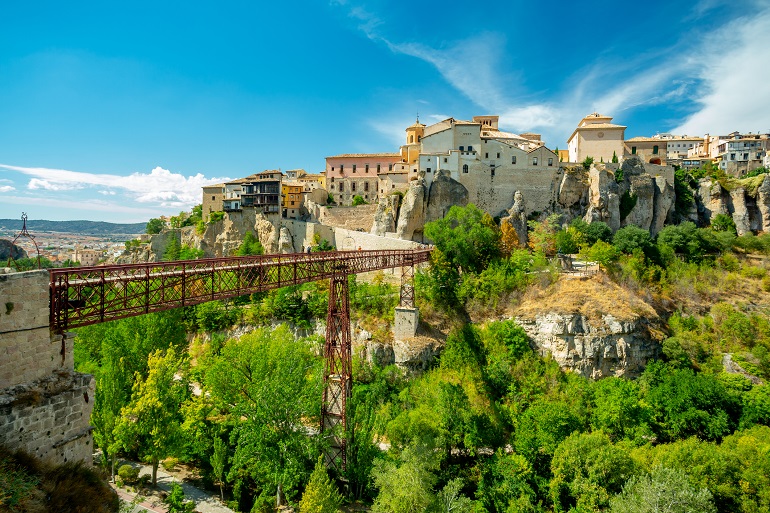
- The San Pablo Bridge is an iron and wood structure offering impressive views of the Hanging Houses and the Huécar River gorge.
- The Mangana Tower, dating back to the 16th century, is one of the highest points in the city and offers panoramic views.
- During the 19th century, Cuenca expanded to become two distinct cities: the upper, old city and the lower, modern one near the railway from Madrid.
- The surrounding area features the Serranía de Cuenca mountain range with scenic valleys, gorges, and waterfalls.
- Near Cuenca is an interesting group of rock formations known as "The Enchanted City" (Ciudad Encantada).
- The former San Pablo Monastery has been converted into a luxury hotel.
- The Serranía de Cuenca mountain range was designated a Natural Park in 2007.

History
Cuenca's history is deeply rooted in its strategic position atop a limestone spur flanked by the Júcar and Huécar river gorges. Founded by the Moors in the 8th century as a fortified settlement, the city became a key defensive outpost due to its natural fortifications. In 1177, King Alfonso VIII of Castile captured Cuenca during the Christian Reconquista, marking a turning point in its development. The subsequent repopulation and establishment of the Fuero de Cuenca—a medieval legal code—laid the groundwork for its growth as a thriving medieval hub. By the 15th century, Cuenca had emerged as a prominent textile centre, with its iconic casas colgadas (hanging houses) constructed along the cliff edges, embodying the architectural ingenuity of the era.
The city's medieval zenith is reflected in its religious and civic landmarks. The Cathedral of Santa María de Gracia, initiated shortly after the Christian conquest, stands as Spain’s first Gothic cathedral, blending Romanesque transitional elements with later Gothic expansions. Cuenca’s tripartite cultural identity—divided into Christian, Jewish, and Moorish quarters—underscored its role as a crossroads of faith and commerce. Though the 16th century saw a decline in political influence, the city retained ecclesiastical prominence, with grand ecclesiastical structures like the Episcopal Palace symbolising its enduring spiritual significance. The People’s Cavalry, a militia established under the Fuero, further highlighted its unique socio-political fabric.
Cuenca’s modern identity balances historical preservation with cultural reinvention. The 19th century brought urban expansion beyond its medieval walls and the secularisation of church holdings, shifting its economic focus. Designated a UNESCO World Heritage Site in 1996, the city now harmonises its medieval charm with avant-garde art institutions, such as the Museo de Arte Abstracto Español housed within the hanging houses. This fusion of ancient topography and modern creativity, coupled with its role as a provincial capital, ensures Cuenca remains a captivating chapter in Spain’s historical and cultural narrative.
Main Attractions
Puente de San Pablo (San Pablo Bridge)
The San Pablo Bridge is a testament to both engineering prowess and aesthetic beauty. Originally constructed in the 16th century, the current iron and wood footbridge dates from 1902 and spans the deep gorge of the Huécar River. The bridge connects the old town to the Parador de Turismo, a luxury hotel housed in a former convent. Walking across the bridge is an exhilarating experience, offering breathtaking views of the Hanging Houses and the river gorge below. The bridge's elegant design complements the natural beauty of its surroundings, creating a harmonious blend of man-made and natural elements. It's a popular spot for photography, especially during the golden hours of sunrise and sunset when the light casts a warm glow over the city.
Historic Walled Town
Cuenca's old town is a living museum of medieval urban planning and architecture. Developed on the site of an Islamic fortress, the upper town is a maze of narrow cobblestone lanes, intimate plazas, and well-preserved mansions. The city walls, parts of which still stand, once encircled this area, providing protection and defining the urban landscape. Walking through the old town is like stepping back in time, with each turn revealing new architectural delights. The "Castillo" quarter, just outside the walls, contains remains of the Islamic fortress, offering a glimpse into the city's pre-Christian history. The old town's layout, with its winding streets and hidden corners, invites exploration and discovery.
Casas Colgadas (Hanging Houses)
The Hanging Houses are Cuenca's most iconic landmark, embodying the city's unique architectural heritage. These medieval structures, built on the edge of a cliff overlooking the Huécar River, seem to defy gravity with their wooden balconies jutting out over the gorge. The houses date back to the 15th century and were once common throughout the city, but now only a few remain. Their precarious position and distinctive design have made them a symbol of Cuenca, featured on countless postcards and photographs. The houses are best viewed from the San Pablo Bridge, where visitors can appreciate their full splendour. At night, the Hanging Houses are illuminated, creating a magical spectacle that reflects in the waters of the Huécar River below.

Plaza Mayor
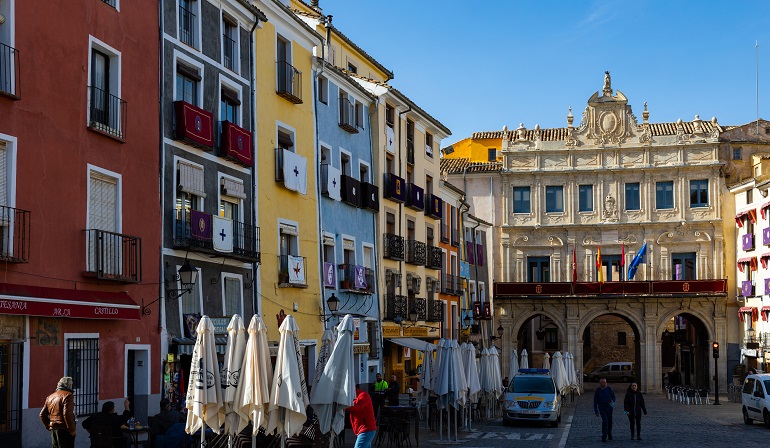
Plaza Mayor is the beating heart of Cuenca, a vibrant public space that has been the centre of city life for centuries. Surrounded by historic buildings, including the Town Hall and the Cathedral, the square is a testament to Cuenca's rich architectural heritage. The buildings around the plaza showcase a variety of architectural styles, from Gothic to Baroque, reflecting the city's long history. Throughout the year, Plaza Mayor comes alive with festivals, markets, and cultural events, providing a glimpse into the lively spirit of Cuenca's residents. The square is also home to numerous cafes and restaurants, where visitors can enjoy local cuisine while soaking in the atmosphere of this historic space.
Catedral de Santa María la Mayor
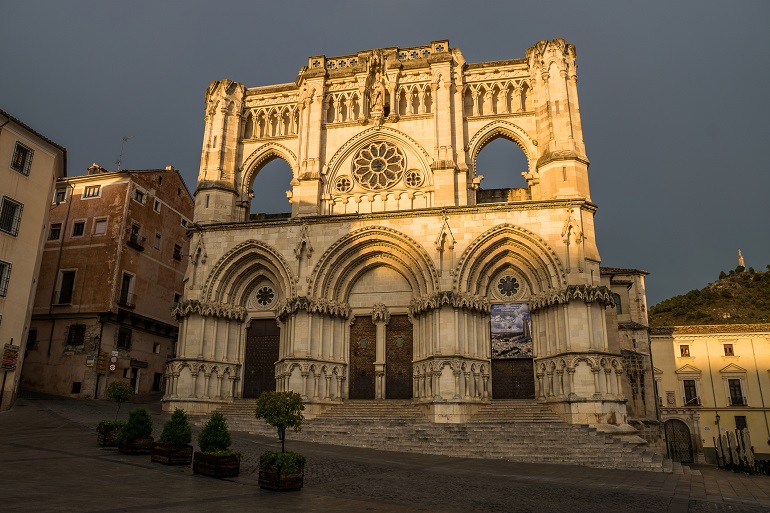
The Cathedral of Santa María la Mayor is a magnificent example of early Gothic architecture in Spain, with construction beginning in the 12th century. Located in Plaza Mayor, the cathedral's façade is a striking blend of Romanesque and Gothic elements, featuring intricate stone carvings and a large rose window. The interior of the cathedral is equally impressive, with soaring vaulted ceilings and numerous chapels adorned with valuable artworks. Of particular note is the main altarpiece, a masterpiece of Renaissance art, and the ornate Baroque chapel of San Julián. The cathedral's tower offers panoramic views of the city and surrounding landscape, providing visitors with a unique perspective on Cuenca's dramatic setting.
Torre de Mangana (Mangana Tower)
The Mangana Tower stands as a sentinel over Cuenca, its sturdy stone structure a reminder of the city's medieval past. Originally built in the 16th century as part of the city's defensive system, the tower has undergone several renovations over the centuries. Today, it serves as one of the highest vantage points in Cuenca, offering panoramic views of the city and the surrounding countryside. The tower's clock, added in the 19th century, has become an important landmark for locals and visitors alike. The area around the tower, known as the Mangana Square, is a pleasant space often used for cultural events and gatherings.
Serranía de Cuenca Natural Park
The Serranía de Cuenca Natural Park is a vast expanse of natural beauty surrounding the city. Covering over 73,000 hectares, the park showcases the diverse landscapes of the region, from deep river canyons to unique rock formations and dense pine forests. The park is home to a rich variety of flora and fauna, including rare species of birds and mammals. Its geological features are particularly noteworthy, with karst formations creating a landscape of caves, sinkholes, and underground rivers. The park offers numerous hiking trails of varying difficulty, allowing visitors to immerse themselves in the natural beauty of the area. Rock climbing enthusiasts will find challenging routes in the park's many cliff faces.
Top Museums
Science and Natural History Museums
Museum of Paleontology of Castilla-La Mancha (MUPA)
This museum is dedicated to the study and display of the paleontological history of the Castilla-La Mancha region. It houses an impressive collection of fossils, including quite impressive dinosaur specimens. Visitors have described it as having "fabulous" staff who are "enthusiastic and well-informed".
Science Museum of Castilla La Mancha
Located in the heart of the city, this interactive science museum offers activities such as a 3D ride in a time machine. Though not the biggest science museum, it features modern exhibitions with interactive elements that make it particularly appealing for science enthusiasts.
History and Culture Museums
Museo de Cuenca
Located in the historic Casa del Curato in the old town, this archaeological museum showcases a diverse collection spanning from prehistoric times to the modern era. The Roman collection is particularly impressive, featuring sculptures with fine details of folds and pleats in flowing clothes and an impressive Corinthian Capital.
Episcopal Palace of Cuenca
This significant historical building houses the Diocesan Museum (Museo Diocesano de Cuenca), which showcases religious artifacts and artworks. The museum is located in the Episcopal Palace and contains many treasures, including two El Greco paintings and fine examples of Cuenca's historically important carpet-making tradition.
Museo Tesoro Catedral
Part of the main cathedral in Cuenca, this museum holds temporary exhibitions that feature aspects of the cathedral and other sites that provide insight into local culture and society.
Art Museums
Museum of Spanish Abstract Art
Located in the iconic Casas Colgadas (Hanging Houses), this museum was established in 1966 and houses approximately 129 paintings, predominantly by Spanish artists from the 1950s and 1960s. The collection features works from the locally beloved modern artist Fernando Zobel, who donated his collection to the Juan March Foundation in 1980. The unique medieval building offers stunning views through its large windows overlooking the Rio Huécar gorge below.
Antonio Pérez Foundation
This contemporary art museum is housed in a former convent from the 1580s and showcases great modern art across numerous media. Visitors have described it as "beautifully curated" with "a surprise in almost every room".
Espacio Torner
Located in the Church of San Pablo, this museum exhibits works by the famous local 20th-century artist Gustavo Torner de la Fuente. The church itself is a gorgeous setting for the art, built in late-gothic style and finished in rococo style in the early 18th century.
Cuenca Contemporary Art Centre
With more than 50 rooms, this museum houses an extensive collection that explores the development of contemporary art from the mid-20th century to the present day.
Other Museums
Museo de la Semana Santa de Cuenca
This local history museum educates visitors about the significance of Easter celebrations in Cuenca, which are renowned throughout Spain.
Centro de Arte Moderno y Contemporáneo de Castilla-La Mancha
Another art museum located in Cuenca's old town that contributes to the city's reputation as a destination for art lovers.
Local Cuisine
Cuenca boasts a rich culinary tradition that earned it the title of 2023 Spanish Capital of Gastronomy. Visitors should not miss trying morteruelo, a traditional hot pâté made from pork liver, game meats, breadcrumbs and spices, typically served with crusty bread. Another local delicacy is zarajos, a unique appetiser consisting of marinated lamb intestines wrapped around vine shoots and then fried, roasted or grilled. Seafood lovers will appreciate ajoarriero, a hearty dish made with salted codfish, garlic, red pepper and olive oil. For meat enthusiasts, Cordero Manchego (lamb from Castilla la Mancha) is particularly tender due to its special cereal-based diet and can be enjoyed as a classic roast or stew. Vegetarians can savour pisto Manchego, a Spanish ratatouille-like dish made with tomatoes, peppers, onions and courgettes. Complete your culinary journey with alajú, a traditional dessert consisting of almonds, spices, honey and toasted breadcrumbs sandwiched between wafers, whilst sampling the excellent local wines from the La Mancha region.
Getting There & Around
Visitors can reach the city by train, with two railway stations available: the central "Estación de Cuenca" for regional trains (approximately 2 hours 50 minutes from Madrid) and "Estación de Cuenca-Fernando Zóbel" located 5km from the centre for high-speed AVE trains (55 minutes from Madrid). Coach services connect Cuenca to nearby cities, with journeys to Madrid or Valencia taking about 2 hours and costing around €12. By car, Cuenca is 165km from Madrid (approximately 1 hour 30 minutes), 145km from Albacete, 185km from Toledo, and 210km from Valencia. Once in Cuenca, the city is highly walkable, particularly the charming old town with its narrow winding streets. Public transportation within the city is efficient and budget-friendly, with a monthly pass costing around €30.