


| Contents |
|---|

Introduction
Burgos (pop. 175,000) is a historic city nestled along the banks of the Arlanzón River at an elevation of about 865 metres above sea level. Founded in 884 by Count Diego Rodríguez Porcelos as an eastern outpost of the Asturian kingdom, it later became the capital of the County and Kingdom of Castile. The city is renowned for its magnificent French Gothic Cathedral, a UNESCO World Heritage Site begun in 1221 and completed in 1567, which houses the tomb of the 11th-century Spanish hero El Cid. With a population of approximately 176,000 inhabitants, Burgos serves as an important stop on the Camino de Santiago pilgrimage route and has been recognised for its gastronomy, earning the title "Spanish Gastronomy Capital" in 2013 and joining UNESCO's Creative Cities Network as a "City of Gastronomy" in 2015. Beyond its cathedral, visitors can explore numerous historic landmarks including Gothic churches, monasteries, and the Museum of Human Evolution, which opened in 2010 and features remains of the first hominins in Europe.
Interesting Facts about Burgos
- Burgos Cathedral, a UNESCO World Heritage Site since 1984, took 346 years to complete, with construction spanning from 1221 to 1567.
- The Cathedral houses the tomb of El Cid, a famous 11th-century military leader considered a hero in the region.
- Burgos Cathedral is the only Spanish cathedral named a World Heritage Site without being connected to the historic centre of a city or other buildings.
- The city was once the capital of the kingdom of Castile and controlled all foreign trade of Castile through the Burgos Guild.
- Burgos is an important stop on the Camino de Santiago pilgrimage route, attracting thousands of pilgrims every year.
- The Cathedral features a curious clock figure called the Papamoscas (flycatcher) that opens its mouth while ringing the bells every hour.
- In 1497, the Catholic Monarchs Fernando II and Isabel I welcomed Christopher Columbus in Burgos upon his return from his second voyage to the Americas.
- The Museum of Human Evolution in Burgos showcases Europe's oldest human fossils, discovered at the nearby archaeological site of Atapuerca.
- The city's architecture is characterised by typical dark-stone buildings common in northern Spanish cities.
History
Burgos as we know it today was formally established in 884 CE by Count Diego Rodríguez Porcelos under the orders of King Alfonso III of León. Founded as a strategic fortress to defend Christian territories during the Reconquista, this military outpost was positioned at the confluence of the Arlanzón river tributaries, giving rise to its name "Caput Castellae" (Head of Castile).
During the medieval period, Burgos flourished into one of the most prosperous cities in Spain. By the 11th century, it had become the capital of the Kingdom of Castile and a major stopping point on the Camino de Santiago pilgrimage route. The city's wealth and importance grew substantially through its dominance of the merino wool trade, enabling the construction of magnificent buildings including the breathtaking Gothic cathedral, begun in 1221 and completed in 1567. Burgos is also inextricably linked with El Cid, the legendary Spanish military leader and national hero born nearby, whose remains now rest in the cathedral. Throughout the 13th and 14th centuries, Burgos remained a favoured seat of the Castilian monarchs and a thriving centre of commerce and culture.
Burgos' prominence began to wane in the 16th century when Philip II moved the capital permanently to Madrid in 1561. The city's decline continued as trade routes shifted and its economic influence diminished. Nevertheless, Burgos remained historically significant, featuring prominently in several major conflicts. During the Peninsular War, the French defeated the Spaniards here in 1808, only to lose the city to Anglo-Portuguese forces in 1813. Perhaps most notably, during the Spanish Civil War, Burgos served as General Franco's Nationalist government headquarters from 1936. Despite these tumultuous episodes, the city has preserved its rich medieval heritage, with its magnificent cathedral being designated a UNESCO World Heritage Site in 1984. Today, Burgos beautifully balances its historical legacy with the vibrancy of modern Spain.
Main Attractions
Historic Centre
The historic centre of Burgos preserves its medieval character through a network of narrow streets, historic buildings, and charming squares. This area developed around the cathedral from the 9th century onwards, expanding as the city grew in importance as a commercial hub and stop on the Camino de Santiago pilgrimage route. Despite urban development over the centuries, the old town maintains its traditional Castilian atmosphere with stone buildings, wooden balconies, and historic façades.
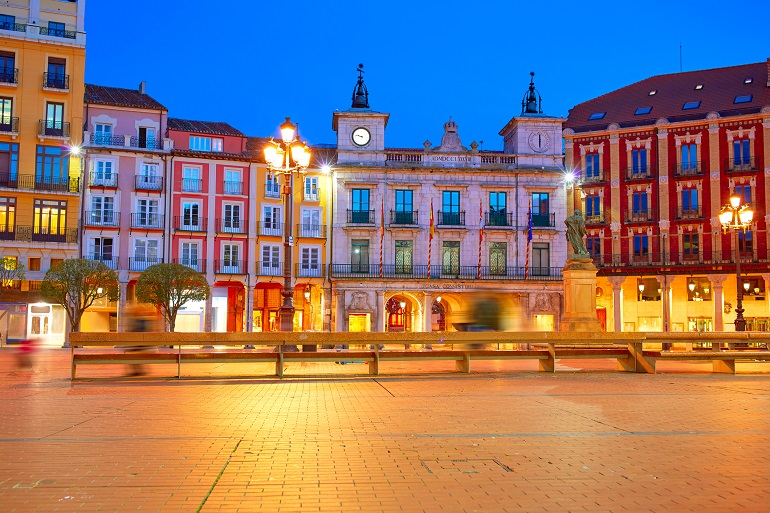
Plaza Mayor forms the heart of the historic centre, a spacious square that has served as the city's main gathering place since medieval times. Surrounded by arcaded buildings housing cafés, restaurants, and shops, the plaza remains the social hub of Burgos. Regular markets and festivals animate this space throughout the year, continuing centuries-old traditions.
Plaza del Rey San Fernando, located on the southern side of the cathedral, offers one of the best views of the Gothic masterpiece. This elegant square features carefully maintained gardens and benches where visitors can contemplate the cathedral's detailed façade. Nearby, the Plaza de la Libertad and Plaza de Santo Domingo de Guzmán showcase additional historic buildings and monuments.
The old town's streets reveal architectural treasures at every turn, from Renaissance palaces to Baroque churches. Notable examples include the Casa del Cordón, a 15th-century palace with an ornate façade featuring a Franciscan cord carved in stone, and the Church of San Nicolás de Bari with its extraordinary carved altarpiece. The district also contains numerous traditional taverns and restaurants serving Castilian specialities, many with centuries of history behind their doors.
Catedral de Burgos
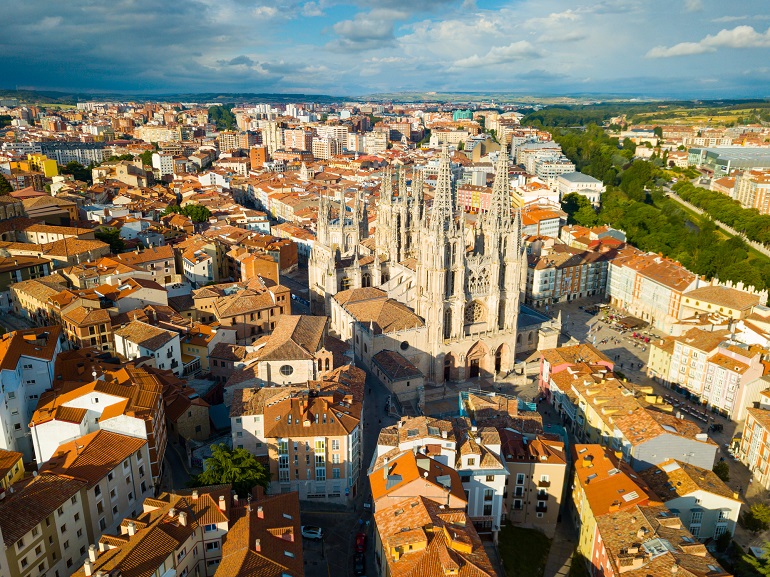
The Catedral de Burgos stands as an exceptional example of Gothic architecture and one of Spain's most significant religious monuments. This UNESCO World Heritage Site dominates the city skyline with its distinctive spires and intricate stonework. Construction began in 1221 under the patronage of King Ferdinand III of Castile and Bishop Maurice of Burgos, drawing inspiration from French Gothic cathedrals. The cathedral underwent numerous expansions and modifications over nearly six centuries, resulting in a harmonious blend of Gothic, Renaissance, and Baroque elements.
The main façade, facing west, features the impressive Puerta del Perdón (Door of Forgiveness) flanked by two slender spires reaching 84 metres in height. Above the entrance sits the estrellón, a magnificent star-patterned rose window that bathes the interior with coloured light. The southern entrance, known as Puerta del Sarmental, displays some of the cathedral's finest sculptural work, with detailed representations of the apostles and evangelists arranged around a central figure of Christ in Majesty.
Inside, visitors are greeted by soaring vaulted ceilings and an impressive central nave. The heart of the cathedral features a distinctive octagonal lantern tower, or cimborrio, rebuilt in the 16th century in a Mudéjar style after the original collapsed. The Escalera Dorada (Golden Staircase), designed by Renaissance architect Diego de Siloé, connects the northern transept with the Puerta de la Coronería in a dramatic display of architectural ingenuity.
The cathedral houses 19 chapels in its side naves, each with unique artistic treasures. The most spectacular is the 15th-century Capilla del Condestable, commissioned by the Constable of Castile, featuring an octagonal dome, ornate tombs, and exquisite altarpieces. The 13th-century cloister, accessible from the south transept, contains monumental tombs and leads to the cathedral museum with its collection of religious artefacts, tapestries, and paintings by artists including El Greco.

Arco de Santa María
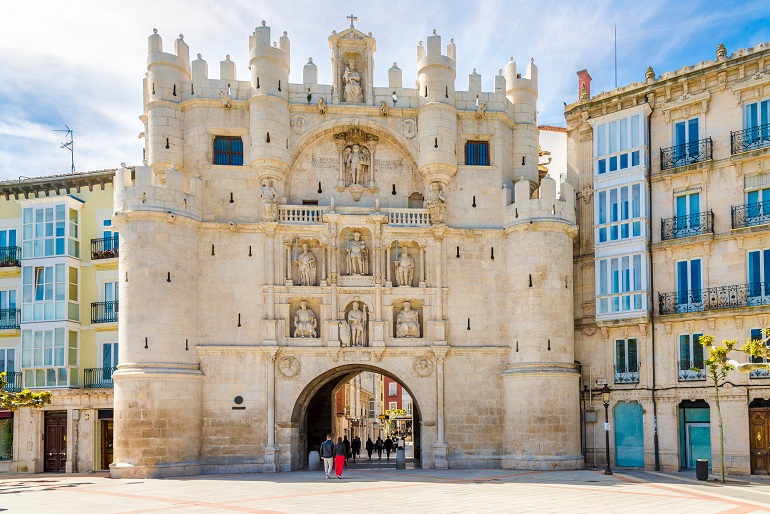
The Arco de Santa María represents one of the most iconic civil monuments in Burgos. This monumental gate formed part of the medieval city walls and served as the main entrance to the city for pilgrims and travellers arriving from the east. Dating back to the 14th century, the structure underwent a significant renovation in 1552 under Emperor Charles V, transforming it from a purely defensive structure into an ornate triumphal arch celebrating Burgos' historical figures.
The façade resembles a small fortress, with a massive central arch flanked by two semicircular towers and topped with turrets and battlements. The decorative scheme includes statues of Castilian heroes and monarchs arranged in niches across the façade. These figures include the city's founder, Count Diego Porcelos; the legendary judge Laín Calvo; Castilian hero Fernán González; and King Charles V himself. This sculptural programme was designed to emphasise Burgos' historical importance and loyalty to the Crown.
Behind the monumental entrance, the interior of the Arco de Santa María contains several rooms formerly used for city council meetings. Today, these spaces frequently host temporary art exhibitions and cultural events. The structure serves as a gateway between the modern city and the historic centre, linking the riverside Paseo del Espolón with the cathedral district.
Paseo del Espolón
The Paseo del Espolón serves as Burgos' principal promenade, stretching along the northern bank of the Arlanzón River. Developed in the 18th century as part of urban beautification efforts, this tree-lined boulevard has become the social heart of the city. Rows of plane trees create a natural canopy over the walkway, providing welcome shade during Castile's hot summer months and a picturesque display of autumn colours later in the year.
The promenade features elegant gardens with carefully maintained flowerbeds, ornamental fountains, and numerous benches where locals and visitors gather throughout the day. Decorative elements include neoclassical statues representing the seasons and Castilian historical figures. The central section contains the "Fuente de la Flora," a 19th-century fountain adorned with mythological figures.
Connecting several of the city's landmarks, the Paseo del Espolón links the Arco de Santa María with the Teatro Principal and the Plaza del Cid, where a statue commemorates Burgos' most famous son, the medieval warrior Rodrigo Díaz de Vivar, known as El Cid Campeador. The northern side of the promenade is lined with historic buildings housing cafés and restaurants with outdoor terraces, creating a lively atmosphere particularly during evening paseos when residents traditionally take their pre-dinner stroll.
Puente de San Pablo
The Puente de San Pablo spans the Arlanzón River, connecting the historic centre with the northern districts of Burgos. While the current bridge dates from the 20th century, it replaces a medieval structure first built in the 13th century to link the city with the Dominican Monastery of San Pablo (now demolished). The bridge offers excellent views of the cathedral and riverfront buildings.
What makes this bridge particularly distinctive are the eight large statues lining its balustrades. These sculptures, created by Lucarini in the mid-20th century, depict figures associated with the legend of El Cid, including the hero himself, his wife Doña Jimena, and other contemporaries from 11th-century Castile. The statues add a dramatic element to the crossing, connecting modern Burgos with its medieval past.
The bridge serves as more than just a functional crossing; it acts as an open-air gallery celebrating Burgos' most famous historical figure. From the centre of the bridge, visitors can enjoy unobstructed views of the cathedral reflected in the river waters, creating one of the city's most photographed scenes. The area around the bridge has been thoughtfully landscaped with gardens and seating areas, making it a pleasant spot to pause and appreciate the riverside setting.
Monasterio de Santa María la Real de Las Huelgas
The Monasterio de Santa María la Real de Las Huelgas stands as one of Spain's most prestigious religious foundations. Established in 1187 by King Alfonso VIII of Castile and his wife, Eleanor of England, this royal monastery was intended as a place of retirement for noble ladies and as a pantheon for the Castilian monarchy. The complex combines Romanesque, Gothic, and Mudéjar architectural elements, reflecting its construction and expansion over several centuries.
The monastery's abbess wielded extraordinary power, holding the title of "Lady of Las Huelgas" with jurisdiction over more than fifty villages. She possessed the authority to conduct trials, appoint officials, and even declare war—privileges normally reserved for bishops or kings. This unique status made Las Huelgas one of the most influential female religious communities in medieval Europe.
Still home to a community of Cistercian nuns, the monastery can only be visited through guided tours. These tours showcase the Romanesque chapter house, where the community would gather for daily readings; the Gothic church with its distinctive ribbed vaults; and the Mudéjar cloister, decorated with intricate geometric patterns. The monastery's museum, known as the Museo de Ricas Telas, houses an exceptional collection of medieval textiles and royal garments, including the banner captured from the Almohad caliph at the Battle of Las Navas de Tolosa in 1212.
The royal pantheon contains the tombs of numerous Castilian monarchs and nobles, including Alfonso VIII and Eleanor of England. These elaborately carved sarcophagi represent some of the finest funerary art of medieval Spain. The monastery also preserves several historic spaces, including the Chapel of Santiago, where knights were once ceremonially dubbed before battle.

Castillo de Burgos
Perched atop a hill overlooking the city, the Castillo de Burgos has witnessed centuries of Spanish history. Originally constructed in 884 during the early Reconquista period by Count Diego Rodríguez Porcelos, the fortress served as a crucial defensive structure against Moorish invasions. Throughout the medieval period, the castle grew in importance, hosting royal weddings and serving as a residence for Castilian monarchs.
The castle underwent significant expansion during the early 16th century under Emperor Charles V, who transformed it into a formidable artillery fortress with bastions and defensive walls. However, its military significance declined in later centuries. During the Peninsular War (1808-1814), Napoleon's troops occupied the castle and subsequently destroyed much of it when retreating from the city, leaving the impressive ruins visible today.
Recent archaeological excavations have uncovered foundations of earlier structures and artefacts dating back to the Roman period. A modern visitor centre within the castle grounds uses interactive displays to illustrate the fortress's evolution and historical significance. The site's elevated position provides spectacular panoramic views of Burgos, with the cathedral's spires prominently visible against the backdrop of the Castilian plains and the Arlanzón River winding through the city.

Mirador del Castillo
The Mirador del Castillo offers the most spectacular viewpoint in Burgos, providing panoramic vistas across the entire city and surrounding countryside. Located near the castle ruins atop the city's highest hill, this observation point rewards visitors who make the climb with unparalleled views of Burgos' historic skyline dominated by the cathedral's Gothic spires.
From this elevated position, visitors can trace the course of the Arlanzón River as it winds through the city, dividing the historic centre from newer districts. The viewpoint provides excellent opportunities to appreciate the urban layout of Burgos, from its medieval core to its modern expansions. Information panels help identify key landmarks visible from this vantage point, including churches, palaces, and bridges spanning several centuries of architectural history.
The mirador is particularly popular at sunset when the cathedral and historic buildings are bathed in golden light, creating dramatic photographic opportunities. The surrounding Parque del Castillo offers peaceful walking paths through pine woods and open spaces where visitors can rest after the uphill journey. Stone benches positioned at strategic points allow for contemplation of different aspects of the cityscape below.
Cartuja de Miraflores
The Cartuja de Miraflores sits in peaceful seclusion approximately 4 kilometres east of Burgos' city centre. Originally built as a hunting lodge for King Henry III of Castile in the early 15th century, the property was donated to the Carthusian Order by his son, King John II. Construction of the monastery began in 1454 but was interrupted by fire, with rebuilding continuing until 1484 under the patronage of Queen Isabella I of Castile.
The monastery's Gothic church features a simple, austere exterior typical of Carthusian architecture, contrasting dramatically with its lavishly decorated interior. The centrepiece is a spectacular gilded altarpiece by Gil de Siloé, completed between 1496 and 1499. This intricate work incorporates gold brought back from early American expeditions and depicts scenes from the Passion of Christ arranged in a circular pattern symbolising the Crown of Thorns.
In front of the altar lie the alabaster tombs of King John II and his second wife, Isabel of Portugal (parents of Queen Isabella I), also carved by Gil de Siloé. These tombs represent masterpieces of late Gothic sculpture, with the recumbent figures surrounded by intricate details including small lions, angels, and saints. Nearby stands the kneeling figure of their son, Prince Alfonso, captured in prayer for eternity.
The monastery follows the traditional Carthusian layout, with monks' cells arranged around a large cloister to facilitate their solitary lifestyle. While most of the monastery remains closed to the public as it continues to house a small community of Carthusian monks, visitors can view the church, chapels, and selected areas that showcase the order's contemplative tradition and artistic patronage.
Camino de Santiago
Burgos occupies a significant position on the Camino Francés, the most popular route of the Camino de Santiago pilgrimage. This ancient path has brought travellers through the city since the early medieval period, contributing substantially to Burgos' historical development and cultural heritage. The traditional pilgrim route enters the city from the east via the Barrio de San Pedro de la Fuente, crosses the Arlanzón River, and passes directly in front of the cathedral.
Throughout the city, bronze scallop shells embedded in the pavement mark the pilgrimage route, guiding modern-day pilgrims through the historic streets. Many buildings along the route bear witness to the city's centuries-old connection with the Camino, including the Hospital del Rey, founded in the 12th century to care for pilgrims, and numerous churches where travellers would stop for prayer and rest.
The pilgrim presence remains visible today, with travellers from around the world passing through Burgos with their distinctive walking staffs and backpacks adorned with scallop shells. Several albergues (pilgrim hostels) continue the tradition of offering accommodation to those making the journey to Santiago de Compostela. The city serves as an important stopping point where pilgrims often take a rest day to explore the cathedral and other historic sites before continuing their westward journey.
Top Museums
Museum of Human Evolution (MEH)
The Museum of Human Evolution (Museo de la Evolución Humana) in Burgos offers visitors a fascinating journey through human prehistory and evolution. Located on the south bank of the river Arlanzón, this modern museum houses remarkable findings from the nearby Sierra de Atapuerca archaeological sites, which were declared a UNESCO World Heritage Site in 2000.
Key Attractions
The museum displays over 200 original fossils, including the remains of Homo Antecessor (the oldest human remains found in Europe), the skull of Miguelón, the pelvis of Elvis, and the hand axe 'Excalibur'. Visitors can also see remains of ancient animals such as panthers and hippopotamuses that once inhabited the region.
One of the highlights is the collection of 10 hyperrealistic reproductions of human ancestors created by French sculptor Élisabeth Daynès, offering a unique opportunity to come face-to-face with our evolutionary predecessors.
Museum Experience
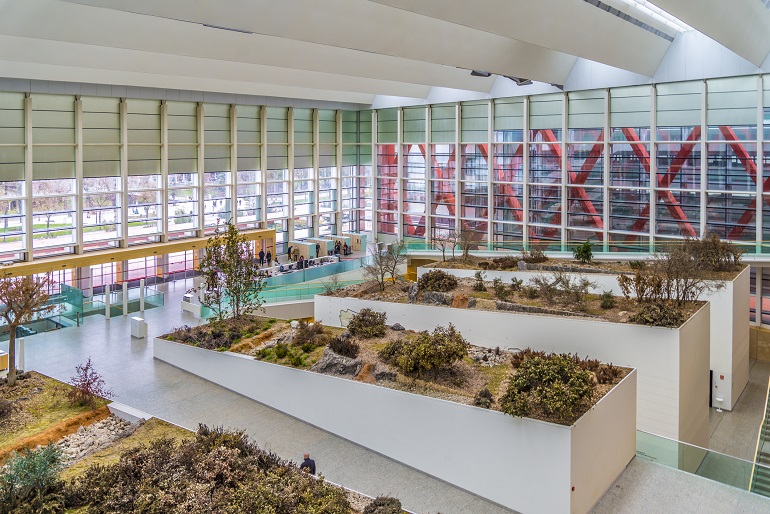
The museum features a well-organised layout with clear explanations that make complex scientific concepts accessible to visitors of all ages. Modern multimedia presentations, life-sized recreations, and a simulated excavation site enhance the educational experience.
Housed in a spectacular modern building designed by Juan Navarro Baldeweg, the museum serves as the centrepiece of the Human Evolution Complex, which also includes Spain's National Centre for Human Research (CENIEH), a Convention Centre and Auditorium.
Since its inauguration in July 2010, the Museum of Human Evolution has become the most visited museum in Castile and León, attracting hundreds of thousands of visitors annually.
For those interested in human origins, archaeology, or natural history, this museum provides valuable insights into our past, present and future as a species, making it an essential stop when visiting Burgos.
Burgos Museum
Casa de Miranda and Casa de Íñigo Angulo
Housed in two magnificent 16th-century stately houses, the Burgos Museum presents the historical and cultural evolution of the province. The museum occupies the Casa de Miranda and the Casa de Íñigo Angulo, forming an impressive block between Calle Calera and Calle Miranda.
The Casa of Miranda houses the prehistory and archaeology sections, while the adjacent Casa de Íñigo Angulo, a mansion dating from 1547 designed by Juan de Vallejo, contains the fine arts collection. There are plans to expand further into the Casa Melgosa, another 16th-century building.
Archaeology Section
Displayed across eight rooms, the archaeology section features remarkable artefacts including:
- Human fossils from Atapuerca and Ojo Guareña
- Findings from Iron Age necropolis of Miraveche, Ubierna and Villanueva de Teba
- Roman artefacts from the city of Clunia, one of the most important Roman cities in northern Spain
- Models and photographs that help visitors understand the archaeological sites
Fine Arts Section
The Fine Arts department spans four floors and a mezzanine, divided into nine rooms. The collection ranges from the Mozarabic period through to contemporary times, featuring:
- The Romanesque frontal from the church of Santo Domingo de Silos
- The tomb of Juan de Padilla by Gil de Siloé
- 15th and 16th-century paintings
- Works of art from the Baroque period
- An extraordinary 10th-century ivory carrying case from Medina Azahara
Military Museum
The Military Museum is situated in the building of the General Captaincy, which served as the headquarters of troops during the Civil War of 1936-39. The museum features:
- An impressive entrance hall with a remarkable ceiling
- A detailed model of the Burgos Castle
- Nearly 5,000 small figures depicting military parades in the town
- A collection of uniforms and flags from Spanish military units and from the Civil War
- Historical weapons that demonstrate the challenges faced by soldiers on the battlefield
Museo de Telas Medievales
The Museum of Medieval Textiles is housed in the Monasterio de las Huelgas Reales. This specialised museum showcases a collection of jewelled robes and royal garments, providing insight into medieval textile craftsmanship.
Other Notable Museums
- Casa del Cordón: A historical building that now serves as a museum.
- Cathedral Museum: Located in the Chapterhouse and open chapels.
- Caja de Burgos Art Centre (CAB): A modern art centre housed in a newly constructed building.
What makes these museums particularly appealing is that they are often overlooked by tourists, resulting in quiet and enjoyable visits where staff are happy to engage with visitors.
Local Cuisine
Burgos is renowned for its hearty farm cuisine, with Morcilla de Burgos (blood sausage with rice, onion and lard) standing as perhaps its most famous delicacy. Meat features prominently in local dishes, particularly suckling lamb and roast meats prepared in traditional wood ovens. The region's ecological diversity yields an abundance of quality ingredients, from the prized Ibeas beans used in the filling olla podrida stew to fresh Burgos cheese, a soft white variety often served with honey and walnuts as "grandfather's dessert." Visitors should not miss sampling the vibrant tapas culture, where small plates showcase local specialities like quail eggs with chorizo. The culinary experience is perfectly complemented by exceptional Ribera del Duero and Arlanza wines, produced in the region's prestigious vineyards. Whether dining in restaurants or exploring street food vendors, Burgos offers a delightful gastronomic journey that combines traditional recipes with evolved signature cuisine.
Getting There & Around
Burgos is easily accessible with Madrid-Barajas Airport being the nearest major international gateway, 250 kilometres south. From Madrid, trains reach Burgos in under two hours, while Alsa buses take approximately three hours costing from €9. The city is well-connected by motorways from all directions, including the A1 from Madrid and AP1 from France. Once in Burgos, the compact historic centre is perfect for exploring on foot, while an efficient public bus network operated by SMYT provides transport for longer journeys. Two taxi companies (ABUTAXI and ATABU) offer convenient alternatives for shorter trips. The modern Burgos-Rosa de Lima railway station sits 5 kilometres northeast of the centre, with city buses (lines 2, 16, and 23) connecting it to downtown areas.