Spain Guide  |
|---|
|
| | Top Spanish Cities |
|---|
|
| | Spanish Regions |
|---|
|
| | Europe Guide |
|---|
|
| | Travel Tools |
|---|
|
|
|
|
 Mudejar Museum in Maria Luisa Park, Sevilla. Mudejar Museum in Maria Luisa Park, Sevilla.
Must-see destinations in Spain
Eupedia is committed to delivering impartial and objective ratings for destinations and attractions featured in its travel guides, employing a set of well-defined criteria. Our evaluation process is comprehensive, comparing sights not only within specific regions or countries but also across European nations. This approach ensures consistency in ratings across all locations, maintaining a uniform standard of assessment.
The rating system is designed to identify and highlight truly exceptional destinations, regardless of their geographical location. As a result, the distribution of highly-rated attractions may not be uniform across regions. Some areas may lack top-tier attractions, while others may boast numerous must-see locations.
Eupedia prioritizes objectivity in its assessments, eschewing a "politically correct" approach that would artificially balance the number of highly-rated attractions across regions. This commitment to unbiased evaluation allows travelers to make informed decisions based on the genuine appeal and significance of each destination, rather than on a predetermined quota system.
By maintaining this rigorous and impartial rating methodology, Eupedia aims to provide travelers with reliable and valuable information to enhance their European travel experiences.
North Spain
| Picos de Europa National Park |
|---|

 The Picos de Europa National Park offers visitors a remarkable combination of natural beauty and cultural heritage. As Spain's first National Park, established in 1918, it features breathtaking limestone landscapes with razor-sharp peaks, the highest being Torre Cerredo at 2,650 metres. The park is home to diverse wildlife including brown bears, Iberian wolves, chamois goats and bearded vultures. Visitors can explore over 30 self-guided routes, numerous viewpoints, and enjoy free guided tours available from July to September. Beyond natural wonders, the area boasts rich cultural treasures including prehistoric cave paintings, Roman archaeological remains, traditional stone architecture, and significant religious sites such as the Basilica of Covadonga and Santo Toribio de Liebana monastery, which houses one of the largest fragments of Christ's Cross. The park's unique status as Spain's only inhabited National Park allows visitors to experience authentic rural life alongside exceptional gastronomic offerings like Cabrales cheese and Asturian cider. |
| Santiago de Compostela ※ |
|---|

 Santiago de Compostela stands as one of Christianity's most revered pilgrimage destinations, with its origins dating back to the 9th century when the remains of St. James the Apostle were discovered. The city's magnificent cathedral, a masterpiece blending Romanesque, Gothic, Renaissance, and Baroque architectural styles, serves as the culminating point of the famous Camino de Santiago pilgrimage routes. The imposing structure features twin towers reaching approximately 75 metres high, the Torre de las Campanas and Torre de la Carraca, which create a distinctive skyline that has welcomed pilgrims for centuries. Beyond the cathedral, visitors can explore the Monastery of San Martin Pinario, a breathtaking example of Baroque architecture, and the Convento de San Francisco with its Gothic design and peaceful gardens. The historical significance of Santiago extends beyond religious importance, as it evolved from a spiritual centre to become the political and administrative capital of Galicia, earning UNESCO World Heritage status in 1985 for its remarkable preservation of medieval architecture and cultural heritage. |
| Salamanca ※ |
|---|
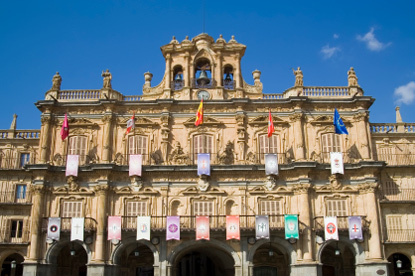
Salamanca stands as a UNESCO World Heritage City renowned for its golden-hued architecture crafted from Villamayor stone that glows beautifully in the sunlight. The city boasts the oldest university in the Hispanic world, established in the Middle Ages, with its famous frog sculpture and historic buildings that have educated Spain's greatest philosophers, scientists, writers and artists. At its heart lies the magnificent Plaza Mayor, considered one of the most beautiful squares in Spain and a masterpiece of Baroque architecture with 88 arches and numerous carved medallions. Visitors can explore the dual cathedrals—the Romanesque Old Cathedral built between 1100 and 1200 and the grand New Cathedral—alongside other remarkable landmarks including the Renaissance Casa de las Conchas adorned with over 300 scallop shell carvings, the impressive Clerecía Towers, the ancient Roman Bridge, and the Convent of San Esteban. The cobblestone streets of the historic quarter reveal a treasure trove of architectural wonders spanning Gothic, Renaissance and Baroque styles, creating an open-air museum atmosphere that has preserved the city's rich cultural heritage since medieval times. |
| Segovia ※ |
|---|

Segovia, a UNESCO World Heritage site, boasts a remarkable Roman aqueduct spanning over 800 metres, constructed without mortar in the 1st century CE. The city's fairy-tale Alcázar castle inspired Disney's Cinderella Castle and has served as a royal palace, military academy, and state prison. Segovia is home to Spain's last Gothic cathedral and the world's oldest operating mint, the Casa de la Moneda. The local cuisine is renowned for cochinillo asado (roast suckling pig), a traditional dish best enjoyed at the famous José María Restaurant. For dessert, try the ponche segoviano, a sweet delicacy made with marzipan and sponge cake. Nature enthusiasts can explore the nearby Sierra de Guadarrama National Park, offering breathtaking landscapes and hiking trails. The city also hosts the annual Hay Festival, celebrating literature, music, and art. |
| Comillas |
|---|
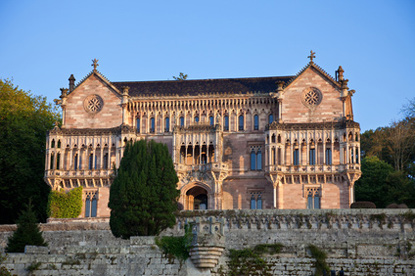
 Comillas, a picturesque town in Cantabria, boasts an extraordinary architectural heritage that showcases the vision of Antonio López, Marqués de Comillas. The town features remarkable modernist masterpieces, including Antoni Gaudí's iconic Capricho building and the grand neo-Gothic Sobrellano Palace designed by Joan Martorell. History enthusiasts will appreciate the medieval origins of the Old Town, centered around Plaza de la Constitución with its historic Old Town Hall displaying coats of arms of archbishops born in the town. The 17th-century Church of San Cristóbal, built by the inhabitants themselves, houses the revered image of Cristo del Amparo, patron saint of fishermen. Visitors can explore the Gothic Cemetery built on the ruins of an old church, reformed by Domènech with modernist mausoleums and an impressive Guardian Angel sculpture by José Llimona. The port of Comillas, the last Cantabrian port dedicated to whale hunting, preserves 17th-century artillery pieces on its wharf, while the former Pontifical University, an eclectic Gothic-Mudejar work, now serves as headquarters for the Comillas Foundation dedicated to specialized teaching of Spanish. |
| Barcelona ※ |
|---|

 Barcelona showcases an extraordinary blend of architectural masterpieces, with Antoni Gaudí's works standing as the city's crown jewels. The unfinished La Sagrada Família Basilica, under construction since 1882, features intricate facades and towering spires that have become globally recognisable symbols. The city's rich medieval heritage is evident in the Gothic Quarter, home to the magnificent Barcelona Cathedral and the Basilica Santa Maria del Mar, considered one of the finest examples of Catalan Gothic architecture. Beyond Gaudí's famous creations like Park Güell with its vibrant mosaics, Casa Batlló, and Casa Milà (La Pedrera), Barcelona offers cultural treasures including the Picasso Museum and the UNESCO World Heritage-listed Palau de la Música Catalana. The lively La Rambla boulevard, the historic port, and architectural wonders spanning Roman times to contemporary innovations like Torre Glòries create a captivating urban landscape where centuries of artistic brilliance and cultural evolution converge in a uniquely Catalan expression. |
|
Ordesa y Monte Perdido National Park |
|---|

Ordesa y Monte Perdido National Park, established in 1918, is the second oldest national park in Spain and was declared a UNESCO World Heritage Site in 1997. The park features spectacular glacial valleys, deep canyons, cascading waterfalls, and impressive peaks, including Monte Perdido, which at 3,355 metres is the third highest mountain in the Pyrenees and the highest limestone mountain in Europe. Visitors can explore diverse ecosystems with over 150 species of animals and 106 types of birds whilst enjoying activities such as hiking to the famous Cola de Caballo waterfall, rock climbing, or visiting the dramatic Añisclo Canyon with its vertical walls and deep ravines. The park's rich biodiversity, pristine natural landscapes, and well-maintained trail network attract more than 600,000 visitors annually, making it one of Spain's most popular national parks. |
| Saragossa (Zaragoza) ※ |
|---|

Zaragoza, Spain's oldest settlement dating back to 24 BCE, was originally named after Caesar Augustus and showcases a remarkable blend of Roman, Moorish, and Renaissance influences. The city features well-preserved Roman ruins, including one of Spain's largest Roman theatres from the 1st century CE. The Stone Bridge, spanning the Ebro River since Roman times, connects the historic centre to modern districts. The city's rich cultural heritage is exemplified by its connection to Francisco de Goya, one of Spain's most celebrated painters who was born nearby. Zaragoza's culinary scene is renowned for its ternasco (milk-fed lamb), unique local vegetable borrajas (borage), and traditional migas made from sautéed breadcrumbs. The city gained international recognition when it hosted Expo 2008, focused on water and sustainable development, which left a legacy of innovative architecture. The Grande Jose Antonio Labordeta park stands out as the city's main green space, featuring diverse gardens, fountains and viewing points. |
| Bardenas Reales Natural Park |
|---|

Bardenas Reales captivates with its extraordinary semi-desert landscape spanning 41,845 hectares in northern Spain. This UNESCO Biosphere Reserve and Natural Park showcases unique geological formations sculpted by erosion, including the iconic Castildetierra, Pisquerra, and El Rallón. The dramatic terrain features a succession of stair-step slopes, mesas, cuestas, buttes, wide depressions, dry ravines and badlands, creating scenery often compared to America's Monument Valley. Visitors can explore this raw beauty via well-marked hiking trails that wind through the most spectacular areas, particularly the Bardena Blanca with its ravines and cut forts resembling a Wild West movie set. In contrast, the southern Black Bardena surprises with Aleppo pine forests and Mediterranean shrubby undergrowth. This border territory of the ancient Kingdom of Navarra contains historical remnants including numerous castles, surveillance watchtowers, and traditional shepherds' cabins that offer glimpses into the human history of this remarkable landscape where geology takes centre stage. |
| San Sebastián (Donostia) |
|---|
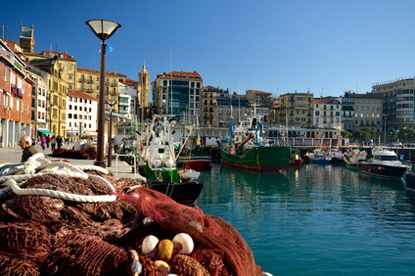
San Sebastián showcases a rich tapestry of historical and architectural treasures, from the remarkably preserved Parte Vieja (Old Town) with its cobbled streets to the elegant Belle Époque buildings that emerged after the city walls were demolished in 1863. The city's cultural landscape features the impressive Baroque Basilica of Santa María, the neo-Gothic Good Shepherd Cathedral, and the 16th-century San Telmo Museum housed in a former Dominican convent. Visitors can explore Monte Urgull crowned by the Castillo de la Mota fortress, offering panoramic views of La Concha Bay, or wander through the vibrant Plaza de la Constitución, which serves as the heart of local celebrations. The beautiful La Concha Promenade, designed in a neoclassical Parisian style, reflects San Sebastián's transformation into a royal summer retreat in the late 19th century, while the city's renowned pintxos bars in the Old Quarter provide a taste of its celebrated culinary scene. |
| Bilbao (Bilbo) |
|---|
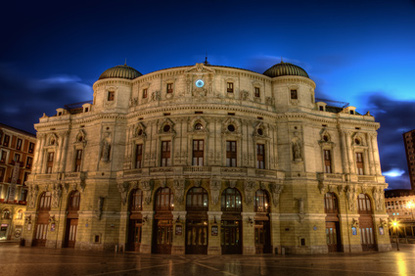
Founded over 700 years ago as a fishing and market gardening settlement, Bilbao has evolved into a major cultural hub in the Basque Country. The city's historic Casco Viejo (Old Quarter) comprises Seven Streets filled with shops, bars and restaurants, having rebounded remarkably after devastating floods in 1983. The area features notable landmarks including the Santiago Cathedral and San Antón Church, earning it Historic-Artistic Monument status in 1972. Modern Bilbao is anchored by the iconic Guggenheim Museum and the striking red Carola Crane, whilst the Romantic-style Doña Casilda Park serves as the city's green lung with over 1,500 plant species. The city is renowned for its distinctive Basque cuisine, particularly its pintxos (tapas), bacalao pil-pil (cod in emulsion sauce), and txangurro (stuffed spider crab). The medieval city flourished through iron trade and maritime commerce, especially with Flanders and Great Britain, after being granted special trading privileges and free port status in 1372. |
Central Spain
| Madrid |
|---|

 Madrid offers an extraordinary blend of historical grandeur and vibrant culture, with its iconic Plaza Mayor standing as a testament to over 400 years of Spanish heritage. The city boasts magnificent royal structures including the Royal Palace with its 1,400 rooms and treasured artifacts, and the neoclassical Puerta de Alcalá, Europe's first Arc de Triomphe predating its Parisian counterpart. Art enthusiasts will appreciate the Golden Triangle of Art along Paseo del Prado, comprising the world-renowned Prado Museum, Reina Sofía Museum, and Thyssen-Bornemisza Museum. The expansive Retiro Park provides a peaceful retreat with its 15,000 trees spread across 125 hectares, featuring the Crystal Palace and the Monument to Alfonso XII. Wandering through Madrid's historic centre reveals architectural marvels spanning medieval to modern eras, from the Cibeles Palace and Fountain (now the city's symbol) to the Almudena Cathedral, finally completed in 1993 after construction that spanned more than a century. The lively Puerta del Sol square, with its famous Bear and Strawberry Tree statue, serves as the heart of the city where celebrations and national events have been commemorated since the 16th century. |
| Royal Palace of Aranjuez ※ |
|---|

The Royal Palace of Aranjuez stands as a magnificent testament to Spanish royal heritage, blending architectural styles across centuries of development. Initially commissioned by King Philip II in the 16th century with plans by Juan Herrera, the palace evolved significantly under Bourbon rule. The striking red brick and white limestone exterior creates a distinctive two-toned effect, while the interior boasts sumptuously furnished rooms decorated with period furniture, artwork, and unique collections of tapestries, clocks, and sculptures. Ferdinand VI rebuilt the palace in late Baroque style following a devastating fire in 1748, and Charles III completed the vision by adding two west wings that frame the central courtyard. The palace is complemented by spectacular gardens designed by the era's greatest landscape architects, featuring tree-lined streets inspired by Italian villas. As a UNESCO World Heritage Site, the palace offers visitors a glimpse into royal life through its Salón de Porcelana—Charles III's favourite retreat—and the grand central staircase created by Giacomo Bonavía, with its impressive black iron and gold-trimmed balustrade exemplifying Rococo elegance. |
| El Escorial ※ |
|---|
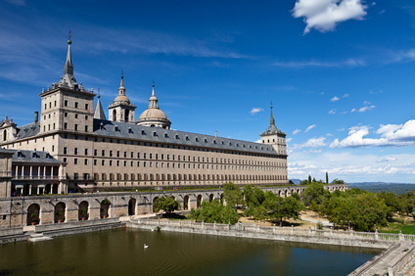
El Escorial stands as a monumental testament to Spain's imperial past, housing the Royal Monastery of San Lorenzo de El Escorial, one of the largest religious establishments in the world measuring approximately 675 by 528 feet. This UNESCO World Heritage site, built between 1563 and 1584 under King Philip II, represents the largest Renaissance building globally and showcases the austere Herrerian architectural style with its imposing granite walls. The complex serves multiple functions as a monastery, royal palace, basilica, and royal pantheon where most Spanish sovereigns since Emperor Charles V have been interred. Visitors can explore its remarkable features including the Courtyard of the Kings, the Palace of the Austrias, the Royal Palace of the Bourbons, the Pantheon of Kings, the magnificent Central Staircase with its frescoed vault depicting "The Glory of the Spanish Monarchy," and the Royal Library housing over 4,700 rare manuscripts and 40,000 printed books. The Basilica forms the central part of the complex, featuring exquisite white Carrara marble statues and paintings by renowned artists including El Greco and Titian, while the Courtyard of the Evangelists offers stunning views of the cloister galleries and a temple representing spiritual life with its cross-shaped plan. |
| Valencia |
|---|
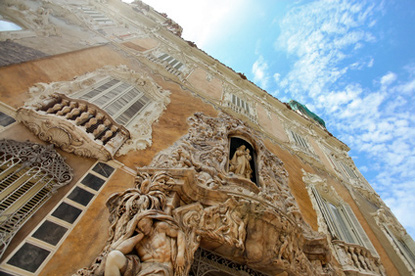
Valencia is a city rich in history and culture, known for its vibrant culinary scene and unique attractions. It is the birthplace of paella, with the traditional version made from rice, chicken, rabbit, and sometimes snails, reflecting its agricultural roots in the nearby Albufera Natural Park, where rice is cultivated. The city boasts the City of Arts and Sciences, an architectural marvel featuring futuristic structures that house a science museum, an aquarium (L'Oceanogràfic, the largest in Europe), and an opera house. Valencia also hosts the Fallas Festival each March, renowned for its elaborate papier-mâché sculptures and fireworks. Additionally, the Silk Exchange (La Lonja de la Seda) is a UNESCO World Heritage site that showcases the city's medieval trading history. With its blend of historical sites and modern attractions, Valencia offers a diverse experience for visitors. |
| Toledo ※ |
|---|
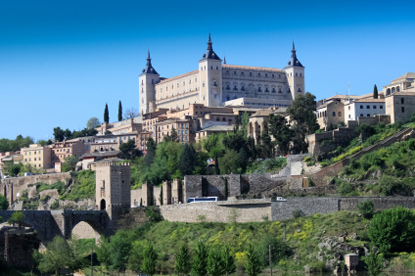
Toledo's extraordinary status as the "City of Three Cultures" is reflected in its remarkable architectural tapestry, where Christian, Muslim and Jewish influences harmoniously coexist. The imposing Gothic Cathedral of Toledo, built between 1226 and 1493, features the spectacular Baroque altar El Transparente, while the tiny 11th-century Mezquita del Cristo de la Luz stands as the last remaining mosque from the city's Moorish period. Jewish heritage shines through the Sinagoga del Tránsito and Sinagoga de Santa María La Blanca, rare surviving synagogues from before the 1492 expulsion. Art enthusiasts will appreciate Toledo's connection to El Greco, whose masterpiece "The Burial of the Count of Orgaz" adorns the Iglesia de Santo Tomé. The city's medieval character remains beautifully preserved in its labyrinthine cobbled lanes, fortified by ancient walls with gates like Puerta de Bisagra and Puerta del Sol, while the commanding Alcázar fortress crowns the hilltop, offering panoramic views across the dramatic landscape that has inspired artists for centuries. |
South Spain
| Cáceres ※ |
|---|

Caceres, a UNESCO World Heritage Site since 1986, showcases an extraordinary blend of Roman, Islamic, Northern Gothic and Italian Renaissance architectural styles. The remarkably preserved medieval Old Town features impressive 12th-century Almohad city walls with the iconic 25-metre Bujaco Tower standing as the city's emblem. Visitors can explore the maze of steep stairways and winding cobbled paths leading to numerous historical treasures, including the Arco de la Estrella—the main entrance to the walled enclosure since the 15th century—where Catholic Monarchs once swore to uphold the city's privileges. The atmospheric Plaza Mayor serves as the gateway to discover palaces like the 15th-century Carvajal Palace, the Tower of the Storks (the only untruncated tower in the historic site), and the Veletas Palace housing the best-preserved cistern in the Iberian Peninsula. Game of Thrones fans will recognise several filming locations throughout this authentic medieval setting, where storks nest atop towers and visitors can enjoy panoramic views from historic battlements. |
| Teide National Park ※ |
|---|

Teide National Park, crowned by Spain's highest peak at 3,718 metres, showcases one of the world's most extraordinary volcanic landscapes. The park's centrepiece, Mount Teide, rises dramatically 7,500 metres from the ocean floor, making it the third tallest volcanic structure globally. UNESCO recognised this geological marvel as a World Heritage Site in 2007 for its rich assemblage of volcanic features, including craters, chimneys, and lava streams that create a remarkable panorama of colours and shapes. The visual impact is heightened by atmospheric conditions that produce constantly changing textures and tones in the landscape, often creating a spectacular 'sea of clouds' backdrop. Beyond geology, the park harbours rare endemic flora like the Teide broom and Teide Bugloss, thriving in its unique high-altitude climate. Visitors can drive across Cañadas del Teide, hike the caldera rim, summit Pico del Teide (permit required), explore the impressive 25-kilometre wall of Las Cañadas, or witness the magical sunset when the mountain's shadow projects onto the sea. |
| Seville ※ |
|---|

Seville showcases over two thousand years of extensive history through its remarkable architecture and design. The city's skyline is dominated by the second largest Cathedral in the world, Catedral de Santa María de la Sede, with its tower visible from virtually anywhere in the city. The Royal Alcázar, the oldest European palace still in use today, features breathtaking gardens where peacocks wander freely. Plaza de España, situated in Maria Luisa Park, exemplifies Regionalist Revival Architecture with its distinctive fountain and Andalusian-style buildings. Visitors can explore the cobblestone avenues of the Santa Cruz neighbourhood with its ceramic shops and tapas bars, or marvel at Las Setas (Metropol Parasol), the largest wooden structure in the world offering a 360-degree view of the city. The Torre del Oro (Golden Tower), once a military watchtower along the Guadalquivir river, now houses a maritime museum, while the former Castle of San Jorge has transformed into Triana Market, offering authentic cuisine and a glimpse into everyday Sevillian life. |
| Cordoba ※ |
|---|
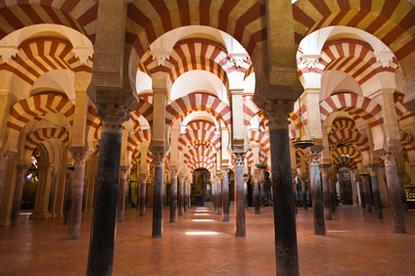
Cordoba's rich historical tapestry spans multiple civilisations, with the magnificent Mezquita-Cathedral standing as its crowning jewel – a stunning fusion of Islamic and Christian architecture featuring distinctive red-white arches. The city's medieval charm extends to the well-preserved Jewish Quarter (Judería) with its narrow, flower-filled streets and 14th-century synagogue. Visitors can explore the impressive Alcázar de los Reyes Cristianos, a 14th-century palace surrounded by beautiful gardens, and cross the ancient Roman Bridge dating back to the 1st century BCE, offering spectacular views of the Guadalquivir River. The city's cultural heritage continues with the Calahorra Tower, Viana Palace with its twelve unique courtyards, and the renowned patios of Cordoba – hidden courtyards beautifully adorned with flowers that are celebrated during the annual May festival. Just outside the city, the archaeological site of Medina Azahara reveals the remains of a once-magnificent 11th-century Moorish city, while within Cordoba, visitors can experience authentic Andalusian culture through flamenco performances and traditional equestrian shows at the 16th-century Royal Stables. |
| Granada ※ |
|---|

Granada showcases an extraordinary blend of Moorish and Christian heritage, with the magnificent Alhambra palace standing as its crowning jewel. This remarkably preserved Nasrid complex, along with the adjacent Generalife summer palace and gardens, represents the pinnacle of Islamic architecture in Spain. The city's historic landscape features the Renaissance Cathedral, the Royal Chapel housing the Catholic Monarchs' tombs, and the Cartuja Monastery with its spectacular Baroque sacristy. Wandering through the labyrinthine streets of the ancient Albaicín quarter reveals traditional carmens (houses with gardens), while the neighbouring Sacromonte district, known for its cave dwellings, offers authentic flamenco performances. The Corral del Carbón (the last Nazarid granary in Spain), the 14th-century Madrasah (ancient Arab university), and the Alcaicería (former Arab souk) further illustrate Granada's rich multicultural past. The picturesque Carrera del Darro street runs alongside the river, providing stunning views of the Alhambra and completing the sensory experience of this historically significant Andalusian city. |
|


