


| Contents |
|---|

Introduction
Sitting on the Meseta Central at 1,131 metres above sea level, Ávila (pop. 58,000) is renowned for its remarkably well-preserved medieval walls, which form a complete circuit around the old town and are considered amongst the finest examples of military architecture in Europe, earning the city UNESCO World Heritage Site status in 1985. Beyond its famous fortifications, Ávila is notable as the birthplace of Saint Teresa of Ávila, the 16th-century mystic and Catholic saint, and houses numerous religious monuments including a Gothic cathedral built into the city walls and several convents and churches linked to the saint's life. The city's compact historic centre features traditional Castilian architecture with granite buildings, medieval streets, and ancient towers, whilst its location on the Spanish plateau provides access to the surrounding countryside and makes it a popular day trip destination from Madrid, approximately 115 kilometres to the southeast.
Interesting Facts about Ávila
- Ávila is the highest provincial capital in Spain, sitting at an impressive 1,132 metres (3,714 feet) above sea level.
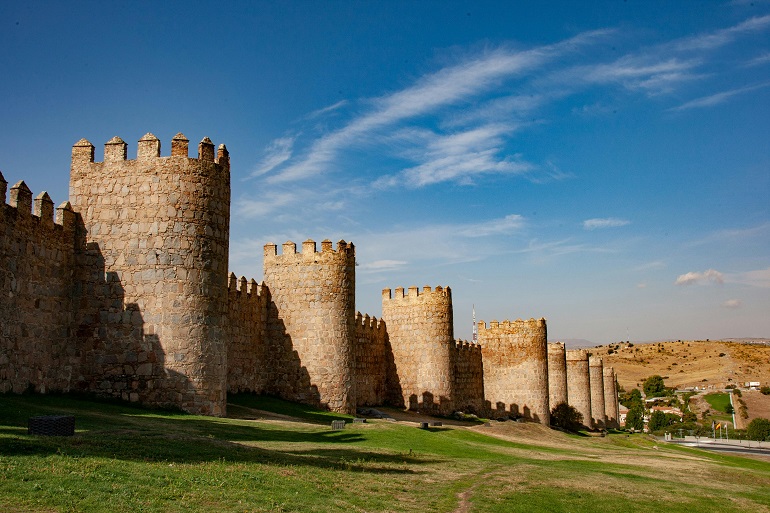
- The city is completely encircled by medieval walls stretching 2.5 kilometres with 88 semi-circular defensive towers and nine magnificent gates.
- Known as the "City of Saints and Stones", Ávila claims to have the highest number of Romanesque and Gothic churches per capita in Spain.
- The entire walled city of Ávila was declared a UNESCO World Heritage Site in 1985, making it one of the most complete medieval fortifications in Europe.
- Ávila is the birthplace of Saint Teresa, the famous 16th-century Carmelite nun and mystic who lived from 1515 to 1582.
- The city's Gothic cathedral is uniquely built into the defensive walls, serving as both a place of worship and part of the fortress system.
- Construction of Ávila's massive stone walls began in 1090 and took nearly ten years to complete, built to protect Spanish territories from the Moors.
- The famous filmmaker Orson Welles once declared Ávila as the place where he would most desire to live, calling it a "strange, tragic place".
- Ávila was conquered by Arab Moors in 714 CE and remained under Islamic rule until it was recaptured by Christians in 1088.
- The city was one of the first in Hispania to be Christianised, specifically by Saint Secundus who became its first bishop in the 1st century.
- During the Revolt of the Comuneros in 1520, Ávila became the first meeting place of the Santa Junta, where a proto-constitutional draft was written in the cathedral.
- The city maintains a typically Roman rectangular layout with two main streets intersecting at what was once the forum in the centre.
- By the end of the 13th century, Ávila hosted one of the largest Jewish populations in Castile until their expulsion in 1492.
- The city's walls are constructed from brown granite stones, some of which were recycled from earlier Roman constructions.
- Ávila experienced significant prosperity under the Catholic Monarchs in the early 16th century but later suffered a long decline, with its population dropping to just 4,000 inhabitants by the 17th century.
History
Ávila's ancient origins stretch back to pre-Roman times, when the Celtic Vettones tribe inhabited the area around the 5th century BCE. Following the Roman conquest, the settlement became known as Abula or Abela, forming part of the Roman province of Lusitania. The town adopted the typical Roman rectangular layout with two main streets intersecting at a central forum. By tradition, Christianity arrived early to Ávila in the 1st century through Saint Secundus, who became the city's first bishop after travelling via the Roman province of Hispania Baetica. After the fall of the Western Roman Empire, Ávila became a stronghold of the Visigoths before falling to the Moors around 714 CE, who renamed it Ābila.
The medieval period marked Ávila's transformation into the 'City of Saints and Stones' that visitors see today. The Moors controlled the city until it was repeatedly attacked by northern Iberian Christian kingdoms, eventually becoming a virtually uninhabited no man's land. The definitive reconquest came around 1088 under Raymond of Burgundy, son-in-law of Alfonso VI of León and Castile, who undertook the city's repopulation. Construction of Ávila's famous walls began in 1090, employing both Christian and Mudéjar craftsmen, with tradition holding that two foreigners - Italian Casandro Romano and Frenchman Florin de Pontuenga - were instrumental in creating this stone frontier town. The magnificent fortifications, completed between the 11th and 14th centuries, encompass 31 hectares with a 2,516-metre perimeter, featuring 88 semicircular towers, nine gates, and walls averaging 12 metres in height and 3 metres in thickness.
Ávila flourished during the late medieval period, hosting one of Castile's largest Jewish communities by the end of the 13th century before the tragic expulsion in 1492. The city achieved prosperity under the Catholic Monarchs in the early 16th century, becoming the birthplace of the mystical Saint Teresa of Jesus and the burial place of the Grand Inquisitor Torquemada. During the Revolt of the Comuneros, Ávila became the first meeting place of the Santa Junta on 1st August 1520, where the revolutionary Proyecto de Ley Perpetua was drafted in the cathedral. However, the city experienced a long decline from the 17th century onwards, with its population reducing to just 4,000 inhabitants. Some recovery occurred in the 19th century with the construction of the Madrid-Irún railway line, and the city gained recognition when UNESCO declared the Old Town of Ávila with its Extra-Muros Churches a World Heritage Site in 1985.
Main Attractions
The Medieval City Walls (Murallas de Ávila)
Ávila's most defining feature is its complete ring of medieval walls, which are among the best-preserved in Europe. Construction began in the 11th century, and the resulting structure is a formidable example of Romanesque military architecture. The granite wall runs for approximately 2.5 kilometres, stands at an average height of 12 metres, and is punctuated by 87 semi-circular towers and nine monumental gates. Visitors can walk along a significant portion of the wall's ramparts, offering excellent views over the old town's rooftops and the surrounding countryside. Access points are located at several gates, including the Puerta del Alcázar, providing a tangible connection to the city's defensive past.
Avila Cathedral (Catedral de Ávila)
Regarded as the first Gothic cathedral in Spain, Ávila Cathedral presents a unique and imposing fusion of religious and military architecture. Its construction started in the 12th century, integrating the apse directly into the city's defensive wall, which gives the east end of the building the appearance of a fortress bastion. This feature, known as the cimorro, is a defining element of its exterior. Inside, the design transitions from the solid, Romanesque origins to the soaring height of the Gothic style, creating a space of solemn grandeur. The cathedral contains significant works of art, including a reredos by Pedro Berruguete and the alabaster tomb of the scholar Alonso de Madrigal, known as "El Tostado".
Basilica of San Vicente
Located just outside the city walls, the Basilica of San Vicente is a masterpiece of Spanish Romanesque architecture. According to tradition, it stands on the site where Saint Vincent of Saragossa and his sisters were martyred in the 4th century. Construction on the current building began in the 12th century and continued for over two hundred years, resulting in a harmonious blend of architectural styles. The basilica is particularly noted for its ornate western portal and the southern portico, which feature intricate sculptures depicting biblical scenes and allegorical figures. The interior houses the cenotaph of the martyred saints, a highly decorated monument that is a prime example of Romanesque funerary art.
Los Cuatro Postes (The Four Posts)
This simple yet iconic monument is situated on a hill about 1.5 kilometres west of the old town, across the Adaja River. It consists of four five-metre-high Doric columns supporting a granite cross at its centre. Erected in 1566, its primary draw is the unparalleled panoramic view it offers of Ávila's complete walled circuit. It is a legendary spot associated with Saint Teresa, who as a child was said to have been stopped here by her uncle while attempting to run away to seek martyrdom in Moorish lands. The viewpoint is especially popular at sunset, when the fading light casts a dramatic glow upon the ancient city walls.
Plaza del Mercado Chico (Plaza Mayor)
Plaza del Mercado Chico is the historic main square and the civic heart of Ávila's old town. This compact, rectangular plaza is enclosed by traditional arcaded buildings, creating a sheltered and intimate atmosphere. The north side is dominated by the Town Hall (Ayuntamiento), while the Church of San Juan Bautista stands on the east side. For centuries, it has served as the city's primary marketplace and a focal point for public life. Today, it remains a bustling hub filled with the terraces of cafes and restaurants, making it a central gathering place for both locals and visitors.
Plaza del Mercado Grande (Plaza de Santa Teresa de Jesús)
Situated immediately outside the Puerta del Alcázar, the Plaza del Mercado Grande is a large, open square that has historically served as the site for larger markets, fairs, and public events. Flanked by the imposing city gate on one side and the Church of San Pedro on another, the square acts as a grand entrance to the old city. It is named after Saint Teresa of Ávila, and her statue is a prominent feature. Surrounded by shops and historic buildings, it is a key transport and orientation point for anyone arriving to explore the walled town.
Puerta del Alcázar and Puerta de San Vicente
These two gates are the most monumental and best-known of the nine entrances to the old city of Ávila. The Puerta del Alcázar, adjacent to the cathedral's fortress-like apse, is distinguished by its twin 20-metre-high towers linked by a semicircular arch. The Puerta de San Vicente, on the eastern side of the walls, has a similar design and takes its name from the nearby basilica. Both gates are powerful symbols of the city's medieval strength and provided controlled, defensible access through the otherwise impenetrable walls.
Basilica de San Pedro
Standing in the Plaza del Mercado Grande, the Basilica de San Pedro is a prominent example of the Romanesque style found outside the city walls (extra-muros). Its construction took place during the 12th and 13th centuries, and its architecture is characterised by its solid, austere stone construction and clean lines. One of its most notable features is the large, intricately carved rose window on its western facade. As one of the city's key historic churches, it contributes to Ávila's status as a UNESCO World Heritage site and represents the importance of the districts that grew just beyond the main fortifications.
Royal Monastery of Saint Thomas (Real Monasterio de Santo Tomás)
A short distance south of the city walls lies the Royal Monastery of Saint Thomas, a significant complex built in the Isabelline Gothic style in the late 15th century. It was founded with the support of the Catholic Monarchs, Ferdinand and Isabella, and served as a summer palace and a centre of learning. The monastery is renowned for its church, which houses the ornate marble tomb of Prince John, the only son of the monarchs, whose early death had a profound impact on Spanish history. The monastery is structured around three distinct cloisters—the Novices' Cloister, the Silence Cloister, and the Kings' Cloister—each offering a tranquil and contemplative atmosphere.
Dávila Palace
The Dávila Palace is one of several fortified mansions belonging to noble families who were influential in medieval Ávila. Located near the Puerta del Alcázar, its stern, crenellated facade and robust towers reflect a time when aristocratic power was demonstrated through defensive architecture. The current structure dates primarily from the 13th century, with significant alterations made in the 16th century. Although the interior is not open to the public, its imposing exterior is a key feature of the city's historic streetscape and illustrates how defensive elements were incorporated into domestic buildings within the walled enclosure.
Plaza de San Vicente
This public square is situated directly in front of the Basilica of San Vicente, serving as a forecourt to the important church. The plaza creates an open space that allows the basilica's architecture, particularly its sculpted western facade, to be appreciated fully. It is an important reference point for visitors exploring the area outside the main city walls and marks the start of one of the main streets leading into the historic centre. The square provides a pleasant, relatively calm space from which to admire one of Ávila's most significant religious monuments.
Top Museums
Museo de Ávila
Housed in the 16th-century Casa de los Deanes, this provincial museum presents Ávila’s material culture across three principal sections.
- Archaeology: Artefacts from the Paleolithic through the Middle Ages, including tools, ceramics and the famous Vetton verracos (stone boar sculptures).
- Fine Arts: Paintings and decorative arts from the 12th to 19th centuries, featuring Flemish panels, Renaissance furniture and arms.
- Etnografía: Traditional costumes, wickerwork, looms and agricultural implements depicting rural life in Ávila’s villages.
Its bullfighting collection includes the Roman mosaic of Magazos and the tomb of the “Knight of Serranos,” creating a vivid panorama of provincial history.
Museo Arte Oriental y Ciencias Naturales
Located within the Royal Monastery of Santo Tomás, these two complementary collections reflect Spain’s missionary encounters in East Asia alongside natural-history specimens.
- Museo de Arte Oriental: Ethnographic objects (choral books, Philippine ivory carvings, lacquerware and scrolls) collected by Dominican missionaries in China, Vietnam and Japan, displayed in a Gothic-Isabelline monastic setting.
- Museo de Ciencias Naturales: A surprising cabinet of curiosities, with taxidermied specimens and skeletons from five continents, notably marine fauna of the Far East.
Museo Catedralicio de Ávila
Set in the sacristies of the Cathedral of Salvador, this museum of sacred art unfolds across the Cardinal’s Chapel, the Treasury and the Cantorales rooms.
Highlights include:
- 15th-century “Cantorales” hymnals by Juan de Carrión.
- An original El Greco portrait of Garcibáñez de Múxica.
- The 16th-century Custodia by Juan de Arfe.
- A Romanesque fragment depicting Saint Paul (c. 12th century).
Museo Convento de Santa Teresa (Museo Teresiano)
Within the Convent of San José, on the site of Saint Teresa’s birthplace, this museum immerses visitors in her life and spirituality. The atmospheric crypt-turned-gallery features devotional sculptures, paintings by Baroque masters such as Gregorio Fernández and personal artefacts told through contemplative space, evocative lighting and teresian music echoing her mystical legacy.
Museo del Convento de la Encarnación
Situated in the convent where Teresa of Ávila lived for nearly four decades, this small monastic museum displays liturgical vestments, reliquaries and 16th-century devotional painting. Its austere cloisters and parlour rooms evoke the reformer’s daily routine, offering insight into Carmelite life and Counter-Reformation piety.
Centro de Interpretación de la Mística
A unique institution dedicated to mysticism as both spiritual discipline and cultural phenomenon. Through multimedia installations, manuscripts and art, it unpacks the general features of mystical knowledge—ecstasy, contemplative prayer and symbolic imagery—anchored in the writings of Saint Teresa and other mystics associated with Ávila’s religious heritage.
Museo Adolfo Suárez y la Transición (Cebreros, Ávila)
In the nearby town of Cebreros stands MAST, Spain’s sole museum devoted to the political Transition (1976–1982). Installed within the 14th-century “Iglesia Vieja,” its permanent exhibition unfolds as a “time tunnel”:
- End of Franco’s regime (1975)
- Proclamation of King Juan Carlos I and Suárez’s appointment
- Democratic elections of 1977 and 1979
- The 23-F coup attempt
- Personal tribute to Adolfo Suárez
Immersive audiovisuals, original parliamentary seats, electoral posters, personal photographs and Suárez’s speeches trace the fragile path from dictatorship to democracy.
Local Cuisine
Ávila’s cuisine reflects its rugged Castilian heritage, featuring hearty, locally sourced dishes that offer comfort amid the region’s chilly winters. The undisputed star is the Chuletón de Ávila, a thick, flavoursome steak from the prized Avileña-Negra Ibérica cattle, traditionally grilled and served rare. Visitors should also try Judiones de El Barco, a rich bean stew cooked with chorizo and pork, as well as Patatas Revolconas, creamy mashed potatoes infused with paprika and garnished with crispy pork scratchings. Other regional classics include the warming Sopa Castellana (garlic soup with bread, paprika and egg) and roasted meats such as lechazo (lamb) and cochinillo (suckling pig). To finish, the city is famous for its Yemas de Santa Teresa, delicate sweets made from egg yolk and sugar, providing the perfect end to an authentic Ávila meal.
Getting There & Around
Getting to Ávila from Madrid is straightforward with several excellent transport options available. By train, the journey takes approximately 1 hour 30 minutes to 2 hours, with Renfe operating regular services departing from Madrid-Príncipe Pío station several times daily, making it a comfortable and scenic route through the Castilian countryside. By coach, travellers can enjoy a slightly faster journey of around 1 hour 20 minutes, with frequent departures from Madrid's Estación Sur de Autobuses operated by companies such as Jiménez Dorado, offering a budget-friendly alternative with direct services throughout the day. By car, the drive covers approximately 110 kilometres and takes about 1 hour 15 minutes to 1 hour 30 minutes via the A-6, AP-6, and AP-51 motorways, providing the flexibility to explore the surrounding region and convenient parking options near Ávila's historic centre. All three methods provide reliable access to this UNESCO World Heritage city, allowing visitors to easily plan their journey according to their preferences and schedule.