


| Contents |
|---|

Introduction
Situated at an elevation of 769 metres and home to approximately 16,000 residents, Baeza was designated a UNESCO World Heritage Site in 2003 alongside its neighbouring city, Úbeda, for its outstanding Renaissance architecture. The city's rich history spans over two millennia, blending Roman, Moorish and Renaissance influences, with the 16th century marking its golden era of prosperity through textiles and other industries. Today, visitors can explore its well-preserved historical centre, including the magnificent Cathedral of the Nativity of Our Lady, the ornate Palace of Jabalquinto, the ancient University dating back to 1533, and charming plazas such as Plaza del Pueblo. As a relatively small city, Baeza offers a more intimate and relaxed experience compared to larger Spanish urban centres, allowing visitors to fully immerse themselves in its unique atmosphere and architectural splendour.
Interesting Facts about Baeza
- The city's history dates back to the Bronze Age, with its first settlers establishing themselves in what is now known as "Cerro del Alcázar".
- Baeza evolved from the Iberian city of Viatia or Vivatia to the Roman Biatia, becoming one of the most important cities in the area.
- The impressive Baeza Cathedral was built on the site of a Roman temple, later a Muslim mosque, with construction beginning in 1227.
- Renowned architect Andrés de Vandelvira left an unmistakable mark on the city, particularly with his work on the cathedral.
- Baeza was the first city in Andalusia to be captured by Christians during the Reconquest in 1227.
- The city was nicknamed "la dama" (the lady) by the brilliant poet Antonio Machado, who taught at Baeza University in the early 20th century.
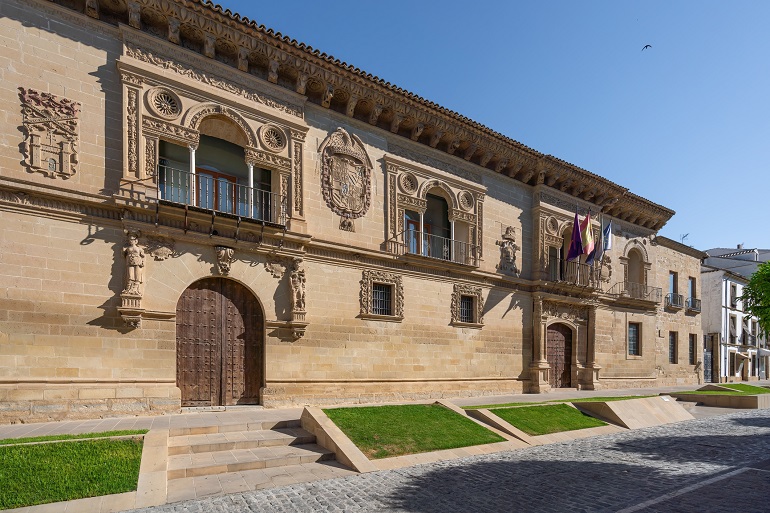
- Baeza's Town Hall was originally built as a combined courthouse and prison in 1520, commissioned by Charles I.
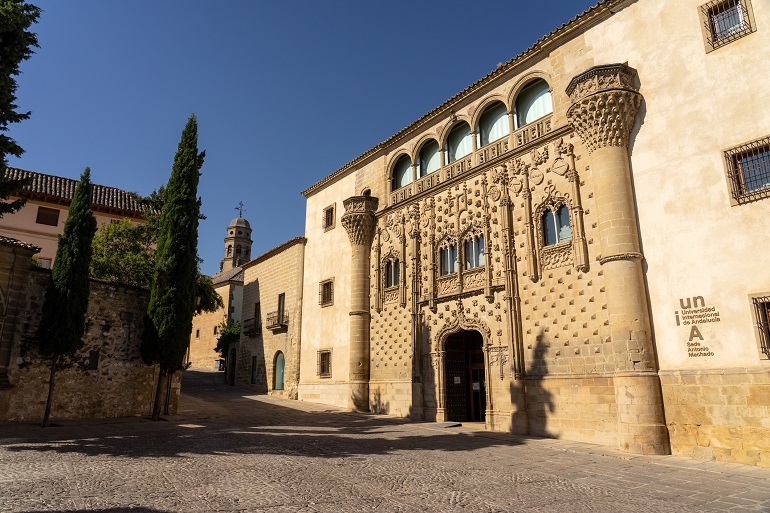
- The Jabalquinto Palace features a Gothic entrance with Plateresque capitals, a Renaissance courtyard, and a Baroque staircase, showcasing different architectural styles.
- Baeza and neighbouring Úbeda are collectively known as "the cradle of Spanish Renaissance".

History
Nestled in the olive-rich plains of Jaén province, Baeza’s history stretches back over two millennia, weaving together Roman, Islamic, and Christian influences into a captivating narrative. Originally established as an Iberian settlement around 2000 BCE, the town flourished under Roman rule as Vivatia or Biatia, a strategic hub on the trade route between Cástulo and Málaga, vital for transporting silver mined in the Sierra Morena. After the Visigoths renamed it Biattiensis in the 5th century CE, the Moors transformed it into Bayyasa during their 8th-century conquest, fortifying it with walls and a citadel (Alcázar) that dominated the Guadalquivir Valley. The town’s pivotal role as a frontier stronghold ended in 1227 when Ferdinand III of Castile reclaimed it during the Reconquista, marking the first major Christian victory in Andalusia and cementing Baeza’s transition into a bastion of Castilian culture.
The 16th century ushered in Baeza’s golden age, as wealth from olive oil and wool funded a Renaissance architectural revolution. Under the patronage of local oligarchs like the Benavides and Carvajales families, masterpieces such as the Cathedral of the Nativity of Our Lady—built atop a Visigothic church and Moorish mosque—and the ornate Palacio de Jabalquinto emerged, blending Gothic, Plateresque, and Renaissance styles. This period also saw Baeza become an intellectual centre; the University of Baeza, founded in 1538, attracted scholars like poet Antonio Machado, who later immortalised the town as “la dama” (the lady) in his works. The urban layout, characterised by grand plazas like Plaza del Pópulo and Plaza de Santa María, reflects Renaissance ideals of harmony and civic pride, earning Baeza and neighbouring Úbeda UNESCO World Heritage status in 2003 as exemplary “Renaissance Monumental Ensembles”.
Despite losing political prominence after the 16th century, Baeza retained its cultural gravitas. The demolition of its Alcázar by Queen Isabella I in 1476 symbolised the end of feudal strife but preserved its medieval street plan, now dotted with Baroque additions like the Fuente de los Leones. Today, the town’s heritage lives through annual festivals such as Semana Santa and its role as a university seat at the International University of Andalucía. Visitors walking its cobbled streets encounter layers of history—Roman columns repurposed in Renaissance courtyards, Moorish irrigation systems feeding fountains, and the ghostly traces of silver traders who once thronged its markets. As Federico García Lorca noted, Baeza’s cathedral tower remains a sentinel over landscapes unchanged since the days of Cervantes, offering travellers a portal into Spain’s multifaceted past.
Main Attractions
Around Plaza Mayor
The heart of Baeza comprises two connected squares that form the Plaza Mayor. The Plaza de la Constitución features a charming garden at one end, providing a serene spot for visitors to relax and soak in the atmosphere of the city. Adjacent to this is the Plaza de España, which houses several notable buildings. Among these is 'La Alhondiga', the old corn exchange, distinguished by its impressive triple-tier arches that showcase the city's architectural prowess, and the Torre de los Aliatares, a tower that forms part of the city's historic defences. The Plaza Mayor serves as a central gathering point for both locals and tourists, offering a glimpse into the daily life of Baeza while surrounded by stunning Renaissance structures.
Town Hall (Ayuntamiento)
Baeza's Town Hall, or Ayuntamiento, is a fine example of Plateresque architecture. The building is composed of two structures joined by an arch, creating a unique and visually interesting facade. Located near the Plaza de España, the Town Hall is not only a functional government building but also an important part of Baeza's architectural landscape. Its design and prominent location reflect the civic pride and artistic achievements of Renaissance Baeza.
Plaza del Populo
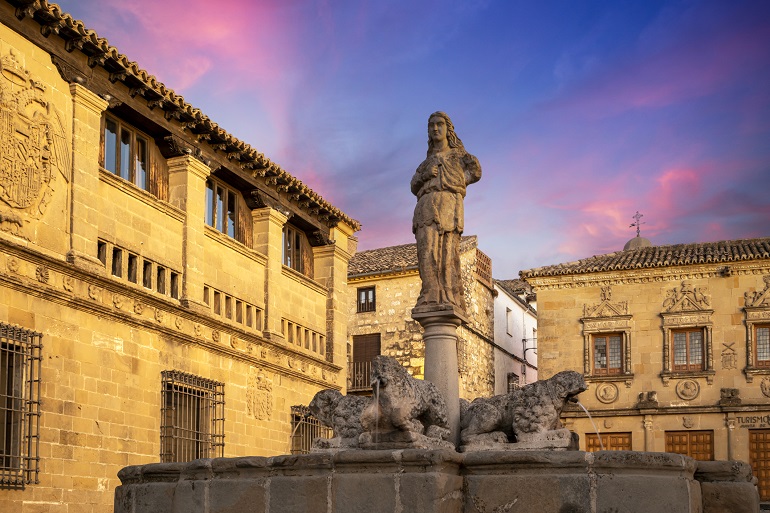
Adjacent to the Plaza de la Constitución is the Plaza del Populo, also known as Plaza de los Leones, which is home to several important structures that reflect the city's rich history. The Casa del Populo, a Plateresque palace, now houses the tourist office and stands as a testament to the ornate architectural style of the period. The Puerta de Jaén y Arco de Villalar, a stone gateway, marks one of the historic entrances to the city, offering visitors a sense of how Baeza appeared in centuries past. The square is also adorned with the Fountain of the Lions, a notable water feature that some believe represents Himilce, the wife of the Carthaginian general Hannibal. This fountain adds both historical intrigue and aesthetic appeal to the plaza.
Cathedral of the Nativity
The Cathedral of the Nativity (Natividad de Nuestra Señora) is a cornerstone of Baeza's religious architecture. Built in the 16th century on the site of a former mosque, it showcases a blend of early Gothic and Plateresque elements. The cathedral's interior, designed by the renowned architect Andrés de Vandelvira, is a prime example of Renaissance style. One of its most striking features is the 'rejas' (choir screen) crafted by Bartolme, an intricate work of art that separates the choir from the main altar. The cathedral's imposing presence and artistic wealth make it a must-visit site for those interested in religious architecture and history.

Plaza de Santa Cruz
Santa Cruz Church
The Santa Cruz Church is a remarkable example of Romanesque architecture in Baeza. Its structure features a two-aisle nave and a semicircular apse, typical of the Romanesque style. What sets this church apart is the incorporation of a Visigothic arch in one of its side walls, a unique element that provides insight into the city's diverse architectural influences. This fusion of styles within a single building offers visitors a tangible connection to Baeza's layered history, spanning from the Visigothic period through the Romanesque era.
Jabalquinto Palace
The Jabalquinto Palace is a striking example of the architectural splendour found in Baeza. Its Gothic entrance is adorned with intricate Plateresque capitals, creating a visually stunning facade. As visitors move inside, they are greeted by a Renaissance courtyard, demonstrating the evolving architectural tastes of the period. The palace's Baroque staircase adds yet another layer of artistic style to the building. Open to visitors most days, the Jabalquinto Palace offers a journey through different architectural periods within a single structure. The palace now houses the Antonio Machado site of the International University of Andalusia.
Antigua Universidad (Old University)
The Antigua Universidad, or Old University, stands as a testament to Baeza's importance as a centre of learning from 1542 to 1825. The building showcases both Renaissance and Baroque architectural styles, reflecting the long period during which it served as one of Spain's main universities. Today, the building continues its educational legacy as a summer school for the University of Granada. Visitors can explore the courtyards, halls, and facades that once housed some of Spain's brightest minds, gaining insight into the academic life of Renaissance and Baroque Spain.
In other parts of town
St Paul's Church
St Paul's Church (Iglesia de San Pablo) presents a harmonious blend of Gothic and Renaissance styles. The church boasts a Gothic structure with a Renaissance portal, creating an intriguing visual contrast. Inside, visitors will find a two-aisle nave flanked by Gothic chapels, showcasing the evolution of architectural styles within a single building. The church is also notable for containing the tomb of Pablo de Olavide, a prominent figure in Spanish history. This combination of architectural interest and historical significance makes St Paul's Church a compelling stop on any tour of Baeza.
City Walls and Gates
The remnants of Baeza's city walls offer visitors panoramic views over the surrounding countryside, providing context for the city's strategic importance throughout history. The Úbeda Gate and Jaén Gate stand as historic entrances to the city, allowing visitors to imagine the comings and goings of centuries past. The Villalar Arch, erected in 1526, commemorates Charles V's victory at Villalar in 1521, adding a layer of political history to the city's architectural narrative.
Top Museums
Baeza Museum (Museo De Baeza)
The Baeza Museum provides visitors with a comprehensive overview of the city's history from the Bronze Age to modern times. Located in the heart of Baeza's old town, this speciality and history museum allows visitors to better understand the city's extensive historical significance. The museum is highly rated by travellers and considered a worthwhile visit for those interested in Baeza's heritage.
Olive Culture Museum (Museo de la Cultura del Olivo)
Considered the temple of olive groves and olive oil in the province of Jaén, the Olive Culture Museum was established in 1997 and is housed in a magnificent 17th-century building. This museum, designated as an Asset of Cultural Interest, is divided into several spaces including three buildings that display different models of oil mills demonstrating various oil production systems.
The museum features a garden with olive tree varieties from various Mediterranean countries and a bodega (cellar) that stands as a symbol of industrial architecture. Visitors can learn about the multiple uses of olive oil and its significance to the region's culture and economy.
Renace Art Center
The Renace Art Center immerses visitors in the Renaissance period, offering insights into the artistic and cultural movement that so profoundly shaped Baeza's architecture and heritage.
Antonio Moreno Museum
This centre exhibits the work of native painter Antonio Moreno, known as "The Painter of the Blues," who passed away in 2017 leaving behind a notable pictorial legacy.
Cathedral Museum (Museo Catedralicio)
Located inside Baeza Cathedral, this museum houses an interesting collection of sacred art. The Cathedral itself features a 16th-century façade and combines various architectural styles including Gothic, Mudéjar and Renaissance elements.
Medieval Interpretation Center
Housed in a restored 16th-century building, the Medieval Interpretation Center offers visitors an informative journey through Baeza's medieval history. The museum's exhibits cover various aspects of medieval life, including architecture, crafts and daily routines. The displays are well-organised and enhanced by audiovisual elements.
Local Cuisine
The local gastronomy features unique specialties such as ochíos (anise-flavoured bread rolls), pipirrana, andrajos (meat and vegetable stew), lomo de orza (olive oil-preserved pork) and morcilla en caldera (blood pudding pâté). Sweet treats reflecting Andalusian and conventual influences include pestiños, aniseed donuts and the celebrated virolos. Many restaurants are housed in historic palaces and former convents, allowing visitors to savour these traditional flavours whilst immersed in Baeza's Renaissance charm.
Getting There & Around
To reach Baeza travellers can take a train or bus from major cities like Madrid or Barcelona to Linares-Baeza station, followed by a short local bus ride to the city centre. Alternatively, driving offers flexibility, with the journey from Madrid taking approximately 4 hours. Once in Baeza, the compact old town is best explored on foot, allowing visitors to fully appreciate its Renaissance architecture and historic streets. Local buses connect Baeza with nearby towns like Úbeda, whilst taxis are available for longer trips. The city's warm Mediterranean climate makes it pleasant to visit year-round, with prices typically quoted in euros (€). Be sure to have some cash on hand, as smaller establishments may not accept cards.