Introduction
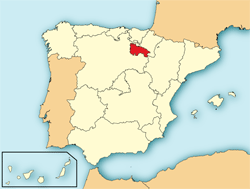
Cut off from the Old Castile in 1983, tiny La Rioja, with its 5,045 km² (1,948 sq mi) and 320,000 inhabitants, could easily for overlooked by tourists to Spain, were it not for its famous wines, generally regarded as the country's finest. La Rioja was for many years the only wine region in Spain to earn the prestigious grading of Denominación de Origen Calificada (D.O.C.), until Priorat got the same status in 2003.
La Rioja's vineyards were founded by the Romans, and it has been theorised that when they later settled in the Bordeaux region, some of the plant cuttings that they took with them may have originated in the Rioja vineyards in the form of the ancient Balisca grape, the ancestor of the Cabernet family. Planted over gently rolling hills in the Ebro valley, with the Cantabrian mountain in the backdrop, the Rioja vineyards are not just Spain's most prestigious, but also the most picturesque and beautiful.
The local economy revolves around wine making, and unsurprisingly most of the tourist attractions in La Rioja are also wine related. Wine tasting tours of the main estates are a definitive must for wine lovers. They include such names as Artadi, Marqués de Murrieta, Marques de Vargas, Remírez de Ganuza, Ramon Bilbao, Roda, Torre Muga, and Valenciso.
Cuisine
The cuisine of La Rioja is relatively simple, emphasising fresh local ingredients, which tend to be cooked to accompany the Rioja wines, rather than the other way round. Many recipes use white asparagus, artichokes, Piquillo peppers (typical of the nearby Basque Country), or Mediterranean specific vegetables like fava beans (caparrónes), chard and borage. Morcilla (Spanish black pudding) and Riojan chorizo are also popular.
Quintessential Riojan dishes include chuletillas al sarmiento (lamb chops, usually grilled outdoors during festivals or special events), gallina en pepitoria a la Riojana (chicken slow-cooked in a Rioja white wine sauce), patatas a la Riojana (potatoes cooked with chorizo sausages, paprika, chili pepper and bay leaves), perdiz asada al Rioja Tinto (roast partridge flambéed in Spanish brandy before being cooked in wine) and perdiz escabechada (partridge cooked with vegetables in wine and seasoned with herbs).
Attractions
West
| San Millán de la Cogolla ※ |
|---|

 The twin monasteries of Suso (upper) and Yuso (lower) in San Millán de la Cogolla are UNESCO World Heritage sites that hold remarkable historical significance. The older Suso Monastery, dating from the 6th century, features Visigoth and Mozarab architecture with distinctive horseshoe arches, whilst the 11th-century Yuso Monastery showcases an impressive library containing over 300 medieval documents. These monasteries are particularly notable as the birthplace of written Spanish, housing the Glosas Emilianenses, the first documented words in both Spanish and Basque languages. The site boasts exceptional artistic treasures, including a 16th-century walnut pulpit considered one of Spain's finest examples of woodcarving, and unique 11th-century gold and ivory chests containing sacred relics. The monasteries are situated in a serene valley setting, and part of the complex now functions as a hotel, making it an ideal base for exploring the surrounding countryside. |
Centre
| Logroño |
|---|

 Logroño, the capital of Spain's La Rioja region, is a historic city that originated as a Roman settlement and gained prominence during the Middle Ages as a crucial stop on the Camino de Santiago pilgrimage route. The city boasts one of Spain's highest ratios of green spaces per inhabitant and features the expansive Ebro Park along its namesake river. At its heart lies Calle del Laurel, known as the 'street of bars', where visitors can sample traditional Riojan pintxos and tapas. Notable landmarks include the 16th-century Co-Cathedral of Santa María de la Redonda and the medieval Stone Bridge. As the centre of Spain's oldest wine designation of origin, established in 1925, Logroño is renowned for its Rioja wines and features numerous historic bodegas. The city's cultural heritage is particularly evident in its old quarter, where medieval structures blend with Renaissance buildings, whilst the Museum of La Rioja, housed in the former Espartero Palace, showcases the region's historical evolution through art and archaeological exhibits. |



 : Local interest
 : Moderately interesting
 : Outstanding place
 : Must-see in the country
 : Top cities in Europe