


| Contents |
|---|

Introduction
Ordesa y Monte Perdido National Park, situated in the Pyrenees of Huesca in northern Spain, is an IUCN Category II National Park that has been protected since 1918. The park was enlarged in 1982 to cover 156.08 square kilometres, encompassing four main valleys: Ordesa, Añisclo, Escuaín and Pineta. Dominated by Monte Perdido, which stands at 3,355 metres and is the third highest peak in the Pyrenees, the park features dramatic limestone landscapes with deep ravines, lush green valleys and impressive waterfalls like the Cola de Caballo. Its diverse ecosystem spans altitudes from 700 to over 3,000 metres, supporting more than 1,300 plant species and wildlife including chamois, roe deer, bearded vultures and the Pyrenean newt. In 1997, UNESCO included the park in both the Biosphere Reserve of Ordesa-Viñamala and the cross-border Pyrénées - Mont Perdu World Heritage Site due to its spectacular geological formations and natural beauty.

Geography and Landscape
Mountainous Terrain
The park is dominated by the imposing Monte Perdido, the third-highest peak in the Pyrenees, standing at an impressive 3,355 metres. This limestone massif, the highest of its kind in Europe, forms part of the Treserols group, which includes the Cilindro de Marboré and Pico de Añisclo. These towering peaks create a dramatic backdrop for the park's other geographical wonders.
Valleys and Canyons
Four main valleys carve through the park's rugged terrain:
- Ordesa Valley: The park's namesake, featuring the picturesque Rio Arazas River and numerous waterfalls
- Añisclo Canyon: A deep, narrow gorge renowned for its striking limestone cliffs
- Escuaín Valley: Known for its vertical rock faces and diverse ecosystems
- Pineta Valley: Home to glacial cirques and U-shaped valleys
The Añisclo Canyon, in particular, stands out as a testament to the power of water erosion, with its sheer walls and winding course.
Glacial and Karstic Features
The park's landscape bears the marks of its glacial past, with U-shaped valleys, cirques, and glacial lakes dotting the terrain. The retreat of ancient glaciers has left behind a variety of geological formations, including:
- Moraines
- Erratic boulders
- Glacial lakes and tarns
Karst topography is another prominent feature, resulting from the erosion of limestone bedrock. This has created a complex network of caves, sinkholes, and underground rivers. The most notable karstic formations include:
- Dolines (sinkholes)
- Poljes (large flat-floored depressions)
- Karren (channels or furrows caused by dissolution of soluble rocks)
Hydrological Wonders
Water plays a crucial role in shaping the park's landscape. Visitors can marvel at:
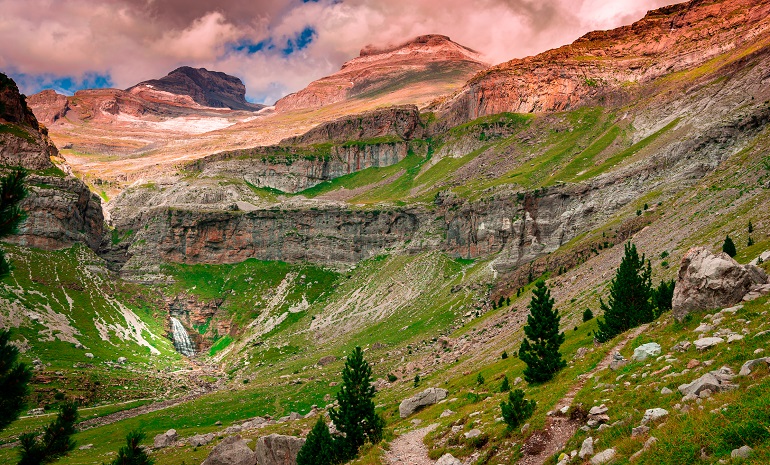
- Waterfalls: The park boasts numerous cascades, including the famous Cola de Caballo (Horse's Tail) waterfall
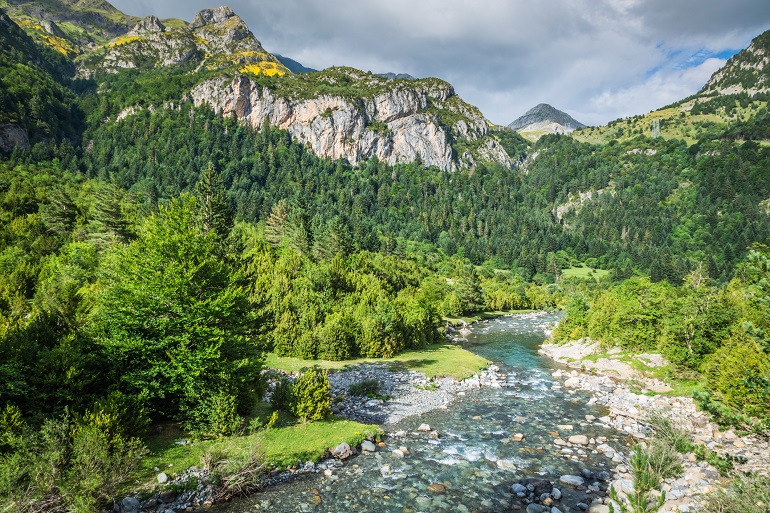
- Rivers: The Arazas River and its tributaries have carved deep gorges and canyons
- Underground water systems: A vast network of subterranean streams and caves
Distinctive Geological Formations
The park's geology is characterised by layers of sedimentary rocks, primarily limestone, dating back to the Cretaceous and Eocene periods. These layers have been dramatically uplifted and folded by tectonic forces, creating the park's distinctive cliffs and rock formations.
The Gallinero Cliffs, composed of the "Gallinera Limestone" formation, are particularly noteworthy for their imposing presence and geological significance.
Flora and Fauna
Flora
The park's diverse landscape supports over 1,500 plant species, creating a botanical wonderland. Visitors can marvel at:
- Vast forests of black pine, white fir, and beech trees
- Colourful alpine and subalpine meadows adorned with bellflowers, Pyrenean violets, and the iconic edelweiss
- Protected species such as the Pyrenean narcissus, Pyrenean saxifrage, and yellow gentian
Fauna
The park is a haven for wildlife, with 32 mammal species, 65 nesting bird species, and numerous reptiles and amphibians. Notable inhabitants include:
Mammals
- Pyrenean chamois, a goat-antelope native to the region
- Alpine marmots, often spotted in open areas
- Brown bears, wild boar, and red squirrels roaming the forests
- The elusive Pyrenean desman, a rare aquatic mammal
Birds
- Majestic raptors such as the bearded vulture (lammergeier), golden eagle, and griffon vulture soaring above the peaks
- The black woodpecker, often heard drumming in the forests
- Choughs and Egyptian vultures adding to the park's rich avian diversity
Aquatic Life
- Common trout and Pyrenean newts thriving in the park's cold mountain streams
- Otters gracefully navigating the rivers and torrents
Whilst exploring the park, visitors should remain vigilant and respectful of the wildlife, particularly during sensitive periods such as mating seasons and nesting times. The park's diverse ecosystems, from lush forests to craggy peaks, provide a unique opportunity to observe these magnificent creatures in their natural habitats.
Activities and Attractions
Hiking Trails
The park's extensive network of hiking trails represents its crowning glory, with routes catering to every level of ability and ambition.
Cola de Caballo (Horse's Tail) Route
This iconic 17-kilometre round trip through the Ordesa Valley serves as the perfect introduction to the park's splendour. Beginning at the Pradera de Ordesa, the well-maintained path follows the crystal-clear Arazas River upstream through ancient beech and pine forests.
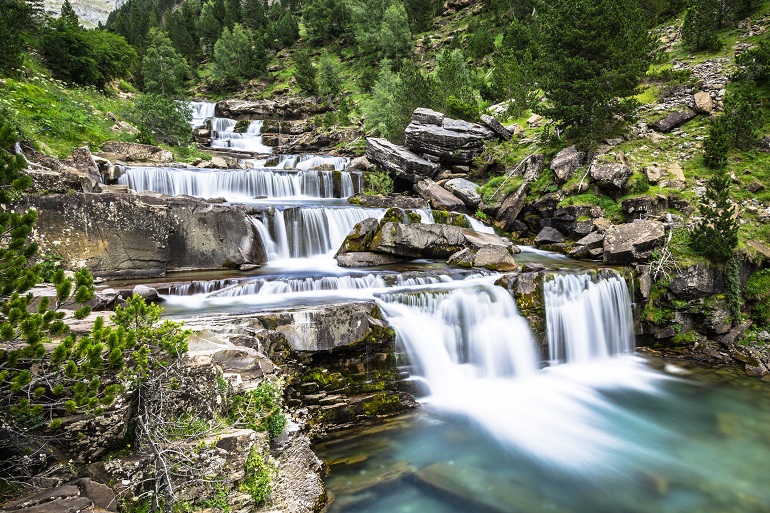
The trail passes a series of increasingly impressive waterfalls, including the Gradas de Soaso—a stunning stepped cascade. After approximately three hours of gentle walking, hikers reach the magnificent Cola de Caballo waterfall, which tumbles dramatically from the cirque walls. The surrounding amphitheatre of towering limestone cliffs creates a truly awe-inspiring backdrop for a picnic lunch.
For those seeking a more challenging return journey, consider taking the elevated Faja de Pelay path back to the Pradera, which offers breathtaking panoramic views across the valley.
Faja de Pelay
This challenging 22-kilometre circular route provides one of the most rewarding hiking experiences in the park. Starting with a steep 600-metre ascent from the Pradera de Ordesa to the Mirador de Calcilarruego viewpoint, hikers are immediately rewarded with spectacular vistas of the Ordesa Valley.
The path then contours along the southern cliffs at an altitude of approximately 2,000 metres, offering uninterrupted views of the valley floor below and the towering peaks of the Tres Sorores massif above. The trail passes through diverse alpine habitats, from rocky outcrops to lush meadows bursting with wildflowers in summer.
After about four hours, the path begins its descent through the Gradas de Soaso, joining the Cola de Caballo route for the return journey to the Pradera. This full-day hike requires good fitness and proper footwear, but the panoramic views make every step worthwhile.
Faja Racon
This lesser-known 11-kilometre route along the northern cliffs of the Ordesa Valley offers a quieter alternative to the more popular trails. Beginning with a steep climb from the Pradera de Ordesa, the path soon levels out as it traverses the cliff face at approximately 1,700 metres.
Walking beneath the imposing rock walls of Tozal del Mallo and Gallinero, hikers experience a unique perspective of the valley. The trail passes through patches of ancient forest clinging to the cliff face, providing welcome shade in summer months. The constant juxtaposition of vertical rock faces and horizontal trail creates a fascinating visual experience.
After approximately 5 kilometres, the path begins its descent back to the valley floor, rejoining the main trail near the Cascada de Arripas waterfall. This route is particularly recommended for those seeking solitude and dramatic landscapes.
Faja de las Flores
For experienced hikers with a head for heights, the Faja de las Flores offers an exhilarating adventure. This challenging 16-kilometre route traverses the upper northern cliffs of the Ordesa Valley at an altitude of approximately 2,400 metres.
The trail begins with a demanding ascent from the Pradera de Ordesa to the Refugio de Góriz mountain hut, where many hikers choose to stay overnight before tackling the Faja itself. The path then contours along narrow ledges with sheer drops of 400 metres or more, requiring careful footing and steady nerves.
The reward for this courage is unparalleled views across to Monte Perdido and down to the valley floor. The route is named for the abundance of alpine flowers that bloom along the path in early summer, creating a colourful contrast to the stark limestone landscape. This trail should only be attempted in good weather conditions and by those with proper equipment and experience.
Monte Perdido Summit
The ascent of Monte Perdido (3,355 metres), the third-highest peak in the Pyrenees, represents the ultimate challenge for mountaineers visiting the park. This demanding two-day expedition typically starts from the Pradera de Ordesa, with an overnight stay at the Refugio de Góriz.
From the refuge, the route climbs steeply through a moonscape of limestone pavements and scree slopes to the Lago Helado (Frozen Lake) at 2,990 metres. The final ascent to the summit involves some scrambling and, early in the season, may require crampons and an ice axe to navigate snow fields safely.
The panorama from the summit is simply breathtaking, with views extending across the Pyrenees into France and south towards the Spanish plains. This ascent requires proper mountaineering experience, equipment, and good weather conditions. Many visitors choose to hire a local guide for this challenging but immensely rewarding adventure.
Añisclo Canyon Routes
The dramatic Añisclo Canyon offers several excellent hiking options. The Añisclo Canyon Floor route follows the crystal-clear Río Bellós upstream through the narrowest sections of the gorge, where sheer walls rise over 1,000 metres on either side. This 12-kilometre return journey passes through lush riverside vegetation and offers numerous spots for cooling dips in the river during summer months.
For a more challenging experience, the Mondoto Circuit provides a spectacular 18-kilometre route that climbs from the canyon floor to the summit of Mondoto (1,957 metres), offering panoramic views of both the Añisclo and Ordesa valleys before descending back to the starting point.
Pineta Valley Trails
The eastern Pineta Valley features several excellent day hikes. The Balcón de Pineta trail climbs from the valley floor to a spectacular viewpoint overlooking the Pineta Glacier and the north face of Monte Perdido. This 14-kilometre round trip offers some of the most dramatic mountain scenery in the park.
For a gentler option, the Llanos de La Larri route follows an ancient glacial hanging valley above the main Pineta Valley, offering beautiful meadows and forests with minimal climbing required.
Escuaín Gorge Paths
The remote Escuaín sector features several challenging routes through dramatic limestone gorges. The Garganta de Escuaín trail follows the course of the Río Yaga through a narrow canyon, with several impressive waterfalls along the route. The 16-kilometre circular path to the Miradores de Revilla offers spectacular viewpoints over the gorge and chances to spot the rare lammergeier (bearded vulture) soaring overhead.
Mountaineering and Climbing
Beyond hiking, the park offers world-class opportunities for more technical mountain sports.
Rock Climbing
The limestone cliffs of Ordesa y Monte Perdido provide some of the finest rock climbing in Europe. The iconic north face of Tozal del Mallo in the Ordesa Valley features multi-pitch routes up to 600 metres in length, with difficulties ranging from moderate to extremely severe.
The Añisclo Canyon offers numerous sport climbing sectors with single-pitch routes suitable for climbers of all abilities. The Escuaín Gorge features more technical climbing on compact limestone, with routes renowned for their technical difficulty and spectacular positions.
Local guides based in nearby towns like Torla and Broto offer instruction and guided climbs for those new to the area or looking to develop their skills.
Via Ferrata Routes
For those seeking a taste of vertical adventure without full climbing experience, several via ferrata routes have been established around the park's periphery. These protected climbing paths, equipped with fixed cables, ladders, and bridges, allow relatively inexperienced visitors to safely access dramatic positions that would otherwise require technical climbing skills.
The Via Ferrata de Sorrosal near Broto features a spectacular crossing above a 200-metre waterfall, while the more challenging Via Ferrata de Foradada del Toscar offers a thrilling traverse across sheer limestone cliffs.
Water Activities
The park's rivers and canyons provide excellent opportunities for water-based adventures.
Canyoning
The limestone landscape has created numerous narrow gorges perfect for canyoning—a thrilling combination of scrambling, swimming, and abseiling down water-carved channels. The Garganta de Escuaín offers several technical descents through narrow slots with multiple abseils beside or through waterfalls.
Just outside the park boundaries, the Río Yesa and Río Cinca feature popular canyoning routes suitable for beginners and intermediate participants. Several qualified guiding companies operate in the area, providing all necessary equipment and instruction.
White Water Activities
The rivers flowing from the park provide excellent conditions for white water sports. The Río Ara, which forms the park's western boundary, offers exciting rafting and kayaking descents from Broto downstream, with rapids ranging from grade II to IV depending on water levels.
For a more sedate experience, stand-up paddleboarding is possible on calmer stretches of the rivers and on the reservoir at the foot of the Pineta Valley.
Scenic Drives and Viewpoints
For those with limited mobility or time, several spectacular driving routes provide access to the park's magnificent landscapes.
Añisclo Canyon Road
Perhaps the most dramatic drive in the park follows the narrow, winding road through the lower Añisclo Canyon. This single-track route tunnels through rock outcrops and clings to the canyon walls, offering breathtaking views of the gorge below. Several parking areas allow visitors to stop and enjoy short walks to viewpoints or riverside picnic spots.
Pineta Valley Access
The road to the head of the Pineta Valley provides easy access to one of the park's most spectacular cirques, where the north face of Monte Perdido rises almost 2,000 metres from the valley floor. A large car park at the road's end serves as the starting point for several trails, but even those remaining with their vehicles can enjoy magnificent views of the surrounding peaks.
Miradores de Revilla
A short drive from the village of Escuaín leads to the Miradores de Revilla viewpoints, offering spectacular vistas over the Escuaín Gorge with minimal walking required. These accessible viewpoints are particularly recommended for sunset, when the evening light bathes the limestone cliffs in golden hues.
Cultural Heritage
While natural wonders dominate, the park also preserves fascinating cultural heritage from centuries of human presence in these mountains.
Traditional Architecture
The villages surrounding the park feature distinctive Pyrenean architecture, with sturdy stone houses topped by slate roofs designed to withstand harsh mountain winters. The villages of Torla, at the entrance to the Ordesa Valley, and Fanlo, overlooking the Añisclo Canyon, offer particularly well-preserved examples of traditional mountain settlements.
Ancient Pathways
Many of the park's hiking trails follow ancient routes used for centuries by shepherds, traders, and smugglers crossing between Spain and France. The network of paths known as the "Camino de Soaso" in the Ordesa Valley was once a vital trade route, while the high-altitude passes near Monte Perdido have witnessed human traffic since prehistoric times.
Photography Opportunities
The diverse landscapes of Ordesa y Monte Perdido National Park offer endless possibilities for photography enthusiasts.
Landscape Photography
The dramatic contrasts between sheer rock walls, verdant valleys, and snow-capped peaks create perfect conditions for landscape photography. The view of the Ordesa Valley from the Mirador de Calcilarruego is particularly photogenic, especially in autumn when the beech forests display their golden colours.
The Circo de Soaso, with the Cola de Caballo waterfall framed by towering cliffs, offers another classic composition, while the Pineta Valley provides spectacular opportunities to capture the interplay of light and shadow on Monte Perdido's north face.
Macro and Detail Photography
Beyond the grand vistas, the park rewards those who look closer. The limestone pavements of the higher regions feature fascinating erosion patterns and fossils, while the alpine meadows burst with colourful wildflowers in late spring and early summer. The crystal-clear mountain streams, with their turquoise pools and white cascades, offer endless possibilities for creative water photography.

Accommodation
Types of Accommodation
Campsites
For those seeking a close connection with nature, numerous campsites are scattered throughout the park and its surrounding areas. These sites typically offer spacious pitches for tents, caravans, and motorhomes, often equipped with modern facilities such as electrical hookups and clean sanitation blocks. Many campsites also feature additional amenities like swimming pools, children's play areas, and on-site shops or restaurants.
Bungalows and Cabins
For a rustic yet comfortable experience, bungalows and mountain cabins are available within the park. These self-catering options provide a cosy retreat after a day of hiking, often featuring fully-equipped kitchens, private bathrooms, and stunning views of the surrounding mountains.
Hotels and Guesthouses
The park and nearby villages offer a selection of hotels and guesthouses, ranging from charming family-run establishments to more luxurious options. Many of these accommodations boast traditional stone architecture that blends with the natural environment. Visitors can expect comfortable rooms, often with mountain views, and on-site restaurants serving local Aragonese cuisine.
Rural Houses
For a truly authentic experience, rural houses in the area provide an opportunity to stay in renovated traditional buildings. These accommodations often offer a home-away-from-home atmosphere, with fully-equipped kitchens, living areas, and outdoor spaces for relaxation.
Location Considerations
When choosing accommodation, consider its proximity to the park's main attractions and hiking trails. Some establishments are located near the park entrance, offering easy access to popular routes, whilst others are nestled in quieter valleys, providing a more secluded experience.
Amenities and Services
Many accommodations in the area cater to outdoor enthusiasts, offering services such as packed lunch preparation, hiking information, and equipment storage. Some may also provide guided tours or activities, helping visitors make the most of their stay in this magnificent national park.
Booking Tips
As Ordesa y Monte Perdido National Park is a popular destination, especially during summer months and holiday periods, it's advisable to book accommodation well in advance. This ensures a wider choice of options and often better rates.

Gastronomy
Local Ingredients and Traditional Dishes
The region's cuisine is characterised by the use of fresh, local products that reflect the area's rich biodiversity. Mountain pastures, forests, rivers, and crops provide an abundance of ingredients that form the basis of traditional dishes. Some of the most popular local ingredients include:
- River trout
- Wild mushrooms
- Artisanal cheeses
- Locally-produced cured meats
Visitors can savour hearty mountain fare that perfectly complements the rugged landscape. Signature dishes of the area include:
- Chiretas (stuffed lamb intestines)
- Ternasco (roasted lamb)
- Migas de pastor (shepherd's breadcrumbs)
- Chilindrón chicken
- Game stews featuring wild boar and deer
Seasonal Delights
The culinary offerings in Ordesa y Monte Perdido change with the seasons, ensuring that visitors always have access to the freshest ingredients. In autumn, the forests come alive with an array of wild mushrooms, which feature prominently in many dishes. Winter brings hearty stews and roasts, while spring and summer offer lighter fare showcasing the region's abundant produce.
Wine and Beverages
No meal in the Ordesa y Monte Perdido area is complete without sampling the excellent local and regional wines. The nearby Somontano wine region produces exceptional vintages that pair perfectly with the robust flavours of mountain cuisine.
Culinary Traditions
The gastronomic heritage of the region is deeply rooted in tradition. In January, locals prepare various pork products during the 'matanzia', preserving meats for use throughout the year. This practice reflects the area's self-sufficient culinary culture and connection to the land.
Modern Interpretations
While traditional recipes remain at the heart of the region's gastronomy, many chefs are now offering modern interpretations of classic dishes. These innovative creations combine time-honoured flavours with contemporary techniques, resulting in a unique fusion of old and new.
Getting There and Around
By Car
The main entrance to the park is through the town of Torla, which is approximately 90 kilometres from Huesca city. The journey takes about one hour and fifteen minutes via the A-23/E-7 and N-260 roads. Free parking is available in Torla-Ordesa all year round, located next to the bus stop.
By Public Transport
Bus Service
The OrdesaBus shuttle service operates from Torla to the park:
- Available during Easter, summer (June to November), and around 12 October.
- Departs from Torla-Ordesa's car park, near the National Park visitor centre.
- Buses run every 15-20 minutes, with the first trip to Ordesa at 6:00 AM and the last return trip between 8:30 PM and 10:00 PM, depending on the season.
- The fare is approximately €4 per person.
Train and Bus Combination
For those travelling from further afield:
- Take a train to Huesca or Jaca stations.
- From there, connect to a bus service to the park.
Access During Off-Season
When the shuttle bus is not operating, private vehicles can access La Pradera de Ordesa directly. However, on busy weekends when the car park is full, a local taxi service is available (Tel: +34 630 418 918).
Walking Option
For the adventurous, it's possible to hike from Torla to La Pradera de Ordesa using the old local pathways called Turieto Bajo or Turieto Alto. This journey takes about two hours.
Remember to check the latest schedules and book in advance, especially during peak seasons. The use of public transport is encouraged to promote sustainable tourism and protect the park's natural environment.
Best Time to Visit
The Ordesa y Monte Perdido National Park offers spectacular beauty year-round, but certain seasons provide optimal conditions for visitors depending on your preferences and planned activities.
Optimal Seasons
Late spring to early autumn is generally considered the best time to visit the park, with the months of May through September offering the most pleasant weather conditions. During this period, temperatures typically range from 10°C to 25°C during the day, creating comfortable conditions for hiking and outdoor exploration.
Seasonal Highlights
Spring (May-June)
Late spring is particularly magical as the snow has melted, wildflowers are in full bloom, and the landscape becomes lush with vegetation. The waterfalls are especially impressive during this season due to the snowmelt. However, be aware that early spring (March-April) still has snow and leafless trees, with potential avalanche risks.
Summer (July-August)
Summer offers warm temperatures with sunny days and the longest daylight hours, perfect for extended hikes and camping. This is also peak tourist season, so expect more visitors, particularly in July and August. Be prepared for sudden afternoon thunderstorms, which are frequent in summer.
Autumn (September-October)
Early autumn provides a spectacular display of colours as the foliage turns vibrant shades of red and gold. September still offers good weather with fewer tourists than the peak summer months.
Winter
Winter transforms the park into a tranquil snowy landscape. While beautiful, some routes may be closed or challenging due to weather conditions. There is abundant snow precipitation, and temperatures are quite cold.
Climate Considerations
The park has a high mountain climate that can be extreme, though it's somewhat tempered by the relative proximity to the Mediterranean and Cantabrian Sea. Weather can change quickly in the mountains, so visitors should always be prepared for sudden temperature drops and rain showers, regardless of season.
Visitor Numbers
If you prefer to avoid crowds, consider visiting during the shoulder seasons:
- Peak season: July and August
- High season: June and September
- Low season: April, May, October, and December
- Very low season: January, February, March, and November
For the best balance of pleasant weather and manageable crowds, late May to early June or September might be your best options.

Conservation and Responsible Tourism
Conservation Efforts
The park benefits from stringent protection measures to safeguard its ecosystems and biodiversity. These include:
- Regulated access to sensitive areas
- Prohibition of plant collection
- Limitations on human activities that could harm the environment
The Spanish portion of the site, which comprises about two-thirds of the World Heritage area, coincides with the boundaries of the Parque Nacional de Ordesa y Monte Perdido. This designation provides the highest degree of conservation for both natural and human heritage.
Sustainable Tourism Initiatives
To promote responsible tourism, the park authorities have implemented several measures:
Public Transportation: A bus system has been introduced to reduce the environmental impact of visitors. Using public transport helps decrease carbon emissions and air pollution, contributing to the park's conservation efforts.
Environmental Education: The park runs programmes and workshops to raise awareness about the natural environment and its biodiversity. These activities encourage visitors to adopt sustainable practices and minimise their environmental impact.
Ecotourism Club: The park is part of the Ecotourism Club in Spain, which offers sustainable experiences that contribute to local development and biodiversity conservation.
Visitor Guidelines
To ensure the preservation of this natural wonder, visitors are encouraged to:
- Plan ahead and choose appropriate routes
- Respect park rules and regulations
- Use public transportation when possible
- Avoid disturbing flora and fauna
- Properly dispose of waste
- Support local communities by using their services

Visitor Centres and Educational Facilities
Visitor Centres
Torla Visitor Centre
Located in the village of Torla, this is the main visitor centre for the park. It provides comprehensive information on the park's ecology and protected areas in Aragon. Open year-round, it's an essential first stop for visitors to gather maps, brochures, and expert advice.
Tella Visitor Centre
Situated in Tella village, this centre focuses on the ethnology, anthropology, and mysteries of the Pyrenees and Pyrenean habitation. It offers a unique perspective on the cultural aspects of the region.
Information Points
The park features several information points strategically located throughout the area:
- Ordesa Meadow Information Point: Open from late June to mid-September, providing updated maps and details about services and trails.
- Escuaín Information Point: Located in Escuaín village, open daily during peak seasons.
- Pineta Information Point: Situated at the end of the access road to the Pineta valley, open during Easter and from early June to mid-October.
- Bielsa Tourism Office: Offers information about the Pineta Valley area.
Educational Facilities
The park places a strong emphasis on environmental education and awareness. Key educational aspects include:
- Glacial and Periglacial Geomorphology: The park offers excellent opportunities to study and observe these geological features.
- Endemic Flora: Particularly on calcareous rocks, providing insights into unique plant adaptations.
- Grazing and Cultural Landscapes: Educational programmes focus on traditional practices and their impact on the landscape.
Educational Activities
The park organises various educational programmes and workshops to foster awareness and respect for the natural environment. These activities are designed for different age groups, including:
- Family-friendly Ecotourism Activities: Accessible for children as young as 4 years old, these activities introduce families to the park's ecosystems through observation and educational games.
- Guided Nature Interpretation Routes: These walks allow visitors to discover the secrets of the Pyrenean forests and fauna, suitable for all types of audiences.
The Ordesa y Monte Perdido National Park welcomes approximately 700,000 visitors annually, testament to its educational value and natural beauty. Whether you're interested in geology, botany, wildlife, or cultural heritage, the park's visitor centres and educational facilities offer a wealth of information and experiences to enrich your visit.