


 Austria Guide
 Croatia Guide
 Czechia Guide
 Hungary Guide
 Poland Guide
 Slovakia Guide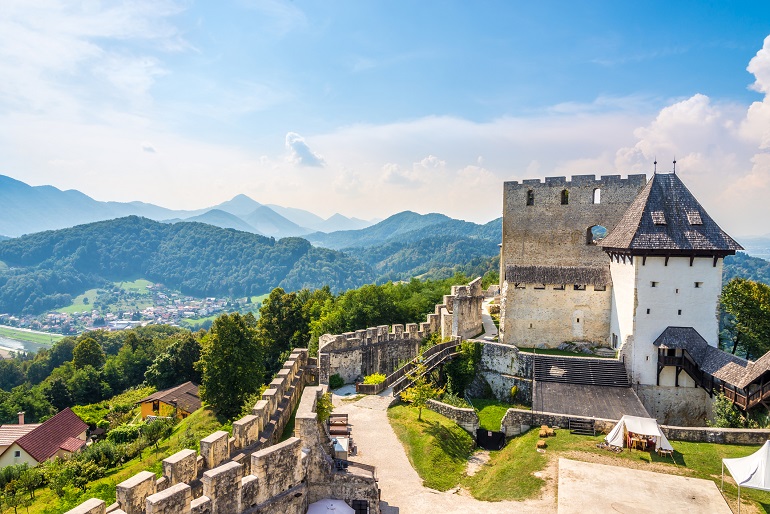
Prehistoric Era and Early Settlements
The territory of present-day Slovenia has been inhabited since the Palaeolithic era, with archaeological evidence dating back approximately 250,000 years. The oldest discovered musical instrument in the world, a Neanderthal flute, was found in the Divje Babe cave near Cerkno and dates to approximately 60,000 years ago. This remarkable find suggests early human creativity and cultural development in the region.
During the Neolithic period (approximately 5500-3500 BCE), agricultural communities began to develop. Archaeological sites such as Ajdovska jama (Ajdovska Cave) near Krško provide evidence of these early farming settlements. The Bronze Age (approximately 2300-800 BCE) saw the emergence of more complex societies, with the Urnfield culture becoming prominent around 1300 BCE. This culture, named for its practice of cremating the dead and placing their ashes in urns, spread throughout Central Europe.
The Iron Age brought significant cultural developments to the region, with two major cultures emerging: the Hallstatt culture (800-400 BCE) and the La Tène culture (400-0 BCE). The Hallstatt period is particularly notable for the development of iron-working techniques and the establishment of trade networks. Remarkable archaeological finds from this period include the situla art—decorative bronze vessels with elaborate figural scenes depicting everyday life and rituals. The Vače situla, discovered near the village of Vače, is one of the most famous examples of this artistic tradition.
Roman Period
Around the 3rd century BCE, Celtic tribes, including the Taurisci and Norici, established settlements in the region. These Celtic groups maintained trade connections with the expanding Roman Republic. By the 1st century BCE, Roman influence had grown considerably, and in 10 BCE, the territories of present-day Slovenia were formally incorporated into the Roman Empire.
The Romans established several important settlements that would become the foundations for modern Slovenian cities. Emona (present-day Ljubljana) was founded in 14 CE and developed into a significant urban centre with a population of approximately 5,000-6,000 inhabitants. Poetovio (Ptuj) served as a major military base and later as a civilian settlement, while Celeia (Celje) became an important municipal centre. Archaeologists have uncovered extensive Roman remains in these locations, including temples, baths, mosaics, and a well-preserved road network.
The Romans also exploited the natural resources of the region. They mined iron ore in the Karavanke Mountains and extracted mercury from the mines at Idrija. The strategic location of the territory made it an important crossroads for trade and military movements, with several major Roman roads traversing the region, including sections of the Amber Road connecting the Baltic to the Adriatic.
Christianity began to spread in the region during the late Roman period. Saint Victorinus, the bishop of Poetovio in the late 3rd century CE, is considered the first known Christian writer in the territory of present-day Slovenia. His theological works represent some of the earliest Christian writings in the region.
Migration Period and Early Slavic Settlement
The decline of the Roman Empire in the 5th century CE led to significant population movements across Europe. The territory of present-day Slovenia experienced invasions by various groups, including the Huns under Attila in 452 CE, followed by the Ostrogoths, Lombards, and eventually the Avars.
The most significant demographic change came with the arrival of Slavic peoples in the 6th century. These Slavic tribes, ancestors of modern Slovenians, migrated from the east, likely from the area of present-day Ukraine and southern Poland. They gradually settled throughout the Eastern Alps and established agricultural communities. Archaeological evidence of early Slavic settlements includes distinctive pottery styles and burial practices.
A significant political development occurred in the 7th century when the Slavic Prince Samo, a Frankish merchant who had gained the trust of local Slavic tribes, led a successful rebellion against Avar domination. From approximately 623 to 658 CE, Samo ruled over a large territory that included parts of present-day Slovenia, Austria, Czech Republic, and Slovakia. This political entity, known as Samo's Realm or Samo's Kingdom, represents one of the earliest known Slavic states.
Carantania and Frankish Rule
Following the collapse of Samo's Realm, the Slavic ancestors of the Slovenes established the Duchy of Carantania in the region of present-day Austrian Carinthia and northern Slovenia. This early medieval state, existing from approximately 658 to 828 CE, is of particular historical significance as it represents one of the first documented Slavic political formations.
Carantania developed a unique political system that included elements of democratic practice. The installation of dukes involved a ceremony conducted in Slovene language at the Prince's Stone (Knežji kamen), where a free peasant would symbolically transfer power to the new duke. This ritual, described in detail in the historical record, is considered one of the earliest examples of democratic legitimation of power in medieval Europe.
By the late 8th century, Carantania came under increasing pressure from the expanding Frankish Empire. To secure protection against Avar threats, Carantanian leaders accepted Frankish overlordship and Christianity. In 788 CE, Carantania was fully incorporated into the Frankish Empire under Charlemagne. The Franks established a system of counties (marches) to administer the territory, including the March of Carniola, the March of Styria, and the March of Istria.
The Christianisation of the Slovene lands began in earnest during this period. Irish and Scottish missionaries were particularly active in the region. The Freising Manuscripts, written between 972 and 1039 CE, represent the oldest known documents written in Slovene and the oldest Slavic texts written in Latin script. These religious texts include a confession formula, a sermon on sin and repentance, and a penitential rite.
Medieval Period and Habsburg Rule
During the medieval period, the territory of present-day Slovenia was divided into several historical regions, including Carniola, Styria, Carinthia, Gorizia, and Istria. These regions developed under different feudal lords and political structures, which contributed to the regional diversity that characterises Slovenia to this day.
The 13th century saw the rise of important urban centres. Towns such as Ljubljana, Maribor, Celje, and Ptuj received town privileges, which granted them certain rights of self-governance and economic freedoms. These medieval towns, with their walls, churches, and marketplaces, formed the nuclei of modern Slovenian cities.
A significant political development occurred in the 14th and early 15th centuries with the rise of the Counts of Celje (Cilli). This noble family, originally vassals of the Habsburgs, accumulated considerable power and territories. At their peak under Count Herman II and his son Frederick II, they controlled lands across present-day Slovenia, Croatia, and Hungary. In 1436, Emperor Sigismund elevated them to the rank of princes of the Holy Roman Empire. The family's ambitions were cut short in 1456 when Ulrich II, the last male member of the family, was assassinated in Belgrade.
Following the extinction of the Counts of Celje, most of their territories came under Habsburg control. The Habsburg dynasty, which had been gradually expanding its influence in the region since the late 13th century, would dominate Slovenian lands for the next 450 years. Under Habsburg rule, the Slovenian territories were administered as separate provinces: the Duchy of Carniola, the Duchy of Styria, the Duchy of Carinthia, the County of Gorizia and Gradisca, and the city of Trieste.
The late medieval period was marked by several peasant revolts, reflecting the harsh conditions faced by the rural population. The Great Slovenian Peasant Revolt of 1515, which involved approximately 80,000 rebels across Carniola, Styria, Carinthia, and Gorizia, was the largest. The rebels demanded the restoration of old rights and the abolition of new feudal burdens. Although ultimately suppressed, these revolts demonstrated the capacity for collective action among the Slovenian peasantry.
Reformation and Counter-Reformation
The 16th century brought significant religious and cultural changes with the spread of Protestant ideas. Primož Trubar, a Protestant preacher, published the first books in the Slovenian language: "Catechismus" and "Abecedarium" in 1550. These works established the foundation for the Slovenian literary language and are considered pivotal in the development of Slovenian national identity.
Other Protestant writers, including Jurij Dalmatin, Adam Bohorič, and Sebastijan Krelj, further developed Slovenian literature. Dalmatin's translation of the entire Bible into Slovenian in 1584 was a monumental achievement. Bohorič wrote the first Slovenian grammar, "Arcticae horulae" (1584), which standardised Slovenian orthography. This period of Protestant literary activity is often referred to as the "golden age" of early Slovenian literature.
The Counter-Reformation, led by the Habsburgs and the Catholic Church, began in earnest in the late 16th century. The Protestant movement was largely suppressed, with Protestant books burned and Protestant preachers exiled. By the early 17th century, the majority of the population had returned to Catholicism. Despite this religious reversal, the linguistic and cultural foundations established by the Protestants endured.
The Baroque period (17th and early 18th centuries) saw significant architectural developments, with numerous churches and monasteries built or renovated in the ornate Baroque style. The works of Italian-trained architects such as Francesco Robba transformed the appearance of Slovenian towns. The period also witnessed the founding of the Academia Operosorum Labacensium in Ljubljana in 1693, an intellectual society that promoted scientific and cultural activities.
Enlightenment and Napoleonic Era
The reign of Empress Maria Theresa (1740-1780) and her son Emperor Joseph II (1780-1790) brought significant reforms to the Habsburg lands, including the Slovenian territories. These Enlightenment-influenced changes included the introduction of compulsory primary education, the limitation of Church power, the abolition of serfdom (1782), and administrative reorganisation. The educational reforms were particularly important for Slovenian cultural development, as they increased literacy rates and allowed for instruction in the Slovenian language at the primary level.
During this period, the first newspapers in Slovenian appeared, including "Lublanske novice" (Ljubljana News), published by Valentin Vodnik from 1797 to 1800. Vodnik, a priest, poet, and journalist, was a key figure in the early Slovenian national awakening. His works, including the collection of poems "Pesme za pokušino" (Poems for Sampling, 1806), celebrated the Slovenian language and people.
The Napoleonic Wars brought dramatic changes to the region. Following the defeat of Austria in 1809, Napoleon established the Illyrian Provinces, which included most of the Slovenian lands, parts of Croatia, and Dalmatia. Ljubljana served as the capital of this French-administered territory from 1809 to 1813. Although short-lived, the Illyrian Provinces had significant cultural impacts. The French administration introduced civil equality, abolished feudal remnants, and supported the use of local languages in administration and education. These policies contributed to the strengthening of Slovenian national consciousness.
National Awakening and the 19th Century
Following the defeat of Napoleon and the Congress of Vienna in 1815, the Slovenian lands returned to Habsburg control. The 19th century witnessed the growth of Slovenian national consciousness, part of the broader European movement of national revivals. This period, known as the "national awakening" (narodno prebujenje), saw the development of Slovenian cultural institutions, literature, and political thought.
The poet France Prešeren (1800-1849) emerged as the central figure of Slovenian Romanticism and is widely regarded as Slovenia's greatest poet. His works, including the epic poem "Krst pri Savici" (The Baptism on the Savica) and "Zdravljica" (A Toast), the latter of which later became the Slovenian national anthem, elevated Slovenian literature to artistic heights comparable to other European literatures. Prešeren's use of complex poetic forms demonstrated the expressive capabilities of the Slovenian language.
The revolutionary year of 1848 marked a significant political milestone. In April 1848, a group of Slovenian intellectuals in Vienna formulated the programme of "United Slovenia" (Zedinjena Slovenija), calling for the unification of all Slovenian-inhabited lands into a single administrative unit within the Habsburg Monarchy, with Slovenian as an official language. Although this programme was not realised at the time, it became a cornerstone of Slovenian political thought for generations.
The second half of the 19th century saw the establishment of important Slovenian cultural institutions. The Slovenian Society (Slovenska matica), founded in 1864, promoted the publication of Slovenian books and scholarly works. Reading rooms (čitalnice) were established in towns across Slovenian territories, serving as centres for cultural activities and national consciousness-raising. The first Slovenian theatre productions were staged, and choral societies were formed.
Politically, this period was characterised by the division between conservative and liberal Slovenian political camps, known as the "Old Slovenes" and "Young Slovenes" respectively. Both groups advocated for Slovenian national rights but differed in their approaches and alliances. The conservative faction, led by Janez Bleiweis, favoured cooperation with the Habsburg authorities, while the liberal faction, represented by figures such as Fran Levstik, took a more confrontational stance.
The late 19th century also saw significant economic developments. Railways connected Slovenian cities to the broader Habsburg network, with the Southern Railway linking Vienna to Trieste via Ljubljana completed in 1857. Industrialisation progressed, particularly in urban centres like Ljubljana, Maribor, and Celje. The Carniolan Industrial Company, established in 1869, became an important iron and steel producer. Despite these developments, the majority of the Slovenian population remained engaged in agriculture.
World War I and the Formation of Yugoslavia
The assassination of Archduke Franz Ferdinand in Sarajevo in June 1914 triggered World War I, which had profound consequences for the Slovenian lands. Slovenian soldiers served in the Austro-Hungarian Army, primarily on the Eastern Front against Russia and the Italian Front in the Julian Alps. The Isonzo Front (Soška fronta), which ran through western Slovenian territories, saw twelve major battles between Italian and Austro-Hungarian forces from 1915 to 1917. These battles resulted in enormous casualties and destruction in the region.
As the war progressed and the Austro-Hungarian Empire began to disintegrate, Slovenian political leaders increasingly oriented themselves toward the idea of South Slavic unification. In May 1917, the Yugoslav Club, composed of South Slavic deputies in the Austrian parliament, issued the May Declaration, calling for the unification of all South Slavs within the Habsburg Monarchy into a democratic state under Habsburg rule.
By 1918, with the collapse of the Austro-Hungarian Empire imminent, Slovenian political leaders shifted toward complete independence from the Habsburgs. On 29 October 1918, the State of Slovenes, Croats and Serbs was proclaimed in Zagreb, encompassing the South Slavic territories of the former Austro-Hungarian Empire. This state existed for only a month before merging with the Kingdom of Serbia to form the Kingdom of Serbs, Croats and Slovenes on 1 December 1918, later renamed the Kingdom of Yugoslavia in 1929.
The post-war peace settlements, particularly the Treaty of Rapallo (1920), left significant numbers of Slovenians outside the new Yugoslav state. Approximately 327,000 Slovenians were assigned to Italy, primarily in the regions of Trieste, Gorizia, and Istria. Smaller Slovenian communities remained in Austria (primarily in Carinthia) and Hungary. These border arrangements created lasting tensions and significantly influenced Slovenian national consciousness.
Interwar Period
Within the new Yugoslav state, Slovenia (officially the Drava Banovina after 1929) emerged as the most economically developed and industrialised region. Ljubljana developed as an important cultural and educational centre, with the University of Ljubljana established in 1919 as the first Slovenian university. The interwar period saw significant cultural developments, including the emergence of avant-garde movements in literature and art, exemplified by the poet Srečko Kosovel and the constructivist group Tank.
Politically, the period was marked by tensions between centralist and federalist visions of Yugoslavia. Slovenian political parties, particularly the Slovenian People's Party led by Anton Korošec, advocated for greater autonomy within the Yugoslav framework. The establishment of the royal dictatorship by King Alexander in 1929 suppressed political pluralism and imposed centralist policies, including restrictions on the use of Slovenian in public life.
The economic Great Depression severely impacted Slovenia's industrial sector in the early 1930s, leading to high unemployment and social unrest. By the late 1930s, the international situation was deteriorating with the rise of fascism in neighbouring Italy and Nazism in Germany. These developments posed particular threats to Slovenia given its strategic location and the presence of Slovenian minorities in Italy and Austria.
World War II
The Kingdom of Yugoslavia was invaded by Axis powers in April 1941, and quickly capitulated. Slovenian territory was divided between Nazi Germany, Fascist Italy, and Hungary. Germany annexed northern Slovenia (Upper Carniola and Styria), Italy took control of Ljubljana and its surrounding areas (creating the Province of Ljubljana), while Hungary annexed the Prekmurje region in the northeast.
The occupying powers implemented different policies, but all aimed at denationalising the Slovenian population. The German occupation was particularly harsh, with mass deportations of Slovenians (approximately 80,000 people), the settlement of ethnic Germans, the banning of the Slovenian language, and the forced Germanisation of the population. The Italian occupation, while initially less severe, also became increasingly repressive, especially after the rise of resistance activities.
Resistance to occupation began almost immediately. In April 1941, the Anti-Imperialist Front (later renamed the Liberation Front of the Slovenian Nation) was established in Ljubljana, uniting communists, Christian Socialists, liberal democrats, and cultural workers in the struggle against occupation. Led by the Communist Party under Boris Kidrič and Edvard Kardelj, the Liberation Front organised armed resistance and established parallel structures of authority in liberated territories.
The resistance movement faced brutal repression. In Ljubljana, the Italian authorities surrounded the city with barbed wire in February 1942 to prevent communication between urban resistance cells and partisan units in the countryside. The Germans conducted numerous anti-partisan operations, burning villages and executing civilians suspected of supporting the resistance. In total, approximately 30,000 Slovenians died during the war, representing about 5% of the pre-war population.
The war also saw collaboration with occupying forces. The Village Guards (vaške straže) and later the Home Guard (domobranci) were anti-communist militia units that fought against the partisans, particularly in the Province of Ljubljana. These units, which received support from Italian and later German authorities, viewed the communist-led resistance as a greater threat than foreign occupation.
By 1945, the partisan movement had grown into a significant military force. As part of the Yugoslav People's Army, Slovenian partisan units participated in the final operations to liberate the country. Ljubljana was liberated on 9 May 1945. The immediate post-war period saw retribution against real and perceived collaborators, including the massacre of thousands of returned Home Guard members and civilians at locations such as Kočevski Rog.
Socialist Yugoslavia
Following the war, Slovenia became one of six constituent republics of the Federal People's Republic of Yugoslavia (renamed the Socialist Federal Republic of Yugoslavia in 1963). The Communist Party, renamed the League of Communists in 1952, established a one-party socialist system. Under the leadership of Josip Broz Tito, Yugoslavia pursued an independent path in international relations, breaking with the Soviet Union in 1948 and later becoming a founding member of the Non-Aligned Movement.
The immediate post-war years saw the implementation of Soviet-style policies, including the nationalisation of industry, the collectivisation of agriculture (later abandoned), and centralised economic planning. Political opponents faced persecution, imprisonment, and in some cases execution. The Catholic Church, a traditional centre of Slovenian cultural life, faced particular pressure, with many priests imprisoned and church property confiscated.
By the 1950s, Yugoslavia had developed its distinctive model of "self-management socialism," which granted workers theoretical control over their enterprises and introduced elements of market socialism. This system, while still authoritarian in political terms, allowed for greater economic flexibility and higher living standards compared to other Eastern Bloc countries.
Slovenia, with its historical ties to Western Europe and relatively developed pre-war industrial base, became the most prosperous republic in Yugoslavia. By the 1970s, its per capita GDP was approximately twice the Yugoslav average. Slovenian companies such as Iskra (electronics), Gorenje (household appliances), and Elan (sporting equipment) became internationally recognised brands. This economic success contributed to a distinct Slovenian identity within Yugoslavia.
The 1960s and 1970s saw gradual liberalisation in cultural and intellectual life. The journal "Perspektive," although eventually banned in 1964, provided a platform for critical intellectual discourse. The student movements of 1968, while less dramatic than in Western Europe, reflected growing dissatisfaction with the authoritarian nature of the regime and demands for greater freedoms. Slovenian intellectuals and artists played an important role in these movements, advocating for cultural autonomy and democratic reforms.
Path to Independence
The death of Josip Broz Tito in 1980 marked the beginning of a period of political and economic instability in Yugoslavia. Rising ethnic tensions, economic stagnation, and increasing demands for autonomy among the republics created a volatile environment. Slovenia, as the most economically developed republic, began to push for greater decentralisation and democratic reforms.
In the late 1980s, a wave of political pluralism swept through Slovenia. The formation of new political parties, such as the Slovenian Democratic Union (SDZ) and the Social Democratic Party of Slovenia (SDSS), challenged the dominance of the League of Communists. In 1988, the arrest of four Slovenian journalists and military personnel (known as the "JBTZ trial") sparked widespread protests and became a rallying point for demands for greater freedom of expression.
In 1990, Slovenia held its first multi-party elections since World War II. The DEMOS coalition, a group of centre-right parties advocating for independence, won a majority. On 23 December 1990, a plebiscite on independence was held, with an overwhelming 88.5% of voters supporting sovereignty. This marked a decisive step toward independence.
On 25 June 1991, Slovenia formally declared its independence from Yugoslavia. The Yugoslav People's Army (JNA) launched a military intervention to prevent secession, resulting in the Ten-Day War. Despite initial clashes, Slovenia's Territorial Defence forces successfully resisted JNA advances. The Brijuni Agreement, brokered by the European Community on 7 July 1991, ended hostilities and allowed for a three-month moratorium on independence declarations. By October 1991, the last JNA troops had withdrawn from Slovenia.
Independent Slovenia
Slovenia's independence was internationally recognised on 15 January 1992 by the European Community and other countries. It became a member of the United Nations later that year. The transition to independence was relatively smooth compared to other former Yugoslav republics, which experienced prolonged conflicts during the breakup of Yugoslavia.
The early years of independence were marked by economic reforms aimed at transitioning from a socialist economy to a market economy. Privatisation of state-owned enterprises, liberalisation of trade, and integration into global markets were key priorities. Slovenia's strategic location and well-educated workforce made it an attractive destination for foreign investment.
Slovenia pursued a policy of integration into Euro-Atlantic institutions. It joined NATO on 29 March 2004 and became a member of the European Union on 1 May 2004. These milestones solidified Slovenia's position as part of Western Europe politically and economically.
In January 2007, Slovenia adopted the euro as its currency, becoming the first new EU member state from Central Europe to do so. That same year, it joined the Schengen Area, allowing for border-free travel with other EU countries. In 2008, Slovenia held the Presidency of the Council of the European Union, demonstrating its growing influence within European institutions.
21st Century Developments
Slovenia has continued to develop as a modern democratic state with a high standard of living. It is known for its strong environmental policies and commitment to sustainability. Ljubljana was named European Green Capital in 2016 in recognition of its efforts to promote green urban development.
The global financial crisis of 2008-2009 had a significant impact on Slovenia's economy, leading to a banking crisis and rising public debt. However, structural reforms and economic recovery measures helped stabilise the economy by the mid-2010s.
In recent years, Slovenia has focused on digital transformation and innovation as key drivers of economic growth. The country has also played an active role in regional cooperation initiatives in Central Europe and the Western Balkans.
Conclusion
Slovenia's history is characterised by resilience and adaptability. From its ancient roots as part of Roman provinces to its emergence as an independent nation in modern Europe, Slovenia has preserved its cultural identity while embracing change. Today, it is recognised as one of Europe's most stable and prosperous countries.
History of European Countries
| Concise Histories of European Countries |
|---|

