


 Austria Guide
 Croatia Guide
 Czechia Guide
 Hungary Guide
 Poland Guide
 Slovakia Guide
| Contents |
|---|

Introduction
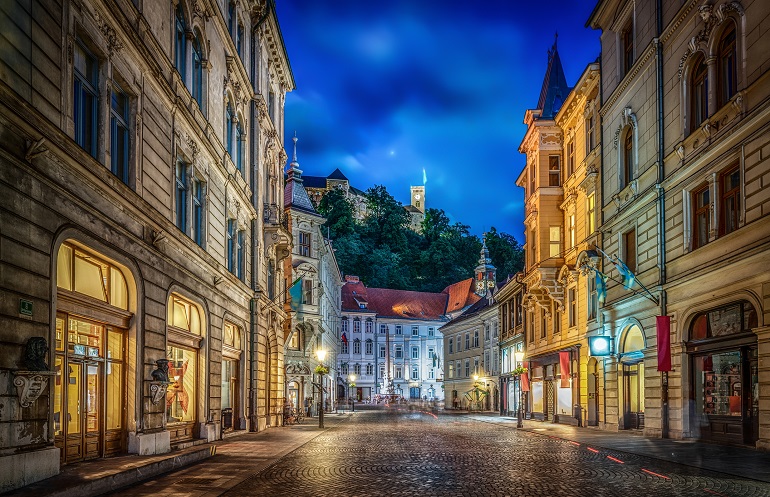
Ljubljana, the capital and largest city of Slovenia, is a charming European destination nestled between the Alps and the Karst region. With a population of approximately 300,000, this compact city offers a blend of historical and modern attractions. Located along an ancient trade route, Ljubljana boasts a rich history dating back to Roman times, with influences from various cultures including Slavic, Habsburg, and Yugoslav. The city centre, largely pedestrianised, is dominated by the medieval Ljubljana Castle perched atop a hill, offering panoramic views. The Ljubljanica River meanders through the heart of the city, lined with cafes and bordered by picturesque bridges, including the iconic Triple Bridge. Ljubljana's architecture showcases a mix of styles, from Baroque and Art Nouveau to the distinctive designs of local architect Jože Plečnik. As the political, economic, and cultural hub of Slovenia, Ljubljana provides visitors with a wealth of museums, galleries, and cultural events, all within a walkable and bike-friendly urban environment.
Interesting Facts about Ljubljana
- Ljubljana is home to one of the oldest philharmonic orchestras in the world.
- The city's iconic symbol is the dragon, which adorns the famous Dragon Bridge.
- Ljubljana was declared the European Green Capital in 2016 due to its sustainable initiatives.
- The Ljubljanica River, which runs through the city, has seven different names along its course.
- Ljubljana Castle, dating back to the 11th century, offers panoramic views of the city.
- The city hosts over 10,000 cultural events annually, including the renowned Ljubljana Festival.
- Ljubljana's Central Market is a food lover's paradise, featuring local produce and gourmet street food.
- The city's architecture was significantly influenced by a major earthquake in 1895.
- Ljubljana is home to a unique 'Mleklomat', a vending machine that dispenses fresh milk.
- The city features a cat café where visitors can enjoy coffee in the company of feline friends.
History
Ljubljana, the enchanting capital of Slovenia, boasts a rich history dating back millennia. The first known settlement in the area existed around 2000 BC on the Ljubljana Marsh, where people lived in wooden dwellings built on stilts. The city's recorded history began in earnest during the Roman era when a military camp was established, which later evolved into the Roman city of Emona. Throughout the centuries, Ljubljana flourished under various rulers, including the Habsburgs, who made it the capital of the Province of Carniola in 1335.
The medieval period saw Ljubljana grow rapidly, with the town consisting of three cores: Old Square, Town Square, and New Square. In 1220, Ljubljana was granted city rights, including the right to mint its own currency. The city's prominence continued to increase, and in 1461, the Ljubljana Diocese was established, elevating the Church of St. Nicholas to cathedral status. Ljubljana's strategic location and numerous trade privileges attracted merchants and craftsmen from across Europe, contributing to its economic and cultural development.
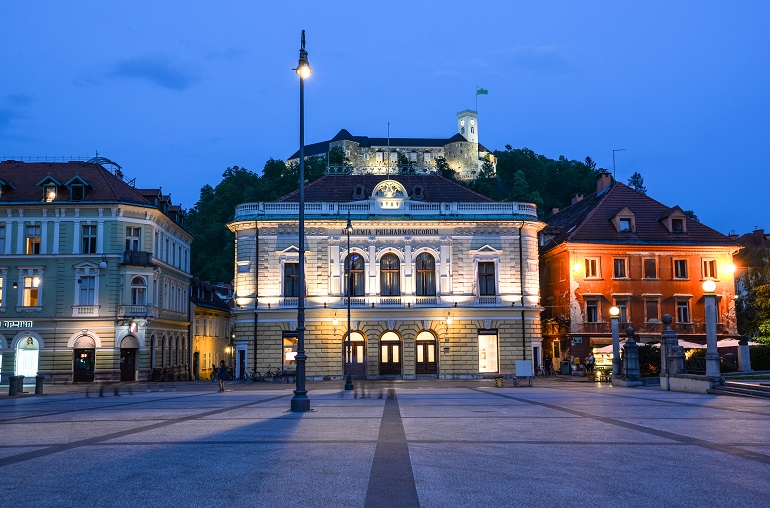
The 18th and 19th centuries brought significant changes to Ljubljana. The city saw the establishment of important cultural institutions such as the Academia Philharmonicorum in 1701 and the University of Ljubljana in 1919. Ljubljana also underwent substantial urban development, with the introduction of gas lighting in 1861 and the construction of its first skyscraper, Nebotičnik, in 1933. Despite facing challenges such as earthquakes, sieges, and occupations throughout its history, Ljubljana has emerged as a vibrant, modern city that seamlessly blends its rich past with contemporary culture, making it a captivating destination for travellers.
Main Attractions
Ljubljana Castle
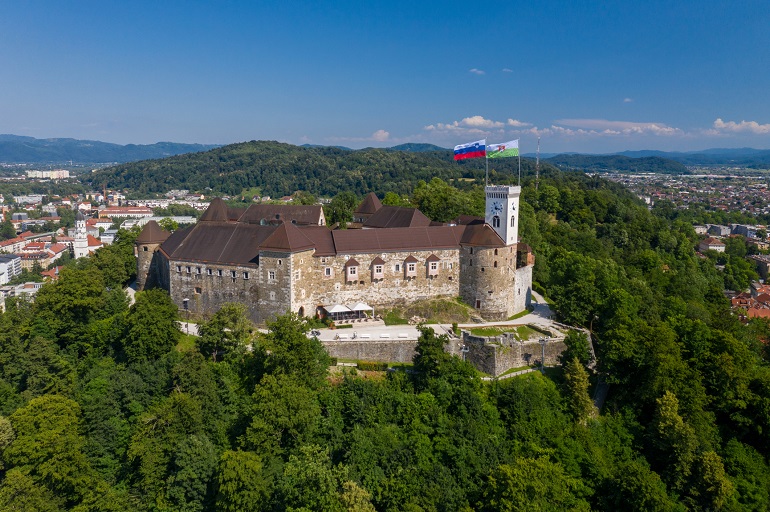
Ljubljana Castle, perched atop Castle Hill, is a medieval fortress that offers panoramic views of the city. The castle's history dates back to the 11th century, though most of the current structures were built in the 15th century. Visitors can explore the Outlook Tower, which provides a 360-degree view of Ljubljana and its surroundings. The castle complex includes St. George's Chapel, a 15th-century Gothic chapel adorned with frescoes and coats of arms. The Archers' Tower and Erazem's Tower are other notable structures within the castle grounds. The castle also houses several exhibition halls and spaces for cultural events, making it a hub for both historical exploration and contemporary culture. Access to the castle is available via a funicular railway or a 10-minute hike up Castle Hill.
Prešeren Square
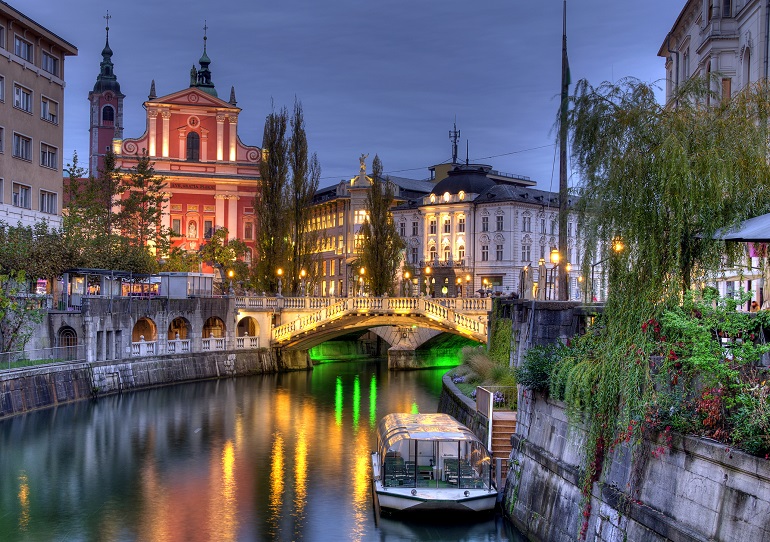
Prešeren Square, located in the heart of Ljubljana, serves as the city's central square and a popular meeting point. The square is named after Dr. France Prešeren, Slovenia's greatest poet, whose bronze statue stands at its centre. The statue, created by sculptor Ivan Zajec, was unveiled in 1905 and depicts Prešeren alongside a muse. The square is flanked by several significant buildings, including the pink-façaded Franciscan Church of the Annunciation, built in the 17th century. Notable Art Nouveau buildings such as the Hauptmann House and Centromerkur add to the square's architectural diversity. The Triple Bridge, designed by architect Jože Plečnik, connects the square to the Old Town across the Ljubljanica River. The square also features the oldest chestnut tree in the city, a living monument to Ljubljana's natural heritage. Since its pedestrianisation in 2007, Prešeren Square has become an even more popular gathering spot for locals and tourists alike.
Dragon Bridge
The Dragon Bridge, constructed in 1901, is one of Ljubljana's most distinctive landmarks. The bridge is renowned for its four imposing copper dragons that flank its corners, giving it its name and iconic status. These dragons are not merely decorative; they are tied to Ljubljana's mythological history and are considered guardians of the city. The bridge's design reflects the Art Nouveau style popular at the turn of the 20th century, showcasing the industrial aesthetics of the era. Notably, the Dragon Bridge was one of the first reinforced concrete structures in Europe, marking a significant advancement in bridge construction techniques. The bridge spans the Ljubljanica River and serves as both a functional crossing and a popular tourist attraction. Its location near the Central Market makes it a focal point for visitors exploring the city centre.
Central Market
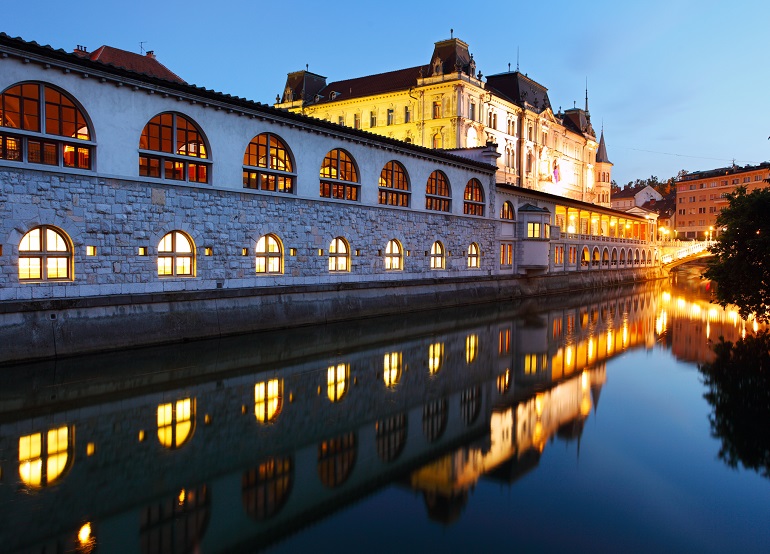
Ljubljana's Central Market is a vibrant hub for local produce and goods, embodying the city's culinary and cultural essence. The market complex was designed by the renowned Slovenian architect Jože Plečnik and comprises several distinct areas. The covered market features four arcades and a colonnade, providing shelter for vendors and shoppers alike. The indoor marketplace is housed in the seminary building, offering a range of products from fresh produce to artisanal goods. The outdoor market extends across Vodnikov trg, Pogačarjev trg, and Dolničarjeva ulica, creating a lively atmosphere especially on weekends. Here, visitors can find an array of local fruits, vegetables, cheeses, meats, and flowers. The market also hosts special events throughout the year, including food festivals and seasonal celebrations. Operating hours vary by season and location, but generally, the market is bustling from early morning to late afternoon, particularly on Saturdays.
Congress Square
Congress Square (Kongresni trg) is a central square with significant historical and cultural importance. The square dates back to 1821 and has been a site of many important events in Ljubljana's history. At its centre lies Star Park (Park Zvezda), a green space designed in the shape of a star. The square is surrounded by several notable buildings, including the University of Ljubljana's main building, which adds to the area's academic atmosphere. The Slovenian Philharmonic building, with its neoclassical façade, stands as a testament to the city's rich musical heritage. Other architectural points of interest include a well-preserved Biedermeier house and the classicist "Kazina" building, which once served as a social hub for Ljubljana's elite. From the square, visitors can enjoy a clear view of Ljubljana Castle perched on the hill above the city. In 2021, Congress Square, along with other works by Jože Plečnik in Ljubljana, was added to the UNESCO World Heritage List, recognising its cultural and historical significance.
Nebotičnik Skyscraper
The Nebotičnik skyscraper, built in 1933, was once the tallest residential building in Europe and remains an iconic part of Ljubljana's skyline. Standing at 70.35 metres high, the 13-storey building was designed by architect Vladimir Šubic. The skyscraper's construction marked a significant milestone in Ljubljana's urban development, symbolising the city's modernisation in the interwar period. The building's design incorporates elements of Art Deco and Neoclassical styles, making it a unique architectural landmark. The ground floor and first storey house various shops, while floors two to five are dedicated to office spaces. Private residences occupy floors six to nine, maintaining the building's original mixed-use concept. One of Nebotičnik's main attractions is its top three floors, which offer a café, bar, and observation deck. From here, visitors can enjoy panoramic views of Ljubljana, including the castle, the old town, and the distant Alps on clear days. The skyscraper's rooftop terrace is particularly popular during summer evenings, offering a unique vantage point for watching the sunset over the city.
Metelkova
Metelkova is an autonomous social and cultural centre located in the heart of Ljubljana, occupying the site of former military barracks. This alternative cultural hub came into existence in September 1993 when a group of artists and activists squatted the abandoned barracks to prevent their demolition. Today, Metelkova spans seven buildings covering an area of 12,500 square metres, each with its own distinct character and purpose. The entire complex is a vibrant canvas of street art, with colourful murals, sculptures, and various art installations adorning every available surface. This ever-changing outdoor gallery reflects the creative spirit of the community that calls Metelkova home. The area is particularly known for its music scene, housing several clubs and venues that cater to alternative and underground music genres. These spaces host regular concerts, DJ nights, and cultural events, attracting both locals and tourists interested in Ljubljana's alternative culture. Beyond music, Metelkova is home to artist studios, galleries, and workshops fostering a diverse creative community. The complex also includes LGBT-friendly spaces and hosts various social and political events, embodying its roots as a centre for counterculture and activism.
The Ljubljanica River
The Ljubljanica River is often referred to as "the river with seven names" due to its changing appellations along its course. It is a central feature of Ljubljana's urban landscape as it winds through the city centre with banks lined by willows and poplars creating picturesque scenery. Several bridges span the Ljubljanica River; among them is the Cobblers' Bridge (Čevljarski most), designed by Jože Plečnik with elegant balustrades and lanterns that make it stand out. Plečnik also designed terraced stone steps along the riverbanks that lead down to the water creating inviting public spaces for relaxation or social gatherings. These areas are particularly lively during summer when outdoor cafes line both sides offering scenic views alongside refreshments. Boat tours operating on Ljubljanica provide visitors with unique perspectives on landmarks like Dragon Bridge or Triple Bridge while gliding through calm waters.
Top Museums
National Museums
National Museum of Slovenia
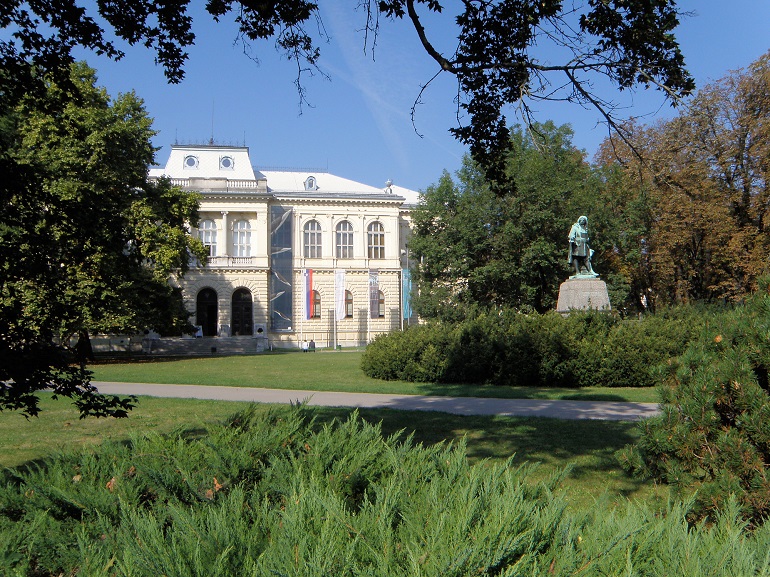
The National Museum of Slovenia, established in 1821, is the country's oldest and most prestigious museum. Housed in a stunning neo-Renaissance palace, it offers visitors a comprehensive journey through Slovenia's rich history.
Key Exhibits:
- The Neanderthal Flute: This 60,000-year-old bone fragment, discovered in the Divje Babe cave, is believed to be the world's oldest musical instrument.
- The Vače Situla: A beautifully preserved bronze vessel from the 5th century BC, adorned with intricate reliefs depicting daily life and rituals of the time.
- Roman Artefacts: An extensive collection of items from the Roman city of Emona, including jewellery, tools, and household items.
- Egyptian Mummy: The only ancient Egyptian mummy in Slovenia, complete with a decorated sarcophagus.
- Numismatic Collection: A vast array of coins and medals spanning from antiquity to modern times.
The museum also features temporary exhibitions that delve into specific aspects of Slovenian and European history.
National Gallery
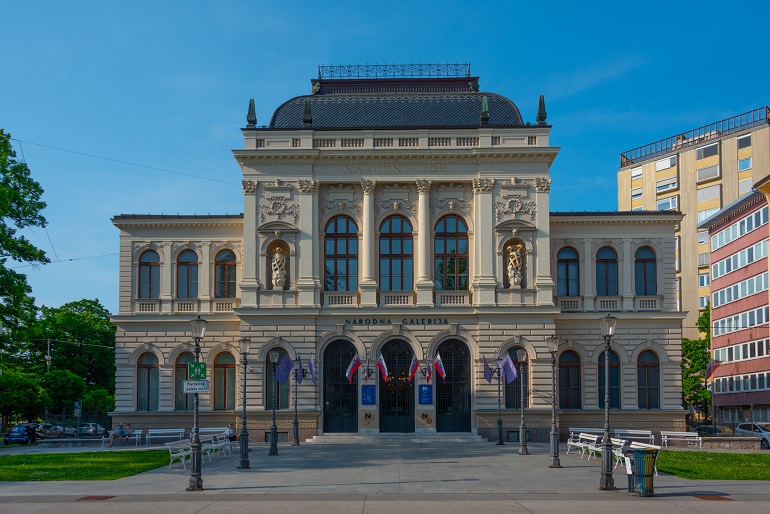
The National Gallery, Slovenia's premier art institution, was founded in 1918 and is housed in a magnificent building that combines 19th-century architecture with modern extensions.
Notable Collections:
- Medieval Art: A significant collection of Gothic frescoes and wooden sculptures from Slovenian churches.
- Baroque Masterpieces: Works by Italian and Slovenian Baroque painters, including Fortunat Bergant and Anton Cebej.
- 19th Century Realism: Paintings by Ivana Kobilca, Jurij Šubic, and Jožef Petkovšek, showcasing Slovenian life and landscapes.
- Impressionist Gallery: Features works by the "Four Giants of Slovenian Impressionism" - Ivan Grohar, Rihard Jakopič, Matija Jama, and Matej Sternen.
- Zoran Mušič Collection: A dedicated space for the internationally renowned Slovenian painter.
The gallery also hosts regular temporary exhibitions, often featuring international artists and movements.
City Museums
City Museum of Ljubljana
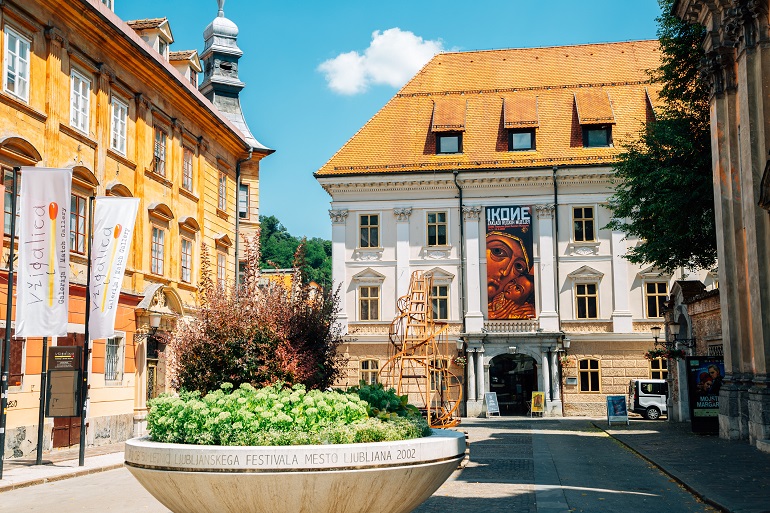
Situated in the Auersperg Palace, the City Museum offers a captivating journey through Ljubljana's history, from prehistoric times to the present day.
Highlights:
- The Ljubljana Wheel: The world's oldest wooden wheel with an axle, dating back over 5,200 years.
- Roman Emona: A detailed model of the ancient Roman city, along with artefacts from daily life.
- Medieval Ljubljana: Exhibits showcasing the city's growth and development during the Middle Ages.
- 20th Century History: Displays on Ljubljana's experiences during World Wars I and II, and under socialist Yugoslavia.
The museum also features an innovative "Time Machine" exhibit, allowing visitors to experience different periods of Ljubljana's history through virtual reality.
Art Museums
Museum of Modern Art
Designed by Edvard Ravnikar, a student of the famous architect Jože Plečnik, this museum is dedicated to 20th and 21st-century Slovenian and international art.
Key Collections:
- Slovenian Impressionism: Works by Ivan Grohar, Rihard Jakopič, and others.
- Avant-garde Art: Pieces by the New Objectivity and Constructivist movements.
- Post-War Art: Abstract expressionism, informel, and neo-constructivist works.
- Contemporary Art: Installations, video art, and multimedia pieces by current Slovenian artists.
The museum also houses a significant collection of photographs and graphic art.
Museum of Contemporary Art Metelkova
Located in a former military barracks, this museum focuses on contemporary art from the 1960s onwards.
Notable Features:
- Arteast 2000+ Collection: An internationally significant collection of Eastern European avant-garde art.
- Slovenian Contemporary Art: Works by influential artists like Marko Pogačnik and OHO Group.
- International Artists: Pieces by Marina Abramović, Anish Kapoor, and Kazimir Malevič.
- New Media Art: A growing collection of digital and interactive artworks.
The museum regularly hosts cutting-edge temporary exhibitions and performances.
Cultural Museums
Ethnographic Museum of Slovenia
This museum offers a fascinating look into Slovenian folk culture and traditions, as well as cultures from around the world.
Key Exhibits:
- Traditional Costumes: A vast collection of Slovenian regional dress and textiles.
- Rural Life: Reconstructions of traditional Slovenian homesteads and farming implements.
- Non-European Collections: Artefacts from Africa, Asia, and the Americas, collected by Slovenian missionaries and travellers.
- Intangible Heritage: Displays on Slovenian customs, music, and oral traditions.
The museum also offers interactive workshops where visitors can try their hand at traditional crafts.
Museum of Architecture and Design
Housed in the Renaissance Fužine Castle, this museum celebrates Slovenian and international achievements in architecture, industrial design, and graphic design.
Highlights:
- Plečnik Collection: Drawings and models by Slovenia's most famous architect, Jože Plečnik.
- Slovenian Design: A comprehensive collection of industrial design from the 20th century to today.
- Architectural Models: Scale models of significant Slovenian buildings and unrealised projects.
- Graphic Design Archive: Posters, packaging, and typography from the early 20th century onwards.
The museum hosts the Biennial of Design (BIO), one of the oldest design events in Europe.
Interactive Museums
House of Illusions
This interactive museum offers a playful exploration of optical illusions, perception, and the science of vision.
Popular Attractions:
- Ames Room: A distorted room that creates the illusion of people shrinking or growing.
- Vortex Tunnel: A rotating cylinder that challenges visitors' sense of balance.
- Hologram Room: A collection of fascinating holographic images.
- Infinity Room: Mirrors create the illusion of endless space.
- Upside-Down Room: A fully furnished room where everything is inverted.
The museum also features puzzles and brain-teasers that challenge visitors' problem-solving skills.
Biographical Museums
Plečnik House
Dedicated to Slovenia's most famous architect, Jože Plečnik, this museum is located in the house where he lived and worked for nearly five decades.
Key Features:
- Plečnik's Studio: Preserved as it was during his lifetime, complete with drawing tools and personal effects.
- Winter Garden: A beautiful conservatory designed by Plečnik himself.
- Model Room: Scale models of Plečnik's most famous buildings in Ljubljana, Prague, and Vienna.
- Personal Library: Plečnik's extensive collection of books on architecture and design.
The museum also offers guided tours of Plečnik's Ljubljana, allowing visitors to see his architectural legacy throughout the city.
Science Museums
Slovenian Museum of Natural History
As the country's oldest cultural and scientific institution, this museum offers a comprehensive look at Slovenia's flora, fauna, and geological history.
Notable Exhibits:
- Dinosaur Fossils: Including a nearly complete skeleton of a Mammoth.
- Minerals and Rocks: An extensive collection showcasing Slovenia's geological diversity.
- Human Fish: Live specimens of the rare Proteus anguinus, an endemic cave-dwelling amphibian.
- Botanical Collection: Herbarium specimens dating back to the 18th century.
The museum also features interactive displays on ecology and conservation efforts in Slovenia.
Speciality Museums
Railway Museum
Located in the former engine shed of Ljubljana's main railway station, this museum celebrates Slovenia's rich railway heritage.
Key Attractions:
- Vintage Locomotives: A collection of steam, diesel, and electric locomotives from different eras.
- Royal Carriage: The luxurious personal train car of Yugoslav President Tito.
- Model Railway: An extensive miniature railway layout depicting Slovenian landscapes.
- Signal Box: A preserved early 20th-century signal box, demonstrating railway operations.
The museum occasionally offers rides on restored vintage trains, providing a unique experience for visitors.
Local Cuisine
Ljubljana's culinary scene offers a delightful blend of traditional Slovenian flavours and modern interpretations. Visitors can savour iconic dishes such as štruklji, boiled or baked dough rolls with various sweet or savoury fillings, and potica, a festive yeast-dough cake with numerous filling options like tarragon or walnut. The city's vibrant food culture comes alive at the Open Kitchen (Odprta Kuhna) street food market, where one can sample an array of local specialities and international cuisines. Traditional restaurants, known as "gostilna", serve authentic Slovenian fare, including hearty dishes like jota, a cabbage stew, and žlikrofi, a type of dumpling. For a quick bite, try the famous Carniolan sausage (Kranjska klobasa), a protected Slovenian delicacy. Don't miss the opportunity to pair these delectable dishes with locally produced wines, including the unique orange wine that has gained popularity in recent years.
Shopping
Ljubljana boasts a variety of shopping options to suit different tastes and budgets. The city centre features popular shopping streets like Slovenska cesta, where locals frequent bookstores, record shops, and international brand outlets. For a more traditional experience, the Central Market in the Old Town is open Monday to Saturday, offering fresh produce, local crafts, and souvenirs. Modern shopping centres such as BTC City, located 5 km from the centre, house hundreds of shops, restaurants, and entertainment facilities. The Nama department store and Maximarket in the city centre provide a range of goods from clothing to homeware. For unique finds, the Sunday flea market on Cankarjevo nabrezje sells trinkets and jewellery, while the ARTish Market, held on Saturdays from April to October, showcases products from Slovenian artists and creators.
Nature in and around Ljubljana
Ljubljana and its surroundings are rich in natural attractions, making it an ideal destination for outdoor enthusiasts. Within the city, Tivoli Park offers expansive green spaces and forest trails, providing a peaceful retreat from urban life. Just outside the city, Šmarna Gora, a popular hill, presents hiking opportunities with panoramic views of the region. The area is also home to the stunning Postojna Cave, known for its impressive stalagmites and unique underground ecosystem, and the Predjama Castle, dramatically situated against a cliff. For those seeking water activities, the Ljubljanica River allows for paddleboarding and kayaking right through the city centre, while nearby Lake Bled is famous for its picturesque scenery and recreational options such as rowing and hiking.
Tivoli Park
Tivoli Park is Ljubljana's largest green space, stretching from the city centre towards the outskirts. The park was initially designed in 1813 by French engineer Jean Blanchard, who created it as a place for recreation and relaxation for Ljubljana's residents. The park has evolved over the years with various additions enhancing its appeal. In 1880, a fish pond was added, providing a tranquil spot for visitors. The park also features a small botanical garden with a glasshouse showcasing a variety of plant species. One of the park's highlights is the Jakopič Promenade designed by architect Jože Plečnik. This tree-lined walkway serves as an outdoor gallery and a popular spot for leisurely strolls. Tivoli Park's extensive network of walking trails extends to Rožnik Hill offering opportunities for more challenging hikes and nature exploration. The park is home to numerous sculptures, fountains, and recreational facilities making it a versatile space for various activities from picnicking to sports.
Ljubljana Botanical Garden
The Ljubljana Botanical Garden was established in 1810 making it Slovenia’s oldest continuously operating scientific institution focused on botany education & conservation efforts alike! Located near Tivoli Park spanning approximately two hectares featuring over four thousand plant species including endemic Slovenian flora tropical/subtropical varieties housed inside glasshouses alongside systematic fields arranged based upon evolutionary relationships between plants themselves! Highlights include tropical glasshouses allowing year-round exploration exotic specimens seed banks preserving rare/endangered species educational programs/workshops/guided tours held throughout seasons ensuring visitors leave inspired by nature’s beauty interwoven w/ modern scientific understanding!
Getting There & Around
Ljubljana is easily accessible by various modes of transport. The city's main gateway, Ljubljana Jože Pučnik Airport, is situated just 26 kilometres north of the city centre, offering a convenient 20-minute drive. Travellers can choose from several transfer options, including shuttle services, taxis, and car hire. For those preferring public transport, a regular bus route connects the airport to Ljubljana's Central Bus Station. If you're arriving by train, Ljubljana's railway station is well-connected to major European cities, making it a popular choice for rail enthusiasts. The city is also readily reachable by car, with excellent motorway connections from neighbouring countries. Once in Ljubljana, visitors can take advantage of the efficient public transport system, including buses and the BicikeLJ bicycle-sharing scheme, to explore the city's delightful attractions.
Best Time to Visit
The best time to visit Ljubljana largely depends on your preferences. For warm weather, June, July, and August are ideal, with temperatures often reaching up to 30°C, making them perfect for outdoor events and festivals. However, these months attract larger crowds and higher prices. Alternatively, spring (April to May) and autumn (September to October) offer pleasant temperatures and fewer tourists, making them excellent choices for those seeking a more relaxed atmosphere. September is particularly appealing, with stable weather and vibrant autumn foliage, while May brings blooming gardens and green spaces. If you prefer a festive atmosphere, December's Christmas market is a delightful experience, despite the colder weather. Overall, visiting during the shoulder season provides a great balance of weather and crowd levels.