


 Belgium Guide
 Luxembourg Guide
| Contents |
|---|

Introduction
Leiden, located 40 kilometres from Amsterdam and 20 kilometres from The Hague in South Holland, is a historic university city with a population of 127,046. The birthplace of Rembrandt houses the oldest university in the Netherlands, 13 museums, and more than 35 courtyard gardens across its well-preserved 17th-century centre. The city's extensive network of 28 kilometres of canals, along with numerous monuments, bridges, and city gates, makes it the second-largest historical centre after Amsterdam. Known as the 'City of Discoveries' due to its significant contributions to medical science and research at the Leiden Bio Science Park, the city continues its legacy of innovation that began with the founding of its university and the establishment of the medicinal gardens at the Hortus botanicus.
Interesting Facts about Leiden
- Leiden is home to the Netherlands' oldest university, founded in 1575 by William of Orange as a reward for the city's resistance against Spanish siege.
- The revolutionary Leyden jar, an early electrical capacitor, was invented in Leiden by Pieter van Musschenbroek in 1746.
- Heike Kamerlingh Onnes achieved the first liquefaction of helium in Leiden in 1908, earning a Nobel Prize in Physics.
- Every 3 October, Leiden celebrates its relief from Spanish siege in 1574 with a festival featuring haring and white bread, echoing rations given to starving citizens.
- Rembrandt van Rijn, considered one of history's greatest painters, was born in Leiden in 1606.
- The Hortus Botanicus Leiden, established in 1590, is one of the world's oldest botanical gardens and introduced the first Dutch tulip.
- Leiden's 17th-century city centre remains remarkably preserved due to economic stagnation that limited new construction for 200 years.
- The city boasts over 110 wall poems displayed on buildings in various languages through its unique 'Wall Poems' project.
- Leiden's Burcht van Leiden is an 11th-century hilltop fortress offering panoramic views of the city's signature canals and rooftops.
- The National Museum of Antiquities in Leiden houses the Netherlands' largest collection of Egyptian artefacts and ancient Roman mosaics.
History
In Roman times, Leiden's suburb of Katwijk was the town of Lugdunum Batavorum, built during the reign of Emperor Claudius (41-54). Leiden was then the site of a smaller settlement called Matilo, which developed into a fortress in the 4th century. Both places were built on the Old Rhine (most of the river was diverted to the south in medieval times), the river forming the northern border of the Roman Empire.
The first medieval mention of Leiden was under the name of Leithon in 860. Originally under the control of the Bishopric of Utrecht, Leiden was annexed to the County of Holland in 1100.
Leiden was sacked in 1047 by Holy Roman Emperor Henry III. In the early 13th century, Ada, Countess of Holland, took refuge here during the civil war against her uncle, William I, Count of Holland. William besieged the stronghold and eventually captured Ada.
Leiden was granted a municipal charter of rights in 1266. By 1389, its population had grown to about 4000 inhabitants.
In 1420, in the heat of the Hook and Cod wars (1350-1490) fought over the title of count of Holland, the armies of Duke John of Bavaria attacked the fortifications surrounding Leiden. After a two-month siege, the city fell and Burgrave Philip of Wassenaar was stripped of his nobility and imprisoned.
Leiden prospered in the 16th and 17th centuries thanks to the weaving industry. It also became an important printing and publishing centre, notably with Christophe Plantin (c. 1520-1589), an influential French Renaissance humanist and printer, who set up shop in Antwerp and temporarily also in Leiden.
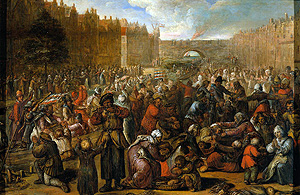
1572 saw the revolt against Spanish rule, as part of the Eighty Years' War (1568-1648). Leiden was (in)famously besieged by the Duke of Alba for six months, so that the inhabitants had to open the dikes and flood their own city to permit allied ships to bring them provisions. This episode is known as the Relief of Leiden (see picture on the right).
As a reward for their heroic defence, Stadholder William the Silent (William I of Orange-Nassau) offered the citizens a choice between founding a university or partial tax exemption. They chose the university, which opened its doors in 1575.
In the early years of the 17th century, a religious congregation known as the Pilgrims fled the persecutions in their native East Midlands of England for the relative calm and religious tolerance of the Netherlands. They settled for a few years in Leiden, then embarked on their journey aboard the Mayflower, and went on to found the colony of Plymouth in 1620, the second successful English settlement in what was to become the USA.
During most of the 17th century, Spanish rule in the Southern Netherlands (modern Belgium) caused many Flemish weavers to seek refuge in Dutch cities, such as Leiden. While the city had lost about a third of its 15,000 citizens during the siege of 1574, it quickly recovered (partly due to Flemish immigrants) to 45,000 inhabitants in 1622, and may have come near to 70,000 circa 1670. During the Dutch Golden Era, Leiden was the second largest city of Holland, after Amsterdam.
The 17th century was also the time of the great painter Rembrandt van Rijn (1606-1669), who was born in Leiden and attended its university, before moving to Amsterdam in 1631.
The 18th and 19th century witnessed the gradual decline of the cloth industry. Leiden's population shrank to 30,000 around 1800. On 12 January 1807, a catastrophe struck the city when a boat loaded with 17,400 kg of gunpowder blew up in the middle of Leiden. 151 persons were killed, over 2000 were injured and some 220 homes were destroyed.
Leiden was connected to the railway in 1842. It is also here that the present Constitution of the Netherlands was single-handedly drafted by Johan Rudolf Thorbecke (1798-1872) in April 1848.
Main Attractions
Historical Landmarks
The Burcht van Leiden stands as one of the city's most distinctive landmarks. This circular fortification, constructed in the 11th century, sits atop an artificial hill rising 12 metres above street level. Visitors can climb to the top via three gates, one of which features the city's coat of arms with a proud lion. The castle's walls offer a sentry walk providing panoramic views of the historic centre, particularly striking at sunset. While the interior is not accessible, the courtyard and walls are open daily without charge.
The Pieterskerk, a magnificent example of Late Gothic architecture, dominates the city centre. This former Catholic church, dating back to the 1300s, has witnessed numerous historical events, including the signing of documents by the Pilgrim Fathers. The building features impressive vaulted ceilings, ancient tombstones, and remarkable stained glass windows. Today, it functions as an events venue, hosting concerts and exhibitions. Adult entry costs €5, while children under 12 enter free. Guided tours are available on request.
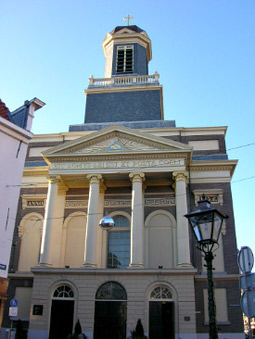
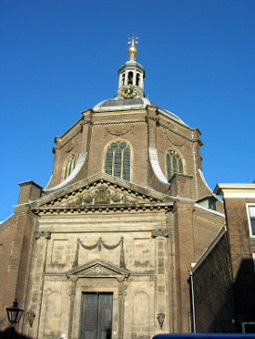
The distinctive Marekerk, with its octagonal design and prominent dome, represents a unique example of Protestant church architecture. Built in 1649, it was the first purpose-built Protestant church in Leiden. The building's excellent acoustics make it a popular venue for classical concerts. The on-site café offers a peaceful retreat in historical surroundings. Regular worship services still take place on Sundays.
Traditional Dutch Heritage
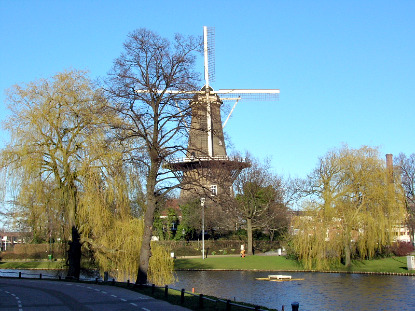
Molen De Valk represents Leiden's milling heritage. This tower mill, built in 1743, rises seven stories high and remains the last surviving windmill within the city walls. While the machinery is no longer operational, visitors can explore multiple floors showcasing milling equipment and living quarters furnished in traditional Dutch style. The viewing gallery offers extensive city views. Opening hours are Tuesday to Saturday 10:00-17:00 and Sunday 13:00-17:00.
Other Notable Sites
Leiden's canal system forms an integral part of the city's charm. The two main branches of the Old Rhine river flow through the centre, complemented by numerous smaller waterways. Boat tours, departing regularly from the Beestenmarkt, typically last 50 minutes and provide historical commentary in multiple languages. Evening tours offer a different perspective, with illuminated bridges and historic buildings creating atmospheric reflections on the water.
The city's hofjes (almshouse courtyards) represent a unique architectural feature. These hidden gardens, surrounded by small houses, originally provided accommodation for elderly women. Leiden contains 35 hofjes, many dating from the 16th and 17th centuries. While some remain private, several welcome visitors during daylight hours. The most accessible include the Hofje Meermansburg and the Leiden Hofje van Nood Gods, both featuring well-maintained gardens and historic architecture.
The Wall Poems project, initiated in 1992, has transformed city walls into an outdoor poetry anthology. Over 100 poems in various languages and scripts appear throughout the historic centre, reflecting Leiden's international character and literary heritage. Free maps marking poem locations are available from the tourist office, allowing visitors to create their own poetry walking tour. The poems range from ancient Greek verses to contemporary works, each carefully chosen to reflect its location.
The city's street markets add vibrancy to the historic setting. The Wednesday and Saturday general markets on the Nieuwe Rijn feature local produce, flowers, and traditional Dutch foods. The weekly book market, held on Wednesdays near the university library, offers both antiquarian and contemporary volumes, reflecting Leiden's scholarly tradition.
Top Museums
Rijksmuseum Boerhaave
The Rijksmuseum Boerhaave is a testament to human ingenuity and scientific progress. Dedicated to the history of science and medicine, it showcases a remarkable collection of historical instruments and artefacts that chart the evolution of scientific thought. The museum’s collection spans five centuries, from the Renaissance to the modern era, and is curated in collaboration with contemporary scientists, ensuring its relevance and accuracy. Visitors can delve into 25 thematic rooms, each dedicated to a specific scientific discipline, featuring everything from meticulously crafted lenses and prisms used in early optical experiments to intricate anatomical models and medical instruments. One can explore the development of physics through historical experiments, trace the progress of medicine through antique surgical tools, or marvel at astronomical instruments used to chart the cosmos. Noteworthy exhibits include early microscopes, astrolabes, and other scientific apparatus, offering tangible connections to the great minds who shaped our understanding of the world. The museum aims not only to preserve these historical treasures but also to make science accessible and engaging for a broad audience.
Museum De Lakenhal
Housed in a stunning 17th-century building that once served as the city's cloth hall, Museum De Lakenhal is Leiden's premier art museum and a cornerstone of the city's cultural identity. It boasts an impressive collection of fine art, with a particular emphasis on works from the Dutch Golden Age, a period of unparalleled artistic flourishing in the Netherlands. The museum showcases paintings by renowned masters such as Rembrandt van Rijn, who was born and raised in Leiden, Lucas van Leyden, a pivotal figure in the Northern Renaissance, and Theo van Doesburg, a pioneer of the De Stijl movement. Beyond its collection of paintings, Museum De Lakenhal also offers insights into Leiden's rich history as a centre of trade, craftsmanship, and intellectual life. The museum's diverse collection includes sculptures, ceramics, silverwork, and historical artefacts, providing a comprehensive overview of Leiden's cultural heritage. The museum also hosts temporary exhibitions, showcasing the work of contemporary artists and exploring themes related to Leiden's history and culture.
Rijksmuseum van Oudheden (National Museum of Antiquities)
The Rijksmuseum van Oudheden, or National Museum of Antiquities, serves as the national centre for archaeology in the Netherlands, safeguarding and interpreting the nation's rich archaeological heritage. The museum offers visitors a fascinating journey through ancient civilisations, spanning from Egypt and the Near East to the classical world of Greece and Rome, and the early history of the Netherlands. One of the museum's most impressive and iconic exhibits is a complete Egyptian temple, transported stone by stone from Egypt and reconstructed within the museum. Visitors can also explore a vast collection of Egyptian mummies, sarcophagi, and other artefacts, gaining insights into the religion, daily life, and artistic achievements of ancient Egypt. The museum's Near Eastern collection features artefacts from Mesopotamia, including cuneiform tablets and monumental sculptures, while the classical collection includes sculptures, pottery, and jewellery from ancient Greece and Rome. The section dedicated to the early Netherlands showcases archaeological finds from prehistoric times to the Roman era, revealing the history of the region and its inhabitants. The museum is dedicated to conducting archaeological research and educating the public about the importance of preserving archaeological heritage.
Naturalis Biodiversity Center
Naturalis is more than just a museum; it's a cutting-edge research institute and a dynamic centre for exploring the wonders of nature. As a natural history and biodiversity museum, Naturalis focuses on showcasing the incredible diversity of life on Earth, from microscopic organisms to towering dinosaurs. It houses a vast collection of specimens, including fossils, skeletons, insects, plants, and minerals, carefully preserved and studied by scientists. The museum's interactive exhibits are designed to engage visitors of all ages, offering hands-on experiences and immersive displays that explore various aspects of biodiversity, evolution, and ecology. One of the museum's main attractions is a remarkably well-preserved Tyrannosaurus rex skeleton, nicknamed "Trix," which has captivated visitors since its arrival. Naturalis is not only a museum but also a leading research institution, with scientists conducting research on biodiversity, evolution, and conservation. The museum's research activities inform its exhibits and educational programs, making it a valuable resource for both the scientific community and the general public.
Japan Museum SieboldHuis
The Japan Museum SieboldHuis offers a unique glimpse into 19th-century Japan through the eyes of Philipp Franz von Siebold, a German physician and naturalist who lived and worked in Japan during the early 19th century. The museum showcases the beautiful Japanese artefacts collected by Siebold during his stay in Japan, providing a fascinating insight into Japanese culture, art, and science during a period of significant change. Visitors can explore a wide range of items, including meticulously crafted maps, exquisite works of art, everyday utensils, fascinating botanical specimens, and geological samples, all displayed within a historic Dutch building that once served as Siebold's home. The museum's collection reflects Siebold's diverse interests, from Japanese flora and fauna to Japanese history, art, and medicine. The museum also hosts temporary exhibitions, showcasing contemporary Japanese art and exploring themes related to Japanese culture.
Leiden American Pilgrim Museum
Nestled within a beautifully preserved 14th-century house, the Leiden American Pilgrim Museum offers a poignant and intimate glimpse into the lives of the Pilgrims who sought refuge in Leiden before their momentous journey to America. The museum tells the story of the Pilgrim community in Leiden, highlighting their struggles, beliefs, and contributions to the city's cultural landscape. Visitors can explore period furniture, books, maps, and other artefacts that offer tangible connections to the Pilgrim experience in Leiden. The museum provides a nuanced portrayal of the Pilgrims' time in Leiden, emphasizing both their integration into Dutch society and their distinct cultural identity.
De Valk Windmill Museum
De Valk Windmill Museum offers a unique opportunity to step inside a working Dutch windmill and explore the intricate machinery and rich history of this iconic symbol of the Netherlands. This authentic tower windmill, dating back to 1743, has been meticulously preserved and transformed into a fascinating museum. Visitors can ascend through the windmill's seven floors, learning about the milling process, the role of windmills in Dutch history, and the lives of the millers who operated them. The museum offers panoramic views of Leiden from the top of the windmill, providing a breathtaking perspective on the city's landscape.
Hortus Botanicus Leiden
While not strictly a museum in the traditional sense, the Hortus Botanicus Leiden, the oldest botanical garden in the Netherlands, is a living museum of plant diversity and a valuable resource for botanical research and education. The garden houses a vast collection of plants from Southeast and East Asia, Southern Europe, and South Africa, as well as plants from other regions around the world. Visitors can explore a variety of themed gardens, including a Japanese garden, a Chinese garden, and a medicinal herb garden, each showcasing a unique collection of plants and offering a tranquil escape from the bustling city. The Hortus Botanicus is not only a beautiful garden but also a centre for botanical research and conservation.
Local Cuisine
Leiden offers a delightful mix of traditional Dutch cuisine and modern gastronomy. At the historic Wednesday and Saturday markets, which have operated for over 900 years, visitors can sample fresh stroopwafels made right before their eyes and the local delicacy Leidsche Kletskop cookies. The city is particularly renowned for hutspot, a hearty dish of mashed potatoes, carrots and onions that traces its origins to the 1574 Siege of Leiden. For authentic Dutch experiences, try the pannenkoeken (pancakes) at establishments like Oudt Leyden, where the spekpannenkoek met stroop (bacon pancake with syrup) is a local favourite. The city's snackbars serve quintessential Dutch fast food like kroketten, frikandellen and chips with various sauces, whilst the fish stalls offer fresh kibbeling (battered fish bites) and herring with onions. For those seeking more upscale dining, restaurants like Bar Lokaal and Aan de Rijn offer contemporary Dutch cuisine in atmospheric settings along Leiden's picturesque canals.
Shopping
Leiden offers diverse shopping options across its historic centre, with the main retail areas concentrated along Haarlemmerstraat and Breestraat. These streets house major fashion chains alongside independent boutiques. The Pieterskwartier and the areas around Hooglandsekerk and Pieterskerk feature smaller speciality shops, antique dealers and vintage stores. The city hosts two weekly markets: a general market on Saturdays from 08:00 to 17:00 selling clothing, accessories, art and fresh produce, and an organic market on Wednesdays along the Nieuwe Rijn. The shopping district known as Hartje Leiden encompasses atmospheric streets like Burgsteeg and Nieuwstraat, where visitors can find fashion items and home accessories.
Nature in and around Leiden
Leiden and its surrounding area offer a diverse range of natural attractions for visitors to explore. Within the city, the Hortus Botanicus stands out as the oldest botanical garden in the Netherlands, featuring exotic plants and a rich history dating back to 1590. The city is also home to several parks, including the Plantsoen, a 19th-century park along the water, and the Singelpark, which is the longest park in the Netherlands at 6.5 km. Just outside Leiden, nature enthusiasts can visit Polderpark Cronesteyn, the city's largest park, known for its diverse flora and fauna. The surrounding region boasts beautiful dune landscapes, such as the Coepelduynen and Meijendel, which are part of the National Park Hollandse Duinen. These areas offer opportunities for hiking, cycling, and wildlife observation. Additionally, the nearby Vlietland recreational lake provides various water sports activities and green spaces for outdoor enjoyment.
Getting There & Around
Leiden is exceptionally well-connected and easy to navigate. The city sits just 20 minutes by direct train from Schiphol Amsterdam International Airport, whilst trains from Amsterdam Centraal take 35 minutes and run every 10 minutes. Upon arrival at Leiden Centraal station, you'll find yourself mere minutes from the historic centre—it's a 5-minute stroll to Beestenmarkt and 10 minutes to Breestraat. For getting around town, you can use the extensive Arriva bus network, though cycling is the most popular option as the compact city centre can be crossed by bike in under 20 minutes. The OV-chipkaart serves as your ticket to all public transport, but visitors can now also use contactless payment cards or mobile devices with the new OVpay system. If you're driving, Leiden is readily accessible via the A4 and A44 motorways, though parking in the centre requires a permit. For a unique perspective of the city's canals and historic architecture, boat tours regularly depart from the city centre.
Best Time to Visit
The best time to visit Leiden is during the spring and summer months, particularly from May to August. In spring, the city comes alive with blooming tulips and narcissi, offering a vibrant display of colours in parks and gardens. The weather begins to warm up, making it ideal for outdoor activities and leisurely strolls along the picturesque canals. Summer brings mild temperatures, with daytime highs averaging around 21°C, perfect for exploring the city's historic sights and enjoying outdoor cafes. This period also coincides with numerous events and festivals, including open-air cinemas, music festivals, and street markets. For those interested in experiencing Leiden's rich cultural heritage, autumn is another excellent option, especially during the 3rd October festival, which celebrates the city's liberation from Spanish troops in 1574. Regardless of when you choose to visit, Leiden's charming architecture, winding canals, and vibrant university atmosphere ensure a delightful experience year-round.