


 Belgium Guide
 Luxembourg Guide
| Contents |
|---|

Introduction
Delft, a mid-sized city in the western Netherlands, is renowned for its picturesque canals, traditional architecture, and rich cultural heritage. Known as the birthplace of the iconic Delft Blue ceramics and the celebrated painter Johannes Vermeer, the city offers a unique blend of history and artistry. Visitors can explore landmarks such as the Nieuwe Kerk, home to the Dutch royal crypt, and the Royal Delft factory, which continues the tradition of hand-painted ceramics. With its charming streets, vibrant markets, and proximity to The Hague and Rotterdam, Delft is a captivating destination for history enthusiasts and casual travellers alike.
Interesting Facts about Delft
- Delft is renowned for its iconic blue-and-white pottery, known as Delftware, which has been crafted since the 17th century.
- The city was the birthplace of Johannes Vermeer, the Dutch Golden Age painter famous for Girl with a Pearl Earring.
- Delft’s Oude Kerk (Old Church) features a leaning tower, nicknamed “Scheve Jan”, due to its foundation on an ancient canal bed.
- The Nieuwe Kerk (New Church) houses the royal burial vault of the Dutch royal family, including William of Orange.
- Delft’s name originates from the Dutch word “delven”, meaning “to dig”, referencing its historic network of canals.
- It received its city charter in 1246, making it one of Holland’s oldest formally recognised cities.
- Antonie van Leeuwenhoek, the pioneering microbiologist who invented the microscope, was born and buried in Delft.
- The Technical University of Delft (TU Delft), founded in 1842, is one of the world’s top engineering universities.
- Delft’s city centre retains hundreds of well-preserved medieval and Renaissance buildings, many dating to the 16th and 17th centuries.
- A catastrophic gunpowder explosion in 1654 destroyed much of the city, including stained glass windows in the Oude Kerk.
History
It was founded around 1100 and received its charter in 1246. It prospered on trade and weaving in the late Middle Ages, and became a small port (Delftshaven, now part of Rotterdam) in the 15th century. The city was equipped with city walls, which have since all but disappeared, apart from the Oostpoort (Eastern gate).
In the late 16th century, the northern Netherlands revolted against Spanish rule and Delft played a major role in the struggle as the headquarters of William of Orange (William the Silent) from 1572 until his assassination in the town's Prinsenhof (see below) in 1584.
The 17th century saw the Golden Age of the Untied Provinces of the Netherlands. Home port of the Dutch East India Company, Delft was the first city to come in contact with imports of Chinese porcelain, which inspired local artisans to develop their own, now famously known as delftware.
It was also during this period that one of the country's most celebrated painter, Johannes Vermeer (1632-1675), was born and died, spending his entire life in Delft. The 2003 biographical movie Girl with a Pearl Earring further increased the popularity of Delft as a tourist destination.
Several other famous painters lived and worked in Delft at that time, such as Carel Fabritius (1622-1654), Pieter de Hoogh (1629-1684) and Nicolaes Maes (1632-1693). They all were members of the Delft School. The Delft School is known for its images of domestic life, views of households, church interiors, courtyards, squares and the streets of Delft.
Main Attractions
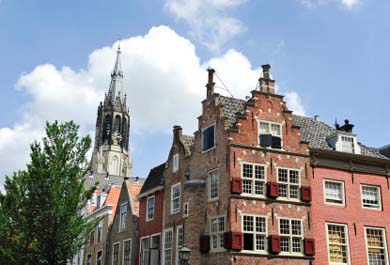
Delft's historic centre is a remarkably well-preserved example of Dutch Golden Age architecture and urban planning. The city's layout, with its network of canals and narrow streets, remains largely unchanged since the 17th century, offering visitors an authentic glimpse into the Netherlands' past. While the entire city centre is worth exploring, several locations stand out as essential visits.
Historic Centre
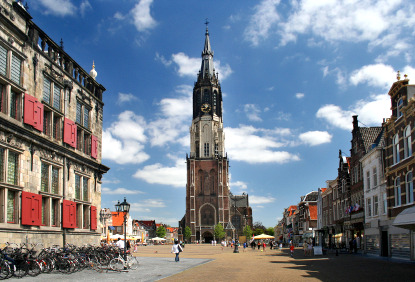
The Market Square (Markt) forms the heart of Delft's historic centre, measuring an impressive 120 by 50 metres, making it one of Europe's largest historic market squares. The square hosts a vibrant weekly market every Thursday, where visitors can purchase local produce, traditional Dutch cheese, flowers, and various regional specialities. The square is surrounded by historic buildings housing shops, cafes, and restaurants, many of which feature outdoor seating areas perfect for people-watching and enjoying the atmosphere.
The City Hall (Stadhuis), situated on the western side of the Market Square, is a magnificent example of Dutch Renaissance architecture, constructed between 1618 and 1620. The building incorporates the Gothic tower known as Het Oude Steen, dating back to the 13th century. Beneath this tower lies an old city prison, which, while not regularly open to the public, serves as a reminder of the building's long history. The City Hall's facade features intricate decorative elements and the city's coat of arms.
Churches
The New Church (Nieuwe Kerk), despite its name, is a historic building dating from the 14th century. Its tower, reaching 108.75 metres, is the second-highest church tower in the Netherlands and offers panoramic views extending to Rotterdam and The Hague. Visitors can climb the tower's 376 steps, though this requires good physical condition and isn't recommended for children under 6 or those with mobility issues. The church serves as the final resting place for members of the Dutch Royal Family, including William of Orange.
The Old Church (Oude Kerk), built in 1325, is notable for its leaning tower, affectionately nicknamed 'Leaning John'. The tower stands 75 metres high and leans almost two metres from vertical, a result of being partially built over an old canal. The church houses numerous important tombs, including that of Johannes Vermeer, Delft's most famous painter. The building's acoustics make it a popular venue for classical concerts.
The Maria van Jesse Church provides a different architectural perspective, representing the Catholic tradition in predominantly Protestant Delft. This active church welcomes visitors and is particularly notable for its ornate interior, featuring detailed woodwork and an impressive pulpit. The church's stained glass windows create beautiful light effects throughout the day.
Historic Gates
The Eastern Gate (Oostpoort) stands as the sole survivor of Delft's original city gates, dating from the 15th-16th centuries. This well-preserved structure features two Gothic-style towers and a water gate, allowing boats to enter the city. Located about 10 minutes' walk from the main square, the gate offers excellent photo opportunities, particularly during sunrise and sunset when the light reflects off the surrounding water.
Outdoor Activities
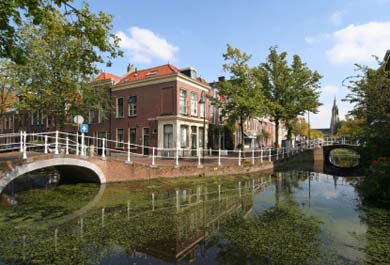
Canal tours provide a unique perspective on Delft's architecture and history. Regular boat tours operate throughout the day, lasting approximately 50 minutes and covering the main waterways of the historic centre. Visitors can choose between traditional tour boats, electric dinghies for self-guided exploration, or even paddleboards for the more adventurous. The tours offer insights into the city's maritime history and the role of canals in Dutch urban development.
Cycling remains one of the best ways to explore Delft, thanks to the city's extensive cycling infrastructure. Numerous rental shops offer bicycles for all ages and abilities, and the flat terrain makes cycling accessible to most visitors. Popular cycling routes include the historic centre, the surrounding countryside, and nearby windmills. Many locals use bicycles as their primary mode of transport, contributing to the city's sustainable and peaceful atmosphere.
Top Museums
Museum Prinsenhof Delft
Located in a historic building that was once a monastery and later an urban palace, the Museum Prinsenhof Delft tells the story of the Eighty Years' War and the role of the House of Orange in Dutch history. The museum features 17th-century paintings and artefacts that highlight Delft's pivotal role during this period. The building itself is significant, as it was where William of Orange lived and was assassinated. Visitors can explore exhibits that blend art, history, and politics.
Royal Delft Museum
The Royal Delft Museum, also known as Koninklijke Delftsch Aardewerkfabriek, is the last remaining 17th-century pottery factory in Delft still producing iconic Delft Blue pottery using traditional methods. Visitors can witness craftsmen at work, creating these exquisite pieces, and explore museum rooms showcasing both historical and modern collections of Delft Blue. The museum offers an immersive experience into the craftsmanship, history, and innovation behind this world-famous earthenware.
Vermeer Centre Delft
Dedicated to Johannes Vermeer, one of Delft's most celebrated painters, the Vermeer Centre offers an insightful journey into his life and work. While no original paintings are displayed here, visitors can view high-quality reproductions arranged chronologically. The centre also delves into Vermeer's techniques and his connection to the city of Delft. Interactive exhibits such as a light studio provide a deeper understanding of his artistic process.
Paul Tetar van Elven Museum
Housed in the former residence of Paul Tetar van Elven, a 19th-century painter and teacher at the Polytechnical School (now TU Delft), this museum showcases his personal collection of paintings, antique furniture, porcelain, and earthenware. The museum reflects Tetar van Elven's artistic legacy and his passion for collecting, offering visitors a glimpse into 19th-century life in Delft.
Other Museums in Delft
- The Hidden House of Madame de Berry: A lesser-known gem that provides an intimate look into historical interiors.
- Tobacco Museum: A small museum dedicated to the history and culture surrounding tobacco.
- Science Centre Delft: Perfect for those interested in science and technology, this museum is linked to TU Delft and features interactive exhibits.
Local Cuisine
Delft's culinary scene offers a delightful mix of traditional Dutch fare and international cuisines. Visitors can savour authentic Dutch dishes like stamppot with rookworst at THUIS by Ladera, whilst the city's iconic apple pie can be found at beloved institutions like Kobus Kuch, which serves an astounding 60,000 slices annually. The historic centre boasts numerous atmospheric restaurants, from cosy canal-side establishments to grand venues like 't Postkantoor, housed in the former post office. Mediterranean flavours feature prominently, with spots like Lakila offering tapas and Italian antipasti, whilst those seeking Asian cuisine can enjoy authentic Japanese ramen at Ramen Nikkou Tonkotsu. For a quintessential Dutch breakfast or lunch, the city's charming cafés serve fresh pastries from historic bakeries like De Diamanden Ring, perfect for enjoying alongside the picturesque canals.
Shopping
Delft's historic city centre offers diverse shopping opportunities along its picturesque canals and cobbled streets. The main shopping areas include the Markt square, which hosts a traditional market every Thursday, and the canal-lined streets north of the Markt, featuring boutiques and art galleries. Most shops operate daily from 09:00 to 17:30, with extended hours on Friday evenings. The modern De Zuidpoort area houses major retail chains, whilst the historic centre is home to speciality shops selling Delftware pottery, antiques, chocolates, and local crafts. The Brabantse Turfmarkt and Beestenmarkt areas are particularly good for fashion retailers and sportswear, with the added bonus of numerous cafes and restaurants for refreshment breaks.
Nature in and around Delft
Delft and its surrounding areas offer a variety of natural attractions for visitors to enjoy. The Delftse Hout, located just outside the historic centre, is a popular recreational area featuring lakes, beaches, bike and walking paths, old windmills, and playgrounds. Nature enthusiasts can explore the Arboretum-Heempark Delft, a living encyclopaedia of trees and shrubs from around the world. Just 15 minutes from Delft lies the Midden-Delfland nature reserve, a beautiful area perfect for cycling and walking through typical Dutch polder landscapes. For those willing to venture further, the Nationaal Park Zuid Kennemerland, about 45 km away, offers diverse landscapes including dunes, forests, and beaches. Closer to the city, the Buytenhout Regional Park provides a tranquil green space between Delft, Zoetermeer, and Pijnacker-Nootdorp, ideal for escaping the urban environment.
Gardens
The TU Delft Botanical Gardens, spanning 2.5 hectares, offer a peaceful retreat from the urban environment. The gardens feature various sections, including tree gardens, annual flower beds, and herb gardens. The greenhouse complex houses special collections of tropical plants and orchids, while the outdoor areas showcase native Dutch flora and themed gardens. The gardens serve both as a research facility for the technical university and as a public space for relaxation and education.
Getting There & Around
Delft is conveniently situated between Rotterdam and The Hague, making it easily accessible by various transport options. The city boasts two railway stations - Delft and Delft Campus - with the main Delft station just a 10-minute walk from the historic centre. Two tram lines serve the city: Tram 1 runs from Scheveningen beach to Delft Zuid, taking about 45 minutes from Scheveningen, while Tram 19 connects Leidschendam to Delft Station. For public transport, visitors can purchase a Tourist Day Ticket for €14,50, which offers unlimited travel on buses and trams in the South Holland region, though it's not valid on trains. Within Delft itself, the compact historic centre is best explored on foot, but you can also rent a bicycle to travel like a local or take a scenic canal cruise. The city actively discourages car use through spatial planning and parking fees, though it's accessible via the A4 and A13 motorways if you must drive.
Best Time to Visit
The best time to visit Delft is during the summer months, from late June to early September. During this period, the weather is warm and pleasant, with average temperatures ranging from 15°C to 23°C. The city comes alive with vibrant colours and energy, making it ideal for exploring on foot. You'll find the charming canals, historic buildings, and cobblestone streets at their most picturesque. While summer is the peak tourist season, Delft's authentic atmosphere remains intact, offering a perfect blend of cultural experiences and outdoor activities. The long daylight hours allow for leisurely strolls through the Market Square, visits to museums, and enjoyment of outdoor cafes. However, do pack a light jacket for cooler evenings, and be prepared for occasional rain showers, as Delft experiences rainfall throughout the year.