


 Belgium Guide
 Luxembourg Guide
| Contents |
|---|

Introduction
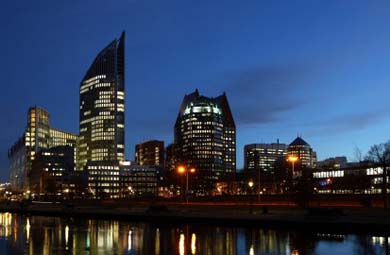
The Hague, known in Dutch as Den Haag or 's-Gravenhage, is the third-largest city in the Netherlands with over 560,000 inhabitants. Located on the North Sea coast with 11 kilometres of shoreline, it serves as the administrative capital and seat of government, despite Amsterdam being the official capital. The city is renowned as a global hub for international law, hosting the International Court of Justice, the International Criminal Court, and approximately 200 other international organisations. Beyond its diplomatic significance, The Hague offers visitors a blend of historical architecture, including the 13th-century Binnenhof parliament complex, numerous museums like the Mauritshuis, and the popular Scheveningen beach resort. The city is notably green, with more trees than inhabitants and multiple parks throughout, whilst also featuring a vibrant cultural scene with high-quality restaurants, cafés, and extensive shopping districts.
The Hague lies in the middle of the Randstad metropolitan area comprising the urban area of coastal Holland (notably Amsterdam, Leiden, Rotterdam and Utrecht). With a total population of 6,660,000 inhabitants, the Ranstad is the 4th largest metropolitan area in the EU, after London, Paris and the Rhine-Ruhr region.
Interesting Facts about The Hague
- The Hague is home to the Peace Palace, which houses the International Court of Justice and an eternal flame symbolising global peace.
- With over 115 historic courtyards, many still inhabited, The Hague boasts one of the highest concentrations of hofjes in the Netherlands.
- Prime Minister Mark Rutte has taught citizenship classes at a local secondary school in The Hague since 2008.
- The city's 11-kilometre coastline features Scheveningen beach, where residents say they live "on" rather than "in" the area due to its elevated position.
- Europe's first traffic light was installed in The Hague's Anna Paulownastraat near Panorama Mesdag.
- The Hague's coat of arms features a stork eating an eel, a symbol dating back to 14th-century beliefs about luck and cleanliness.
- At 5.8 kilometres long, Laan van Meerdervoort holds the title of the Netherlands' longest continuous urban lane.
- The Netherlands' first tennis court was established at the Binnenhof complex in the 16th century, commemorated by a stone near Parliament.
- With more trees than residents, The Hague ranks among Europe's greenest urban areas despite its political importance.
- Local residents are called either Hagenaars (traditionally wealthier) or Hagenezen, based on historical geographical divisions within the city.
History

The territory of The Hague was purchased in 1229 by Count Floris IV of Holland. His successor, William II, Count of Holland and King of Germany, who was supposed to become Holy Roman Emperor, constructed a castle there in 1248. He intended to live there after his coronation, but died in battle before he could be crowned. His castle was not finished, but parts of it survived and are now called the Ridderzaal (Knights' Hall). It is still in use for political events, such as the annual speech by the monarch on Prinsjesdag ("day of the princelings").
The city's full Dutch name, Des Graven Hage, literally means "The Count's domain", as a reference to William II's clearance in the forest to build his castle.
The later counts of Holland established their court there and transformed the small village into their administrative centre. The Staten-Generaal (the Dutch parliament) opened in 1446, and The Hague became the country's official capital in 1584. This explains why the city is still the seat of the Dutch monarchy, heir of the counts of Holland, nowadays.
Ironically, The Hague did not receive its first charter of city rights until 1806, during the French occupation. This makes it one of the youngest cities in the country, by official standard. It is probably the only place in Europe to have become a national capital before being recognised as a city.
Parts of the city sustained heavy damage during World War II. The Atlantic Wall was built through part of the city, causing whole neighbourhoods to be torn down by the German occupiers. On March 3, 1945, the Royal Air Force mistakenly bombed the Bezuidenhout district. The target was an installation of V-2 rockets in a nearby park. Due to navigational errors, the bombs fell on a heavily populated and historic part of the city. Over 500 people died and the scars in the city can still be seen today.
After the war The Hague was at one point the largest building site in Europe. The city expanded massively to the southwest. The destroyed areas were also quickly rebuilt. The population peaked at 600,000 inhabitants around 1965.
Main Attractions

Because of its peculiar history, The Hague does not have a substantial historical city centre like other cities in Holland. The sights are mostly limited to the area around the old castle, known as the Binnenhof ("inner court", housing the Dutch Parliament) and its wide moat, named Hofvijver ("court's pond").
Part of the Binnenhof compound, the Royal Picture Gallery Mauritshuis is the most famous art museum in The Hague. Collections include paintings by famous Dutch painters such as Johannes Vermeer, Rembrandt van Rijn, Jan Steen, Paulus Potter and Frans Hals and works of the German painter Hans Holbein the Younger. The original painting of the Girl with a Pearl Earring (after which the 2003 movie was named) is one of the most famous work in exhibit.
The Peace Palace (Vredespaleis) houses the International Court of Justice, the Permanent Court of Arbitration, the Hague Academy of International Law, and the extensive Peace Palace Library. It was constructed between 1907 and 1913 in Neo-Renaissance style. Guided tours are available in English, French, German and Dutch.
Suburbs
The main beach resort Scheveningen, in the northwestern part of the city, is a popular destination for tourists and young people. With 10 million visitors a year it is the most popular beach town in the Benelux. The name 'Scheveningen' is reputedly one of the most difficult to pronounce for non-Dutch speakers, so that it was even used as a password by Dutch resistance fighters during WWII.
The high concentration of civil servants, expatriates and diplomats in The Hague has made it one of the best places to dine out in the Netherlands. The relatively small city boasts no less than 6 Michelin-starred restaurants (though all but one of them are in the upper-middle class suburbs of Rijswijk and Vorburg, or in Scheveningen).


Top Museums
Mauritshuis
The Mauritshuis is undoubtedly the crown jewel of The Hague's museum scene. Housed in a 17th-century mansion, this museum showcases an exceptional collection of Dutch Golden Age paintings. The star attraction is Vermeer's iconic 'Girl with a Pearl Earring', but visitors can also marvel at masterpieces by Rembrandt, including 'The Anatomy Lesson of Dr. Nicolaes Tulp', and Carel Fabritius's poignant 'The Goldfinch'. With its elegant interiors and world-class artworks, the Mauritshuis offers an unparalleled glimpse into the pinnacle of Dutch art.
Kunstmuseum Den Haag
Formerly known as Gemeentemuseum, the Kunstmuseum Den Haag is one of Europe's largest art museums. It offers a unique blend of modern and contemporary art, fashion, and applied art. The museum houses the world's largest collection of Piet Mondrian's works, including his famous 'Victory Boogie Woogie'. Visitors can trace Mondrian's artistic evolution and explore an extensive collection of Dutch art from the early 19th century onwards. The building itself, designed by H.P. Berlage, is a masterpiece of rationalist architecture.
Escher in Het Paleis
Dedicated to the world-renowned Dutch artist M.C. Escher, this museum is located in the former Lange Voorhout Palace. It showcases over 130 works by Escher, famous for his mind-bending optical illusions and impossible constructions. The highlight is the 7-metre-long 'Metamorphosis III', which exemplifies Escher's mastery of perspective and transformation.
Museum Beelden aan Zee
Uniquely situated in the dunes of Scheveningen, Museum Beelden aan Zee is dedicated to modern and contemporary sculpture. The museum's collection features works by international sculptors, displayed both indoors and on outdoor terraces overlooking the sea. The building's innovative design, partially hidden in the dunes, adds to the allure of this sculptural haven.
Haags Historisch Museum
For those interested in the city's rich history, the Haags Historisch Museum is a must-visit. Located in the former St. Sebastian's Doelen, the museum chronicles The Hague's development from a small settlement to the seat of Dutch government. It houses a diverse collection of paintings, objects, and interactive exhibits that bring the city's past to life.
Panorama Mesdag
This unique museum features a cylindrical painting over 14 metres high and 120 metres in circumference. Created by Hendrik Willem Mesdag in 1881, it offers a 360-degree view of Scheveningen as it appeared in the late 19th century. This immersive experience transports visitors back in time, offering a glimpse of the coastal landscape and daily life of that era.
Louwman Museum
Automobile enthusiasts will delight in the Louwman Museum, which houses the world's oldest private collection of motor vehicles. With over 275 antique and classic automobiles, the museum traces the history of motorised transport from 1886 to the present day. Highlights include rare vintage cars, famous sports cars, and even vehicles owned by celebrities.
Local Cuisine
The Hague offers a delightful mix of traditional Dutch delicacies and international cuisine. Local specialities include the Haagse Kakker, a rich bread filled with cinnamon-almond paste and currants, and the historic Haagsch Hopje, a beloved coffee-caramel sweet with roots dating back to Baron Hendrik Hop. The city is particularly renowned for its Dungelmann croquettes, which draw long queues at their locations in the Nieuwe Passage. For those seeking refreshment, the city boasts several craft breweries, including Eiber Bier, Kompaan, and Haagse Broeders. The dining scene seamlessly blends Dutch traditions with international influences, featuring everything from authentic Thai and Lebanese establishments to Michelin-starred restaurants. The local food culture also reflects the Netherlands' historical connections, with Indonesian rijsttafel and Surinamese cuisine being integral parts of The Hague's culinary landscape.
Shopping
The Hague offers diverse shopping experiences across several distinct areas. The main shopping district lies in the semi-pedestrianised Binnenstad, with major department stores and fashion chains concentrated along Grote Marktstraat. The historic covered mall De Passage features upmarket stores under a glass-roofed arcade. Around the Royal Palace, particularly in Noordeinde, Hoogstraat and Prinsestraat, visitors will find haute couture boutiques and art galleries. The Zeeheldenkwartier houses local shops and trendy cafes, whilst the Haagse Markt, one of Europe's largest multicultural markets, operates on Mondays, Wednesdays, Fridays and Saturdays. Most shops open Tuesday to Friday from 10:00-18:00, with late-night shopping until 21:00 on Thursdays, and many establishments also open on Sundays.
Nature in and around The Hague
The Hague, known as one of the greenest cities in the Netherlands, boasts an abundance of natural attractions. With over 111,000 acres of dunes, parks, and country estates, the city offers diverse outdoor experiences. Notable green spaces include the Haagse Bos, one of the oldest surviving forests in the country, and Clingendael Park, featuring a stunning Japanese garden. The city's 11-kilometre stretch of beach and adjacent dunes provide opportunities for activities such as cycling, kite flying, and swimming. Westduinpark, a rugged dune area, is popular among joggers and mountain bikers. Other significant natural areas include Zuiderpark, which hosts the annual Parkpop music festival, and Westbroekpark, known for its beautiful rose gardens. As the only major Dutch city situated directly next to the sea, The Hague offers a unique blend of urban and coastal environments for nature enthusiasts.
Getting There & Around
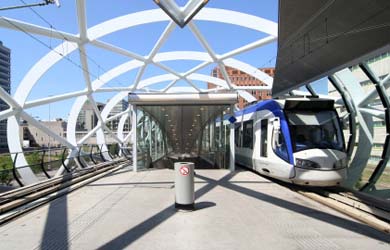
The Hague offers an excellent public transport network that makes getting around the city a breeze. The extensive system includes over 30 bus and tram lines operated primarily by HTM, covering both the city centre and surrounding areas. While the city centre is easily walkable, trams and buses provide convenient connections to attractions like Scheveningen beach and outlying areas. Visitors can purchase single tickets from drivers, but the most convenient option is the OV-chipkaart, a reloadable smartcard valid throughout the Netherlands. For short trips, consider a 2-hour ticket for €4.00, which allows unlimited travel on HTM trams and buses. The city also features numerous park-and-ride facilities on the outskirts, where you can leave your car and continue your journey via public transport. Cycling is another popular way to traverse the city, with dedicated cycle paths throughout, and bike hire is readily available at various locations. For those preferring taxis, several reliable companies operate in the city, though public transport remains the most cost-effective and efficient way to explore The Hague.
Best Time to Visit
The best time to visit The Hague is during the summer months of June to August, when the weather is most favourable and the city comes alive with events and activities. During this period, visitors can expect pleasant temperatures averaging around 21°C, with August being the warmest month. The long, sunny days provide ample opportunity to explore the city's attractions and enjoy its beautiful beaches. However, for those seeking a quieter experience with fewer crowds, the shoulder seasons of late spring (April to May) and early autumn (September) offer mild temperatures and the chance to see the famous Dutch tulip fields in bloom. Whilst summer is the peak tourist season, The Hague is generally less crowded than Amsterdam, making it an appealing destination throughout the warmer months.