


 Denmark Guide
 Finland Guide
 Iceland Guide
 Norway Guide
| Contents |
|---|

Introduction
Stockholm (pop. 884,000; metro 2.4 million), the capital of Sweden, is a captivating city built across 14 islands connected by 57 bridges, earning it the moniker "Venice of the North". This vibrant metropolis seamlessly blends historical charm with modern innovation, offering visitors a unique Scandinavian experience. From the medieval cobblestone streets of Gamla Stan (Old Town) to the cutting-edge design districts, Stockholm caters to diverse interests. The city boasts world-class museums like the Vasa Museum and ABBA Museum, alongside stunning royal palaces and an impressive archipelago of 30,000 islands. Known for its commitment to sustainability, Stockholm offers efficient public transport and numerous green spaces. Visitors can indulge in the local tradition of fika (coffee break), explore the city's thriving food scene, and experience the phenomenon of long summer days or cozy winter nights. With its rich cultural heritage, natural beauty, and forward-thinking attitude, Stockholm provides an unforgettable journey for travellers seeking both history and contemporary Nordic lifestyle.
Interesting Facts about Stockholm
- Stockholm spans 14 islands linked by 57 bridges where Lake Mälaren meets the Baltic Sea, giving the city its famously watery landscape.
- The name Stockholm dates to 1252 and the Old Town, Gamla Stan, remains one of Europe’s best-preserved medieval centres.
- The city hosts the Nobel Prize ceremonies and the glittering banquet in City Hall’s Blue Hall each December.
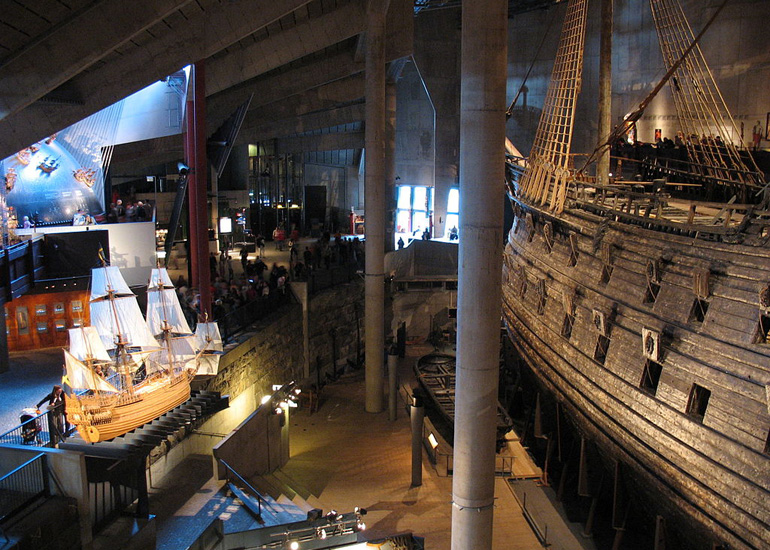
- The Vasa Museum displays a 17th-century warship that sank on its maiden voyage in 1628 and was salvaged almost intact in 1961.
- The city is one of the world's cleanest metropolises due to the absence of heavy industry
- Stockholm was the first city to be named the European Green Capital in 2010, reflecting its commitment to sustainability and environmental protection
- During late June, it barely gets dark due to the midnight sun
- The Ericsson Globe (now known as Avicii Arena) in Stockholm is one of the world's largest hemispherical buildings, with a diameter of 110 meters
- Stockholm’s metro is often called the world’s longest art gallery, with richly decorated stations across the network.
- Beyond the centre lies the Stockholm Archipelago, a sweep of roughly 24,000 islands, islets and skerries.
- ABBA The Museum opened in 2013 on Djurgården, offering an interactive celebration of Sweden’s iconic pop group.
- As the largest urban area in the Nordic countries, Stockholm anchors a metropolitan region of about 2.5 million people.
- Stockholm hosted the 1912 Summer Olympics, leaving a legacy of sporting venues and international ties.
- Local life revolves around fika, the cherished coffee-and-cake pause that thrives in Stockholm’s many cafés.

History
Medieval Origins
Stockholm's history begins in the 13th century when Swedish statesman Birger Jarl founded the city in 1252, positioning it strategically between Lake Mälaren and the Baltic Sea. The name 'Stockholm' derives from two words: 'Stock' meaning 'log' and 'Holm' meaning 'islet', reflecting its island-based geography. According to a 17th-century legend, settlers from the ancient Viking town of Birka floated a log down the lake to determine where their new settlement should be established. By the end of the 13th century, Stockholm had rapidly grown to become not only the largest city in Sweden but also the de facto Swedish political centre and royal residence. The city's strategic importance was enhanced through a trade agreement with the Hanseatic League, which granted German merchants freedom from customs charges and the right to settle in Sweden. Stockholm received its oldest preserved charter, the Letter of Privilege from the Privy Council, on 1st May 1436, which granted the city significant rights and freedoms, affirming its role as the political and economic centre of Sweden.
Union, Conflict and Independence
During the Kalmar Union (1397-1523), which united Sweden, Norway and Denmark under a single monarch, Stockholm became a crucial prize for various factions seeking control of the kingdom. The city endured repeated sieges and occupations, with Danish forces capturing it multiple times throughout the 15th century. In 1452, a Danish fleet launched an unsuccessful attack on Stockholm, whilst in 1471, Sten Sture the Elder defeated Christian I of Denmark at the Battle of Brunkeberg. The most infamous event in Stockholm's medieval history occurred on 8th November 1520, when Danish King Christian II orchestrated the Stockholm Bloodbath in the Royal Palace. What began as a peaceful dinner transformed into a brutal massacre, as Christian II executed over 80 Swedish nobles, religious figures and burghers for alleged heresy. Gustav Vasa finally liberated Stockholm from Danish rule in 1523, ending the Kalmar Union and establishing Swedish independence on 6th June 1523, which now marks Sweden's National Day. When Gustav Vasa reconquered the city, he observed that every second building had been abandoned due to the devastation.
Imperial Capital and Great Power Era
The 17th century marked Stockholm's golden age as Sweden emerged as a major European power. In 1634, Stockholm formally became the official capital of the Swedish Empire, and central government departments were established there, making the city an independent administrative unit. The population experienced dramatic growth, multiplying sixfold between 1610 and 1680, rising from approximately 10,000 at the beginning of the century to over 50,000 by the 1670s. This era witnessed significant architectural developments, including the construction of the Riddarhuset (House of Nobility) between 1641 and 1674, and the replacement of the medieval Tre Kronor Castle with Stockholm Palace after the former burned down in 1697. The old city walls were demolished, and new districts expanded north and south of the original "city between the bridges". However, the Great Stockholm Fire of 1625 destroyed the southwestern section of Stadsholmen, leading to the beginning of the demolition of Stockholm's defensive walls. The city also became a centre of learning and culture, attracting prominent figures such as philosopher René Descartes, who died in Stockholm after being hosted by Queen Christina for several years. Despite this prosperity, Stockholm suffered a devastating plague outbreak in 1710 that killed approximately 20,000 people (36 percent of the population), and after the end of the Great Northern War, the city stagnated as Sweden lost its great power status.
Main Attractions
Gamla Stan (Old Town)
Gamla Stan, Stockholm's Old Town, is a beautifully preserved medieval district that dates back to the 13th century and is considered the historic heart of the city. Located on the island of Stadsholmen and neighbouring islets, it features narrow cobblestone streets, colourful facades, and iconic landmarks such as the Royal Palace, Stortorget square, and Stockholm Cathedral. Once a bustling hub for merchants and later a neglected slum, Gamla Stan has transformed into a vibrant tourist destination filled with museums, cafés, shops, and historical treasures like the Nobel Prize Museum and Riddarholmen Church. Its charming atmosphere, rich history, and architectural beauty make it a must-visit destination in Stockholm.

Royal Palace
Stockholm's Royal Palace, or Stockholms slott, is a magnificent Baroque structure located in the heart of Gamla Stan (Old Town). Built in the 18th century to replace the medieval Tre Kronor Castle, it serves as the official residence of the Swedish monarch and a major tourist attraction. With over 600 rooms spread across eleven floors, the palace houses five museums, including the Royal Apartments and the Treasury. Visitors can explore its opulent interiors, witness the Changing of the Guard ceremony, and admire architectural features like the Hall of State with Queen Christina's silver throne. As both a working royal office and a cultural landmark, Stockholm Palace offers a unique blend of historical significance and contemporary relevance, providing insights into Sweden's royal heritage and continuing traditions.

Top Museums
Medieval Museum
The Museum of Medieval Stockholm, located near the Royal Palace, offers visitors a captivating journey through the city's medieval history from the 13th to the 16th century. Established in 1986 following extensive archaeological excavations in the 1970s, the museum showcases a rich collection of artifacts, including tools, weapons, jewelry, and clothing, providing insight into daily life during medieval times. A highlight is the preserved medieval street, allowing visitors to walk on 500-year-old cobblestones. However, as of 5 November 2023, the museum under the Norrbro bridge closed for relocation to new premises in Börshuset on Stortorget in the Old Town. During this transition period, the museum continues to engage the public through city walks, guided tours of historical areas, digital experiences, lectures, and school visits, ensuring that Stockholm's medieval heritage remains accessible to locals and tourists alike.
National Museum
The Nationalmuseum in Stockholm, Sweden's premier art institution, is a treasure trove of European and Swedish art spanning six centuries. Founded in 1792 and housed in its current building since 1866, the museum underwent a major renovation completed in 2018, enhancing its exhibition spaces and visitor experience. The museum's vast collection of around 700,000 items includes paintings, sculptures, prints, drawings, and applied arts from the 16th century to the present day. Visitors can explore masterpieces by renowned artists such as Rembrandt, Rubens, and Goya, as well as significant works by Swedish artists like Carl Larsson and Anders Zorn. The museum also boasts an impressive collection of design and craft exhibitions, showcasing Scandinavian furniture, ceramics, and textiles. With its dual focus on international and national art, the Nationalmuseum offers a comprehensive journey through art history, making it a must-visit destination for art enthusiasts in Stockholm.

Stockholm City Museum
The Stockholm City Museum, housed in the historic Södra Stadshuset building on Södermalm, is a cultural treasure trove dedicated to preserving and showcasing Stockholm's rich history. Established in 1937 and opened to the public in 1942, it is Sweden's largest municipal museum, boasting an impressive collection of 300,000 historical items, 20,000 works of art, and 3 million photographs. The museum offers two main permanent exhibitions: "The Stockholm Exhibition – Based on a True Story," which traces the city's development from its earliest days to the present, and "About Houses – Architecture & Building Preservation in Stockholm," which explores the evolution of architectural styles. With free admission, English texts throughout, and a commitment to accessibility, the museum provides an immersive experience for visitors of all ages, offering insights into Stockholm's urban development, cultural heritage, and the daily lives of its inhabitants throughout history. The museum also hosts temporary exhibitions, city walks, and educational programs, making it a dynamic hub for both locals and tourists interested in delving deeper into the Swedish capital's fascinating past.

Swedish History Museum
The Swedish History Museum is one of Sweden's largest and most significant cultural institutions. Founded in 1866, it houses over 10 million objects spanning from prehistory to the present day, offering visitors a comprehensive journey through Swedish history. The museum's extensive collections include archaeological artefacts, ecclesiastical art, and one of the world's largest Viking exhibitions. Notable highlights include the Gold Room, showcasing prehistoric gold treasures, and exhibits on the Middle Ages, the Swedish Empire, and childhood history. With free admission, interactive displays, and educational programs, the museum caters to diverse audiences, from history enthusiasts to families. Open Tuesday to Sunday from 10 AM to 5 PM, the Swedish History Museum provides an engaging and accessible exploration of Sweden's rich cultural heritage, making it a must-visit destination for those seeking to understand the nation's past.
Skansen Open-Air Museum
The Skansen Open-Air Museum, located on the island of Djurgården in Stockholm, is the world's first open-air museum, founded in 1891 by Artur Hazelius. It offers visitors a unique opportunity to explore Sweden's cultural heritage through its collection of over 150 historic buildings relocated from across the country, including farmhouses, windmills, and churches. The museum showcases traditional Swedish life, crafts, and customs, with costumed staff demonstrating activities like weaving and glassblowing. Skansen also features a zoo with Nordic animals such as moose, reindeer, wolves, and lynx, making it a family-friendly destination. Throughout the year, it hosts seasonal events and festivals, including Christmas markets and Midsummer celebrations, providing an immersive experience of Swedish history and traditions.

Vasa Museum
The Vasa Museum is one of Scandinavia's most visited museums, housing the remarkably well-preserved 17th-century warship Vasa. This 64-gun vessel sank on its maiden voyage in 1628, just minutes after leaving port, and was salvaged 333 years later in 1961. Opened in 1990, the museum showcases the ship as its centrepiece, with over 98% of its original structure intact, including hundreds of intricate wooden carvings. Visitors can view the Vasa from multiple levels, exploring its history, construction, and the story of its recovery through various exhibits, films, and guided tours. The museum not only presents the ship itself but also offers insights into 17th-century Swedish maritime history and culture, making it a unique blend of historical artifact and educational experience that has attracted over 25 million visitors since its opening.
ABBA Museum
The ABBA Museum in Stockholm, which opened on 7th May 2013, is the world's only official ABBA museum and a must-visit destination for fans of the iconic Swedish pop group. Located on the island of Djurgården, the museum offers a chronological journey through ABBA's career, from their early days to their global stardom and beyond. Visitors can explore interactive exhibits, view original costumes, instruments, and personal memorabilia, and even become the "fifth member" of ABBA by singing and dancing on a virtual stage. The museum features replicas of significant locations in ABBA's history, such as the Polar Studio and the Writing Hut on Viggsö Island. With its blend of original artifacts, cutting-edge technology, and immersive experiences, the ABBA Museum not only celebrates the band's musical legacy but also provides insights into their personal lives and enduring influence on pop culture. As of 2024, the museum continues to attract record numbers of visitors, showcasing ABBA's timeless appeal to both long-time fans and new generations.
Arts and Culture
Underground Art Gallery
Stockholm's metro system is known as the world's longest art gallery, with 90 out of 100 stations featuring artistic displays. The "grotto" stations, carved deep into the bedrock, showcase particularly striking decorations.
Fotografiska
Fotografiska is a must-visit for photography enthusiasts, featuring rotating exhibits of contemporary photography. The museum's top floor café offers panoramic views of the harbour and Gamla Stan.
Local Cuisine
Fika
Fika is a cherished Swedish tradition involving a daily coffee (or tea) break accompanied by a sweet treat. This ritual is an integral part of Swedish culture and can be enjoyed anywhere, either alone or with friends.
Traditional Dishes
While exploring Stockholm, be sure to try some traditional Swedish dishes such as meatballs (köttbullar), gravlax (cured salmon), and kanelbullar (cinnamon buns).
Shopping
Sweden is predominantly cashless, so visitors should be prepared to use credit cards or mobile payment methods. The city centre boasts a plethora of shopping districts, each with its own unique character. Drottninggatan, a bustling pedestrian street, is lined with high-street favourites and local boutiques, whilst the upmarket Bibliotekstan area houses luxury brands and designer shops. For a more eclectic experience, the trendy Södermalm district is home to vintage stores, independent designers, and quirky concept shops. Stockholm is renowned for its sleek Scandinavian design, which can be found in abundance at department stores like NK (Nordiska Kompaniet) and in the numerous interior design shops dotted throughout the city. Market enthusiasts should not miss Östermalms Saluhall, a historic food hall offering gourmet delicacies, or the outdoor Hötorget market for fresh produce and flowers. With its commitment to sustainability, Stockholm also boasts a growing number of eco-friendly and second-hand shops. Whether you're seeking cutting-edge fashion, unique souvenirs, or classic Swedish designs, Stockholm's shopping scene promises a memorable retail adventure.
Nature in and around Stockholm
Stockholm offers a remarkable blend of urban convenience and natural splendour, with over 330 nature reserves and two national parks within easy reach. The crown jewel is Tyresta National Park, located just 2km outside the city, featuring rare old-growth forest, pristine lakes, and ancient pine trees. Within the city itself, the Royal National City Park serves as Stockholm's green oasis, boasting Northern Europe's largest collection of ancient oaks and several bathing spots. Nature enthusiasts will particularly appreciate Hellasgården, an outdoor recreation centre merely 20 minutes from the city centre, offering activities from swimming and fishing to cross-country skiing and ice skating, depending on the season. The sprawling Flaten nature reserve, Stockholm's largest, features the city's cleanest lake and numerous walking trails through ancient woods and rocky terrain. For those seeking coastal experiences, the Stockholm archipelago presents countless opportunities for kayaking, hiking, and swimming, with many islands accessible via public transport.
Getting to Stockholm & Around
Getting to Stockholm
Stockholm, Sweden's vibrant capital, is well-connected to the rest of Europe and the world through various transport options. Whether travelling by air, rail, sea, or road, there are numerous ways to reach this beautiful Scandinavian city.
By Air
Stockholm is served by four airports, with Stockholm Arlanda Airport being the primary international gateway. Located 40 kilometres north of the city centre, Arlanda connects Stockholm to over 160 destinations worldwide with 44 airlines operating from its three terminals. The airport handles both domestic and international flights, with the most popular routes including Copenhagen, London, and various European capitals.
The other airports serving Stockholm include Bromma Stockholm Airport, situated just 8 kilometres west of the city centre and primarily handling domestic and regional flights. Stockholm Skavsta Airport, located 100 kilometres south of Stockholm, mainly serves budget carriers, whilst Västerås Airport offers additional low-cost options.
Major European cities offer direct flights to Stockholm, with frequent connections from London, Brussels, Amsterdam, and other key destinations. Airlines such as SAS, Ryanair, Norwegian, and Brussels Airlines provide regular services to Arlanda.
Airport Transport Options
From Arlanda Airport
The Arlanda Express offers the quickest connection to Stockholm Central Station, taking just 18 minutes with trains departing every 10-15 minutes. For a more economical option, Flygbussarna airport coaches connect Arlanda to various parts of Stockholm, including the City Terminal next to Central Station, with journey times of 35-45 minutes.
Commuter trains operated by SL provide another alternative, taking 43 minutes to reach Stockholm Central Station and departing twice hourly from Arlanda Central Station. Several bus companies, including FlixBus, also operate services between the airport and city centre.
From Other Airports
Bromma Airport connects to the city via Flygbussarna coaches in approximately 20 minutes, whilst SL bus 110 provides a public transport option to Alvik metro station. From Skavsta Airport, airport coaches take around 80 minutes to reach Stockholm's City Terminal.
By Train
From the United Kingdom
Travelling from London to Stockholm by train is entirely feasible, though it requires multiple connections and typically takes 2-3 days. The most efficient route involves taking the Eurostar from London to Brussels, then connecting through Germany to board the Hamburg-Stockholm sleeper train.
The recommended journey begins with an evening Eurostar departure from London St Pancras to Brussels, arriving around 22:38. After an overnight stop in Brussels, travellers continue to Hamburg via high-speed ICE trains, departing Brussels at 08:25 and arriving in Hamburg at 15:14. The final leg involves boarding the SJ EuroNight sleeper train from Hamburg at 22:03, arriving in Stockholm Central Station at 09:55 the following morning.
From Continental Europe
Stockholm enjoys excellent rail connections with the rest of Europe through the Swedish Railways (SJ) network. Direct train services operate from major European cities, with comfortable day trains and overnight sleeper options available. The Hamburg-Stockholm sleeper service, which began operating in September 2022, provides daily connections throughout the year.
From Amsterdam, the journey typically involves connections through Germany, with total travel times of approximately 18 hours. Routes from Brussels take around 19-20 hours, usually requiring changes in German cities such as Cologne or Hamburg.
By Ferry
Ferry travel to Stockholm offers a scenic and relaxing alternative, particularly from Finland and Estonia. The port of Stockholm, located at Frihamnen (Värtahamnen), serves as the main terminal for international ferry services.
From Finland
Several routes connect Finnish ports to Stockholm. The Helsinki-Stockholm service, operated by Viking Line, runs three times weekly with a journey time of approximately 16 hours. The Turku-Stockholm route provides more frequent connections, with up to three daily sailings taking around 11 hours.
From the Åland Islands, ferries operate between Mariehamn and Stockholm up to four times daily, with crossing times of 5-7 hours. The Långnäs-Stockholm service runs twice daily with a journey time of about 6 hours.
From Estonia
The Tallinn-Stockholm route operates three times weekly, taking approximately 16 hours to complete the crossing. Both Tallink Silja Line and Viking Line provide these services, offering cabin accommodation and onboard facilities.
By Bus
International coach travel to Stockholm is available through various operators, with FlixBus providing the most comprehensive network. From London, coaches operate daily with connections through Copenhagen, though the journey takes approximately 23 hours.
The route typically involves an initial journey from London to Copenhagen, followed by a connecting coach to Stockholm via Malmö, Jönköping, and Linköping. Passengers must change coaches in Copenhagen, with the second leg departing at 12:15 and arriving in Stockholm at 21:20.
From other European cities, FlixBus and other operators provide regular services to Stockholm's Cityterminalen. Journey times vary depending on the departure city, with connections available from major centres across Germany, Poland, and Denmark.
By Car
Driving to Stockholm from other European countries offers flexibility and the opportunity to explore the Scandinavian countryside. The city is well-connected by motorways, with the E4 providing the main north-south route through Sweden.
From Amsterdam, the driving distance is approximately 1,519 kilometres, taking around 15-16 hours of actual driving time. The route typically passes through Germany and Denmark before entering Sweden via the Øresund Bridge connecting Copenhagen to Malmö.
Ferry connections are also available for those preferring to avoid extensive overland driving. Services from Germany, Denmark, and Poland connect to various Swedish ports, allowing drivers to shorten their journey whilst enjoying the maritime experience.
Getting around Stockholm
Navigating Stockholm is straightforward thanks to its highly efficient and extensive public transport system, managed by Storstockholms Lokaltrafik (SL). A single ticketing system allows for seamless travel across the city's network of metro trains, buses, trams, ferries, and commuter trains, connecting the city centre with surrounding suburbs.
Metro (Tunnelbana)
The backbone of Stockholm's public transport is the metro, known as the Tunnelbana or T-bana. It is the most popular and efficient way to travel around the city.
- Lines: The system consists of three main lines—Green, Red, and Blue—which converge at the T-Centralen station, the city's primary transport hub. These lines serve approximately 100 stations, extending from the city centre into the suburbs.
- "The World's Longest Art Gallery": A unique feature of the Stockholm metro is the art displayed in over 90 of its stations. The stations are adorned with sculptures, mosaics, paintings, and installations, making a journey on the metro a cultural experience in itself.
Buses
Stockholm's bus network complements the metro, providing extensive coverage and reaching areas not directly served by the train lines. With almost 500 routes, modern and comfortable buses—often equipped with free Wi-Fi—connect the city centre with the suburbs and surrounding municipalities. Some key city bus routes for visitors include:
- Bus 69: A scenic route that travels from the Central Station to the island of Djurgården, passing major attractions.
- Bus 2: This route serves key areas like Gamla Stan (Old Town), Slussen, and Stureplan.
Trams and Light Rail
The city's tram network, though smaller, is an efficient way to travel through specific areas.
- Djurgårdslinjen (Line 7): This popular heritage tram line is ideal for tourists, running from Norrmalmstorg in the city centre to the island of Djurgården. It provides easy access to attractions such as the Vasa Museum, Skansen, and Gröna Lund amusement park.
- Tvärbanan (Line 22): A modern cross-town light rail line that connects Stockholm's western and southern suburbs without passing through the city centre.
- Lidingöbanan (Line 21): Connects the island of Lidingö with the mainland at Ropsten station.
Ferries
Given that Stockholm is spread across 14 islands, ferries offer a scenic and practical mode of transport.
- The Djurgården Ferry (Djurgårdsfärjan): This is the most frequented ferry service, connecting Slussen and the Gamla Stan area with the island of Djurgården, with an optional stop at Skeppsholmen.
- Other Services: The SL network also includes other local ferry lines that are part of the public transport system, providing a unique perspective of the city from the water.
Commuter Trains (Pendeltåg)
For trips to the outer suburbs and nearby towns like Uppsala, the Pendeltåg (commuter train) is the best option. These trains are faster and make fewer stops than the metro, extending well beyond the central city area.
Walking and Cycling
Stockholm is a very walkable city, and exploring by foot is highly recommended. Furthermore, the city has an extensive network of bike lanes that connect the main neighbourhoods, making cycling a popular and environmentally friendly way to get around.
Best Time to Visit
The best time to visit Stockholm is during the summer months of June, July, and August, when the weather is at its warmest and the days are delightfully long. During this period, temperatures typically range from 15-20°C, creating ideal conditions for outdoor activities and sightseeing. The city comes alive with a celebratory atmosphere, offering a plethora of cultural festivals, urban beach swimming, and opportunities for island excursions. However, if you prefer to avoid the peak tourist season and higher prices, consider visiting during the shoulder seasons of May and September. These months still offer mild weather and fewer crowds, allowing for a more relaxed exploration of Stockholm's attractions. Spring, particularly from March to May, can also be a lovely time to visit, with blooming cherry blossoms in Kungsträdgården park and a gradual awakening of the city after the long winter.