Sweden Guide  |
|---|
|
| | Swedish Regions |
|---|
|
| | Europe Guide |
|---|
|
| | Travel Tools |
|---|
|
| | Nordic Europe |
|---|
|
|
|
|
 Typical red Swedish cottages in winter. Typical red Swedish cottages in winter.
Introduction
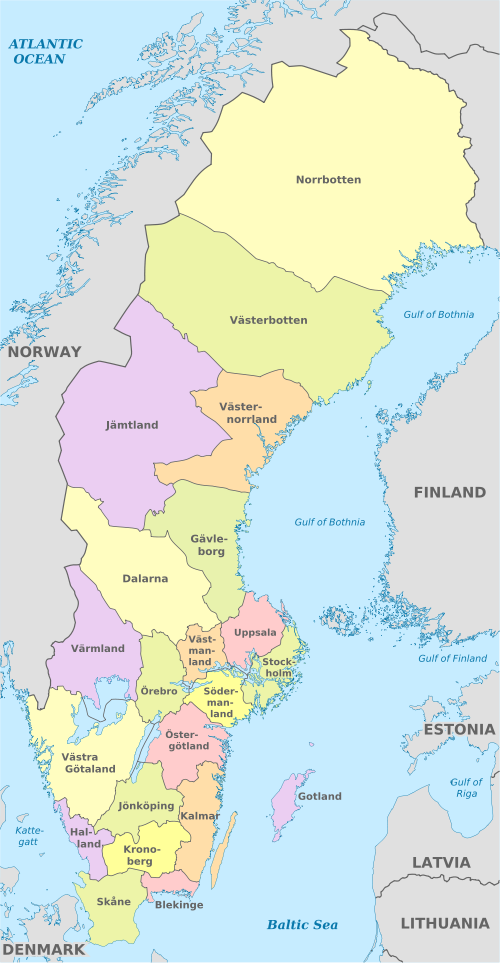
Sweden (Sverige in Swedish) is the third largest country in the EU and the second most sparsely populated after Finland. Most of the land is flat, apart from the north-west area bordering Norway. 78% of the country is occupied by forests and 9% by Sweden's 95,700 lakes. Among them, Vänern is the largest lake in Europe outside Russia, with an area over twice the size of Luxembourg.
Sweden has one of the highest GDP per capita in the world. It is also most equal countries in terms of income, as well as one of the world's freest, most democratic and least corrupted nations.
Some of the best known Swedish companies include Electrolux, Ericsson, Hennes & Mauritz, IKEA, Scania, Securitas, and Volvo. Sweden is also a major producer of timber and iron ore. The national drinks are akvavit (a spirit flavoured with spices and herbs, especially caraway or dill) and vodka, Absolut Vodka being the leading Swedish brand.
Famous people from Sweden include (chronologically): the botanist Carl Linnaeus, the astronomer Anders Celsius, the chemist Alfred Nobel, the Nobel Prize-winning author Selma Lagerlöf, the film director Ingmar Bergman, the actresses Greta Garbo and Ingrid Bergman, the actor Stellan Skarsgård, the cross-country skier Gunde Svan, the tennis players Björn Borg, Mats Wilander and Stefan Edberg.
|
History of Sweden
|
|---|

Discover Sweden's rich history from Viking explorations to modern democracy. Explore key events, monarchs, and cultural transformations that shaped this Nordic nation's unique heritage.
|
| Swedish Cuisine
|
|---|
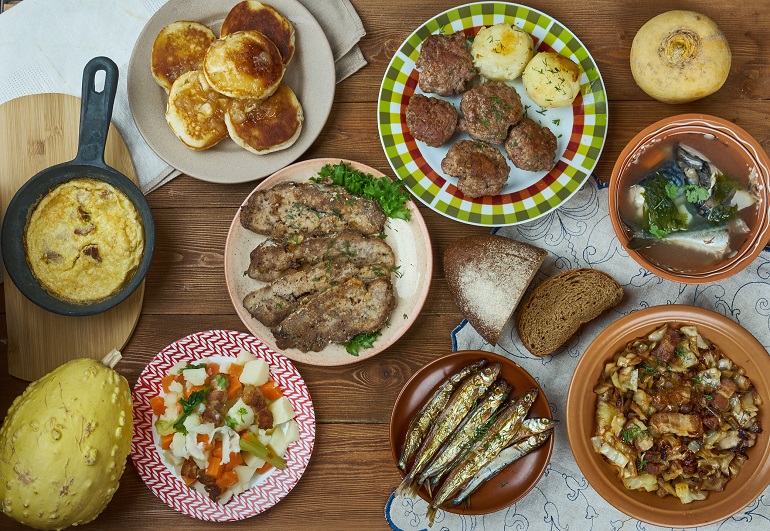
Discover Sweden's culinary treasures from hearty husmanskost to delicate pastries. Explore traditional dishes featuring local ingredients, dairy, breads, berries and seafood in this comprehensive guide.
|
Attractions
|
|
Sarek National Park ※ |
|---|

 Established in 1909, Sarek National Park stands as one of Europe's oldest national parks and represents Sweden's most mountainous region, featuring six of the nation's thirteen highest peaks above 2,000 metres. This vast wilderness, spanning 1,970 square kilometres, harbours nearly 100 glaciers and offers a truly untamed experience with no marked trails or facilities. The park's dramatic landscape showcases the spectacular Rapa River delta, considered one of Europe's most remarkable views, whilst its rich wildlife includes brown bears, wolverines, golden eagles, and impressive moose with enormous antlers. The area holds profound cultural significance as the ancestral home of the Sami people, who have practised reindeer husbandry here for thousands of years through three distinct communities: the Sirges, Jåhkågaska Tjiellde, and Tuorpon. |
|
Padjelanta National Park ※ |
|---|

 Padjelanta, Sweden's largest national park, derives its name from the Lule Sami word 'Badjelánnda' meaning 'the higher land'. This spectacular 1,984 square kilometre expanse features rolling mountains, vast lakes, and some of Sweden's most luxuriant flowering meadows, boasting unique alpine flora that has attracted botanists since the 17th century. The park is traversed by the 160-kilometre Padjelanta trail, which offers relatively easy hiking with convenient mountain cabin accommodations. The area has one of the highest concentrations of ancient remains in the alpine world, with traces of settlements dating back to the Stone Age. Three Sami villages—Duorbun, Jåhkågasska and Sirges—continue their traditional reindeer herding practices in the park, using modern methods like helicopters whilst maintaining their cultural heritage. The park's rich wildlife includes wolverines, Arctic foxes, brown bears, and golden eagles, whilst its lakes teem with Arctic char and whitefish that local Sami often sell to visitors. |
|
Skuleskogen National Park |
|---|

Skuleskogen National Park, established in 1984 as Sweden's 19th national park, stands as a remarkable testament to natural geography where mountains dramatically meet the sea. The park features some of the Gulf of Bothnia's deepest waters and highest islands, characterised by beautiful red Nordingrå Granite and an uplifted coastline that showcases Sweden's emergence from the sea. One of its most striking features is the Slåttdalsskrevan, a 40-metre-high mountain crevice that recently received a new hiking trail allowing visitors to experience it from both above and below. The park harbours one of the coastland's few remaining old-growth forests and is part of the UNESCO World Heritage-listed High Coast, which boasts the world's highest coastline at 286 metres above sea level and continues to rise by approximately 8 millimetres yearly. Visitors can explore the park through three different entrances, each leading to various hiking trails that wind through verdant spruce forests, beautiful lakes, and offer grandiose views of both forest and sea. |
More Swedish National Parks
| Gammelstad Church Town ※ |
|---|

 Gammelstad Church Town, a UNESCO World Heritage site situated 10 km north of Luleå, is a captivating historical settlement featuring 404 charming red and white wooden cottages surrounding a 15th-century stone church. These cottages, originally built to house distant parishioners during religious gatherings, are still in use today and represent the largest and best-preserved example of a church town in Sweden. The site includes the Hägnan open-air museum, which showcases farm houses from the 18th to 20th centuries and features a vintage shop, café, and delightful farm animals including two hogs named Mist and Rist. What makes Gammelstad particularly fascinating is that it escaped industrialisation when the town's commercial centre was relocated due to natural land upheaval rendering the harbour unusable in the 17th century, thus preserving its medieval character. Visitors can explore the quaint medieval streets, participate in traditional handicraft activities such as butter churning and blacksmithing, and take atmospheric lantern-guided tours through this remarkable historical settlement. |
| Gävle |
|---|

 Gävle, Sweden's 13th most populous city, offers a fascinating blend of history and quirky traditions. As the oldest city in historical Norrland, chartered in 1446, it boasts a beautifully preserved Old Town (Gamla Gefle) and a 16th-century castle. The city is internationally famous for its annual Christmas tradition of erecting the Gävle Goat - a giant straw goat that has been burned down 42 times since 1966 despite security measures. Culture enthusiasts can enjoy the city's three major museums, including Sweden's Prison Museum, the County Museum, and the National Railway Museum, whilst music lovers can attend performances by the century-old Gävle Symphony Orchestra at the concert hall. The city's industrial heritage is represented by the Gevalia coffee brand, and sweet-toothed visitors can discover local treats like Läkerol throat lozenges and the car-shaped sweets Ahlgrens Bilar. The bustling port, which welcomes over 1,000 ships annually, stands as a testament to Gävle's historical importance as a trading centre. |
|
Ice Hotel in Jukkasjärvi |
|---|

The world's first ice hotel, located in the village of Jukkasjärvi about 17 kilometres from Kiruna in northern Sweden, began as a happy accident in 1989 when visitors requested to sleep in an ice art exhibition. Today, this remarkable establishment features both seasonal and permanent structures, with the seasonal hotel being completely rebuilt each winter using 900 tonnes of ice and 27,000 tonnes of snow harvested from the pristine Torne River. The hotel boasts roughly 120 rooms, including 55 spectacular 'cold rooms' where guests sleep at -5°C, whilst the permanent Icehotel 365 section offers 18 year-round icy chambers powered by solar panels. Each year, about 30 international artists gather to sculpt unique suites, creating an ever-changing art exhibition where even the drinking glasses in the famous Icebar are crafted from river ice. The hotel's restaurant, helmed by a Michelin-trained chef, serves local delicacies such as Arctic char and moose, often presented on plates made of ice, offering a truly immersive Nordic dining experience. |
More tourist destinations in North Sweden
| Örebro |
|---|

 Örebro, Sweden's sixth largest city, is a charming destination nestled between Stockholm and Gothenburg, where history and contemporary culture beautifully converge around the Svartån River. The city's crown jewel is the 13th-century Örebro Castle, situated dramatically on its own island, offering ghost walks and treasure hunts for visitors. The cityscape features unique attractions including the mushroom-shaped Svampen Water Tower with its panoramic views and restaurant, and a peculiar giant popcorn cluster sculpture that has become the city's most popular selfie spot. The historic Wadköping district showcases preserved 17th-19th century wooden houses, whilst the vibrant arts scene flourishes at Örebro Konsthall and through various cultural festivals. Food enthusiasts can savour traditional Swedish meatballs, visit the bustling Saluhallen market hall, or partake in the cherished 'fika' tradition at cosy cafés. The city also boasts an impressive academic presence with Örebro University, which gained full university status in 1999. |
| Norrköping |
|---|

Norrköping, an old industrial city in Östergötland County, boasts the world's largest collection of ancient rock carvings with over 7,000 petroglyphs dating back to the Bronze Age. The city's industrial heritage is beautifully preserved in its iconic red-brick buildings along the Motala River, including the distinctive seven-cornered 'Strykjärnet' (The Iron) building, which now houses the Museum of Work. The deep green marble from Kolmården quarry near Norrköping has been used in prestigious buildings worldwide, including the Rockefeller Center in New York. Nature enthusiasts can uniquely fish for salmon in the city centre, whilst culture seekers can explore Scandinavia's largest outdoor zoo at Kolmården Wildlife Park. The city's culinary scene ranges from Michelin-starred establishments to traditional Swedish bistros, with seafood playing a prominent role due to its Baltic Sea location. The Industrial Landscape area has been thoughtfully repurposed into a cultural hub, featuring museums, restaurants, and the Louis De Geer Concert Hall, whilst the charming Knäppingsborg Quarter offers artisanal shops and cosy cafés in 18th-century buildings. |
| Stockholm ※ |
|---|

 Stockholm, Sweden's captivating capital, is spread across 14 islands connected by 57 bridges, earning it the nickname "Venice of the North". The city's medieval heart, Gamla Stan, dates back to the 13th century and remains one of Europe's best-preserved historic centres, featuring cobblestone streets and the magnificent Royal Palace. Stockholm's underground metro system doubles as the world's longest art gallery, with stunning murals adorning 90 of its 100 stations. The city boasts remarkable attractions including the Vasa Museum, housing a perfectly preserved 17th-century warship that sank on its maiden voyage and was salvaged 333 years later. As the first European Green Capital (2010), Stockholm dedicates over 30% of its area to parks and nature reserves, with waters so clean you can swim and fish in the city centre. The city is also home to three UNESCO World Heritage sites: Drottningholm Palace, the Viking Age sites at Birka and Hovgården, and the woodland cemetery Skogskyrkogården. Beyond the city proper lies the vast Stockholm archipelago, comprising an impressive 24,000 islands of various sizes. |
| Drottningholm Palace ※ |
|---|

Located just 12 kilometres from Stockholm, Drottningholm Palace is Sweden's majestic royal residence and a UNESCO World Heritage site known as the 'Versailles of Scandinavia'. The palace, whose name literally means 'Queen's Island', features a fascinating 'confidence dining room' where the table could be lowered underground for private royal conversations. The grounds boast three distinct attractions: a perfectly preserved 18th-century theatre where original machinery is still used, a Chinese Pavilion adorned with authentic Asian decorations, and spectacular gardens combining both Baroque and English landscape styles. The palace has a rich scientific heritage, as the renowned botanist Carl von Linné worked in its library cataloguing royal collections. Today, whilst the southern wing serves as the private residence of the Swedish royal family, most of the palace and its grounds remain open to visitors year-round. |
| Uppsala |
|---|

Uppsala, Sweden's fourth-largest city and just 35 minutes by train from Stockholm, is a captivating blend of historical grandeur and modern innovation. Home to Scandinavia's oldest university, founded in 1477, the city boasts a vibrant student population that makes up about 20% of its residents. The cityscape features the impressive Uppsala Castle, where Queen Christina abdicated in 1654, and ancient Viking burial mounds that hint at the area's fascinating Norse heritage. Science enthusiasts will appreciate Uppsala's connection to Carl Linnaeus, the renowned 18th-century botanist whose legacy lives on in the city's beautiful Botanical Garden and his preserved residence, Linnaeus' Hammarby. The city is also a hub for life sciences and technology, with notable achievements including the development of Upsalite by Sweden's youngest technology professor. For culinary adventurers, local specialities include the 'Linnébulle', a giant shareable cinnamon bun that can be found in cafés throughout the city. |
| Sigtuna |
|---|

Sigtuna, Sweden's oldest town and first capital, was founded in 980 CE by King Erik the Victorious on the picturesque shores of Lake Mälaren, just 48km northwest of Stockholm. This charming historic settlement boasts the highest concentration of runestones in the world, with 30 significant ones in the town alone and 170 across the municipality. Visitors can stroll along Stora Gatan, Sweden's oldest street still following its original medieval route, which is lined with colourful wooden buildings from the 1800s and delightful shops and cafés. The town features unique attractions including Sweden's smallest town hall, built in 1744, and a creative repurposed phone box that serves as a book kiosk. For a taste of local heritage, one can visit Tant Brun Kaffestuga, one of Sweden's oldest cafés housed in a 17th-century wooden building, or explore the Sigtuna Museum to discover Viking-era artifacts and treasures from Russia and Byzantium. Nature enthusiasts can enjoy the area's ten nature reserves, perfect for hiking, biking, swimming and boating. |
More tourist destinations in Central Sweden
| Gothenburg (Göteborg) |
|---|

Gothenburg, Sweden's second-largest city, was founded in 1621 by King Gustav II Adolf and has evolved from a maritime trading hub into a vibrant cultural centre. The city has earned remarkable recognition as the world's most sustainable destination for six consecutive years. Home to Volvo's birthplace and two universities, Gothenburg boasts the spectacular Liseberg theme park, the picturesque Haga district with its traditional wooden houses, and the architecturally striking Feskekörka fish market, which resembles a Gothic church. The archipelago, comprising 10,000 granite islets, offers excellent opportunities for kayaking and fishing. The city's culinary scene is particularly renowned for its seafood, with specialities including the iconic shrimp sandwich and smoked mackerel, whilst the local cafés are famous for their enormous cinnamon buns called 'Hagabulle'. Cultural highlights include the Gothenburg Museum of Art, the striking Poseidon statue at Götaplatsen, and the innovative Röda Sten Konsthall housed in a former boiler house. |
| Helsingborg |
|---|

Helsingborg, one of Sweden's oldest cities founded over a thousand years ago, is a charming coastal gem situated along the Öresund Strait directly opposite Denmark's Helsingør. The city's skyline is dominated by the iconic medieval Kärnan tower, the last remnant of a 14th-century castle, whilst the neo-gothic Town Hall adds to its architectural splendour. The city boasts Sweden's first pedestrianised shopping street, Kullagatan, and is renowned for its ceramics heritage as part of Sweden's pottery district. Cultural highlights include the modern Dunker Cultural Center, offering exhibitions and concerts, and Fredriksdal, Sweden's largest open-air museum. The culinary scene is particularly noteworthy, with excellent seafood restaurants like Sillen & Makrillen perched over the water, whilst the city's coffee culture is exemplified by Zoégas, one of Sweden's major coffee companies that has called Helsingborg home since the 19th century. Just outside the city, visitors can explore the magnificent Sofiero Palace, a former royal residence celebrated for its beautiful gardens. |
| Vadstena |
|---|

Vadstena, a charming town of around 5,600 inhabitants on the shores of Lake Vättern (Sweden's second-largest lake), boasts one of Sweden's best-preserved Renaissance castles, built by King Gustav Vasa in 1545. The picturesque town centre features cobbled medieval streets lined with buildings from every century between the 15th and 21st, including Sweden's oldest town hall. Notable for its scientific heritage, Vadstena housed Sweden's first psychiatric hospital and employed the country's first psychiatrist, whilst also being home to the laboratory of Jacob Berzelius, who discovered five chemical elements. The town offers delightful small-town shopping experiences along its medieval streets, and visitors can enjoy a unique glimpse of transport history at the Wadstena-Fogelsta Railway Museum, which preserves a narrow-gauge railway that was once part of Östergötland's extensive rail network. |
| Lund |
|---|

Founded around 990 CE, Lund is one of Sweden's oldest cities and a captivating blend of medieval charm and modern innovation. The city centre features cobblestone streets and colourful half-timbered houses, whilst being home to Sweden's second-oldest university, established in 1666. Visitors can explore the magnificent Botanical Gardens with over 7,000 plant species, wander through Kulturen, one of the world's first open-air museums spanning two city blocks, or marvel at the ivy-draped University Library, often compared to Hogwarts. The city hosts unique events like Kulturnatten with 400 cultural activities each September, and the grand Lundakarnevalen carnival every four years, a tradition since 1849. Beyond its cultural offerings, Lund seamlessly combines urban sophistication with natural beauty, offering excellent hiking and cycling opportunities just outside the city limits. The city is also a hub for innovative research and technology, making it an intriguing destination where historical heritage meets cutting-edge science. |
| Visby ※ |
|---|

Visby, a fairy-tale town on the Swedish island of Gotland, is one of Scandinavia's best-preserved medieval cities and a UNESCO World Heritage Site. The town is encircled by a remarkable 3.44-kilometre medieval wall with 27 large towers still standing from the 13th and 14th centuries. Known as the 'city of roses and ruins', Visby charms visitors with its cobbled streets, idyllic rose-covered cottages, and more than 200 buildings dating from the 12th to 14th centuries. The town boasts a fascinating Viking heritage, showcased in the Gotlands Museum which houses Europe's largest silver treasure comprising 67 kilos of bangles, bracelets and 14,000 coins. Beyond its historical allure, Visby has emerged as a foodie hotspot, particularly renowned for its fresh seafood, craft breweries, and local speciality of saffron pancakes. Interestingly, the entire Pippi Longstocking TV series was filmed in Visby and other parts of Gotland1, whilst the town comes alive during the annual Medieval Week festival, featuring jousting tournaments, medieval markets, and historical reenactments. |
| Naval Port of Karlskrona ※ |
|---|

Founded in 1680 as Sweden's new naval base, Karlskrona is an extraordinary UNESCO World Heritage site spread across an archipelago in the Baltic Sea. The city stands as Europe's best-preserved naval port town, having remarkably escaped any war damage throughout its history. Visitors can explore the Naval Museum, one of southern Sweden's most popular attractions, marvel at the Drottningskär Citadel, and admire the Admiralty Church, which holds the distinction of being Sweden's largest wooden church. The city's unique maritime heritage is evident in fascinating structures like the 300-metre-long Ropewalk from the 1690s, one of Sweden's longest wooden buildings, and the innovative Polhem dry dock from 1724, which was Europe's first to use water pumps rather than tides. The naval presence remains active today, with military personnel still visible throughout the city centre, whilst the surrounding archipelago has been designated as one of Sweden's seven UNESCO Biosphere Reserves, offering splendid opportunities for paddling amongst historic fortifications. |
More tourist destinations in South Sweden
|


 Denmark Guide
 Finland Guide
 Iceland Guide
 Norway Guide

 Established in 1909, Sarek National Park stands as one of Europe's oldest national parks and represents Sweden's most mountainous region, featuring six of the nation's thirteen highest peaks above 2,000 metres. This vast wilderness, spanning 1,970 square kilometres, harbours nearly 100 glaciers and offers a truly untamed experience with no marked trails or facilities. The park's dramatic landscape showcases the spectacular Rapa River delta, considered one of Europe's most remarkable views, whilst its rich wildlife includes brown bears, wolverines, golden eagles, and impressive moose with enormous antlers. The area holds profound cultural significance as the ancestral home of the Sami people, who have practised reindeer husbandry here for thousands of years through three distinct communities: the Sirges, Jåhkågaska Tjiellde, and Tuorpon.
 Padjelanta, Sweden's largest national park, derives its name from the Lule Sami word 'Badjelánnda' meaning 'the higher land'. This spectacular 1,984 square kilometre expanse features rolling mountains, vast lakes, and some of Sweden's most luxuriant flowering meadows, boasting unique alpine flora that has attracted botanists since the 17th century. The park is traversed by the 160-kilometre Padjelanta trail, which offers relatively easy hiking with convenient mountain cabin accommodations. The area has one of the highest concentrations of ancient remains in the alpine world, with traces of settlements dating back to the Stone Age. Three Sami villages—Duorbun, Jåhkågasska and Sirges—continue their traditional reindeer herding practices in the park, using modern methods like helicopters whilst maintaining their cultural heritage. The park's rich wildlife includes wolverines, Arctic foxes, brown bears, and golden eagles, whilst its lakes teem with Arctic char and whitefish that local Sami often sell to visitors.

 Gammelstad Church Town, a UNESCO World Heritage site situated 10 km north of Luleå, is a captivating historical settlement featuring 404 charming red and white wooden cottages surrounding a 15th-century stone church. These cottages, originally built to house distant parishioners during religious gatherings, are still in use today and represent the largest and best-preserved example of a church town in Sweden. The site includes the Hägnan open-air museum, which showcases farm houses from the 18th to 20th centuries and features a vintage shop, café, and delightful farm animals including two hogs named Mist and Rist. What makes Gammelstad particularly fascinating is that it escaped industrialisation when the town's commercial centre was relocated due to natural land upheaval rendering the harbour unusable in the 17th century, thus preserving its medieval character. Visitors can explore the quaint medieval streets, participate in traditional handicraft activities such as butter churning and blacksmithing, and take atmospheric lantern-guided tours through this remarkable historical settlement.
 Gävle, Sweden's 13th most populous city, offers a fascinating blend of history and quirky traditions. As the oldest city in historical Norrland, chartered in 1446, it boasts a beautifully preserved Old Town (Gamla Gefle) and a 16th-century castle. The city is internationally famous for its annual Christmas tradition of erecting the Gävle Goat - a giant straw goat that has been burned down 42 times since 1966 despite security measures. Culture enthusiasts can enjoy the city's three major museums, including Sweden's Prison Museum, the County Museum, and the National Railway Museum, whilst music lovers can attend performances by the century-old Gävle Symphony Orchestra at the concert hall. The city's industrial heritage is represented by the Gevalia coffee brand, and sweet-toothed visitors can discover local treats like Läkerol throat lozenges and the car-shaped sweets Ahlgrens Bilar. The bustling port, which welcomes over 1,000 ships annually, stands as a testament to Gävle's historical importance as a trading centre.

 Örebro, Sweden's sixth largest city, is a charming destination nestled between Stockholm and Gothenburg, where history and contemporary culture beautifully converge around the Svartån River. The city's crown jewel is the 13th-century Örebro Castle, situated dramatically on its own island, offering ghost walks and treasure hunts for visitors. The cityscape features unique attractions including the mushroom-shaped Svampen Water Tower with its panoramic views and restaurant, and a peculiar giant popcorn cluster sculpture that has become the city's most popular selfie spot. The historic Wadköping district showcases preserved 17th-19th century wooden houses, whilst the vibrant arts scene flourishes at Örebro Konsthall and through various cultural festivals. Food enthusiasts can savour traditional Swedish meatballs, visit the bustling Saluhallen market hall, or partake in the cherished 'fika' tradition at cosy cafés. The city also boasts an impressive academic presence with Örebro University, which gained full university status in 1999.

 Stockholm, Sweden's captivating capital, is spread across 14 islands connected by 57 bridges, earning it the nickname "Venice of the North". The city's medieval heart, Gamla Stan, dates back to the 13th century and remains one of Europe's best-preserved historic centres, featuring cobblestone streets and the magnificent Royal Palace. Stockholm's underground metro system doubles as the world's longest art gallery, with stunning murals adorning 90 of its 100 stations. The city boasts remarkable attractions including the Vasa Museum, housing a perfectly preserved 17th-century warship that sank on its maiden voyage and was salvaged 333 years later. As the first European Green Capital (2010), Stockholm dedicates over 30% of its area to parks and nature reserves, with waters so clean you can swim and fish in the city centre. The city is also home to three UNESCO World Heritage sites: Drottningholm Palace, the Viking Age sites at Birka and Hovgården, and the woodland cemetery Skogskyrkogården. Beyond the city proper lies the vast Stockholm archipelago, comprising an impressive 24,000 islands of various sizes.


 : Local interest
 : Must-see in the country