


| Contents |
|---|
Introduction
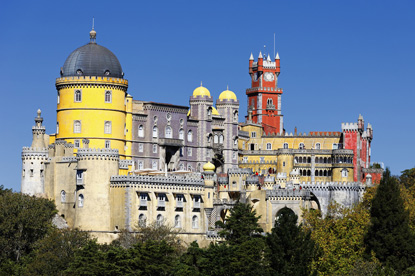
Sintra is a UNESCO World Heritage Site renowned for its unique blend of natural beauty and cultural landmarks. Nestled in the Serra de Sintra hills, this historic town was a summer retreat for Portuguese royalty and is home to iconic attractions such as the colourful Pena Palace, the medieval Castle of the Moors, and the National Palace of Sintra. Visitors can also explore the mystical gardens of Quinta da Regaleira, with its famous Initiation Well, and the exotic Monserrate Palace. Known for its Romantic architecture and lush forests, Sintra offers a cooler climate than Lisbon, making it an ideal destination for both history enthusiasts and nature lovers.
Interesting Facts about Sintra
- Sintra is known as the "romantic village" of Portugal, famous for its misty weather, charming streets, and harmonious blend of natural and man-made beauty.
- The town was designated a UNESCO World Heritage Site in 1995 for its unique cultural landscape.
- Pena Palace, a vibrant Romanticist castle, was built in the 19th century on the ruins of a medieval monastery.
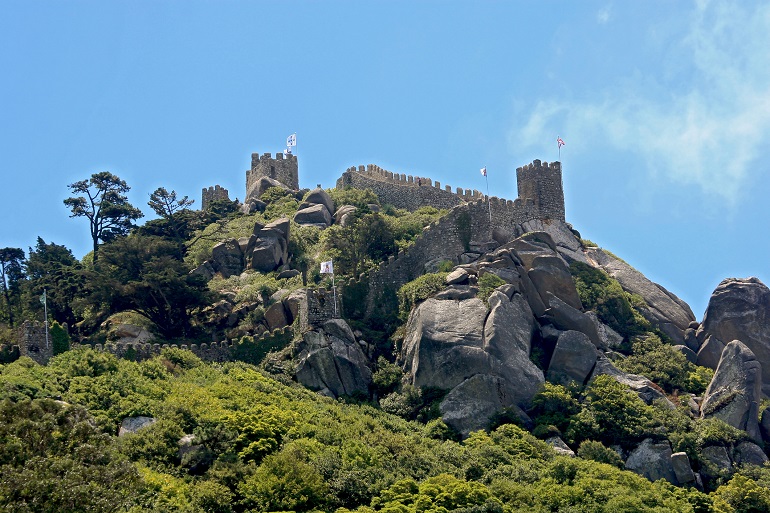
- The Moorish Castle, dating back to the 8th and 9th centuries, offers breathtaking views of Sintra and its surroundings.
- Quinta da Regaleira is renowned for its mysterious Initiation Well, hidden tunnels, and enchanting gardens.
- Sintra's microclimate supports lush vegetation, making it home to exotic gardens and dense forests.
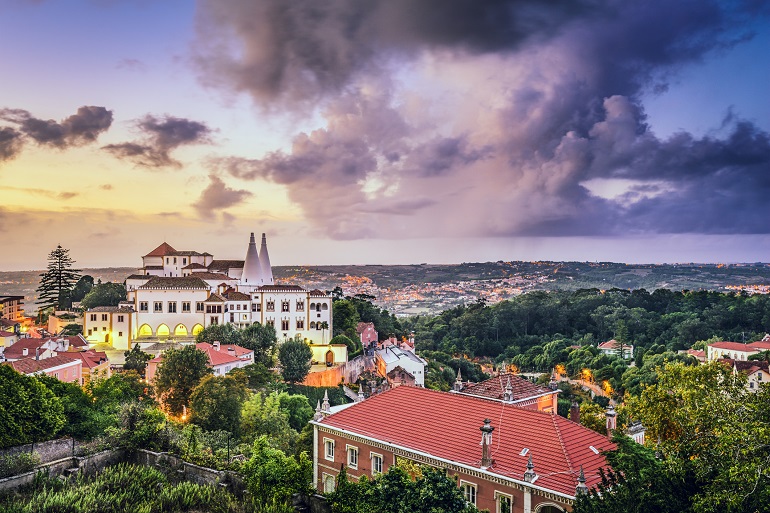
- The National Palace of Sintra, with its iconic twin chimneys, is one of Portugal's oldest surviving royal palaces.
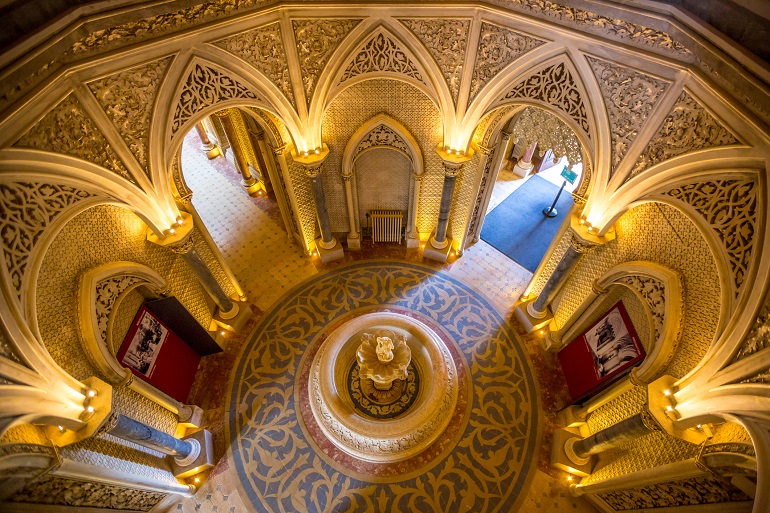
- Monserrate Palace showcases an eclectic mix of Gothic, Moorish, and Indian architectural styles surrounded by stunning gardens.
- Cabo da Roca, near Sintra, is the westernmost point of mainland Europe.
- Lord Byron described Sintra as a "glorious Eden," inspired by its magical landscapes and historic charm.
History
From its early days as a settlement during the Palaeolithic and Neolithic periods to its Roman and Moorish occupations, Sintra has been a significant cultural and strategic hub. The Moors constructed the iconic Moorish Castle in the 8th century, which served as a defensive stronghold overlooking Lisbon. In 1147, the castle fell to Afonso Henriques, Portugal’s first king, marking the end of Moorish rule. By the late Middle Ages, Sintra began to transform into a retreat for Portuguese royalty, laying the foundation for its later reputation as a haven of architectural beauty.
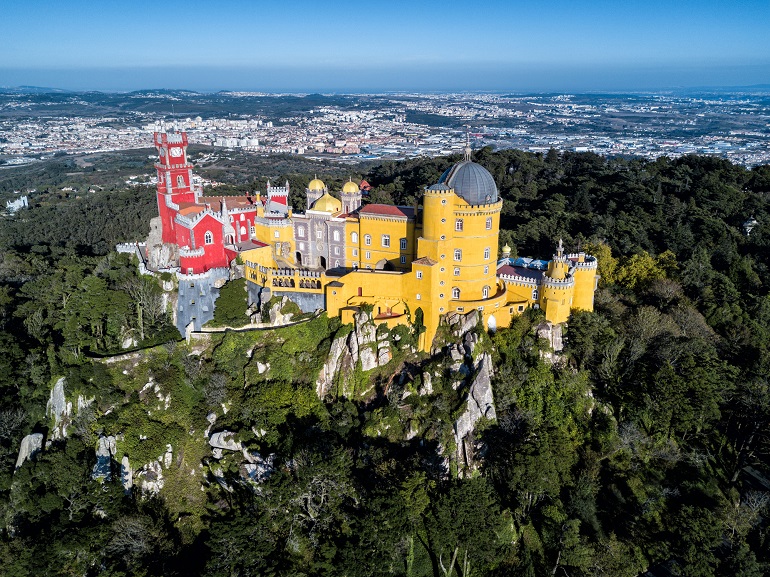
The 19th century marked Sintra's golden age, as it became a centre of Romanticism in Europe. This era saw the construction of the vibrant Palácio da Pena by King Ferdinand II, blending Gothic, Moorish, and Renaissance styles into an eclectic masterpiece. The palace, perched atop the Serra de Sintra, reflects the Romantic ideals of harmony with nature and artistic creativity. Alongside other landmarks like Quinta da Regaleira and Monserrate Palace, Sintra became a magnet for poets, artists, and travellers enchanted by its mystical allure. Lord Byron famously described it as a “glorious Eden,” capturing its ethereal charm.
Today, Sintra is celebrated as a UNESCO World Heritage Site for its cultural landscape that harmoniously integrates natural beauty with human ingenuity. Visitors can explore its palaces, castles, and lush gardens while delving into centuries of Portuguese history. The town’s cobbled streets lead to treasures such as the National Palace of Sintra, with its distinctive chimneys and Manueline architecture. Beyond its historical monuments, Sintra offers breathtaking views from Cabo da Roca—the westernmost point of mainland Europe—and serene beaches along its rugged coastline.
Main Attractions
Palácio da Pena (Pena Palace)
The Palácio da Pena, situated atop the Sintra Mountains in Portugal, is a stunning example of 19th-century Romantic architecture and one of the country's most iconic landmarks. Originally a 16th-century monastery, it was transformed by King Ferdinand II into a vibrant palace blending Neo-Gothic, Neo-Manueline, Neo-Islamic, and Neo-Renaissance styles. Its vivid red and yellow façades, whimsical towers, and intricate stone carvings create a fairytale-like appearance. Inside, visitors can explore opulent staterooms such as the Noble Room, the Arab Room with its trompe-l’oeil effects, and the King’s chambers featuring Portugal’s first hot-water shower. The Manueline cloister and chapel from the original monastery have been preserved, adding to the historical depth of the site.
Surrounding the palace is the expansive Parque da Pena, a 200-hectare garden designed by King Ferdinand II. It features winding trails, exotic plants from around the world, serene lakes, and enchanting viewpoints like Cruz Alta and Alto do Chá. Highlights include the Queen’s Fern Valley and the Chalet da Condessa d’Edla, an Alpine-inspired retreat built by Ferdinand’s second wife. The park’s microclimate supports a rich botanical diversity, making it a paradise for nature lovers.
Visitors are advised to purchase timed-entry tickets in advance to explore both the palace interiors and gardens. The Queen’s Terrace offers breathtaking views of Sintra and beyond, while shaded pathways in the park provide a tranquil escape from crowds. Open year-round with seasonal hours, the Palácio da Pena is a UNESCO World Heritage Site and a must-visit destination for its blend of history, art, and natural beauty. Whether marvelling at its architectural details or wandering through its lush gardens, this magical palace promises an unforgettable experience.
Sintra National Palace
The Sintra National Palace, located in the heart of Sintra, is a stunning blend of architectural styles, including Gothic, Manueline, Mudéjar, and Renaissance influences. Known for its iconic twin conical chimneys, the palace was a favoured residence of Portuguese royalty for nearly eight centuries and is the best-preserved medieval royal palace in Portugal. Inside, visitors can explore opulent rooms such as the Swan Room, adorned with frescoes of golden swans, and the Magpie Room, featuring a ceiling of painted magpies tied to royal legend. The palace also houses Portugal’s largest collection of Mudéjar tiles and showcases exquisite azulejo tilework throughout. Declared a national monument in 1910 and now a UNESCO World Heritage Site, it offers a fascinating journey through Portuguese history and culture.
Parque da Liberdade
Parque da Liberdade is a public park near Sintra’s town centre offering well-maintained gardens with exotic trees and flowers. It includes walking paths perfect for leisurely strolls or picnics amidst nature.
The park provides a quiet retreat from busier attractions while showcasing local flora. Its central location makes it easily accessible for visitors exploring Sintra on foot.
Quinta da Regaleira
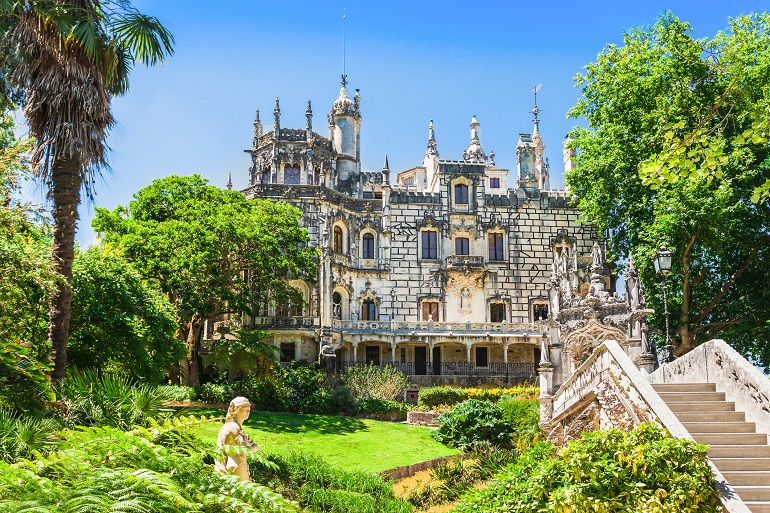
Quinta da Regaleira is a neo-Gothic estate renowned for its mystical architecture and symbolic gardens. Built between 1898 and 1913 for António Augusto Carvalho Monteiro, it was designed by Italian architect Luigi Manini. The estate spans four hectares and features a blend of meticulously arranged gardens and untamed woods.
The Initiation Well is one of its most famous attractions—a subterranean tower with a spiral staircase descending into symbolic depths inspired by Dante’s Inferno. Visitors can also explore hidden tunnels connecting different parts of the garden. Other highlights include ornate fountains like the Fountain of Abundance, statues such as those on the Promenade of the Gods, and terraces offering scenic views. The palace itself features intricate stone carvings and richly decorated interiors.
Castelo dos Mouros (Moorish Castle)
The Castelo dos Mouros is a medieval fortress built by the Moors in the 8th or 9th century to protect Sintra’s agricultural lands. It was later captured by Christian forces during the Reconquista in 1147. Perched on a hilltop, the castle offers breathtaking views of Sintra’s landscape, including Pena Palace and the Atlantic Ocean.
Visitors can walk along its ancient walls and explore its towers while learning about its historical significance. Notable features include a cistern used for water storage and remnants of a Romanesque chapel. The castle underwent restoration during King Ferdinand II’s reign in the 19th century, adding to its romantic appeal.
Palácio de Monserrate (Monserrate Palace)
The Palácio de Monserrate is an exquisite example of Romanticism in architecture. Built in 1858 as a summer residence for Francis Cook, an English merchant, it combines Moorish, Gothic, and Indian influences. The palace’s interior features fine lattice carvings and geometric patterns that create a luxurious atmosphere.
Surrounding the palace are extensive gardens inspired by English landscaping traditions. These include themed sections such as the Rose Garden, Mexican Garden with desert plants, and fern-filled valleys. Visitors can also discover an abandoned chapel overgrown with trees. Monserrate Palace offers a quieter experience compared to other attractions in Sintra.
Vila Sassetti
Vila Sassetti is a picturesque villa located on Estrada da Pena at the base of Sintra’s hills. Designed by Luigi Manini in Lombard style, it was built in the late 19th century as a summer residence for Victor Carlos Sassetti. Its medieval-style tower and colourful façade stand out amidst lush gardens.
The estate includes pathways leading up to Pena Palace and offers peaceful spots for relaxation. Visitors can explore fountains, terraces, and scenic viewpoints overlooking Sintra Valley without requiring an entry ticket.
Convento dos Capuchos
The Convento dos Capuchos is a 16th-century Franciscan monastery known for its simplicity and integration with nature. Built in 1560 by Álvaro de Castro, it reflects the ideals of asceticism through its small cork-lined cells and austere chapels.
The convent is surrounded by dense forested landscapes that enhance its tranquil atmosphere. Visitors can explore its courtyards, hermitages, and living quarters while gaining insight into the monks’ humble lifestyle. The site has been restored to preserve its historical significance as part of Sintra’s UNESCO World Heritage designation.
Sintra Tram
The Sintra Tram is a historic narrow-gauge tramway connecting Sintra town with Praia das Maçãs beach along an 11.5-kilometre route. Opened in 1904, it passes through picturesque villages like Colares and Praia Grande.
Operating seasonally during tourist months, the tram provides a scenic journey through Sintra’s countryside. It offers an enjoyable way to explore lesser-visited areas while experiencing vintage transportation.
Top Museums
Anjos Teixeira Museum
The Anjos Teixeira Museum is a tribute to the artistic legacy of two renowned Portuguese sculptors, Artur Gaspar dos Anjos Teixeira and his son Pedro Augusto dos Anjos Teixeira. Set in a charming early 20th-century watermill, this museum offers a serene environment that complements the creative spirit of its exhibits.
The Sculptures
The museum's collection includes an impressive array of sculptures and drawings that reflect themes such as:
- Human and animal anatomy: Detailed studies of form and movement.
- Professions: Sculptures depicting workers and tradespeople in action.
- Freedom and spirituality: Abstract pieces that evoke deep emotion.
- Religious figures: Works inspired by Portugal's rich spiritual traditions.
A Personal Connection
The museum also served as Pedro Teixeira’s home and studio until his death in 1992. Visitors can explore his workspace, gaining insight into his creative process. Workshops and guided tours are available, making this an excellent destination for families, students, or anyone interested in sculpture.
Nature Connection
Located near the lush Sintra hills, the museum is surrounded by natural beauty, enhancing its tranquil atmosphere. It’s a perfect spot for those who appreciate art in harmony with nature.
MU.SA - Sintra Museum of the Arts
The Sintra Museum of the Arts (MU.SA) is a vibrant cultural hub that bridges the gap between historical and contemporary art. Situated in a beautifully restored building, it serves as a showcase for Sintra’s Municipal Collection of Contemporary Art.
The Permanent Collection
MU.SA’s permanent collection features works by Portuguese and international artists who have lived or worked in Portugal. Highlights include:
- Paintings, sculptures, and mixed-media works exploring themes like identity, nature, and modernity.
- Pieces by influential 20th-century artists alongside emerging talents.
Temporary Exhibitions
The museum is known for its dynamic temporary exhibitions, which often feature:
- Local artists from Sintra and its surrounding areas.
- Nationally acclaimed figures who have shaped Portugal’s art scene.
- International artists whose work resonates with contemporary issues.
Community Engagement
MU.SA also hosts workshops, artist talks, and educational programmes designed to engage visitors of all ages. It’s an inspiring destination for art enthusiasts seeking to explore creativity through multiple lenses.
News Museum
The News Museum, located in Sintra’s historic centre, offers a fascinating exploration of media, journalism, and communication. This interactive multimedia museum is unlike any other in Portugal.
Themed Sections
Spread across three floors with 25 themed sections, the museum delves into:
- Iconic headlines: Stories that shaped global history.
- Photojournalism: Powerful images capturing moments of triumph and tragedy.
- Propaganda: How media has been used to influence public opinion.
- War reporting: The challenges faced by journalists covering conflicts.
Interactive Experiences
Visitors can immerse themselves in the world of journalism through:
- Simulated live TV reports where you can step into the role of a news anchor.
- One of the world’s largest touch screens displaying major historical events.
- A metal tower with 70 television screens streaming global news channels in real time.
Educational Value
The News Museum is ideal for families, students, or anyone curious about how information shapes our world. It offers a unique perspective on the power of storytelling through media.
Sintra Natural History Museum
Located in a charming 19th-century building in Sintra’s Old Town, the Natural History Museum is a treasure trove for science enthusiasts. Its extensive collection spans paleontology, mineralogy, malacology (the study of molluscs), and petrography (the study of rocks).
Fossil Collection
The museum’s fossil collection is particularly impressive:
- Dinosaur fossils such as Triceratops horns and Velociraptor claws.
- Prehistoric egg nests showcasing ancient reproductive behaviours.
- Rare flying reptiles like Braseodactylus sp., offering insights into early aviation evolution.
Other Highlights
In addition to fossils, visitors can explore:
- Stunning mineral specimens from around the world.
- Shell collections that reveal the diversity of marine life over millions of years.
Family-Friendly Features
Interactive displays make this museum especially engaging for children. It’s an excellent place to spark curiosity about Earth’s history while enjoying a fun day out with family.
Water and Waste Museum
The Water and Waste Museum, located in Ribeira de Sintra, focuses on environmental education and sustainability. It offers an innovative approach to understanding our relationship with water and waste management.
Exhibits and Activities
This museum features:
- Displays explaining the urban water cycle—from collection to treatment.
- Workshops on sustainable habits like recycling and water conservation.
- Exhibitions highlighting innovative solutions to environmental challenges.
A Mission for Sustainability
The museum aims to raise awareness about preserving natural resources while fostering a sense of responsibility among visitors. It’s an enlightening experience for those interested in environmental issues.
Ferreira de Castro Museum
Dedicated to José Maria Ferreira de Castro—one of Portugal’s most celebrated writers—the Ferreira de Castro Museum offers an intimate look at his life and work.
The Collection
Highlights include:
- Rare editions of Ferreira de Castro’s novels, such as A Selva (The Jungle), which brought him international acclaim.
- Manuscripts revealing his creative process.
- Personal items such as his typewriter and correspondence with literary contemporaries.
Reconstructed Study
A highlight is Ferreira de Castro’s study from his Lisbon home, meticulously recreated within the museum. Visitors can see where he wrote some of his most famous works.
Casa-Museu Leal da Câmara
Situated in Rinchoa with stunning views of the Sintra hills, the Casa-Museu Leal da Câmara was once home to Mestre Leal da Câmara—a painter, caricaturist, and political activist known for his satirical works.
Artistic Legacy
Visitors can explore:
- A vast collection of paintings reflecting social commentary on Portuguese society.
- Humorous caricatures critiquing political figures of his time.
- Furniture, ceramics, tiles, fabrics, and personal archives that provide insight into his life.
Historical Significance
Originally owned by the Marquis of Pombal as a staging post during journeys between Quinta da Granja do Marquês and Oeiras Palace, this house now serves as both an artistic haven and historical landmark.
Modern Art Museum (MUSA)
The Modern Art Museum (MUSA), housed in an elegant 1920s building near the Olga Cadaval Cultural Centre, celebrates modern art from 1945 onwards. It is a must-visit for art lovers interested in pivotal artistic movements and contemporary creativity.
Permanant Collection
The museum features works by iconic artists such as:
- Francis Bacon
- Joan Miró
- Andy Warhol
- Pablo Picasso
These are displayed alongside pieces by Portuguese masters like Columbano Bordalo Pinheiro, creating a rich tapestry of artistic expression.
Temporary Exhibitions
MUSA frequently hosts temporary exhibitions covering topics such as:
- Surrealism movements across Europe.
- War photography capturing human resilience during conflict.
Support for Emerging Artists
A dedicated New Gallery within the museum provides space for emerging artists to showcase their work, offering visitors a glimpse into the future of contemporary art.
Local Cuisine
Sintra boasts a rich culinary heritage that tantalises the taste buds of visitors and locals alike. The town's gastronomic tapestry weaves together traditional Portuguese flavours with unique local specialities. No visit to Sintra is complete without sampling the iconic Travesseiros, delicate pastries filled with almond cream that melt in your mouth. Equally delightful are the Queijadas de Sintra, small, round tarts with a creamy cheese filling and a hint of cinnamon. Seafood enthusiasts will relish dishes like Bacalhau à Brás, a savoury codfish dish with potatoes and eggs. For heartier fare, try the Cozido à Portuguesa, a traditional meat and vegetable stew. To round off your culinary journey, indulge in a Pastel de Nata, Portugal's famous custard tart. Sintra's local markets offer an array of fresh produce, allowing visitors to savour the authentic flavours of the region, from locally sourced fish and meats to artisanal cheeses and honey.
Shopping
The historic centre, Vila Velha, features narrow streets filled with artisan shops offering handcrafted ceramics, azulejos (traditional tiles), lace, and jewellery, which is often cheaper than in nearby Lisbon. For unique souvenirs, visitors can explore gift shops at landmarks like the National Palace of Sintra or browse galleries near Praça de República for local art. Open-air markets such as São Pedro Market, held on the second and fourth Sundays of each month, provide a mix of artisan goods and household items. For modern shopping, Forum Sintra and Beloura Shopping offer a wide range of stores, cinemas, and dining options. Additionally, Sintra Retail Park provides outlet shopping for fashion and home décor. These varied options make Sintra an appealing destination for both traditional and contemporary shopping experiences.
Nature in and around Sintra
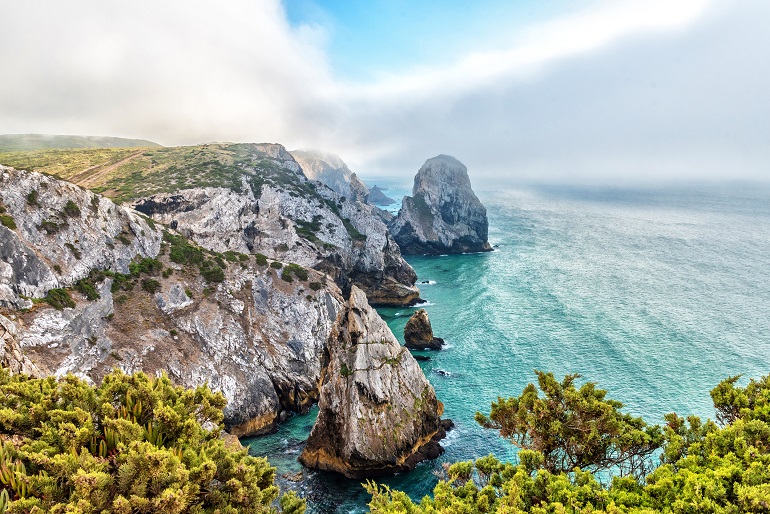
The Parque Natural de Sintra-Cascais offers diverse landscapes, including the dramatic cliffs of Cabo da Roca, the westernmost point of mainland Europe, and pristine beaches like Praia da Ursa. Visitors can explore lush forests and hiking trails leading to sites such as the Convento dos Capuchos, a 16th-century monastery, and the panoramic views from the Santuário da Peninha. The park also encompasses the famous Pena Park, home to exotic flora and winding paths around the iconic Pena Palace. For coastal activities, Praia Grande and Praia das Maçãs are ideal spots for surfing and relaxing. This region’s natural beauty is complemented by its rich biodiversity and unique geological features, making it a must-visit destination.
Hiking Trails: Caminho de Santa Maria
Sintra offers several hiking trails that connect key landmarks amidst natural landscapes. The Caminho de Santa Maria trail ascends from Sintra’s historic centre to Castelo dos Mouros and Palácio da Pena through dense forests.
This moderately challenging trail provides stunning views of Sintra’s hillsides and architectural landmarks along paved paths suitable for most fitness levels. It is ideal for visitors seeking an active way to explore Sintra’s cultural landscape.
Cabo da Roca
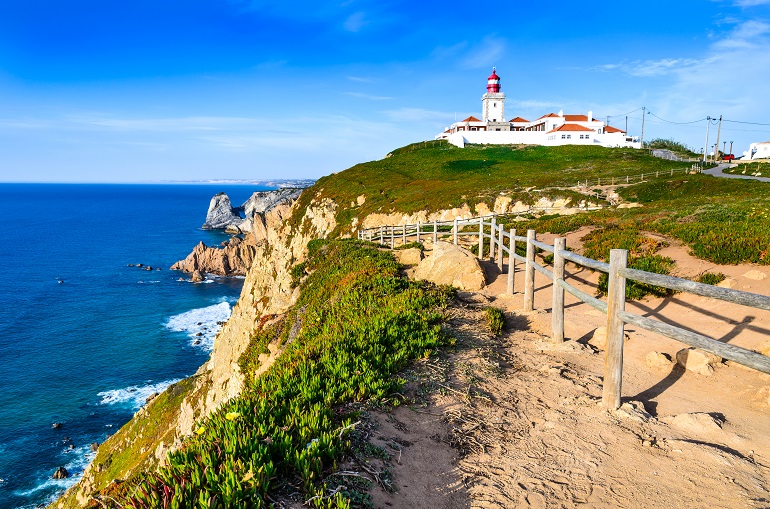
Cabo da Roca marks the westernmost point of mainland Europe at 165 metres above sea level. Known for its dramatic cliffs overlooking the Atlantic Ocean, it features a lighthouse operational since 1772. A stone monument inscribed with coordinates marks its geographical significance.
Visitors can enjoy panoramic views from walking trails along the cliffs or relax at nearby cafés offering local delicacies. Cabo da Roca is accessible via car or public transport from Sintra and serves as a popular spot for photography.
Sintra-Cascais Natural Park
The Sintra-Cascais Natural Park is a breathtaking protected area on the Portuguese Riviera, spanning approximately 145 square kilometres. It combines the lush Serra de Sintra mountain range with dramatic coastal landscapes, including Cabo da Roca, the westernmost point of mainland Europe. The park is renowned for its rich biodiversity, microclimate, and harmonious blend of natural beauty and cultural heritage. Visitors can explore a variety of attractions, from the majestic Castle of the Moors and the enchanting Quinta da Regaleira to the serene Convent of the Capuchos and the iconic Palácio da Pena. Along the coastline, pristine beaches such as Praia Grande and Guincho offer opportunities for surfing, windsurfing, or simply relaxing by the sea. Inland, picturesque villages like Colares showcase traditional rural life and local wine production.
The park’s trails provide access to stunning viewpoints like Cruz Alta and Peninha Sanctuary, offering panoramic vistas over the mountains and Atlantic Ocean. Geological wonders include fossil dunes at Magoito and dinosaur footprints at Praia Grande. Its unique vegetation, shaped by a temperate microclimate, supports exotic plants and dense forests ideal for hiking or leisurely walks. The park is also home to historical landmarks reflecting Sintra’s legacy as a favoured retreat for Portuguese royalty and nobility.
Getting There & Around
Sintra is easily accessible from Lisbon and other nearby areas. The most convenient and cost-effective way to reach Sintra is by train, with regular services departing from Lisbon's Rossio Station in the city centre and Oriente Station in the eastern part of the city. The journey takes approximately 40 minutes, with trains running frequently throughout the day. For those coming from Cascais or Estoril, bus services are available, such as the 403 from Cascais and the 418 from Estoril, both terminating near Sintra's town centre. If arriving at Lisbon Airport, one can take the metro to Oriente Station and then catch a train to Sintra. It's worth noting that driving to Sintra is not recommended due to limited parking and narrow, congested roads. Once in Sintra, local buses, particularly the 434 and 435 lines, provide easy access to the town's main attractions, including the famous Pena Palace and Quinta da Regaleira.
Best Time to Visit
The best time to visit Sintra is during the spring and early autumn seasons. Spring, from March to May, offers pleasant temperatures ranging from 15°C to 22°C, making it ideal for outdoor exploration amidst lush greenery. The summer months, particularly June to September, are warm and sunny, but they attract larger crowds. Early autumn, from September to October, provides a comfortable climate with warm days and cooler evenings, perfect for enjoying the scenic beauty of Sintra without the peak summer crowds. While winter can be mild, it is less popular due to cooler temperatures. Overall, spring and early autumn are recommended for a more relaxed and enjoyable experience in Sintra.