


| Contents |
|---|

Introduction
Lisbon (pop. 567,000; 2.9 million), Portugal's capital and largest city, is situated on the western coast of the Iberian Peninsula along the Tagus River estuary, making it continental Europe's westernmost capital. The city combines centuries of cultural heritage with modern innovation. Founded over 20 centuries ago, Lisbon features a Mediterranean climate with warm summers and mild winters.
The Portuguese capital showcases magnificent Manueline architecture, including the UNESCO World Heritage sites of Jerónimos Monastery and Belém Tower, while its winding cobblestone streets in the Alfama district tell stories of centuries past. The city pulses with life through its vintage yellow trams, world-class museums, vibrant food scene featuring the famous pastéis de Belém, and soulful fado music echoing from candlelit taverns. From the commanding São Jorge Castle offering panoramic views to the grand Praça do Comércio square with its iconic triumphal arch, Lisbon offers an enchanting mix of cultural treasures, architectural wonders, and contemporary attractions that make it one of Europe's most captivating capitals.
Interesting Facts about Lisbon
- Lisbon is the second-oldest capital city in Europe, predating both London and Paris.
- The city boasts the world's oldest continuously operating bookshop, Bertrand Bookstore, established in 1732.
- Lisbon's iconic yellow trams, affectionately called 'Americanos', were originally designed and built in the United States.
- The city is actually built on eight hills, not seven, despite the popular romantic comparison to Rome.
- On 1 November 1755, Lisbon was devastated by a catastrophic earthquake with an estimated magnitude of 9 on the Richter scale.
- The Vasco da Gama Bridge is the longest bridge in Europe, stretching approximately 17 kilometres across the Tagus River.
- Lisbon is home to the largest indoor aquarium in Europe, the Oceanário de Lisboa, which holds over 5 million litres of water.
- During World War II, Lisbon was a crucial centre of international espionage due to its neutral position.
- The city's traditional azulejo tiles are not just decorative but tell stories of Portuguese history and culture.
- Lisbon's Christ the King statue, inspired by the famous Rio de Janeiro monument, was built in 1959 to commemorate Portugal's survival during World War II.
- The São Vicente de Fora church houses the tomb of Catherine de Bragança, who is said to have introduced tea-time to the British.
- Lisbon's Lux nightclub, once a meat warehouse on the docks, is now considered one of Europe's top clubs.
- The Águas Livres Aqueduct, a massive 18th-century structure spanning 19 km, survived the 1755 earthquake and is now a tentative UNESCO World Heritage Site.
History
Ancient Origins and Medieval Development
Lisbon stands as one of Europe's most ancient cities, with archaeological evidence revealing settlement since neolithic times. The earliest inhabitants were indigenous Iberians and Celts, before the Phoenicians established the first formal settlement in the 7th century BC, which they named Ulissipo. The Romans conquered the city in 205 BC during the Second Punic War, renaming it Olissipo and incorporating it into the province of Lusitania. Under Roman rule, the city flourished as a wealthy trading port with impressive infrastructure including a 190-metre hippodrome on what is now Rossio Square and a theatre seating over 3,000 people. Following the collapse of the Roman Empire, Lisbon was controlled by Germanic tribes, particularly the Kingdom of the Suebi until 585 AD. The Islamic conquest in 711 AD brought another transformation, with the Moors renaming the city al-Usbuma and ruling for over four centuries. This Muslim period ended dramatically in 1147 when Christian crusaders led by Portugal's first king, Afonso Henriques, captured the city after a four-month siege.
The Golden Age of Discovery
Lisbon's transformation into Portugal's capital occurred in 1256 when King Afonso III moved the royal court from Coimbra, recognising the city's strategic position and excellent natural harbour. The city truly came into its own during the 15th and 16th centuries as the nerve centre of Portugal's maritime empire. The port of Lisbon became one of the world's most important, handling trade from the Cape Verde coast, Asia, Africa, and Brazil. The establishment of the Casa da Guiné e Mina and later the Casa da India centralised all overseas commerce, making Lisbon phenomenally wealthy and unfortunately also Europe's most important slave trading centre. This immense wealth attracted merchants from across Europe - particularly Genoa, Flanders, and Mallorca - whose expertise influenced Henry the Navigator's court. The city's prosperity during this golden age is still visible today in magnificent Manueline architecture, including the UNESCO World Heritage sites of Jerónimos Monastery and Belém Tower, both built in the 16th century.
Catastrophe, Reconstruction, and Modern Times
The defining moment of Lisbon's modern history came on 1 November 1755, when a devastating earthquake, followed by fires and a tsunami, almost completely destroyed the city. The reconstruction was masterminded by the Marquis of Pombal, who used wealth from Brazilian gold mines to rebuild the downtown area (Baixa) in an elegant neoclassical style with wide avenues and uniform architecture. This period of Spanish rule from 1580 to 1640 saw Lisbon temporarily lose its status as an imperial capital when Philip II of Spain became king of Portugal, though independence was restored in 1640. The city faced another foreign occupation in 1807 when Napoleon's forces invaded, but British forces under General Wellington successfully recaptured it. The 19th century brought political upheaval with the end of the constitutional monarchy in 1910 and the declaration of the Portuguese Republic. Throughout these turbulent centuries, Lisbon's strategic position and natural harbour have ensured its continued importance as Portugal's political, economic, and cultural heart.
Main Attractions
Castelo de São Jorge
Perched atop a hill overlooking the city, this iconic 11th-century Moorish castle offers panoramic views of Lisbon. Its imposing battlements, engaging archaeological site, and prime location make it one of the city's most popular attractions.
Belém Tower
This 16th-century fortified tower is a symbol of Lisbon and a prime example of the Portuguese Manueline architectural style. Located along the Tagus River, it's a UNESCO World Heritage site and offers stunning views.

Jerónimos Monastery
Another UNESCO World Heritage site, this magnificent 16th-century monastery showcases intricate Gothic and Baroque architecture. Its ornate cloisters and impressive church interior make it a must-visit landmark.
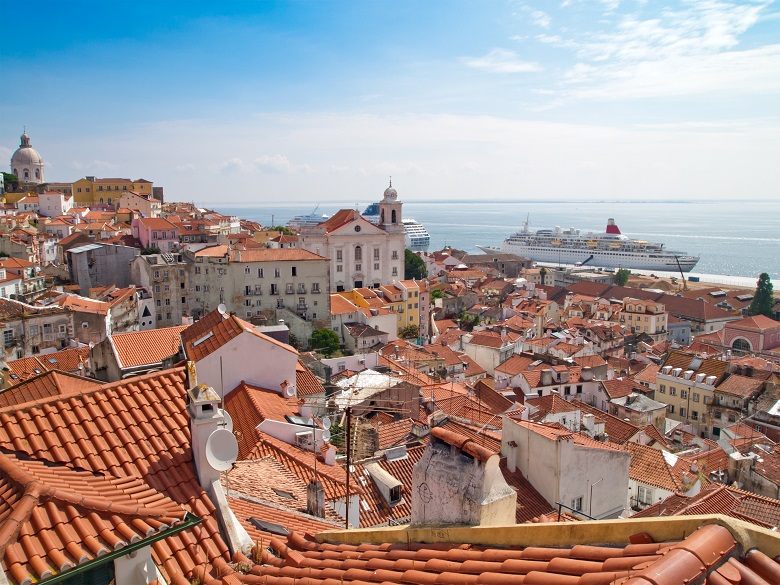
Alfama
Wandering through the historic Alfama district is considered one of the best things to do in Lisbon. This picturesque area features narrow alleys, colorful houses, and authentic local atmosphere. It's perfect for getting lost and discovering hidden gems.
LX Factory
This cool arts center housed in a historical industrial complex offers a unique blend of arty retailers, eateries, and creative spaces. It's an excellent spot to experience Lisbon's contemporary cultural scene.
Miradouro de Santa Luzia & Miradouro das Portas do Sol
These adjacent viewpoints in Alfama offer breathtaking panoramas of the city and the Tagus River. They're ideal spots for capturing memorable photos of Lisbon's landscape.
Praça do Comércio
This grand square by the river is one of Europe's largest and most impressive. Surrounded by elegant yellow buildings and featuring a triumphal arch, it's a central hub of Lisbon's urban life.

Rossio Square
Also known as Pedro IV Square, this bustling plaza in the heart of Lisbon features beautiful wave-pattern cobblestones, ornate fountains, and lively cafes.
Lisbon Aqueduct
The Águas Livres Aqueduct is an impressive 18th-century structure stretching 14 km, with a notable 65m-high section spanning the Alcântara Valley. It offers a unique perspective on the city's history and engineering.
Top Museums
Lisbon boasts an impressive array of museums that showcase the city's rich history, art, and culture. Here are some of the top museums to visit in the Portuguese capital:
National Museum of Ancient Art (Museu Nacional de Arte Antiga)
This museum houses the most significant collection of Portuguese art from the 12th to the 19th century. With over 40,000 pieces, including paintings, sculptures, and decorative arts, it's a treasure trove of national heritage. Don't miss the St. Vincent Panels, a set of six paintings depicting 15th-century Portuguese society.
Calouste Gulbenkian Museum
Home to one of Europe's finest art collections, this museum features works spanning 4,000 years. The collection includes Egyptian, Greco-Roman, and Islamic art, as well as European masterpieces. With its modern and ancient art sections, it offers a comprehensive journey through art history.
National Tile Museum (Museu Nacional do Azulejo)
Housed in the Madre de Deus Convent, this unique museum is dedicated to the famous Portuguese azulejo tiles. It showcases six centuries of tile work, including the impressive Grande Panorama de Lisboa, a massive 18th-century cityscape of Lisbon.

18th-century Lisbon represented in azulejos, National Tile Museum, Lisbon
MAAT - Museum of Art, Architecture and Technology
Opened in 2016, MAAT is a contemporary museum exploring the intersections between art, technology, and architecture. Its striking building, designed by British architect Amanda Levete, has become an iconic part of Lisbon's waterfront.
Maritime Museum (Museu da Marinha)
This museum honors Portugal's rich maritime history with a collection of 17,000 historical pieces, including ship parts, navigational instruments, and maps. It's one of the most visited museums in Lisbon, second only to the National Coach Museum.
Berardo Collection Museum (Museu Coleção Berardo)
Featuring works by over 900 artists, including Picasso, Dalí, and Warhol, this museum offers a journey through modern and contemporary art movements. It covers styles such as Dada, Surrealism, Abstract Expressionism, and Pop Art.
National Coach Museum (Museu Nacional dos Coches)
Housing an unparalleled collection of ceremonial and promenade vehicles from the 17th to 19th centuries, this museum offers a unique glimpse into European courtly life. The highlight is the sumptuous Golden Coach used by Portuguese monarchs.

Local Cuisine
Lisbon's culinary scene is a delightful blend of traditional Portuguese flavours and modern interpretations. The city's signature dishes include the iconic bacalhau (salt cod), which appears in numerous preparations, most notably in the beloved bacalhau à Brás, a hearty combination of shredded cod, eggs, and crispy potatoes. Fresh seafood takes centre stage at establishments like Cervejaria Ramiro, where the catch of the day is served with remarkable simplicity. Local tascas (taverns) offer authentic Portuguese fare, from the humble yet flavourful bifana (pork sandwich) to the robust cozido à Portuguesa (traditional meat stew). The city's maritime heritage shines through in dishes like grilled sardines and arroz de marisco (seafood rice), whilst the famous pastéis de nata (custard tarts) showcase Lisbon's mastery of sweet treats. From traditional eateries in the historic Alfama district to contemporary restaurants putting modern spins on classic recipes, Lisbon's dining scene perfectly balances preservation of culinary heritage with gastronomic innovation.
Shopping
Lisbon offers a diverse and sophisticated shopping experience across several distinct districts. The elegant Avenida da Liberdade, often compared to Paris's Champs-Élysées, stands as the city's premier shopping boulevard, hosting luxury brands like Louis Vuitton, Prada, and Cartier. The historic Chiado and Baixa districts present a delightful mix of traditional Portuguese shops, international retailers, and charming boutiques, including the world's oldest bookstore, Livraria Bertrand. For a comprehensive shopping experience, visitors can explore modern shopping centres such as Centro Colombo, the largest mall in the Iberian Peninsula, or Centro Vasco da Gama, which offers over 160 shops alongside stunning waterfront views. The city also boasts unique shopping destinations like LX Factory, housed in a former industrial complex, and Embaixada, set in a beautiful 19th-century palace, where shoppers can discover Portuguese designers and artisans.
Nature in and around Lisbon
Lisbon and its surroundings offer a remarkable variety of natural attractions that will delight nature enthusiasts. The Tagus Estuary Natural Reserve, Portugal's largest wetland, lies at the city's doorstep and provides a spectacular sight of thousands of flamingos during autumn, alongside numerous other bird species such as stilts, redshanks and pied avocets. Just a short drive from the capital, the stunning Arrábida Natural Park presents dramatic coastal scenery with limestone mountains covered in Mediterranean vegetation and pristine beaches with crystal-clear waters, perfect for kayaking and snorkelling. Nature lovers can also explore the lush Estufa Fria botanical garden in the heart of Lisbon, featuring three distinct gardens within Eduardo VII Park, where peaceful strolls amid caves and verdant pathways offer a tranquil escape from the urban bustle. The nearby Sintra-Cascais Natural Park combines breathtaking natural landscapes with historical sites, whilst the Tapada Nacional de Mafra, merely 42 kilometres from Lisbon's centre, provides an 800-hectare sanctuary where visitors can spot diverse wildlife including foxes, deer, eagles and owls.
Getting to Lisbon & Around
Getting to Lisbon
By air
Lisbon’s main gateway is Humberto Delgado Airport (IATA: LIS), about 7km northeast of the historic centre, serving extensive European and intercontinental routes.
The airport is operated by ANA/VINCI Airports and functions as a hub for TAP Air Portugal alongside significant operations by low-cost carriers, giving broad connectivity across Europe, Brazil and Africa.
The official airport site provides live flight information, terminal details and access guidance for planning arrivals and onward connections.
From the airport
The Red Line of the Lisbon Metro runs directly from “Aeroporto” station to São Sebastião, connecting with other lines for Baixa/Chiado and beyond; services operate daily roughly 06:30–01:05 with frequent trains.
The airport is also linked by city buses and has taxi/ride-hailing access points and ground-transport services signposted in the terminals for straightforward transfers.
By train
Within Portugal, long-distance Alfa Pendular and Intercidades services connect Lisbon with cities such as Porto, Coimbra and Faro; current timetables and routes are listed by Comboios de Portugal (CP).
Cross-border rail is evolving: governments have discussed reinstating night trains like the Lusitânia (Madrid–Lisbon) and Sud-Express (Hendaye–Lisbon), while works on the Elvas–Évora section are part of a wider corridor expected to cut journey times between Portugal and Spain; always check the latest schedules before planning.
By long-distance coach
Coaches provide frequent, direct links from Spanish and Portuguese cities to Lisbon, typically serving Oriente and Sete Rios bus terminals for easy onward metro connections.
- Madrid–Lisbon routes are widely available with multiple daily departures, commonly arriving at Oriente or Sete Rios depending on operator.
- Oriente (Parque das Nações) is a major intermodal hub used by Rede Expressos and international operators, with city transport on site.
By car
Portugal’s motorways (autoestradas) are largely tolled, using a mix of traditional booths and electronic systems; visitors can use solutions such as Via Verde and Easytoll to handle electronic toll sections smoothly.
In the Lisbon area, both the 25 de Abril and Vasco da Gama bridges are tolled in the northbound direction, so plan routes and payment methods in advance to avoid delays.
By sea
Lisbon Cruise Port sits on the Tagus near the historic centre, featuring a modern terminal inaugurated in 2017 and berths capable of handling the largest ships.
The terminal’s location offers easy city access and is a short road transfer from the airport, supporting both transit calls and homeport operations for cruise itineraries.
Entry and borders
Portugal is in the Schengen Area, and many travellers (including UK nationals) can visit visa-free for up to 90 days in any 180-day period; always confirm current requirements before travel.
The EU Entry/Exit System (EES) is scheduled to start on 12 October 2025 and may add time at the border for biometric checks, while ETIAS is planned to launch in the last quarter of 2026 for visa-exempt visitors.
Getting around Lisbon
Lisbon is easy to navigate using the integrated public transport network of Metro, buses, trams, suburban trains and ferries, complemented by taxis, ride-hailing and bike share for shorter hops across the hills and waterfront. The most efficient combination for most visitors is the Metro plus a reloadable Viva Viagem card, with buses/trams from Carris filling the gaps above ground.
Tickets and passes
A reloadable Viva Viagem/navegante occasional card works across Metro, Carris buses and trams, CP suburban trains and the Transtejo & Soflusa ferries, so one card covers almost all urban trips when properly loaded and validated. Metro also supports multiple purchase and reload channels, including ticket machines, ticket offices and contactless bank cards for eligible gates, which speeds up travel. The Lisboa Card tourist pass includes transport on Carris, Metro and the Sintra/Cascais CP lines alongside attraction entries, which can be convenient for sightseeing-heavy days.
Metro
Metropolitano de Lisboa runs four colour-coded lines with broad city coverage and frequent services, typically operating from around 06:30 until after midnight for fast cross-city journeys. The Red Line links key interchanges and the airport station “Aeroporto”, with swift transfers to other lines for Baixa/Chiado and beyond. Trains run at short headways and stations post live service information, making the Metro the backbone for crossing longer distances in the city centre.
Buses and trams
Carris operates the city’s surface network of modern buses and the iconic electric trams, which are especially useful for neighbourhoods and hill routes beyond immediate Metro reach. Real-time updates, route maps and service notices are published by Carris, and the same card used for the Metro is valid when properly loaded and validated on board. For steep ascents and short inner-city hops, the tram network complements the Metro with frequent stops at street level.
Funiculars and lift
Carris also runs the historic funiculars (Glória, Bica and Lavra) and the vertical Santa Justa Lift, designed to overcome steep gradients between Baixa and the higher quarters. The Santa Justa Lift connects Rua de Santa Justa to Largo do Carmo and is both a practical link and a heritage attraction with panoramic views. Service pages from Carris provide current operating details for the lift and funiculars before planning a ride.
Suburban trains
CP’s Lisbon urban trains are ideal for coastal or suburban trips, including the Cascais Line from Cais do Sodré and the Sintra Line from Rossio, both integrated with city transport. Frequent services run from early morning to late at night, making them popular for day trips as well as commuting within the wider metropolitan area. Timetables and live updates are available via CP’s official channels to coordinate with Metro or bus connections.
Ferries
Transtejo & Soflusa ferries connect central terminals on the north bank to south-bank towns such as Cacilhas, Barreiro, Seixal and Montijo, offering scenic and practical river crossings. Core routes depart from Cais do Sodré and Terreiro do Paço, integrating with Metro, suburban trains and buses at those hubs. Route lists and operating information are publicly documented to help choose the right crossing for each itinerary.
Taxis and ride-hailing
Taxis are widely available at signed ranks, while ride-hailing apps such as Bolt operate across the city and can be convenient late at night or with luggage. Pick-ups at major hubs and the airport are straightforward through app-based kerbsides and dedicated areas. Vehicle categories within the apps range from economy to larger cars, matching different group sizes and comfort needs.
Cycling and micromobility
GIRA, Lisbon’s public bike-sharing scheme managed by EMEL, has expanded its station network and integrates with the Navegante ecosystem, making short, flat trips and last-mile connections easier. Coverage has grown to all Lisbon parishes, with hundreds of stations and a large e-bike fleet supporting hillier rides. The official announcements note millions of trips since launch, reflecting growing viability alongside buses and Metro.
Night travel
Carris’ Rede da Madrugada night network provides overnight coverage with several core routes and additional departures from Cais do Sodré around 02:00, bridging the gap when Metro is closed. Route numbers and extra trips are published in service notices to help plan late-night returns after dining or events. Coordinating night buses with suburban trains or ferries where available can maintain connectivity across the wider area.
Practical tips
Use official apps and sites from Metro Lisboa, Carris, CP and Transtejo & Soflusa for live times, disruption alerts and simple journey planning across modes. Major hubs such as Cais do Sodré link Metro, suburban trains and ferries, simplifying multi-modal transfers along the riverfront and to the coast. Keep the same card topped up and remember to validate correctly at gates or on board to ensure seamless travel throughout the network.

Best Time to Visit
The optimal time to visit Lisbon is during the spring months from March to May or autumn months from September to October. During these shoulder seasons, you'll experience pleasantly warm temperatures around 22°C, making it ideal for exploring the city's hilly streets and historic neighbourhoods. These periods offer the perfect balance of comfortable weather and fewer tourist crowds, whilst also benefiting from more reasonable accommodation prices compared to the peak summer months. It's best to avoid July and August, as these months bring sweltering temperatures up to 30°C, massive crowds and significantly higher hotel rates. The shoulder seasons also showcase Lisbon at its most charming, with spring bringing blooming Jacaranda trees that paint the squares in purple hues, whilst autumn offers the possibility of late-season beach visits and the atmospheric scent of roasting chestnuts wafting through the streets.