• Don't want to see ads? Install an adblocker like uBlock Origin or use a Europe-based privacy-friendly browser like Vivaldi or Mullvad.

Is haplogroup D actually the Sumerians of Ancient Mesopotamia?

ElijahShell

Newbie
Messages
4
Reaction score
1
Points
3
The haplogroup D, a male lineage mainly distributed in Japan, Tibet, and the Andamanese islands, is the third oldest human Y haplogroup in the world, only younger than haplogroup A and B. Considering that they entered East Asia by crossing the Iranian Plateau, and its sibling subclade, haplogroup E, are distributed all over the Middle East, it is possible that haplogroup D has also been living in Mesopotamia between the two rivers for a very long time. The ancient Sumerians were called the "black-headed ones", I read that some ethnic groups in Tibet also called themselves the "black-headed people", which is too hard to be a coincidence.
Dukes-1.jpg

Screenshot 2024-04-19 160550.png

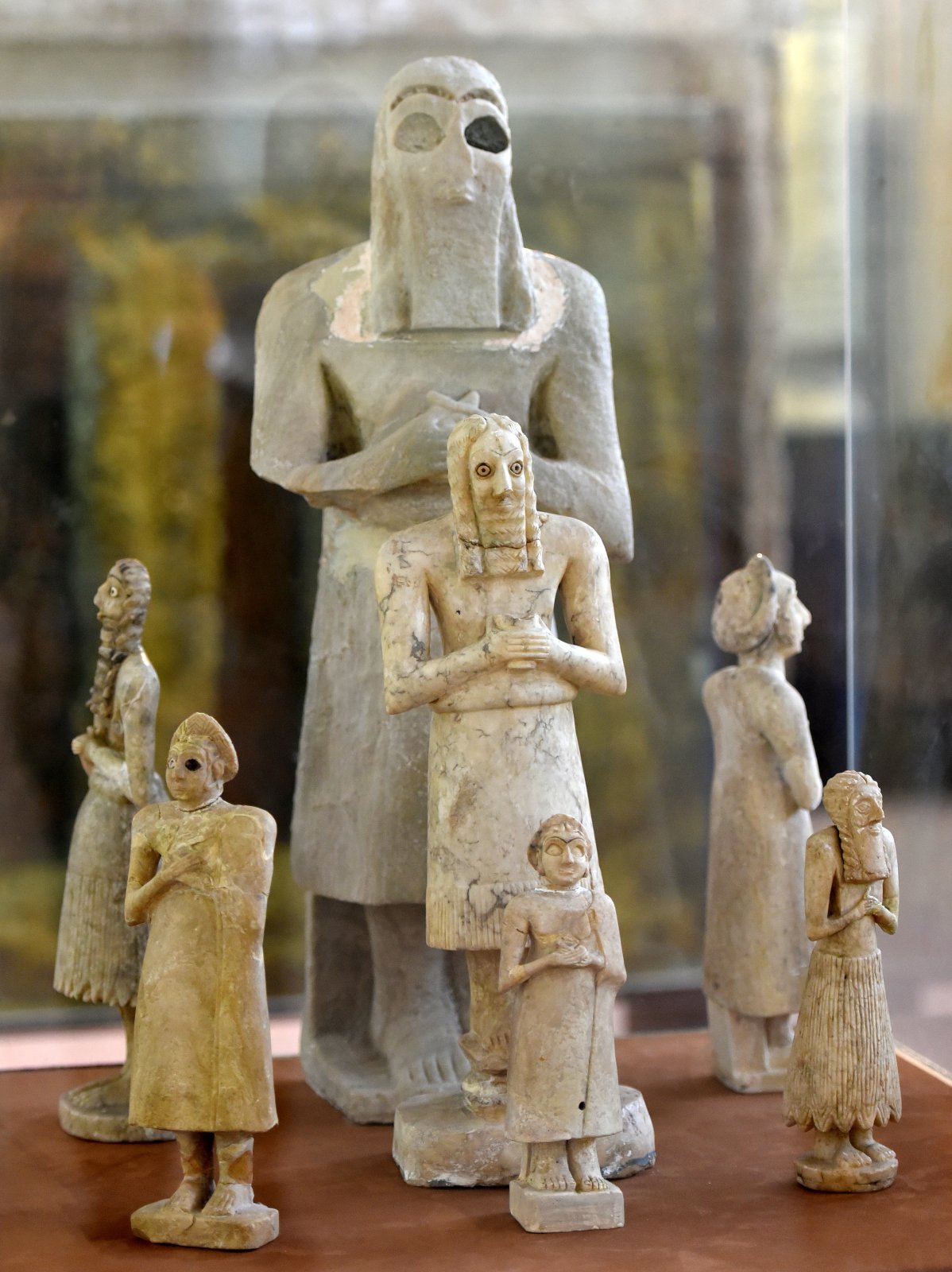
The ancient Sumerian statue and the face of the Jomon, notice how similarly the shape of eyes and the way they gaze are alike.
ancient-sumerian-carvings-they-have-countless-others-with-v0-92zm2hiv754b1.jpg


Sumerian_Statues_from_Eshnunna_and_Khafajah_of_Diyala_region,_Iraq_Museum.jpg

unnamed.jpg

86c9e772c32ae77f1e766fd26cfbbce1.jpg

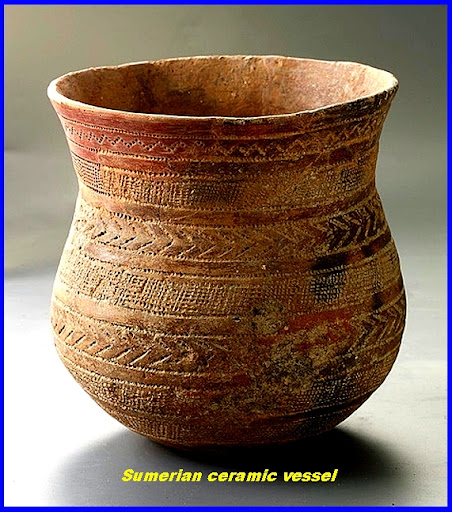
Ancient Sumerian artifacts.
800px-Stone_statue,_late_Jomon_period.jpg

jomon-pottery-hero.jpg


download.jpg


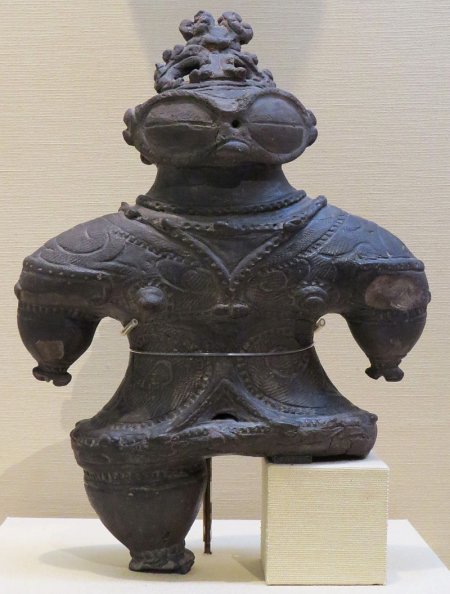
Jomon-Period artifacts

When I look at the Jomon Japanese culture, it always gives me a strong vibe that somehow they are related to ancient Sumerians in mysterious ways.
 

Attachments

  • 800px-Stone_statue,_late_Jomon_period.jpg
    800px-Stone_statue,_late_Jomon_period.jpg
    146.3 KB · Views: 570
I really don't see how the Sumerians could be more closely related to the Jomons or Tibetans than to neighbouring Middle Eastern populations.
 
I really don't see how the Sumerians could be more closely related to the Jomons or Tibetans than to neighbouring Middle Eastern populations.
What about their Y haplogroup? There are reports about some rare cases of branch D0, a deep-rooting DE lineage detected in some males from Syria.
 
Someones see ressemblances (here the eyes) where I can't find any. And as already said, we have to beware of paintings and statues. This Jômon reconstitution is dubious IMO.
As Maciamo I don't think we have any element of proof linking Sumerians to Thibetans and even less to Jomon people (of what time?). If Sumerians had had some ties with Jômons it would have been through very remote common ancestros, I never heard of a return of recent (Neolithic???) Jômons people to West. Have we any bit of Y haplo D found in Mesopotamia todate, ancient or current ???
Some ancient myths about "first" Sumerians described them as high statured people come by sea, so? We have to avow we know very few about the ssupposed "true and first" Sumerians on the physical aspect.
 
Inventing a connection with the Jomon people doesn't make any sense. If D0 was present among the Sumerians, it could only have been in completely negligible traces, a leftover from early modern humans. D is a very ancient haplogroup and predates the West/East-Eurasian split, yet alone the differences of comparably recent ethnic groups. I think it is plausible to assume that the Sumerians were dominated by haplogroups like J, T and perhaps even L.
 
No, I'm 99% sure Sumerians were J1


This is yet another attempt, in line with afrocentrism, to appropiate an ancient (Abrahamic) culture


And I think you were trying to say something like "haplo E is Egypt, haplo D is Mesopotamia, we created civilization"

But the truth is Y-DNA DE is African and Y-DNA CF is Eurasian
 
No, I'm 99% sure Sumerians were J1


This is yet another attempt, in line with afrocentrism, to appropiate an ancient (Abrahamic) culture


And I think you were trying to say something like "haplo E is Egypt, haplo D is Mesopotamia, we created civilization"

But the truth is Y-DNA DE is African and Y-DNA CF is Eurasian
Interesting, if DE is African, so is CT, which in turn makes CF ultimately African, dont you think?
 
If we go back until Adam grand'father, we are all of us Africans (or Asians, if you're a Chinese theory supporter).
 
What is this Chinese theory?
I don't know if it is THE or A Chinese theory but I read somewhere on another forum (forgotten the name) that some theory places the origin of Homo sapiens and even older Homo races in eastern Asia and not in Africa. It isn't so new or so old (some years ago).
I had not a the complete argumentation at hand, and I was rather secptical at first. Perhaps it was based on the Y-haplo study? Sorry I don't know more todate.
 
I don't know if it is THE or A Chinese theory but I read somewhere on another forum (forgotten the name) that some theory places the origin of Homo sapiens and even older Homo races in eastern Asia and not in Africa. It isn't so new or so old (some years ago).
I had not a the complete argumentation at hand, and I was rather secptical at first. Perhaps it was based on the Y-haplo study? Sorry I don't know more todate.

What is probably meant here is a theory within the context of the Multiregional Evolution model. Its basic premise is that modern humans evolved from archaic humans in multiple regions simultaneously. A varation of this model is supported by Chinese anthropologists and archeologists, although I don't know how mainstream this theory is in Chinese academia. What it states is that East Asians evolved directly from local archaic humans such as Homo erectus pekinensis (Peking Man), an interpretation with a rather nationalist and racial bias. Among the principle challenges to this model is its inability to explain the identical mutations that would lead to brain expansion in all human populations worldwide. The African origin for all modern humans clearly has the upper hand.
 
Last edited:
What is probably meant here is a theory within the context of the Multiregional Evolution model. Its basic premise is that modern humans evolved from archaic humans in multiple regions simultaneously. A varation of this model is supported by Chinese anthropologists and archeologists, although I don't know how mainstream this theory is in Chinese academia. What it states is that East Asians evolved directly from local archaic humans such as Homo erectus pekinensis (Peking Man), an interpretation with a rather nationalist and racial bias. Among the principles challenges to this model is its inability to explain the identical mutations that would lead to brain expansion in all human populations worldwide. The African origin for all modern humans clearly has the upper hand.
How accurate is the claim in this paper stating that recent data disproves the "Out of Africa" theory? Specifically, it suggests that non-African people lack key SNPs (M91, P97, etc.) associated with haplogroups A and B in their Y-chromosomes. If true, would this have implications for the root of the Y-haplogroup tree?

"A critical datapoint has emerged that disproves the “Out of Africa” concept; specifically, recent data shows that non-African people have neither M91, P97, M31, P82, M23, M114, P262, M32, M59, P289, P291, P102, M13, M171, M118 (haplogroup A and its subclades SNPs), nor M60, M181, P90 (haplogroup B SNPs) in their Y-chromosomes."
 
D2 is present in the Arab/Mesopotamian world, however this lineage is extremely rare and their Autosomal DNA was genetically swallowed up by J1, and K1(LT) Paleolithic tribes; long before Mesopotamia started record keeping.
IMG_1425.webp
 
The haplogroup D, a male lineage mainly distributed in Japan, Tibet, and the Andamanese islands, is the third oldest human Y haplogroup in the world, only younger than haplogroup A and B. Considering that they entered East Asia by crossing the Iranian Plateau, and its sibling subclade, haplogroup E, are distributed all over the Middle East, it is possible that haplogroup D has also been living in Mesopotamia between the two rivers for a very long time. The ancient Sumerians were called the "black-headed ones", I read that some ethnic groups in Tibet also called themselves the "black-headed people", which is too hard to be a coincidence.
View attachment 16019
View attachment 16020
The ancient Sumerian statue and the face of the Jomon, notice how similarly the shape of eyes and the way they gaze are alike.
View attachment 16021

View attachment 16022
View attachment 16024
View attachment 16025
Ancient Sumerian artifacts.
View attachment 16026
View attachment 16028

View attachment 16029

Jomon-Period artifacts

When I look at the Jomon Japanese culture, it always gives me a strong vibe that somehow they are related to ancient Sumerians in mysterious ways.


You provide shrewd observations and insights on the potential link between the Sumerians and Jomon people. This is actually a very hot topic in the Japanese archaeology/anthropology society today, and there is now increasingly supportive evidence that there is a connection between Jomon people and the Sumerians. I'll provide some interesting similarities between the Sumerian and Jomon cultures below.


1) Similar grammatical structure and syntax. Both Sumerian and the Japanese language are agglutinative languages, which is an extremely rare form of language. Similar to the Japanese language, the Sumerian language writes both vowel and consonant sounds.

In addition, this is not well-known outside of Japan, but before the Japanese started using the Chinese characters, there were many other writing systems used especially in Shinto rituals. One of them is ‘Jindai-Moji’, which literally means ‘characters of the age of the gods’. Jindai-Moji has many forms, and some of them look just like Sumerian alphabets.


2) Similar mythology and cultures. The Sumerian religion is similar to Shinto. The Sumerians worshiped nature, and their religion was polytheistic like Shinto in Japan. The Sumerians worshiped Anu (the sky god), Enlil (god of wind, air and storms), and Enki (god of water). This is very similar to Japanese mythology, in which the three most important gods are Amaterasu (god of Sun), Tsukuyomi (god of the moon), and Susanoo (the god of storm).

Furthermore, the three sacred treasures in the Sumerian (and old Babylonian) cultures are 1) mirror, 2) necklace, and 3) sword. This is similar to the Imperial regalia of Japan, which are 1) mirror Yata no Kagami, 2) Yasakani no Magatama (necklace piece), and 3) sword Kusanagi no Tsurugi. An interesting similarity between the Sumerian and Japanese mythology is that in the Japanese mythology, Susanoo obtains the sword (Kusanagi no Tsurugi) after fighting and defeating a giant eight-headed snake. In the Sumerian mythology, the sword is obtained after defeating a seven-headed serpent.

Another intersecting find is that many of the stone henges and giant stones in Japan have petroglyphs carved on them, and some of them have Sumerian alphabets carved on them. It is possible that the Jomon people developed the Sumerian language starting from these petroglyphs, or some Sumerians migrated to Japan and carved their alphabets on these stones. For a very long time, the scholars in Japan did not pay much attention to these petroglyphs on the stones, but scholars from Europe and even South America started reporting the same petroglyphs in their archeological sites, and the scholars in Japan finally started paying attention to this recently, so more research is coming in the future!


Also, the Imperial Seal of Japan (16-petal flower symbol) can be found in both Sumerian and Mesopotamian cultures, which makes me wonder if some Sumerians later migrated to Japan and formed the Imperial house in Japan. Historically, emperors in Japan were called ‘Sumera Mikoto’, which literally means ‘god’ of ‘Sumera’, which might come from ‘Sumer’.

Another similarity is how both cultures revered and utilized reed. The Sumerians called their land ‘ki-en-gi’, which means ‘place of the Lords of the reed’. In ancient Japanese literature, the Japanese called their own land ‘Ashihara no Nakatsukuni’, which literally means ‘middle country of reed beds’.


3) Jomon people migrated to other parts of the world and established civilizations outside Japan. The Jomon civilization spanned roughly from 10,500 – 300 BCE. The Jomons were excellent sailors – their wooden boats have been discovered, and scholars from Japan actually tested if they could sail from Taiwan to Okinawa using this boat, and they were successful (225 km distance!). Jomon-style pots have been found on not only on the Korean peninsula and Asia but also in South America. There was one volcanic eruption that likely contributed to the spread of Jomon people to other parts of the world. In 5250 BCE, the Kikai Caldera in the southern part of Kyushu exploded. This explosion is known as Akahoya or Kikai-Akahoya eruption, and this eruption is considered the most explosive and largest eruption in the past 10,000 years of human history. This eruption decimated the Jomon population and culture on the Kyushu island, and some Jomon people migrated to the northern part of Japan, but some moved to other parts of the world. Jomon pots have been found on the Korean peninsula, and even an extremely similar-looking female figurine has been found from a Vinča culture archeology site in Southeast Europe. It is possible that Jomon people migrated to the Mesopotamia region and started the Sumerian civilization. It is said that the Sumerian civilization was started by ‘black-headed people from the east’. Interestingly, it is considered that the Sumerian civilization started around the time of this eruption (i.e. 5300-5000 BCE; no one knows the exact date, of course).


4) Possible encounter of aliens in both Sumerian and Jomon civilization. The Sumerian mythology talks about Annunaki coming to the earth. If you look at the picture of Jomon dogu figurine, you can see how exotic it looks for such an old civilization. Vaughn Greene from the US, after analyzing Jomon dogu in Japan, concluded that there are over 30 points of similarity between these dogu statues and modern space suits (lenses, rivets, belts, quick release pins, earphones, rubber cuffs, etc.). The Japanese mythology is also filled with encounter with extraterrestrial beings.


This connection between the Sumerians and Jomon (Japanese people) was actually first pointed out by the German doctor/scholar Engelbert Kämpfer, who visited Japan in the 17th century, then wrote and published ‘The History of Japan (Geschichte und Beschreibung von Japan).’

This is an active area of research, and hopefully more studies will be available in English in the future.
 
Not even a chance.
Sumerians are clearly J1 because of the Marsh 'Arabs' being 70-80+% of that haplogroup (they self-identify as Arabs rather than having migrated, as most people who call themselves Arab)

Also, Sumerians founded the Egyptian civilization (20% J1).
Also, Abraham, was from Ur.

Haplogroup D and E branched tens of thousands of years ago, during the Stone Age.
And as for the 'Sumera' of the Japan Imperial House, we just don't know, but "Sumerians" called themselves Saggagi ("black heads")
 
Not even a chance.
The West and East Eurasians have very segmented haplogroups since 40000-30000 years.

Sumerians are clearly J1 because of the Marsh 'Arabs' being 70-80+% of that haplogroup (they self-identify as Arabs rather than having migrated, as most people who call themselves Arab)

Also, Sumerians founded the Egyptian civilization (20% J1).
Also, Abraham, was from Ur.

Haplogroup D and E branched tens of thousands of years ago, during the Stone Age.
And as for the 'Sumera' of the Japan Imperial House, we just don't know, but "Sumerians" called themselves Saggagi ("black heads")
 
Sumerians are clearly J1 because of the Marsh 'Arabs' being 70-80+% of that haplogroup (they self-identify as Arabs rather than having migrated, as most people who call themselves Arab)
The Sumerians are clearly made up of multiple ethnic groups through assimilating nearby nations, they were never a homogenous nation. I suppose J1 was a prevalent haplogroup among the Sumerians along with other haplogroups like G2, T, E1b1 at that time. But since people never tested the DNA of the bones in any of the Sumerian royal cemetery, it is still hard to tell what could be the haplogroup of the Sumerian ruling elites.

Also, Sumerians founded the Egyptian civilization (20% J1).
Sumerians influenced the Egyptian civilization, however it will be kind of a stretch to say that the Egyptian civilization was founded by the Sumerians. As for the haplogroups of the pharaohs, so far I have only read about King Tutankhamun being R1b and Ramesses III being E1b1a, but no DNA information for any other Egyptian royals have been reported.
 
You provide shrewd observations and insights on the potential link between the Sumerians and Jomon people. This is actually a very hot topic in the Japanese archaeology/anthropology society today, and there is now increasingly supportive evidence that there is a connection between Jomon people and the Sumerians. I'll provide some interesting similarities between the Sumerian and Jomon cultures below.


1) Similar grammatical structure and syntax. Both Sumerian and the Japanese language are agglutinative languages, which is an extremely rare form of language. Similar to the Japanese language, the Sumerian language writes both vowel and consonant sounds.

In addition, this is not well-known outside of Japan, but before the Japanese started using the Chinese characters, there were many other writing systems used especially in Shinto rituals. One of them is ‘Jindai-Moji’, which literally means ‘characters of the age of the gods’. Jindai-Moji has many forms, and some of them look just like Sumerian alphabets.


2) Similar mythology and cultures. The Sumerian religion is similar to Shinto. The Sumerians worshiped nature, and their religion was polytheistic like Shinto in Japan. The Sumerians worshiped Anu (the sky god), Enlil (god of wind, air and storms), and Enki (god of water). This is very similar to Japanese mythology, in which the three most important gods are Amaterasu (god of Sun), Tsukuyomi (god of the moon), and Susanoo (the god of storm).

Furthermore, the three sacred treasures in the Sumerian (and old Babylonian) cultures are 1) mirror, 2) necklace, and 3) sword. This is similar to the Imperial regalia of Japan, which are 1) mirror Yata no Kagami, 2) Yasakani no Magatama (necklace piece), and 3) sword Kusanagi no Tsurugi. An interesting similarity between the Sumerian and Japanese mythology is that in the Japanese mythology, Susanoo obtains the sword (Kusanagi no Tsurugi) after fighting and defeating a giant eight-headed snake. In the Sumerian mythology, the sword is obtained after defeating a seven-headed serpent.

Another intersecting find is that many of the stone henges and giant stones in Japan have petroglyphs carved on them, and some of them have Sumerian alphabets carved on them. It is possible that the Jomon people developed the Sumerian language starting from these petroglyphs, or some Sumerians migrated to Japan and carved their alphabets on these stones. For a very long time, the scholars in Japan did not pay much attention to these petroglyphs on the stones, but scholars from Europe and even South America started reporting the same petroglyphs in their archeological sites, and the scholars in Japan finally started paying attention to this recently, so more research is coming in the future!


Also, the Imperial Seal of Japan (16-petal flower symbol) can be found in both Sumerian and Mesopotamian cultures, which makes me wonder if some Sumerians later migrated to Japan and formed the Imperial house in Japan. Historically, emperors in Japan were called ‘Sumera Mikoto’, which literally means ‘god’ of ‘Sumera’, which might come from ‘Sumer’.

Another similarity is how both cultures revered and utilized reed. The Sumerians called their land ‘ki-en-gi’, which means ‘place of the Lords of the reed’. In ancient Japanese literature, the Japanese called their own land ‘Ashihara no Nakatsukuni’, which literally means ‘middle country of reed beds’.


3) Jomon people migrated to other parts of the world and established civilizations outside Japan. The Jomon civilization spanned roughly from 10,500 – 300 BCE. The Jomons were excellent sailors – their wooden boats have been discovered, and scholars from Japan actually tested if they could sail from Taiwan to Okinawa using this boat, and they were successful (225 km distance!). Jomon-style pots have been found on not only on the Korean peninsula and Asia but also in South America. There was one volcanic eruption that likely contributed to the spread of Jomon people to other parts of the world. In 5250 BCE, the Kikai Caldera in the southern part of Kyushu exploded. This explosion is known as Akahoya or Kikai-Akahoya eruption, and this eruption is considered the most explosive and largest eruption in the past 10,000 years of human history. This eruption decimated the Jomon population and culture on the Kyushu island, and some Jomon people migrated to the northern part of Japan, but some moved to other parts of the world. Jomon pots have been found on the Korean peninsula, and even an extremely similar-looking female figurine has been found from a Vinča culture archeology site in Southeast Europe. It is possible that Jomon people migrated to the Mesopotamia region and started the Sumerian civilization. It is said that the Sumerian civilization was started by ‘black-headed people from the east’. Interestingly, it is considered that the Sumerian civilization started around the time of this eruption (i.e. 5300-5000 BCE; no one knows the exact date, of course).


4) Possible encounter of aliens in both Sumerian and Jomon civilization. The Sumerian mythology talks about Annunaki coming to the earth. If you look at the picture of Jomon dogu figurine, you can see how exotic it looks for such an old civilization. Vaughn Greene from the US, after analyzing Jomon dogu in Japan, concluded that there are over 30 points of similarity between these dogu statues and modern space suits (lenses, rivets, belts, quick release pins, earphones, rubber cuffs, etc.). The Japanese mythology is also filled with encounter with extraterrestrial beings.


This connection between the Sumerians and Jomon (Japanese people) was actually first pointed out by the German doctor/scholar Engelbert Kämpfer, who visited Japan in the 17th century, then wrote and published ‘The History of Japan (Geschichte und Beschreibung von Japan).’

This is an active area of research, and hopefully more studies will be available in English in the future.
I thanked you for yout contribution, but I don't share your analysis. The most of what you take as proofs of community between both is common to a lot of people on this planet. As a whole, religion is the lesser reliable mean to verify ancient links.
 
The Sumerians are clearly made up of multiple ethnic groups through assimilating nearby nations, they were never a homogenous nation. I suppose J1 was a prevalent haplogroup among the Sumerians along with other haplogroups like G2, T, E1b1 at that time. But since people never tested the DNA of the bones in any of the Sumerian royal cemetery, it is still hard to tell what could be the haplogroup of the Sumerian ruling elites.

I‘ll add J2 to the predicted Y-Haplogroups of the Sumerians.
 
Back
Top