Introduction
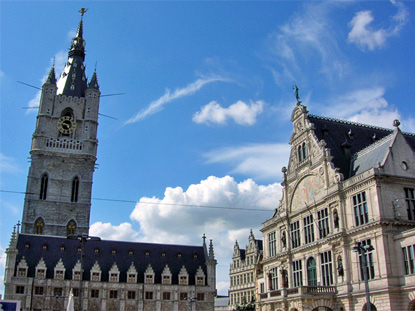
Ghent, Belgium's second-largest municipality and fourth-largest agglomeration (pop. 270,000, metro 470,000), is a historic city where the rivers Lys and Scheldt meet. The city centre is defined by its iconic three towers - Saint Nicholas Church, the Belfry, and Saint Bavo's Cathedral - while the medieval Gravensteen castle stands as a testament to its rich past. Along the historic Graslei and Korenlei quays, visitors can experience the city's bustling cafe culture and boat tours, while the Patershol district has evolved into a culinary destination. The city is particularly enchanting after dark, when its unique lighting plan illuminates historical façades and monuments until midnight, creating a magical atmosphere that highlights its architectural heritage.
Ghent was the 4th largest European city in the 13th century, with a population of 65,000. Ghent was also the birthplace of Charles V of Habsburg (Holy Roman Emperor and King of Spain), and of John of Gaunt, Duke of Lancaster (see History of England).
Interesting Facts about Ghent
- Ghent was once the second-largest city in Northern Europe after Paris, renowned for its leading position in cloth production and trade.
- The city is home to the iconic Belfry of Ghent, a UNESCO World Heritage site offering panoramic views of the city from its 91-metre height.
- Ghent hosts an annual Lichtfestival, transforming the city into a dazzling spectacle with artistic light installations.
- The city boasts the largest designated cycling area in Europe, with over 400 kilometres of cycling paths.
- Ghent's historic centre has been car-free since 2017, contributing to its status as a finalist for the European Green Capital Award.
- The Ghent Altarpiece, housed in St. Bavo's Cathedral, is one of the most famous artworks in the world.
- Ghent is known as the "Manhattan of the Middle Ages" due to its medieval architectural splendour and vibrant cultural scene.

History
The region of Ghent has been inhabited since the Stone Age and was continuously settled by various groups, including the Celts and Romans, before the arrival of Germanic tribes.
The name Ghent is derived from the Celtic word 'ganda', which means 'confluence', referring to the meeting of the Scheldt and Lys rivers.
Around 406/407, a Germanic tribe known as the Salian Franks invaded the region and settled permanently in the Leie and Scheldt valleys.
Two important abbeys, St. Peter (founded between 625-650) and St. Bavo (founded around 650), developed from the 7th century. By 800, these abbeys had become significant enough for Einhard, Charlemagne's biographer, to be appointed abbot of both.
Ghent also has a connection to the legend of King Arthur. Although there is no direct historical evidence linking Abbot Dunstan of Glastonbury to Ghent, it is known that he fled to Flanders. Two centuries later, Count Philip of Alsace is said to have possessed a mysterious manuscript that might have influenced Chrétien de Troyes, who wrote Perceval ou le conte del Graal, a work that helped immortalize the legend of King Arthur and his Knights of the Round Table.
In the late Middle Ages, Ghent was the most important city in Europe for cloth manufacturing and trading. The city imported wool from England and exported finished luxury cloth across Europe, from the Baltic Sea, Germany, and France to Spain, Portugal, and even North Africa. A significant portion of Ghent's households earned their living from the wool industry, which included sorting, washing, spinning, bleaching, weaving, fulling, and trading. The city's economy was largely controlled by a group of powerful merchant families.
In 1180, Count Philip of Alsace built the 'Gravensteen' ("Castle of the Counts") as a symbol of power to maintain control over the city and its influential burghers.

From the 13th to the 15th century, Ghent was one of the largest and most prosperous cities in Europe, second only to Paris outside Italy. The Van Eyck brothers, renowned for their masterpiece the Ghent Altarpiece, contributed to the city's rich cultural heritage. Humanist Erasmus of Rotterdam admired Ghent for its high intellectual level, which attracted many distinguished scholars.
The Reformation led to divisions between Protestants and Catholics in Ghent, with Protestants facing severe persecution under the Spanish Inquisition.
Between 1600 and 1660, a Catholic revival movement, supervised by Bishop Antoon Triest, focused on restoring dozens of monasteries, convents, churches, beguinages, chapels, and almshouses that had been destroyed or damaged. The Jesuits, who arrived during this period, introduced Baroque architecture to the city.
In the early 18th century, Ghent continued to flourish as a trading center. Although specific records of Ghent traders fitting out ships to China and India in 1714-1715 are not well-documented, the city's involvement in international trade was significant. The Theatre of St Sebastian, which opened in 1715, served as a cultural hub for the city's aristocracy and bourgeoisie.
A period of peace and prosperity began in 1740 under the reign of Austrian Empress Maria-Theresa. During this time, Ghent's textile industry expanded with the development of sugar refineries, fulling mills, bleach works, dye houses, and cotton-printing shops.
Around 1800, the mechanisation of the textile industry transformed Ghent, as it adopted spinning and weaving machines and steam engines from England. This led to Ghent being nicknamed 'the Manchester of the continent'. The influence of the French Revolution also brought significant social changes.
From 1800 to 1930, large textile factories were a defining feature of Ghent. The city's population tripled between 1815 and 1930. In 1913, Ghent hosted the World Exhibition, further solidifying its status as a major industrial and cultural center.
Despite being a Flemish city, French language and culture have historically had a strong influence in Ghent. Maurice Maeterlinck, a Ghent author and the only Belgian to win the Nobel Prize in Literature, wrote in French. Even today, some members of the bourgeoisie and upper-class families may still be heard speaking French in the city.
Main Attractions
Gravensteen
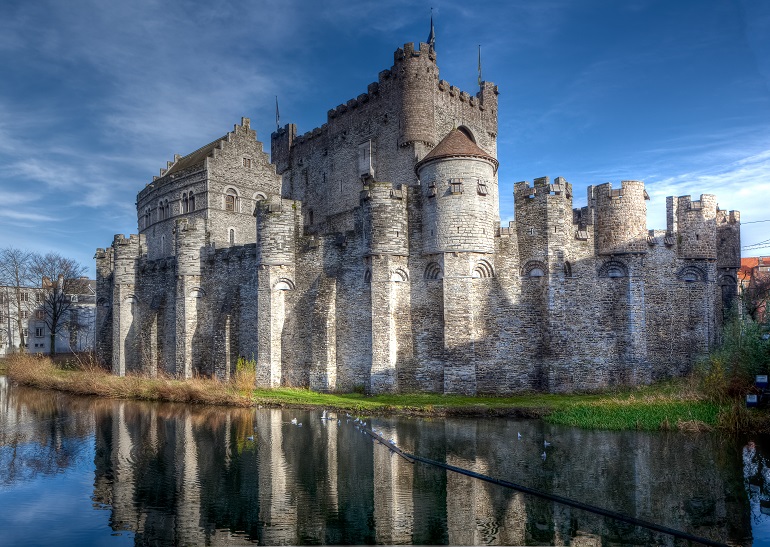
The Gravensteen ("Castle of the Counts"), a magnificent medieval castle situated in the heart of Ghent, Belgium, stands as one of Europe's most well-preserved medieval fortresses. Built in 1180 by Count Philip of Alsace and inspired by crusader castles, this imposing structure served as the residence of the Counts of Flanders until 1353. The castle features thick stone walls, 24 small watchtowers, a central keep, and a moat fed by the River Lys. Throughout its rich history, the Gravensteen has served various purposes, including a court, prison, mint, and even a cotton factory during the Industrial Revolution. Today, visitors can explore its impressive architecture, climb the central keep for panoramic views of Ghent, visit the intriguing Torture Museum, and enjoy interactive exhibits that bring medieval history to life. The castle also hosts various seasonal events, including medieval festivals and Christmas activities, making it a must-visit attraction for anyone travelling to Ghent.
St. Bavo's Cathedral
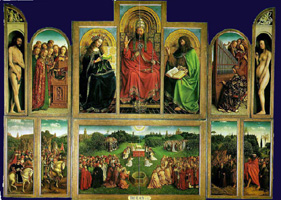
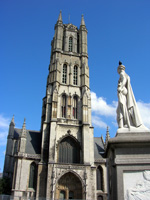
St Bavo's Cathedral, a magnificent Gothic edifice standing proudly in the heart of Ghent, is a testament to the city's medieval wealth and power. Originally consecrated in 942 as the Church of St John the Baptist, it evolved through centuries of construction and renovation to become the impressive 89-metre-tall cathedral we see today. The building showcases a remarkable blend of architectural styles, from its Romanesque crypt to its soaring Gothic choir and nave, completed in the 16th century. The cathedral houses numerous artistic treasures, most notably the famous Ghent Altarpiece (The Adoration of the Mystic Lamb) by the van Eyck brothers, as well as an exquisite Rococo pulpit crafted by Laurent Delvaux. As the seat of the Diocese of Ghent since 1559, this architectural masterpiece continues to captivate visitors with its rich history, stunning interior, and remarkable collection of religious art.
The history of Van Eyck's Mystic Lamb is worth mentioning here. The painting depicting the Christ's death on one panel and Adam and Eve on another, was almost destroyed by the Calvinists in the 16th century. Prude Austrian Emperor Joseph II was shocked at the nudity of the original ancestors and made them replace by a clad version. The painting was taken to Paris during the French Revolution, then stolen by the Germans during WWII, who concealed it in an Austrian salt mine, until it was eventually returned to Ghent.
Belfry (Belfort)
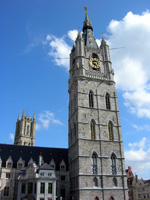
The majestic Belfry of Ghent, standing at 91 metres tall, is the highest belfry in Belgium and a proud UNESCO World Heritage site. This medieval tower, built between 1313 and 1380, is one of three iconic towers that define Ghent's skyline, nestled between Saint Bavo Cathedral and Saint Nicholas' Church. The tower, crowned by a golden dragon that has become the city's beloved mascot, served multiple purposes throughout history, from a watchtower and treasury to a bell tower regulating daily life. Today, visitors can climb 386 steps to enjoy panoramic views of Ghent's historic centre, whilst the tower continues its centuries-old tradition of musical performances with regular carillon concerts on Sunday mornings and the first Friday evening of each month. The Belfry stands as a testament to Ghent's medieval prosperity and independence, making it an essential stop for any traveller exploring this charming Belgian city.
Townhall (Stadhuis)
The Ghent Town Hall (Stadhuis) is a remarkable architectural marvel that showcases two distinct styles in perfect harmony. This quadrangular complex, which has served as the city's political heart since the 14th century, features a stunning late-Gothic wing with a flamboyant façade along Hoogpoort, built between 1519 and 1539, whilst the Renaissance wing along Botermarkt, constructed between 1595 and 1618, displays elegant Doric, Ionic and Corinthian columns inspired by Italian palazzi. The building houses 51 magnificent halls, including the historic Pacification Hall, the Arsenal Hall, the Mayor's Cabinet, and a wedding chapel, all lavishly decorated in varying styles. Though regular tourist access is limited, guided tours are available to explore this splendid building, which continues to serve as the city's administrative centre whilst standing as a testament to Ghent's rich architectural heritage.
Graslei & Korenlei
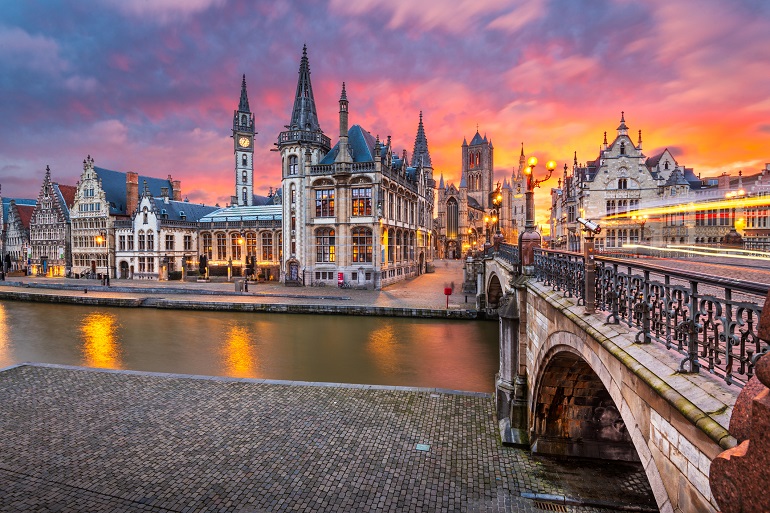
The Graslei and Korenlei are two historic quays situated along the Leie River in the heart of Ghent, Belgium. These picturesque waterfront promenades showcase a stunning collection of medieval guild houses and architectural masterpieces that reflect the city's prosperous trading past from the 11th century onwards. The Graslei, meaning 'Grass Quay', sits on the right bank whilst the Korenlei, or 'Wheat Quay', occupies the left bank, both having served as the city's bustling medieval port where grain trade flourished. Today, these protected cityscapes have transformed into one of Ghent's most beloved tourist destinations, offering a delightful blend of historic charm and modern vitality with their numerous cafés, boat tours, and outdoor terraces where visitors can relax whilst admiring the remarkable medieval façades reflected in the tranquil waters of the Leie.
Assembly Hall of the University (Aula Academica)
The Aula Academica, a magnificent Neo-Classical masterpiece in Ghent's historic centre, stands as the ceremonial heart of Ghent University. Designed by architect Lodewijk Roelandt and inaugurated in 1826, this grand edifice features an impressive façade inspired by the Roman Pantheon, with eight towering Corinthian columns and a triangular pediment. Inside, visitors will find a spherical ceremonial hall with an amphitheatre and a unique coffered ceiling where every flower design is different. The building's peristyle contains a fascinating 21-metre copper meridian line with an oculus that once helped determine the true solar noon. Note that the building will be closed for renovations from July 2024 until the end of 2027, but when open, it regularly hosts important university ceremonies, including the conferral of honorary doctorates to distinguished figures such as Kofi Annan and Angela Merkel.
Top Museums
1. Museum of Fine Arts Ghent (MSK)
The MSK is one of the oldest museums in Belgium, housing an impressive collection of around 9,000 works of art from the Middle Ages to the first half of the 20th century. The museum features works by renowned artists such as Hieronymus Bosch, Pieter Paul Rubens, and René Magritte. Its collection includes paintings, sculptures, works on paper, and a library of precious publications.
2. Design Museum Gent
Located in the heart of Ghent, the Design Museum Gent boasts an international design collection. The museum complex includes an 18th-century mansion and a modern wing, showcasing Belgian design alongside international pieces. The collection features furniture, ceramics, textiles, and more, reflecting the evolution of design over time.
3. Ghent City Museum (STAM)
STAM offers a chronological overview of Ghent's history, featuring ceremonial objects, construction fragments, furniture, and historical paintings. Highlights include a panoramic view of Ghent from 1534 and designs of the Ghent town hall and belfry.
4. Museum of Industry
Housed in an old cotton mill, the Museum of Industry provides insights into Ghent's industrial past. Visitors can enjoy a stunning view of the city from the top floor. The museum showcases technological changes over the past 250 years, reflecting Ghent's role as a textile center.
5. Dr. Guislain Museum
This museum focuses on psychiatry, exploring the human psyche through art, photography, and historical documents. It serves as a place where past and present meet, questioning mental health and wellbeing.
6. House of Alijn
The House of Alijn is a museum of daily life, exploring rituals, traditions, and habits from the 20th century to the present. It offers a unique perspective on everyday life and culture.
7. Ghent University Museum (GUM)
Located within the Ghent Botanical Garden, GUM is dedicated to science, research, and critical thinking. The museum highlights the process of scholarship through trial and error, doubt, and imagination.
8. St Peter's Abbey
While not strictly a museum, St Peter's Abbey hosts historio-cultural, literary, and photographic exhibitions. The site includes a large garden and historic buildings from the 17th and 18th centuries.
Local Cuisine
Ghent's culinary heritage is a delightful mix of hearty dishes and sweet delicacies. The city's most famous dish is waterzooi, a creamy stew dating back to medieval times, originally made with river fish but now commonly prepared with chicken, vegetables and a rich broth thickened with egg yolks. Local sweet treats include the iconic cuberdons (affectionately called 'neuzekes' or little noses), which are raspberry-flavoured cone-shaped sweets with a gooey centre, and the seasonal Ghent snowballs made with whipped margarine and chocolate. The city is also renowned for its Tierenteyn mustard, handcrafted since 1790 using a secret recipe, and traditional biscuits like speculoos and Gentse kletskoppen. Other regional specialities worth sampling include stoemp (a hearty mashed potato dish), Ganda ham (similar to Serrano ham), and mastels (cinnamon-spiced bread rolls traditionally served with butter and brown sugar).
Shopping
Ghent boasts Belgium's largest pedestrian shopping area, offering a delightful blend of modern retail and historic charm. The main shopping arteries of Langemunt and Veldstraat feature popular international brands, whilst Voldersstraat, Brabantdam and Vlaanderenstraat showcase designer boutiques and couture fashion. For those seeking unique treasures, the historic quarters around Oudberg and Sint-Jacobskirk are home to vintage shops and antique dealers. The city's markets add a vibrant dimension to the shopping experience, with the Vrijdagmarkt hosting vendors on Fridays and Saturdays, and a splendid flower market brightening the Kouter on Sunday mornings. Food enthusiasts shouldn't miss the artisanal offerings, from the historic Temmerman sweet shop, known for its traditional cuberdons (Ghent noses), to the centuries-old Tierenteyn-Verlent mustard shop, whilst contemporary establishments like Yuzu Chocolates bring innovative flavours to the city's retail landscape.
Nature in and around Ghent
Ghent offers a remarkable blend of urban and natural attractions that make it a paradise for nature enthusiasts. The Bourgoyen-Ossemeersen nature reserve spans over 210 hectares of wet grasslands, whilst the Assels area provides a natural floodplain where visitors can spot kestrels, buzzards and meadow birds throughout the year. The city boasts several hidden gardens, including the romantic Sint-Pietersabdij garden with its historic vineyard terraces and fruit trees, and the University Botanical Garden, home to an impressive collection of 7,000 plant species. For those seeking recreational spaces, the Blaarmeersen Sports and Recreation Park offers a peaceful retreat near the historic centre, whilst the Gentbrugse Meersen provides extensive grounds for sports, picnicking and community gatherings. The city's commitment to green spaces is further exemplified by its numerous parks and gardens, from the centrally located Citadelpark to the charming Veergrep, where students often gather to study amongst nature.
Getting Around
Public transport in Ghent is efficient and well-organised, featuring a comprehensive network of trams and buses that operate from early morning until late at night. The city's public transport system is managed by De Lijn, which provides convenient options for both locals and visitors. A single ticket allows unlimited travel within an hour, whilst the CityCard Gent offers unlimited access to all public transport services, making it an excellent choice for tourists. With easy access to major attractions and a user-friendly ticketing system, getting around Ghent is both simple and affordable.
Ghent is about halfway between Brussels and Bruges, or Antwerp and Lille, and can easily be reached by train from any of these cities. The fastest train connect it to Bruges in 35 min, Brussels in 30 min, Antwerp in 50 min and Lille in 45 min.
Best Time to Visit
The ideal time to visit Ghent is during the shoulder seasons from April to June or September to October, when you'll find a perfect balance of pleasant weather and manageable crowd levels. During these months, temperatures are comfortably mild, ranging from 11°C to 19°C, making it splendid for exploring the medieval city centre and enjoying canal cruises. Spring brings beautiful cherry blossoms to Parc Muink, whilst autumn offers stunning fall colours around Saint Michael's Bridge and Baudelopark. These periods also feature lower accommodation prices compared to the peak summer months of July and August, when the city becomes quite crowded during the famous Gentse Feesten festival. Whilst summer brings warmer temperatures and lively atmosphere, it also sees more rainfall and higher tourist numbers. Winter, particularly December, transforms Ghent into a magical destination with Christmas markets, though January and February can be quite cold with some attractions closed for renovations.


 Luxembourg Guide
 Netherlands Guide