• Don't want to see ads? Install an adblocker like uBlock Origin or use a Europe-based privacy-friendly browser like Vivaldi or Mullvad.

The Celts of Iberia

Status
Not open for further replies.
There are not Celtic genes.
In Ireland they speak a Celtic language.
Yes, there are some subclades attributed to celts, the ones I have showed you, which are coincident with the Celtic expansion, are found also in Ireland.
Let's be clear once for all : What countries you think have celtic ancestry and WHY ??
 
So what ?
:thinking: Maybe because Celticity is based on culture ?
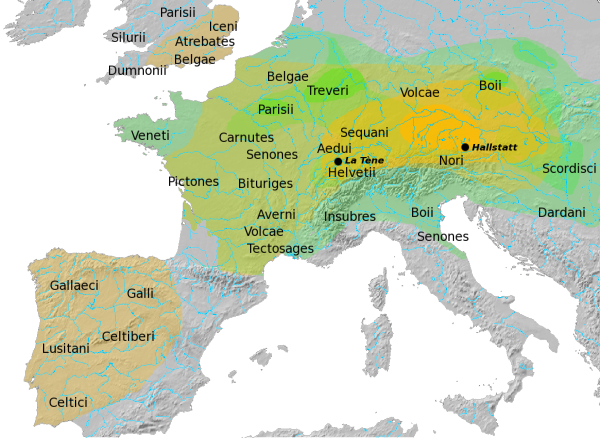
Celts_in_Europe.png


A few regions in France (the north east basically), the Swiss plateau, and to some extant maybe south western Germany.

The farther you are from these regions, the less celtic you are.
:rolleyes2: That's very nice, but I asked you WHY , you didn't show any evidence
 
Really? Quite amazing that you would actually make such a statement.

Well, here's the base of that theorie: "These stone inscriptions in Portugal and Spain are in the earliest written language of western Europe, Tartessian, and date from 800 BC to 400 BC. Professor Koch argues that this language can be deciphered as Celtic."

Now :

1 Halstatt predates these inscriptions,

2 Koch probably choose to label as celtic the IE language in which these inscriptions are written because it suits his own agenda, that would not be the first time that something similar happens,

3 they include the Basques in that theorie, which makes no sense at all,

4 The celtic languages are a branch of the italoceltic languages which clearly belong in Central Europe, far from Iberia.


Even if there is an antlantic connection (why not after all), it has nothing to do with the Celts.
 
:rolleyes2: That's very nice, but I asked you WHY , you didn't show any evidence

Is it too difficult to get ?
It corresponds basically to the core of the La Tène culture (the part that was not too demographically influenced).
 
Is it too difficult to get it ?
It corresponds basically to the core of the La Tène culture (the part that was not too demographically influenced).
It is so difficult to understand that the La Tène culture was expanded also to Iberia and Ireland ?
"La Tène cultural material appeared over a large area, including parts of Ireland and Great Britain(thelake dwellings at Glastonbury, England, are a well known example of La Tène culture), northern Spain , Burgundy, and Austria.
From their homeland, La Tène groups expanded in the 4th century to Hispania, the Po Valley, the Balkans, and even as far as Asia Minor, in the course of several major migrations.
Hallstatt_LaTene.png
 
It is so difficult to understand that the La Tène culture was expanded also to Iberia and Ireland ?
"La Tène cultural material appeared over a large area, including parts of Ireland and Great Britain (the lake dwellings at Glastonbury, England, are a well known example of La Tène culture), northern Spain, Burgundy, and Austria.
From their homeland, La Tène groups expanded in the 4th century to Hispania, the Po Valley, the Balkans, and even as far as Asia Minor, in the course of several major migrations.

Décidément...

Since you don't seem to be able to make the difference between the culture and the people there is no need to continue again and again, you're lost for the cause.
 
Décidément...

Since you don't seem to be able to make the difference between the culture and the people there to need to continue again and again, you're lost for the cause.
I have already asked you to show me genetic evidences from the people supposedly Celtic. Since you didnt answer, I will still base celticity on Culture, which was brought by Celtic people in Iberia , because otherwise, WHO BROUGHT CELTIC CULTURE IN IBERIA ? GHOSTS ?
 
Well, here's the base of that theorie: "These stone inscriptions in Portugal and Spain are in the earliest written language of western Europe, Tartessian, and date from 800 BC to 400 BC. Professor Koch argues that this language can be deciphered as Celtic."

Now :

1 Halstatt predates these inscriptions,

2 Koch probably choose to label as celtic the IE language in which these inscriptions are written because it suits his own agenda, that would not be the first time that something similar happens,

3 they include the Basques in that theorie, which makes no sense at all,

4 The celtic languages are a branch of the italoceltic languages which clearly belong in Central Europe, far from Iberia.


Even if there is an antlantic connection (why not after all), it has nothing to do with the Celts.

Your are definitely wrong on point 1). The Tartessian script unearthed has been dated more than 500 years prior to anything Halstatt. Check the material put forward in Koch's Harvard lectures and various other presentations and research.

Time will tell. Meanwhile, research goes on...
 
Last edited:
Actualmente se cree que gen�ticamente celtas, �beros y vascos eran pr�cticamente lo mismo, la diferencia habr�a que situarla en la influencia que tuvo la cultura de Campos de Urnas (de origen centroeuropeo, sur de Alemania) en Arag�n y Catalu�a (noreste de Espa�a) y que influyeron en la formaci�n cultural de los �beros (posible influencia en su lengua diferenci�ndose del euskera pero con un mismo sustrato, incineraci�n de sus muertos en urnas, tradiciones etc), as� como los contactos mediterr�neos con fenicios, etruscos, griegos y posteriormente con romanos. Para los griegos todos los pobladores de la pen�nsula ib�rica eran lo mismo y estaban todos emparentados, la diferencia fundamentalmente era cultural y ling��stica, ya que fundamentalmente se hablaban tres lenguas, �bero (incluyendo el tart�sico), euskera y celt�bero (incluyendo en ella el lusitano).
"Lo celta" habr�a que entenderlo como un fen�meno cultural asociado a la cultura metal�rgica relacionada con las gentes del occidente europeo, el centro de Europa y la zona euroasi�tica, donde hubo varias oleadas de influencia rec�proca entre estas zonas. Las gentes que participaron en esta formaci�n cultural tienen unos marcadores gen�ticos que pueden ser diferenciables, pero hablar de "raza celta" seguramente sea absurdo, habr�a que buscar el origen cultural de los celtas y seguramente el occidente de Europa, en especial la pen�nsula ib�rica sea el mejor sitio, aunque como he dicho antes "lo celta" habr�a que entenderlo como un proceso cultural de influencia rec�proca, teniendo en la cultura de La Ten�, en centroeuropa, su mayor esplendor, debido a la explosi�n demogr�fica y a su posterior expansi�n e influencia en el resto de Europa.
Digamos que el origen de los "celtas", gen�ticamente hablando, est� en la poblaci�n propia de la Europa occidental, y su formaci�n y origen habr�a que buscarla en el refugio franco-c�ntabro y en su posterior expansi�n hacia el resto de Europa, donde los marcadores gen�ticos R1b1 del Y-DNA y el H del mt DNA son los m�s mayoritarios y representativos.
Seguramente el origen de la Europa occidental (gen�tica y cultural) haya que buscarla en la zona franco-c�ntabra y en el euskera, y seguramente "lo celta" est� dentro de este �mbito cultural propio de esta zona.
 
There is no consensus about celticity in iberia among historians and archaeologists. But it seems that there weren't great invasions of peoples from central europe and nowadays very few scholars support the idea of celts who spread from iberia to the rest of europe.

This means that celts of iberia were mostly the original inhabitants that lived here for thousand years with little mixing with other peoples of central europe. So, it is assumed among scholars that celtic culture came to iberia like a cultural invasion more than racial. For example, it seems that vettons were the result of celtization of Cogotas I and II cultures (mainly by celtiberian influence) that were original from north-central-western iberia.
 
A ver... el origen genetico de TODOS lo europeos, especialmente de la Europa occidental, es de origen iberico, eso es un hecho, y demostrado geneticamente y a nivel arqueologico (pinturas rupestres franco-cantabricas). La region franco-cantabrica, en especial, pero tambien toda la peninsula iberica, fue un refugio durante la ultima glaciacion, y a partir de ahi hubo una expansion hacia el resto de Europa, esto fue hace 10.000 a�os aC. Luego vino la cultura mesolitica, megalitica, el neolitico, la cultura del Vaso Campaniforme, La Tene y los celtas (la edad del hierro)... m�s o menos resumiendo mucho un periodo de 10.000 a�os.
El haplogrupo mt DNA mayoritario entre los europeos es el H y esta demostrado que su origen esta en la peninsula iberica datado en la ultima glaciacion, siendo en Espa�a (Spain) actualmente el de mayor proporcion de toda Europa, eso es un hecho. El haplogrupo V tambi�n fue originario de la peninsula iberica.
En lo que respecta al R1b1 durante mucho tiempo se dijo que su origen estuvo en la zona euroasiatica y relacionado con la cultura indoeuropea, pero dificilmente puede ser indoeuropeo si el R1b1 lo llevaron los ibericos a las islas britanicas despues de la ultima glaciacion, ya que se sabe que la poblacion nativa de las islas britanicas, la mayor�a actualmente, es de origen iberico y que su llegada estuvo en torno a los 10.000 ac. Actualmente es en Espa�a y en las islas britanicas donde el R1b1 es mayoritario, y eso es un hecho. En eupedia est� mal.
La poblaci�n de la peninsula iberica y de toda la europa occidental ERA LA MISMA en la epoca en la que se desarrollo la cultura de La Tene !!!!!!
 
Further discussion on R1b and Celtiberians and Bel Beaker culture can be found on the Wiki entries for Haplogroup_R1b_(Y-DNA), Celtiberians, Celts, Beaker_culture, and on Professor Steve Jones discussion on Celtic Migrations.

We probably need a lot more data on L21 to draw conclusions on the possible migration routes. There were several possible waves of migration into Ireland including from Spain and the Rhine Rhone Danube route. There were also several migrations routes (at a much later date) in the reverse direction from Ireland to the continent. For example the establishment of early Irish Christian monasteries in Britain, France, Germany, Switzerland on the Rhine, Rhone, Danube route and elsewhere in Europe in the 6th - 8th C AD. The major figures in this enormous Irish missionary activity were Columcille, who founded the monastery on Iona and evangelized the Scots and Picts; Aidan, who founded the monastery on Lindisfarne and evangelized the Northumbrians; Fridolin, who founded monasteries in France and Germany; Fursey, who founded monasteries in East Anglia and Gaul; Kilian, who did missionary work among the East Franks and the Thuringians (Wurzburg); Gall, of Switzerland; and Columban, who founded monasteries in Belgium, Switzerland and Italy.
See the Wiki entry on Hiberno-Scottish_mission.
At a later date the Wild Geese left many Irish decendents on the European continent.
See the Wiki entry on Flight_of_the_Wild_Geese.
These migrations and their entourage could have brought L21 back into European homeland.
 
A ver... el origen genetico de TODOS lo europeos, especialmente de la Europa occidental, es de origen iberico, eso es un hecho, y demostrado geneticamente y a nivel arqueologico (pinturas rupestres franco-cantabricas). La region franco-cantabrica, en especial, pero tambien toda la peninsula iberica, fue un refugio durante la ultima glaciacion, y a partir de ahi hubo una expansion hacia el resto de Europa, esto fue hace 10.000 a�os aC. Luego vino la cultura mesolitica, megalitica, el neolitico, la cultura del Vaso Campaniforme, La Tene y los celtas (la edad del hierro)... m�s o menos resumiendo mucho un periodo de 10.000 a�os.

El haplogrupo mt DNA mayoritario entre los europeos es el H y esta demostrado que su origen esta en la peninsula iberica datado en la ultima glaciacion, siendo en Espa�a (Spain) actualmente el de mayor proporcion de toda Europa, eso es un hecho. El haplogrupo V tambi�n fue originario de la peninsula iberica.

The Franco-Cantrabian refuge was the source population of the European hunter-gatherers represented by Y-DNA haplogroup I, and mtdna haplogroups H1, H3, V, U4 and U5 (and probably others too). Afterwards came the first farmers from the Near East, via Greece, the Balkans and Central Europe. The first herders of sheep and goats (Y-DNA haplogroup G2a, and probably mtDNA X2, H2 and H13) came via another route, from the Caucasus through Anatolia, Greece, Italy, southern France and eventually Iberia.

It is important to understand that R1b only came after all these migrations. The Indo-Europeans only arrived during the early Bronze Age, between 2500 and 2000 BCE.

If you want to visualise better how this all happened, I have made migration maps for each period.
 
Didn't R1b1 originate in Europe ?
Also in the interactive map, the S-116 and M-167 starts in where the Halstatt and La Tene same places (isn't that Celtic ? ) , which then goes to Iberia, England, Ireland, France...isn't that prove ?? Earlier you said that there is no celtic connection in Iberia, yet your maps say the contrary
 
Last edited:
Es decir que todos los hombretones que tenian r1b1 y que vinieron de Asia... hace 2.500 a�os mataron a todos los hombres I de Espa�a (o casi todos) y se liaron luego con todas las mujeres H... �una guerra? un poco extra�o, no hay constancia de ese hecho. No tiene sentido comun.
A fecha de hoy hay muchas posturas que consideran que el r1b se origino en la Europa occidental, incluso que es anterior a la glaciaci�n, asi como que "celta" es un termino cultural, que nacio en la Europa occidental pero que tuvo su esplendor , posteriormente, en centroeuropa con la cultura de La Tene.
Si alguien se fija en el mapa de R1b lo logico es pensar que su origen estuvo en la Europa occidental y que de ahi se expandio hacia el resto del mundo, eso no quita para que en 2.500 ac hubiese una influencia indoeuropea relacionada con el neolitico y con otros haplogrupos. �Los hombres vascos de origen indoeuropeo de hace 2.500 ac? pues va a ser que no... no cuadra, no tiene sentido, a lo mejor guardara sentido para un belga que no conoce la cultura vasca, lo siento el r1b1 no es de hace 2.500 ac, pero ni de coNa... no, los mapas de eupedia en eso estan mal
 
El R1b esta asociado a la cultura auri�aciense (Aurignacian) de 32.000 - 21.000 AC originaria de la europa occidental, esta cultura llego posteriormente a Anatolia.
 
Status
Not open for further replies.
Back
Top