-
Don't want to see ads? Install an adblocker like uBlock Origin or use a Europe-based privacy-friendly browser like Vivaldi or Mullvad.
You are using an out of date browser. It may not display this or other websites correctly.
You should upgrade or use an alternative browser.
You should upgrade or use an alternative browser.
Language trees support hybrid model for origin of Indo-European languages
- Thread starter Jovialis
- Start date
APO276
Regular Member
TBH, when you consider connections to Catacomb culture and Mycenaean Greece, I'm still inclined to believe that Proto-Greeks came from the Steppe.
Which connections? The practice of the face clay masks in Catacomb comes from the Levant. And also proto-Greeks did not use clay masks. And they did not use golden masks either and the best examples of gold funerary masks are from Egypt.
The only thing that I consider possible theoretically is the legend of Herakles, and maybe thus the Heraclids at least in part to have something to do with a Yamnaya-related population, an R1b population in general, not necessarily Z2103, maybe a more rare clade.
For example, there are no 'kurgan stelae' in Greece.

Jovialis
Advisor
- Messages
- 9,888
- Reaction score
- 6,794
- Points
- 113
- Ethnic group
- Italian
- Y-DNA haplogroup
- R1b-PF7566>Y227216
- mtDNA haplogroup
- H6a1b7
Similarities between the Catacomb culture and Mycenaean Greece are particularly striking. These include types of socketed spear-heads, types of cheekpieces for horses, and the custom of making masks for the dead.[14]
The Catacomb culture is named for its burials. These augmented the shaft grave of the Yamnaya culture with burial niche at its base. This is the so-called catacomb.[2] Such graves have also been found in Mycenaean Greece and parts of Eastern Europe.[a]
In some cases, the skull of deceased Catacomb people was modelled in clay. This involved the filling of the mouth, ears and nasal cavity with clay and modeling the surface features of the face. This practice is associated with high-status burials containing prestige items. The practice was performed on men, women, and children. It has been suggested that these clay masks may have served as a prototype for the later gold masks found in Mycenaean Greece.[2]
https://en.m.wikipedia.org/wiki/Catacomb_culture
The Catacomb culture is named for its burials. These augmented the shaft grave of the Yamnaya culture with burial niche at its base. This is the so-called catacomb.[2] Such graves have also been found in Mycenaean Greece and parts of Eastern Europe.[a]
In some cases, the skull of deceased Catacomb people was modelled in clay. This involved the filling of the mouth, ears and nasal cavity with clay and modeling the surface features of the face. This practice is associated with high-status burials containing prestige items. The practice was performed on men, women, and children. It has been suggested that these clay masks may have served as a prototype for the later gold masks found in Mycenaean Greece.[2]
https://en.m.wikipedia.org/wiki/Catacomb_culture
Jovialis
Advisor
- Messages
- 9,888
- Reaction score
- 6,794
- Points
- 113
- Ethnic group
- Italian
- Y-DNA haplogroup
- R1b-PF7566>Y227216
- mtDNA haplogroup
- H6a1b7
APO276
Regular Member
Similarities between the Catacomb culture and Mycenaean Greece are particularly striking. These include types of socketed spear-heads, types of cheekpieces for horses, and the custom of making masks for the dead.[14]
The Catacomb culture is named for its burials. These augmented the shaft grave of the Yamnaya culture with burial niche at its base. This is the so-called catacomb.[2] Such graves have also been found in Mycenaean Greece and parts of Eastern Europe.[a]
In some cases, the skull of deceased Catacomb people was modelled in clay. This involved the filling of the mouth, ears and nasal cavity with clay and modeling the surface features of the face. This practice is associated with high-status burials containing prestige items. The practice was performed on men, women, and children. It has been suggested that these clay masks may have served as a prototype for the later gold masks found in Mycenaean Greece.[2]
https://en.m.wikipedia.org/wiki/Catacomb_culture
It says nothing. Just a link to Anthony. There are no similarities. The were clay funeral masks in Levant PPNB (?) I think.
ChatGPT said:
Funerary masks are a form of ceremonial or ritualistic face covering used to cover the face of the deceased during burial or funeral rites. They are often made of various materials, such as metal, clay, stone, or other substances, and are designed to resemble the face of the deceased or represent specific symbolic or religious meanings.
Throughout history and across different cultures, funerary masks have served several purposes and held various significances:
1. Ritual and Spiritual Significance: Funerary masks are often associated with religious or spiritual beliefs related to the afterlife. In some cultures, it is believed that the mask helps guide the soul of the deceased to the realm of the ancestors or the spirit world.
2. Ancestor Veneration: Some cultures use funerary masks as part of ancestor veneration practices. The masks may represent deceased ancestors and are incorporated into ceremonial events or family rituals.
3. Protection and Symbolism: In certain cultures, masks were believed to provide protection for the deceased in the afterlife or to ward off evil spirits. They may also be symbolic representations of deities or mythological figures.
4. Status and Identity: Funerary masks could serve as a means to preserve the identity and memory of the deceased. Masks may be adorned with specific features or designs that reflect the individual's social status, achievements, or cultural affiliations.
Examples of Funerary Masks:
1. Ancient Egypt: The ancient Egyptians are well-known for their use of funerary masks, particularly in the form of golden masks placed over the faces of pharaohs and high-ranking individuals in tombs. The famous funerary mask of Tutankhamun is a prime example of such ancient Egyptian craftsmanship.
2. Pre-Columbian Cultures: Various pre-Columbian civilizations in the Americas, such as the Aztecs and the Moche, also created funerary masks. These masks were often crafted from metal, clay, or other materials and were placed over the faces of the deceased as part of burial rituals.
3. African Cultures: Several African cultures have traditions of using masks in burial practices. These masks can represent spirits, ancestors, or deities and are often used in funeral ceremonies and commemorative rituals.
4. Papua New Guinea: The indigenous peoples of Papua New Guinea create intricately carved wooden funerary masks, which are used in elaborate funeral ceremonies and as part of cultural expressions of grief and remembrance.
The use of funerary masks varies widely across different cultures, each carrying its unique customs, symbolism, and artistic expressions. Funerary masks provide valuable insights into the beliefs, rituals, and artistic practices of ancient and contemporary societies, reflecting the universal human desire to honor and remember the departed.
Jovialis
Advisor
- Messages
- 9,888
- Reaction score
- 6,794
- Points
- 113
- Ethnic group
- Italian
- Y-DNA haplogroup
- R1b-PF7566>Y227216
- mtDNA haplogroup
- H6a1b7
Frankly, I'm ambivalent on the topic of the spread of Indo-European languages. As I am with debates on haplogroups. What matters to me is autosomal DNA, in terms of interest.
The impression I get reading it is these Mukians could have possibly been an Iranian population.
The Ainianae of Strabo appear to be Greek (or Greek in origin because language shifts are possible in an area dominated by another linguistic group). Most probable interepretation is that they moved from Greece, during the historical times. And there was a tribe with the same name from Central Greece.
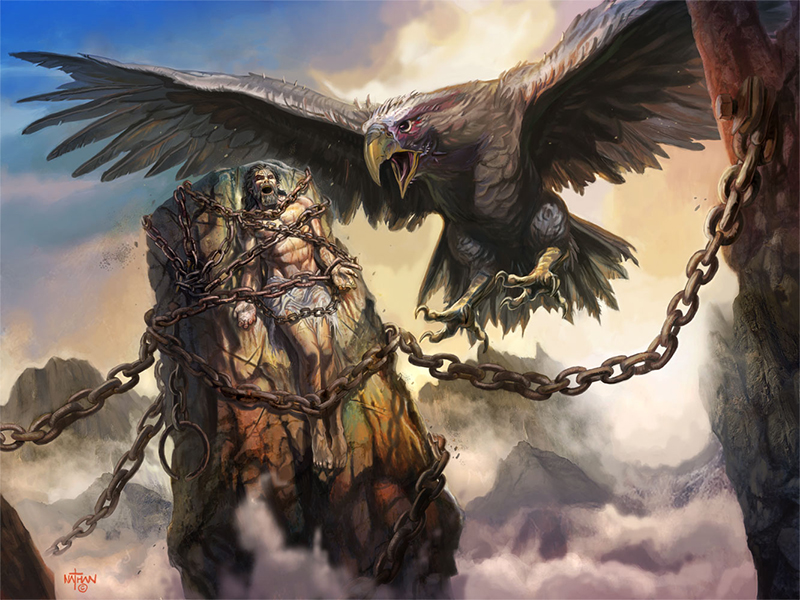
Caucasus has a more important role in the Greek culture than Iranian culture, for example we know Zeus chained Prometheus to this mountain for stealing fire from the gods, this story exists in non-Indo-European cultures in the South of Caucasus too, like Georgian Amirani: https://en.wikipedia.org/wiki/Amirani As you read this legend is traced between 3,000 and 2,000 years BC in the south of Caucasus. Talysh people in this region believe that their ancestor was an enormous bronze giant, similar to Talos in Greek mythology: https://en.wikipedia.org/wiki/Talos In Talysh mythology, there is also the legend of Ledu: https://en.wikipedia.org/wiki/Talysh_mythology "according to legend they are brothers who saving their sister; carry the symbol of the savior from enemies they are the image of the messiah for the Talysh.", it is also similar to the story of Leda in Greek mythology: https://en.wikipedia.org/wiki/Castor_and_Pollux

Anfänger
Regular Member
- Messages
- 547
- Reaction score
- 511
- Points
- 93
- Ethnic group
- Iranian
- Y-DNA haplogroup
- R1b-Z2103
- mtDNA haplogroup
- U7a4

APO276
Regular Member
Caucasus has a more important role in the Greek culture than Iranian culture, for example we know Zeus chained Prometheus to this mountain for stealing fire from the gods, this story exists in non-Indo-European cultures in the South of Caucasus too, like Georgian Amirani: https://en.wikipedia.org/wiki/Amirani As you read this legend is traced between 3,000 and 2,000 years BC in the south of Caucasus. Talysh people in this region believe that their ancestor was an enormous bronze giant, similar to Talos in Greek mythology: https://en.wikipedia.org/wiki/Talos In Talysh mythology, there is also the legend of Ledu: https://en.wikipedia.org/wiki/Talysh_mythology "according to legend they are brothers who saving their sister; carry the symbol of the savior from enemies they are the image of the messiah for the Talysh.", it is also similar to the story of Leda in Greek mythology: https://en.wikipedia.org/wiki/Castor_and_Pollux
I don't have a problem with your view but if we follow mythology there are traditions of movement from Greece to that region. The Argonautes, the Story of Jason and Media. The story of Perseus. Also a story about a movement towards Syria, Lebanon associated with the story of Io.
I have opinions on the interpretation of myths and other semi-mythical traditions but I keep them to myself mostly.
One figure that I find interesting (not for the origin of Greeks primarily) is the mythological King Aeetes of the region of Colchis. Something that seems plausible based on the myth is that it was referring to a population that knew who to process gold. And that the Greeks could have gotten the knowledge of gold metallurgy from them or at least a technique of some short associated with it.
Talos can be Cretan theonym. If it originally meant 'Sun' as some traditions say, it can be equivalent of proto-Greek hawelios that later became ~eelios in Attic, Latin sol, Sanskrit surya etc.
(But it would be interesting to investigate the possible relationship to Albanian diell and also to proto-Uralic *tul which means 'fire' if I remember correctly).
I think personally the reflected root here is talj- and that would be a possible word for the meaning 'Sun' in an ancient Cretan language. This language would not descend from PIE but they could have had a common ancestor further back in time.

Tautalus
Regular Member
- Messages
- 545
- Reaction score
- 1,380
- Points
- 93
- Ethnic group
- Portuguese
- Y-DNA haplogroup
- I2-M223 / I-FTB15368
- mtDNA haplogroup
- H6a1b2y
From the Supplementary Materials.
"Here, uncertainty in tree topology is represented by the posterior probability shown for each node. Any branch leading to a node with a posterior probability of less than 0.5 is shown as a dashed line. Branches that end before the right-hand margin represent non-modern languages, used here as date calibrations. Colors indicate the established clades of Indo-European"

"Here, uncertainty in tree topology is represented by the posterior probability shown for each node. Any branch leading to a node with a posterior probability of less than 0.5 is shown as a dashed line. Branches that end before the right-hand margin represent non-modern languages, used here as date calibrations. Colors indicate the established clades of Indo-European"

Tautalus
Regular Member
- Messages
- 545
- Reaction score
- 1,380
- Points
- 93
- Ethnic group
- Portuguese
- Y-DNA haplogroup
- I2-M223 / I-FTB15368
- mtDNA haplogroup
- H6a1b2y
Still from the supplementary materials :
"2.1.4 LATEST ADNA RESULTS AND ALTERNATIVES TO THE STEPPE HYPOTHESIS
Recently published aDNA findings in Europe significantly update and refine the first major results (16). Notably,
populations of the Yamnaya culture on the Pontic-Caspian Steppe no longer appear as the whole or even main
source of the new ancestry component that spread into Central Europe from c. 5000 BP, from further to the east.
The ancestry predominant in aDNA samples from early Corded Ware contexts has recently been reported (39) to
have originated not on the Pontic-Caspian grassland steppe, but further to the north in the ‘forest steppe’ of the
Middle Dnepr region, and towards the Baltic (85). The ancestry predominant in Yamnaya samples entered Central
Europe via the Danubian corridor in a separate expansion further to the south. This conclusion has been challenged
in (23), arguing that the Yamnaya culture on the Pontic-Caspian cannot be excluded as a primary source for Corded
Ware samples, within the limits of the statistical resolution of their analysis. That inference, however, is a function
of the low resolution of their chosen analysis, and of the fact that both Yamnaya and Corded Ware ultimately derive
from a very similar Eneolithic ancestry background that formed c. 7000 BP once CHG ancestry spread north across
the Caucasus.
Recent aDNA results have also more clearly identified an additional, earlier east-to-west expansion, which brought
into the Eastern Mediterranean and the Balkans a quite different ancestry component, predominantly CHG/Iranian
(86, 44, 87). The homogenization of Anatolian and Iranian Neolithic ancestry is attested in Anatolia and the Near
East around 8500 BP (22), from where the mixed ancestry spread westward c. 7000 BP, which is best explained by
continued contacts with the eastern Mediterranean during the Chalcolithic and early Bronze Age (86, 44, 87).
Notably, the westward dissemination of CHG/Iranian, albeit in mixed form and not as a distinct migration event,
predated the expansions from the forest and grassland Steppe by approximately two millennia.
These updated aDNA findings open up potential correlations with processes of expansion and divergence attested
in the topology of the Indo-European language family. By the time that distinct forest vs. grassland steppe
ancestries were expanding westwards deeper into Europe (after c. 5000 BP, by the radiocarbon dating of the aDNA
samples), the linguistic chronology we report here has one already existing split, estimated around 6370 BP (4940-
7860 BP), between branches that make for at least a prima facie rough geographical and chronological fit: the Balto-
Slavic clade as opposed to the joint clade of Germanic+Celtic+Italic. Further south, the expansion of CHG/Iranian
ancestry into the eastern Mediterranean and Balkans, without passing through the Steppe (48) and thus without
major admixture with EHG ancestry, presents a closer chronological and geographical match with the remaining,
deeper European branches in our topology, namely Albanian, Greek and Armenian. (To these might be added other
‘Paleo-Balkan’ branches, known of and identifiable as some form of Indo-European, but long since extinct and too
scantily documented to be placed reliably within the Indo-European topology.)
Ancient DNA evidence from the Fertile Crescent (46, 47) has already pointed to a scenario for the origins and
spread of agriculture that is more complex than the original farming hypothesis in which Indo-European languages
spread with the first farmers both westwards into Balkan Europe and eastwards to the Indus. The hybrid
hypothesis, in which some branches of Indo-European reach (Northern) Europe via the steppe as a secondary
homeland, fits with aDNA evidence that starting from c. 7000 BP, populations of the Pontic-Caspian steppe derived
approximately half of their ancestry from a source first found from the southern Caucasus to north-western Iran
(48). On the route by which this CHG/Iranian ancestry reached the Steppe, aDNA evidence is not yet sufficient to
exclude a route via Central Asia, i.e. first eastwards and then north and westwards, counter-clockwise around the
Caspian, as hypothesized in (54). Nonetheless, the more parsimonious explanation, also given the aDNA record for
time-transects through the Caucasus (48), would be a far shorter route directly northwards through the Caucasus,
in line with corresponding expansions in material culture in the archaeological record (48, 88).
Recent aDNA results from the Fertile Crescent and Western Asia more widely (21, 22, 23) find no intrusion of
Steppe ancestry into the region that spoke the Anatolian branch of Indo-European, as entailed by the Steppe
hypothesis. They do detect, however, “an admixture event that biologically connected” regions from Western
Anatolia to the Zagros in northern Iran, admixed into a common “Anatolian/Iranian ancestry cline” (22). Possible
scenarios include population movements westwards and eastwards out of the northern Fertile Crescent, which
could correlate with the early splits to the Anatolian and Indo-Iranic branches in a hybrid hypothesis for Indo-
European origins. This admixture event has been dated to c. 8500 BP (22)."
https://www.science.org/doi/suppl/10.1126/science.abg0818/suppl_file/science.abg0818_sm.pdf
"2.1.4 LATEST ADNA RESULTS AND ALTERNATIVES TO THE STEPPE HYPOTHESIS
Recently published aDNA findings in Europe significantly update and refine the first major results (16). Notably,
populations of the Yamnaya culture on the Pontic-Caspian Steppe no longer appear as the whole or even main
source of the new ancestry component that spread into Central Europe from c. 5000 BP, from further to the east.
The ancestry predominant in aDNA samples from early Corded Ware contexts has recently been reported (39) to
have originated not on the Pontic-Caspian grassland steppe, but further to the north in the ‘forest steppe’ of the
Middle Dnepr region, and towards the Baltic (85). The ancestry predominant in Yamnaya samples entered Central
Europe via the Danubian corridor in a separate expansion further to the south. This conclusion has been challenged
in (23), arguing that the Yamnaya culture on the Pontic-Caspian cannot be excluded as a primary source for Corded
Ware samples, within the limits of the statistical resolution of their analysis. That inference, however, is a function
of the low resolution of their chosen analysis, and of the fact that both Yamnaya and Corded Ware ultimately derive
from a very similar Eneolithic ancestry background that formed c. 7000 BP once CHG ancestry spread north across
the Caucasus.
Recent aDNA results have also more clearly identified an additional, earlier east-to-west expansion, which brought
into the Eastern Mediterranean and the Balkans a quite different ancestry component, predominantly CHG/Iranian
(86, 44, 87). The homogenization of Anatolian and Iranian Neolithic ancestry is attested in Anatolia and the Near
East around 8500 BP (22), from where the mixed ancestry spread westward c. 7000 BP, which is best explained by
continued contacts with the eastern Mediterranean during the Chalcolithic and early Bronze Age (86, 44, 87).
Notably, the westward dissemination of CHG/Iranian, albeit in mixed form and not as a distinct migration event,
predated the expansions from the forest and grassland Steppe by approximately two millennia.
These updated aDNA findings open up potential correlations with processes of expansion and divergence attested
in the topology of the Indo-European language family. By the time that distinct forest vs. grassland steppe
ancestries were expanding westwards deeper into Europe (after c. 5000 BP, by the radiocarbon dating of the aDNA
samples), the linguistic chronology we report here has one already existing split, estimated around 6370 BP (4940-
7860 BP), between branches that make for at least a prima facie rough geographical and chronological fit: the Balto-
Slavic clade as opposed to the joint clade of Germanic+Celtic+Italic. Further south, the expansion of CHG/Iranian
ancestry into the eastern Mediterranean and Balkans, without passing through the Steppe (48) and thus without
major admixture with EHG ancestry, presents a closer chronological and geographical match with the remaining,
deeper European branches in our topology, namely Albanian, Greek and Armenian. (To these might be added other
‘Paleo-Balkan’ branches, known of and identifiable as some form of Indo-European, but long since extinct and too
scantily documented to be placed reliably within the Indo-European topology.)
Ancient DNA evidence from the Fertile Crescent (46, 47) has already pointed to a scenario for the origins and
spread of agriculture that is more complex than the original farming hypothesis in which Indo-European languages
spread with the first farmers both westwards into Balkan Europe and eastwards to the Indus. The hybrid
hypothesis, in which some branches of Indo-European reach (Northern) Europe via the steppe as a secondary
homeland, fits with aDNA evidence that starting from c. 7000 BP, populations of the Pontic-Caspian steppe derived
approximately half of their ancestry from a source first found from the southern Caucasus to north-western Iran
(48). On the route by which this CHG/Iranian ancestry reached the Steppe, aDNA evidence is not yet sufficient to
exclude a route via Central Asia, i.e. first eastwards and then north and westwards, counter-clockwise around the
Caspian, as hypothesized in (54). Nonetheless, the more parsimonious explanation, also given the aDNA record for
time-transects through the Caucasus (48), would be a far shorter route directly northwards through the Caucasus,
in line with corresponding expansions in material culture in the archaeological record (48, 88).
Recent aDNA results from the Fertile Crescent and Western Asia more widely (21, 22, 23) find no intrusion of
Steppe ancestry into the region that spoke the Anatolian branch of Indo-European, as entailed by the Steppe
hypothesis. They do detect, however, “an admixture event that biologically connected” regions from Western
Anatolia to the Zagros in northern Iran, admixed into a common “Anatolian/Iranian ancestry cline” (22). Possible
scenarios include population movements westwards and eastwards out of the northern Fertile Crescent, which
could correlate with the early splits to the Anatolian and Indo-Iranic branches in a hybrid hypothesis for Indo-
European origins. This admixture event has been dated to c. 8500 BP (22)."
https://www.science.org/doi/suppl/10.1126/science.abg0818/suppl_file/science.abg0818_sm.pdf
It is important to know where ancient Greece was, for example where was Mount Olympus? In modern Greece: https://en.wikipedia.org/wiki/Mount_Olympus, Cyprus: https://en.wikipedia.org/wiki/Mount_Olympus_(Cyprus) or Anatolia: https://en.wikipedia.org/wiki/Tahtalı_Dağı ? All of them are less than 3,000 meters high, the second highest mountain in Iran which has a height of 4,850 meters, is Alam Kuh: https://en.wikipedia.org/wiki/Alam-Kuh Its old name seems to be Olumpu. Samavar stone close to summit of Alam Kuh:I don't have a problem with your view but if we follow mythology there are traditions of movement from Greece to that region. The Argonautes, the Story of Jason and Media. The story of Perseus. Also a story about a movement towards Syria, Lebanon associated with the story of Io.

Let’s not be pedantic. The connection between steppe and early Greeks is evident in both culture and genetics. Between 2300-1700BCE we have three types of shifts:Cultural (Minoan monumental tombs were above ground, the new ones are below), linguistic (an IE language appears) and genetic ( there is a crystal clear gene flow form the steppe). People that posit an Anatolian Route for paleobalkan languages need to make it compatible to the above triple combo, because right now it is not.
Anfänger
Regular Member
- Messages
- 547
- Reaction score
- 511
- Points
- 93
- Ethnic group
- Iranian
- Y-DNA haplogroup
- R1b-Z2103
- mtDNA haplogroup
- U7a4
Let’s not be pedantic. The connection between steppe and early Greeks is evident in both culture and genetics. Between 2300-1700BCE we have three types of shifts:Cultural (Minoan monumental tombs were above ground, the new ones are below), linguistic (an IE language appears) and genetic ( there is a crystal clear gene flow form the steppe). People that posit an Anatolian Route for paleobalkan languages need to make it compatible to the above triple combo, because right now it is not.
I wouldn't say a crystal clear gene flow from the steppe. There is only one "real" R1b-PF7562 so far and very negligible steppe ancestry. Anyway, for now the northern model for Proto-Greek is more realistic, I agree.
APO276
Regular Member
Let’s not be pedantic. The connection between steppe and early Greeks is evident in both culture and genetics. Between 2300-1700BCE we have three types of shifts:Cultural (Minoan monumental tombs were above ground, the new ones are below), linguistic (an IE language appears) and genetic ( there is a crystal clear gene flow form the steppe). People that posit an Anatolian Route for paleobalkan languages need to make it compatible to the above triple combo, because right now it is not.
If you really study the tombs and burial practices you will see a much more complex reality. Greek can theoretically be from a group within the ANF - Steppe Eneolithic continuum, that formed before Yamnaya came to be.
Yamnaya could represent something like proto-Cimmerians and related groups and they have ancestry from further West.
The so called "flow from the Steppes" can sometimes be not real flow but admixture with local HGs. I have said that non-ANF like HGs (basically hunter-fishers) could have existed even in parts of Anatolia, especially northern Anatolia.
-Edit-
I also wanted to say that early Greeks had more in common culturally with CWC related groups than with Yamnaya but I never believed Greeks came from Corded Ware itself. That is why it is important to understand how Corded Ware came to be.
Last edited:
Let’s not be pedantic. The connection between steppe and early Greeks is evident in both culture and genetics. Between 2300-1700BCE we have three types of shifts:Cultural (Minoan monumental tombs were above ground, the new ones are below), linguistic (an IE language appears) and genetic ( there is a crystal clear gene flow form the steppe). People that posit an Anatolian Route for paleobalkan languages need to make it compatible to the above triple combo, because right now it is not.
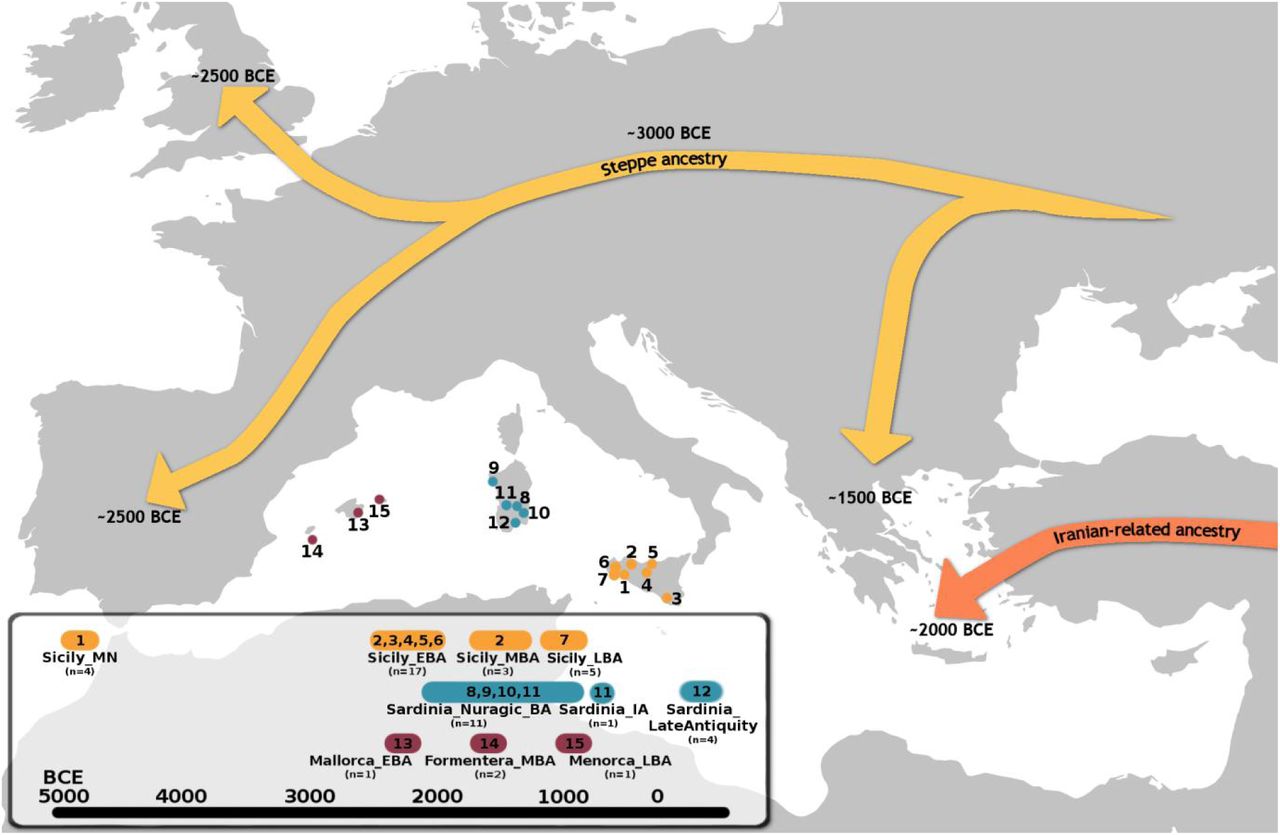
It was Iranian-related ancestry which came to Greece about 2,000 BC, wasn't it?
APO276
Regular Member
It was Iranian-related ancestry which came to Greece about 2,000 BC, wasn't it?
Which Y-DNA haplogroups you associate with movements from Iran to Greece? In order for a movement from Iran to Greece to have taken place some clades later found in Greece should be proven to have existed in Iran first.
The term 'Iranian-related' is a misnomer. Note that no one uses a term like 'Ukrainian related'.
Consider a scenario where instead of the term 'steppe ancestry' which is also bad, we were using a term like 'Ukrainian related ancestry'.
Which Y-DNA haplogroups you associate with movements from Iran to Greece? In order for a movement from Iran to Greece to have taken place some clades later found in Greece should be proven to have existed in Iran first.
The term 'Iranian-related' is a misnomer. Note that no one uses a term like 'Ukrainian related'.
Consider a scenario where instead of the term 'steppe ancestry' which is also bad, we were using a term like 'Ukrainian related ancestry'.
That image is from this genetic study: The spread of steppe and Iranian-related ancestry in the islands of the western Mediterranean, as you see they are geneticists who use these terms. These terms don't matter, it is important thing is that these studies don't talk about people of modern countries.
The main Y-DNA haplogroup seems to be J2, the oldest samples of J2a and J2b have been found in Iran, however J2b has already a low frequency in this country, so it can't be related to modern Iranians.

ThirdTerm
Regular Member
- Messages
- 190
- Reaction score
- 103
- Points
- 43
There was little if any Steppe ancestry identified in all published samples from the Middle to Late Bronze Age “Minoan” culture (individuals dating to 2400-1700 BCE), although these individuals derived about 15% of their ancestry from groups related to early Iranian farmers (from here on referred to as “Iranian-related ancestry”)6 (Fig. 1).
https://www.biorxiv.org/content/10.1101/584714v1.full
The orange arrow (Fig. 1) points to Crete, where the Minoan culture emerged as complex urban civilization around 2,000 BCE. Four out of five males belonging to Minoans, Mycenaeans, and southwestern Anatolians belonged to haplogroup J (Lazaridis et al. 2017). Earlier populations from Greece and western Anatolia were dominated by Y-chromosome haplogroup G2 that was prevalent in Anatolian and European farmers. Mycenaeans can be modelled as a mixture of Minoans and Bronze Age steppe populations (~13–18% admixture with a ‘northern’ steppe population in mainland Greece). Haplogroup R1b was presumably introduced to mainland Greece by Mycenaeans.
Code:
The origin of the Mycenaeans has been intensely debated. Various theories have been
proposed to respond to the question of if, when and in what circumstances Greek speakers or
their linguistic ancestors, speaking a language that later developed into Greek, entered the
Aegean. One theory attributes the origin of Greek speakers to the Balkans, from which waves
of Indo-European speakers flowed into the north of Greece during the Bronze Age. These
people came from the Eurasian steppe north of the Black and Caspian seas, [9] and they are
referred to as the Proto Indo-Europeans. These migrants, together with the local population
they encountered, then combined to form the ancestors of the Mycenaeans and later Greek
speakers. [10-12] One problem with this theory is that the material culture relationship of
Bronze Age populations of the Aegean with populations far to the north is very tenuous. [11-12]


Another theory traces the origin of the Proto-Greeks further back in time, to approximately
3000 BCE at the start of the Early Bronze Age. [13] It proposes that as migrants, they filled a
largely depopulated landscape.


An additional hypothesis for the origin of the Greeks goes even further back to the seventh
millennium BCE and is associated with the view that the Greeks are descended from the first
farmers who migrated into Europe from Anatolia. Alternatively, a very late origin of
Mycenaean elites, associated with chariot riding warriors from the Caucasus in approximately
1600 BCE and characterised by those buried in the Shaft Graves at Mycenae, has also been proposed. [14]
https://static-content.springer.com...jects/41586_2017_BFnature23310_MOESM1_ESM.pdf
Last edited: