
Boss
Regular Member
- Messages
- 117
- Reaction score
- 23
- Points
- 18
- Ethnic group
- Greek
- Y-DNA haplogroup
- T1a
- mtDNA haplogroup
- T2f
Partly why I don't like focusing on Mycenaean and Minoan periods is the lack of evidence.

This is the famous fresco of a Minoan Prince. Now what in the world am I supposed to conclude from it? we know so little about them, it's ridiculous. Nor do I think that taking features in isolation mean much (do Julius Caesar's "keenly" Black eyes mean he was a "Southerner"?)
But even in later Greece of which we know more:


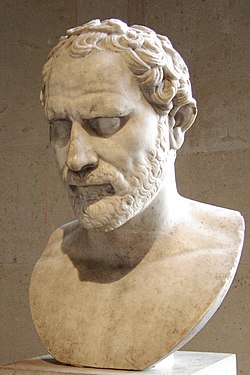
Again, what am I to conclude from this? I'm referring to the associations people make with modern populations. I can find people looking like that (Plato's face is completely battered but anyways) in many places around Europe (and it's colonies).
Then there are people who look like this
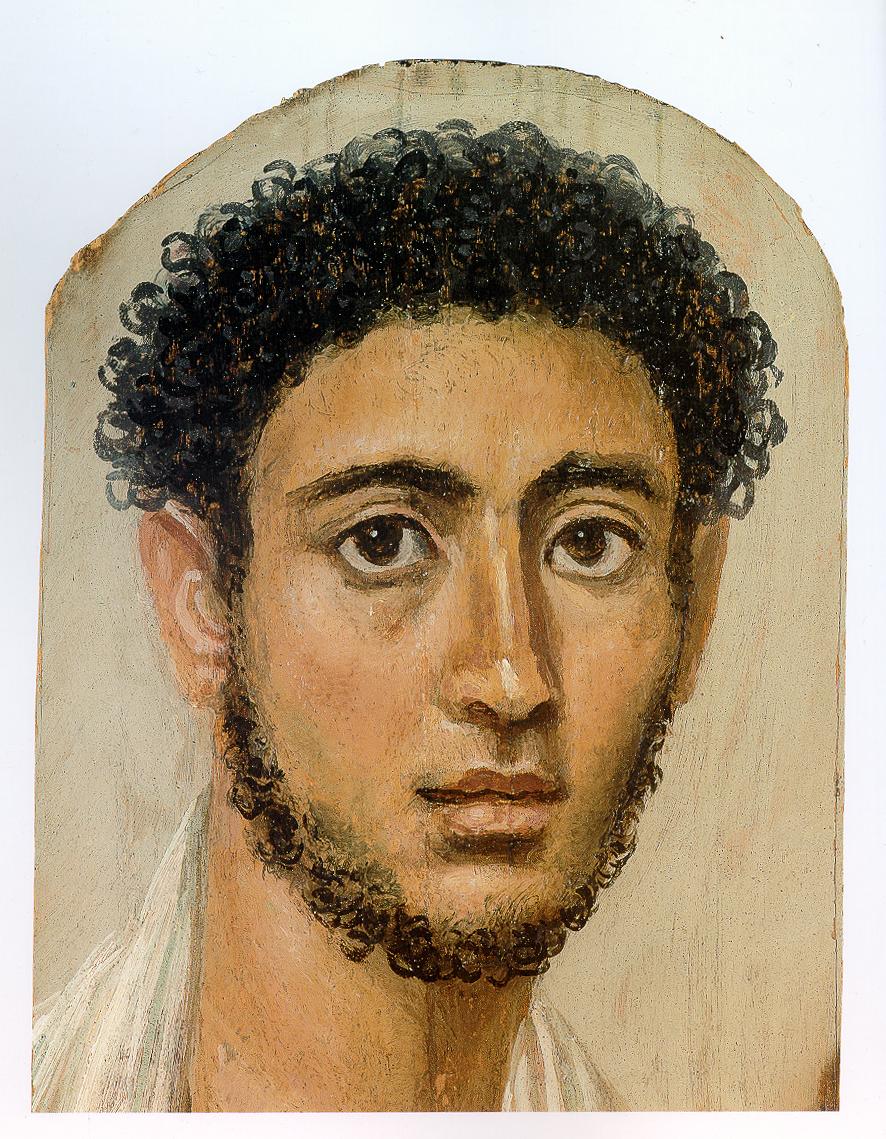 in modern Greece (hair like that I don't think it's easy to find in modern Greece but the face in general). Now this is one of them famous Fayum portraits (many more on google) which, unlike other art, we know were meant to represent people like they were (the descendants of the Hellenistic-Ptolemaic ruling elite of Egypt). Problem is, these Greeks were either mixed with native Egyptian elites or were simply Hellenised Egyptians. Per wiki, their DNA matches the DNA of modern Egyptians more closely (to be fair some of them do look entirely "modern" Egyptian).
One thing is certain though. Such hybrids could not have been 'produced' if the Hellenistic Greeks were "purely" Northerners (I should repeat, the theory I posted on OP is not one of mixture but rather of purity - C. Greeks being purely Northern or purely Southern)
Now this concerns genetics and appearance. Culture is different and, as Maciamo suggested, it does not make one invicible against numerous invaders. Nor does genetic affinity mean anything either. I mean, which culture had more in common with Roman culture? the 'Eastern' Greek or the 'Northern' Germanic/Saxon/Whatever culture(s)? There's also no doubt that the Near Eastern cultures had a significant impact on Classical and Hellenistic Greek cultures which were (virtually?) devoid of "Northern" influences. I'd think the Eastern or 'Oriental' features of Greek (and later Roman!) culture is what made it so attractive (and annoying to anti-Greek Romans like Cato ).
).
It's one thing to propose genetic affinity and another to propose cultural affinity and I'd rather that we focused on the topic of genetic affinity.
Quite obviously, modern Greece is far from being a homogeneous nation (though for reasons I can't understand, many Greeks seem to think it is) so I would not expect to find anything like *A* typical Greek look. The country's a very diverse and, for example, the Island I'm originally from (Crete - Lasithi for anyone interested!), has a different history from that of, e.g., Northern Greece. It's not outlandish that people might look different in Crete than in Thessaloniki.
All the other Greeks I know here (and in Greece), Northern and Southern, can tell I'm Greek (I used to think I look more Armenian or Georgian but they don't think so). So to be honest, I'm surprised we don't look more different. And I, too, find it very easy to identify other Greek students in England from looks alone.
This is the famous fresco of a Minoan Prince. Now what in the world am I supposed to conclude from it? we know so little about them, it's ridiculous. Nor do I think that taking features in isolation mean much (do Julius Caesar's "keenly" Black eyes mean he was a "Southerner"?)
But even in later Greece of which we know more:
Again, what am I to conclude from this? I'm referring to the associations people make with modern populations. I can find people looking like that (Plato's face is completely battered but anyways) in many places around Europe (and it's colonies).
Then there are people who look like this
One thing is certain though. Such hybrids could not have been 'produced' if the Hellenistic Greeks were "purely" Northerners (I should repeat, the theory I posted on OP is not one of mixture but rather of purity - C. Greeks being purely Northern or purely Southern)
Now this concerns genetics and appearance. Culture is different and, as Maciamo suggested, it does not make one invicible against numerous invaders. Nor does genetic affinity mean anything either. I mean, which culture had more in common with Roman culture? the 'Eastern' Greek or the 'Northern' Germanic/Saxon/Whatever culture(s)? There's also no doubt that the Near Eastern cultures had a significant impact on Classical and Hellenistic Greek cultures which were (virtually?) devoid of "Northern" influences. I'd think the Eastern or 'Oriental' features of Greek (and later Roman!) culture is what made it so attractive (and annoying to anti-Greek Romans like Cato
).It's one thing to propose genetic affinity and another to propose cultural affinity and I'd rather that we focused on the topic of genetic affinity.
Quite obviously, modern Greece is far from being a homogeneous nation (though for reasons I can't understand, many Greeks seem to think it is) so I would not expect to find anything like *A* typical Greek look. The country's a very diverse and, for example, the Island I'm originally from (Crete - Lasithi for anyone interested!), has a different history from that of, e.g., Northern Greece. It's not outlandish that people might look different in Crete than in Thessaloniki.
All the other Greeks I know here (and in Greece), Northern and Southern, can tell I'm Greek (I used to think I look more Armenian or Georgian but they don't think so). So to be honest, I'm surprised we don't look more different. And I, too, find it very easy to identify other Greek students in England from looks alone.
Last edited by a moderator: