


 Denmark Guide
 Iceland Guide
 Norway Guide
 Sweden Guide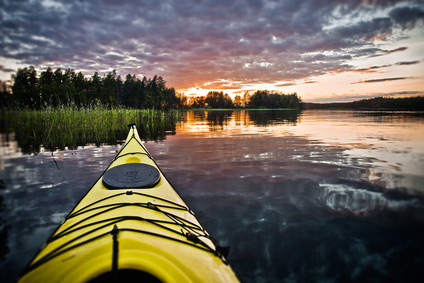
Canoeing on a lake in Finland.
Introduction
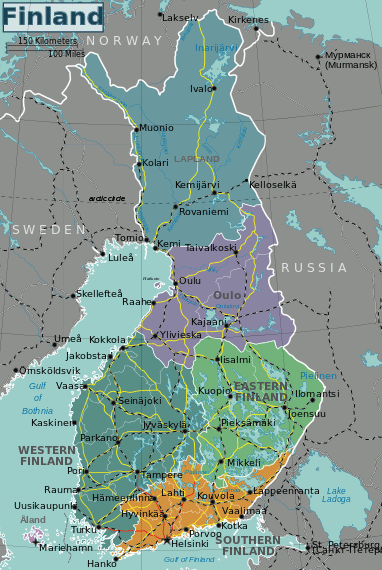
Finland (Suomi in Finnish) is the EU's fifth largest and most sparsely populated country, with only 16 people per km². One fourth of Finland's 5.4 million inhabitants live in the Helsinki metropolitan area. Only seven cities outside the Greater Helsinki have a population exceeding 100,000, the largest of which being Tampere with 300,000 inhabitants in its urban area.
Finland is a flat country occupied mostly by forests (69% of the land area) and lakes (10%). It is famous for its large population of elks (moose), but is also one of the last regions in Europe where grey wolves, wolverines and brown bears can be found.
Finnish is one of the few languages in Europe that does not belong to the Indo-European linguistic family. Like Estonian, its closest relative, and Hungarian, a much more distant relative, Finnish is an Uralic language.
The Finns are a population isolate due to the fact that they descended from a tiny ancestral population in the Middle Ages. Genetic studies have shown that the Finns (including the Sami in Lapland) have the lowest level of Middle Eastern admixture in Europe, and are consequently the closest living relatives of Paleolithic northern Europeans.
Finland is so far the only Nordic country to have joined the Eurozone. Electronics are the country's largest industry, and Nokia its largest and most famous company. Angry Birds, the popular mobile phone game, was developed in Finland.
Famous people from Finland include (chronologically): the "father of the Finnish written language" Mikael Agricola, the philologist and Kalevala author Elias Lönnrot, the classical composer Jean Sibelius, the ski jumper Matti Nykänen, Linux engineer Linus Torvalds, and the F1 drivers Mika Häkkinen and Kimi Räikkönen.
| History of Finland |
|---|

Discover Finland's rich history from Swedish rule to independence. Learn about key events including the Russian era, civil war, and Finland's journey to becoming a modern European nation.
|
| Finnish Cuisine |
|---|
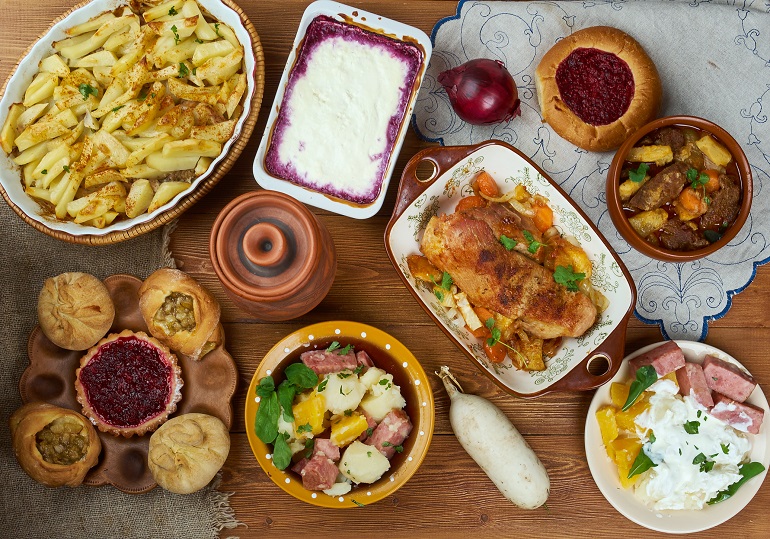
Discover Finland's unique cuisine, characterised by fresh, local ingredients like fish, game meats, berries and root vegetables. Experience traditional dishes that reflect the country's natural landscape.
|

 The 600 wooden houses of Old Rauma, the colourful city centre, have been designated a World Heritage Site. Though only dating from the 18th and 19th centuries, Old Rauma is truly one of Fennoscandia's most beautiful neighbourhoods.
 Remarkably sited between two lakes, Tampere is a bustling student city and the second largest conurbation after Helsinki. Its industrial history owed it the moniker of "Manchester of Finland".
 Naantali

 Finland's capital and largest city, Helsinki is a city of arts, renowned for its Neoclassical and Contemporary architecture and its vibrant cultural scene. Helsinki was even designated the World Design Capital for 2012. A highly liveable city, the northernmost EU capital was built across a number of islands and peninsulas jutting into the Baltic Sea. Prominent among them is the World Heritage Site of Suomenlinna, an inhabited sea fortress built on six islands in 1748 as protection against Russian expansionism.
 Covering an area of 1,020 km² (394 sq mi) of primeval forest, Pallas-Yllästunturi is the third-largest Finnish national park. It is also the most visited, attracting nearly half a million nature lovers annually. The park is located at the country's northern extremity, along the border with Sweden and Norway, and is ideal for hiking or skiing. Reindeer husbandry is practiced by the indigenous Sami people.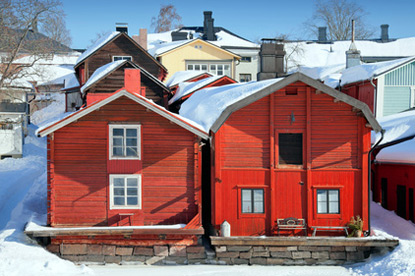



 : Must-see in the country
 : Top cities in Europe