


 Austria Guide
 Czechia Guide
 Hungary Guide
 Poland Guide
 Slovakia Guide
 Slovenia Guide
| Contents |
|---|

Introduction
Plitvice Lakes National Park, Croatia's oldest and largest national park, is situated in the mountainous region between the Mala Kapela and Lička Plješivica mountain ranges. Covering nearly 300 km², the park was established on 8 April 1949 and gained UNESCO World Heritage status in 1979. The park's most remarkable feature is its system of 16 cascading lakes divided into the Upper and Lower Lakes, connected by more than 90 waterfalls. The Upper Lakes, formed on dolomite rock, feature gentler shores, whilst the Lower Lakes sit within a limestone canyon with steeper cliffs. The lakes continuously change colour from emerald green to deep blue depending on mineral content and sunlight. Visitors can explore the park via seven different routes, with programmes designed to showcase both the Upper and Lower Lakes. The park is open year-round, with spring and autumn (May, June, September, and October) considered the optimal visiting times.

Geography and Landscape
Geographical Setting
The park is located on the Plitvice plateau, which lies at an elevation of 650-700 metres above sea level. It is surrounded by three prominent mountains of the Dinaric Alps:
- Lička Plješivica (peak: Gola Plješevica, 1,640 m)
- Mala Kapela (peak: Seliški Vrh, 1,280 m)
- Medveđak (884 m)
This mountainous embrace creates a unique microclimate, with the Velebit mountain range acting as a barrier between the Mediterranean coastal region and the Lika high plateau, resulting in a moderate mountainous climate within the park.
Karst Landscape
Plitvice Lakes National Park is a prime example of karst topography, characterised by its limestone bedrock. This geological foundation has given rise to a myriad of fascinating features:
- Sinkholes (dolines)
- Caves and underground river systems
- Porous rock formations
The park's terrain is divided into two distinct zones:
- The Upper Lakes: Predominantly composed of dolomite rock, which is slightly harder and less permeable than limestone. This area features several smaller, parallel lakes with shallow water flow.
- The Lower Lakes: Primarily limestone, these larger lakes have carved a dramatic canyon through the rock, eventually forming the Korana River.
The Lake System
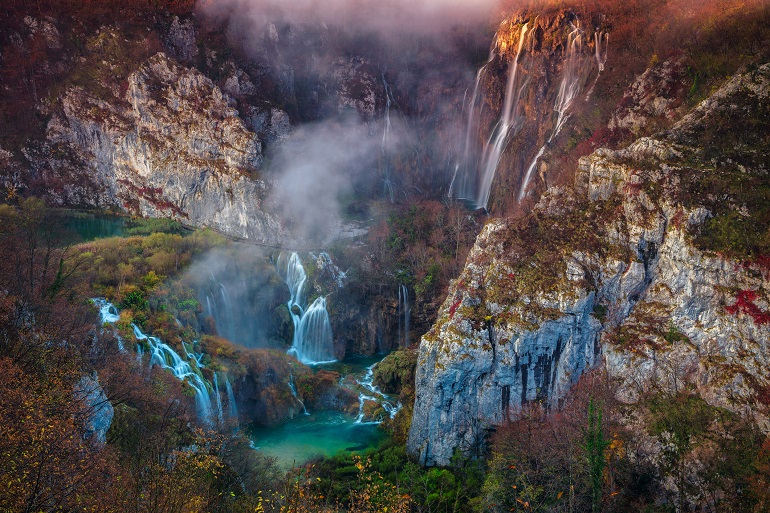
The crown jewel of Plitvice Lakes National Park is its magnificent system of 16 interconnected lakes, divided into the Upper and Lower lakes. These lakes are a result of millennia of geological and biochemical processes, creating natural dams known as tufa barriers.
Tufa Formation
The park's unique water chemistry plays a crucial role in shaping its landscape:
- The water is supersaturated with calcium carbonate due to the karst bedrock.
- Under specific conditions, this dissolved calcium carbonate is deposited, forming porous limestone barriers.
- These barriers retain water, creating the lakes and waterfalls that define the park's scenery.
The tufa formation process is ongoing, making Plitvice Lakes a dynamic and ever-changing landscape.
Waterfalls and Watercourses
The park boasts over 90 waterfalls, with water flowing both above and below ground. The most striking features include:
- Numerous waterfalls connecting the lakes
- Clear water courses winding through the forested terrain
- Underground karst rivers that emerge at the surface upon reaching harder rock
Speleological Structures
For the adventurous traveller, Plitvice Lakes National Park offers a wealth of underground wonders:
- 114 recorded speleological structures, including both caves and pits
- Notable formations such as the Čudinka pit (203 m deep) and the Vršić pit (154 m deep, 110 m long)
- Fascinating caves like Mračna špilja (Dark cave), Golubnjača, and Vile Jezerkinje (Lake Fairies' cave)
These subterranean features add another dimension to the park's already impressive landscape, offering glimpses into the complex underground world that shapes the surface beauty of Plitvice Lakes.
Flora and Fauna
The Plitvice Lakes National Park boasts a rich and diverse array of flora and fauna, making it a captivating destination for nature enthusiasts. This UNESCO World Heritage site is home to an impressive variety of plant and animal species, owing to its unique geographical location and well-preserved ecosystems.
Flora
The park is heavily forested, with beech, spruce, and fir trees dominating the landscape. Over 1,400 plant species have been recorded within the protected area, representing 112 different plant families. The park's vegetation is a fascinating mix of Alpine and Mediterranean flora, creating a vibrant tapestry of colours that change with the seasons.
Endemic and Rare Plants
Plitvice Lakes is home to 72 endemic plant species, some of which were first described in this area. Notable examples include:
- Narrow-leaved bellflower (Edraianthus tenuifoliu)
- Thor's buttercup (Ranunculus scutatus)
- Dalmatian scilla (Scilla litardierei)
The park also harbours several rare and protected species, such as the lady's slipper orchid (Cypripedium calceolus), considered the most beautiful orchid in Europe. Interestingly, carnivorous plants like the common sundew (Drosera rotundifolia) and common butterwort (Pinguicula vulgaris) can be found in boggy areas.
Fauna
The diverse habitats within Plitvice Lakes National Park support a wide range of animal species, from tiny microorganisms to large mammals.
Mammals
Over 50 mammal species inhabit the park, including:
- Brown bears (Ursus arctos)
- Wolves (Canis lupus)
- Lynx (Lynx lynx)
- Otters (Lutra lutra)
- Wild boars
- Deer
- Various bat species
Birds
The park is a haven for birdwatchers, with around 169 bird species recorded. Some notable species include:
- Woodpeckers (9 species)
- Owls (8 species)
- Black storks
- Eagles and hawks
Aquatic Life
Despite the abundance of lakes, fish species are relatively few. The most common fish include:
- Trout
- Chub
- Roach
Amphibians and Reptiles
The park is home to various amphibians and reptiles, including:
- Newts
- Frogs (e.g., the brown frog)
- Lizards (e.g., the green lizard)
- Snakes (e.g., grass snakes and vipers)
Visitors to Plitvice Lakes National Park can marvel at this extraordinary biodiversity while exploring the park's stunning landscapes. However, it's important to note that many of these species, particularly the larger mammals, are elusive and prefer secluded areas. Nonetheless, the park offers a unique opportunity to experience one of Europe's most pristine natural environments.

Activities and Attractions
Plitvice Lakes National Park offers a wealth of activities and attractions, with its stunning network of lakes, waterfalls, and lush forests serving as a backdrop for unforgettable adventures. The park's main draw is its extensive system of hiking trails, which allow visitors to explore the natural wonders at their own pace.
Hiking Trails
The park boasts eight marked hiking trails, each offering a unique perspective on the breathtaking landscape. These trails are well-maintained and colour-coded, making navigation straightforward for visitors.
Lower Lakes Trails
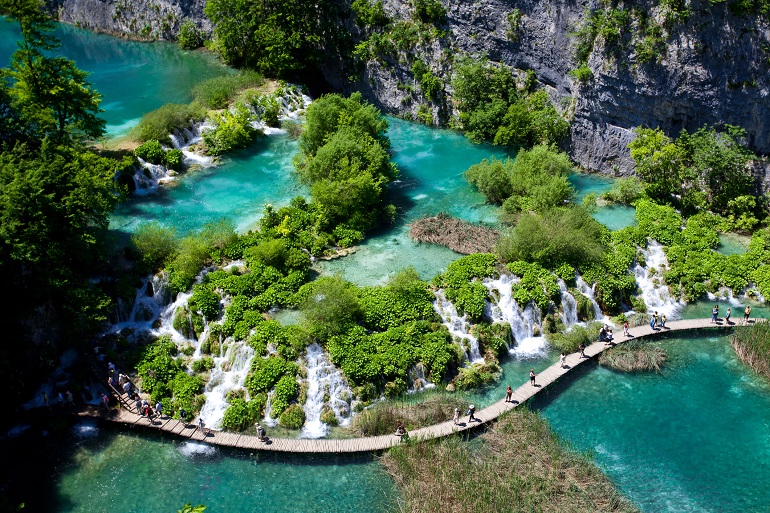
Trail A: This 3.5-kilometre route is ideal for those with limited time or mobility. Starting at Entrance 1, it takes visitors through the Lower Lakes area, showcasing the Great Waterfall and lasting about 2-3 hours. The trail includes wooden walkways that meander over the water, providing close-up views of the turquoise lakes and cascading waterfalls.
Trail B: At 4 kilometres, this trail offers a bit more variety. It includes a boat ride across Lake Kozjak and a train ride back to Entrance 1, typically taking 3-4 hours to complete. This trail allows visitors to see both the Lower Lakes and part of the Upper Lakes, offering a more comprehensive park experience.
Trail E: This 5.2-kilometre trail is a circular route starting and ending at Entrance 2. It takes visitors around the eastern shore of Lake Kozjak and includes a boat ride, providing a different perspective of the Lower Lakes area.
Trail F: A 4.6-kilometre trail that starts at Entrance 2 and explores the Lower Lakes, including a visit to the Great Waterfall. This trail offers some of the most iconic views of the park.
Combined Lower and Upper Lakes Trails
Trail C: This 8-kilometre trail offers a comprehensive experience, covering both Lower and Upper Lakes. Visitors can marvel at three of the largest waterfalls: Great Waterfall, Veliki Prštavac, and Mali Prštavac. The trail includes boardwalks over crystal-clear waters and paths through lush forests.
Trail H: Starting at Entrance 2, this 8.9-kilometre trail takes 4-6 hours and includes a visit to the Upper Lakes, a boat ride across Lake Kozjak, and exploration of the Lower Lakes and Great Waterfall. It's an excellent choice for those wanting to see the majority of the park's highlights in one day.
Full Park Experience
Trail K: The most extensive option, this 18.3-kilometre trail allows hikers to explore the entire lakes section, including both Upper and Lower Lakes. It can be started from either entrance and offers the most comprehensive park experience. This trail is recommended for experienced hikers and typically takes 6-8 hours to complete.
Additional Trails
Trail J: A 9-kilometre trail that takes visitors through the Upper Lakes area, offering views of the park's largest waterfall clusters.
Trail L: This trail covers the entire park and includes a visit to the Čorkova Uvala virgin forest. At 21 kilometres, it's the longest trail and is recommended only for very experienced hikers.
Other Activities
Boat Rides: Electric boat rides across Lake Kozjak are included in some trail options, offering a serene way to take in the park's beauty from a different perspective. These silent boats ensure minimal disturbance to the park's ecosystem while providing visitors with a unique vantage point of the surrounding landscapes.
Panoramic Train: Several trails incorporate a ride on the panoramic train, providing a relaxing way to cover more ground and enjoy sweeping views of the park. The train connects the Upper and Lower Lakes areas and is an excellent option for those who want to conserve energy for walking the boardwalks.
Cycling: While cycling is not permitted within the core area of the park, there are cycling routes in the surrounding areas. These routes offer a chance to explore the wider region and enjoy the beautiful Croatian countryside.
Photography: The park is a paradise for photographers, with countless opportunities to capture stunning landscapes, waterfalls, and reflections in the crystal-clear lakes. Early morning and late afternoon offer particularly beautiful light for photography.

Attractions
Waterfalls: The park is renowned for its numerous waterfalls, each with its own unique character:
- Great Waterfall (Veliki Slap): The park's largest waterfall, cascading from a height of 78 metres. It's an awe-inspiring sight and a highlight of many visitors' trips.
- Veliki Prštavac: One of the most impressive waterfalls in the Upper Lakes area, with multiple cascades creating a spectacular display.
- Mali Prštavac: Another stunning waterfall often included in longer trail options, known for its delicate, lace-like appearance.
- Milka Trnina Waterfall: Named after a famous Croatian opera singer, this waterfall is particularly picturesque and is often less crowded than some of the more famous falls.
- Galovački Buk: A series of cascades in the Upper Lakes area, creating a stunning stepped waterfall effect.
Lakes: The park's 16 interconnected lakes are a sight to behold, each with its own unique characteristics:
- Lake Kozjak: The largest and deepest lake in the park, often crossed by electric boat. It serves as a natural divide between the Upper and Lower Lakes.
- Prošćansko Lake: The highest lake in the park, located in the Upper Lakes area.
- Ciginovac Lake: Known for its ever-changing colours, ranging from deep blue to turquoise depending on the mineral content and light conditions.
- Okrugljak Lake: A small, round lake surrounded by lush vegetation, creating a picturesque scene.
- Novakovića Brod, Kaluđerovac, Gavanovac, and Milanovac: Beautiful dark blue lakes in the Lower Lakes area, each with its own unique charm and surrounding landscape.
Limestone Canyon: The Lower Lakes are situated in a limestone canyon, offering dramatic views and unique geological formations. The canyon walls rise steeply on either side, creating a dramatic backdrop for the lakes and waterfalls.
Šupljara Cave: Located along some of the trails, this cave adds an element of intrigue to the park's natural wonders. While visitors can't enter the cave, its entrance is visible from the trail and adds to the park's mystique.
Viewpoints: The park features several viewpoints offering panoramic vistas:
- Tomićevo Pogledalo: A recently opened viewpoint providing breathtaking views of the lakes and surrounding landscape.
- Vidikovac: A classic viewpoint offering one of the most photographed views of the Lower Lakes.
- Veliki Slap Viewpoint: Offers a spectacular view of the Great Waterfall and the surrounding canyon.
Visitors are reminded to stay on marked trails, wear appropriate footwear, and respect park rules to preserve this UNESCO World Heritage site for future generations. Whether opting for a short stroll or a full-day hike, Plitvice Lakes National Park offers an unparalleled opportunity to immerse oneself in nature's splendour, with its network of trails and attractions catering to all levels of ability and interest.
Accommodation
Inside the National Park
Staying within the park provides unparalleled convenience for exploring the lakes early in the morning or late in the day, avoiding peak crowds. However, accommodation within the park is limited to a few state-managed hotels. These establishments are functional but tend to be older and slightly more expensive compared to options outside the park. Despite their simplicity, they are ideal for those prioritising proximity over luxury.
Nearby Villages
The surrounding villages, such as Jezerce, Mukinje, and Grabovac, offer a wider range of accommodation, including guesthouses, boutique hotels, and self-catering apartments. These options are typically more modern and budget-friendly than those inside the park while still being located within a short drive of the main entrances. Many properties provide amenities such as free parking, Wi-Fi, and breakfast, making them excellent choices for families and groups.
Guesthouses and Bed & Breakfasts
Family-run guesthouses are a popular choice in the area. They often feature warm hospitality, homemade meals, and cosy atmospheres. Some also offer packed lunches for visitors heading into the park. These accommodations provide a more personal touch and are perfect for travellers seeking a tranquil retreat after a day of exploring.
Apartments and Cottages
For those who prefer self-catering or travelling in larger groups, apartments and wooden cottages are widely available in the villages near the park. These accommodations typically include fully equipped kitchens and outdoor spaces, making them ideal for longer stays or those who enjoy cooking their own meals.
Camping
For nature enthusiasts, camping is another option. Campsites near the park provide opportunities to stay amidst nature while enjoying basic facilities. This is a great choice for budget-conscious travellers or those seeking an adventurous experience.
Accessibility
Most accommodations outside the park are within 10 kilometres of Entrances 1 or 2. With affordable parking available at the park entrances, staying slightly further afield can still be convenient while offering better value for money.
Gastronomy
Regional Specialities
The cuisine of Plitvice and the surrounding Lika region is characterised by its 'home-made' spirit, utilising locally sourced ingredients from nearby producers and family-owned farms. Visitors can expect to encounter a range of dishes that showcase the area's rich culinary heritage:
- Meat Dishes: Lamb is a standout, often prepared as spit-roast over an open fire or cooked under a baking lid (peka) with vegetables. Other popular meat options include pork, beef, and traditional sausages like Lika's kulen.
- Fish: Despite being inland, the area's rivers provide excellent freshwater fish. Trout is a local favourite, typically pan-fried or grilled to perfection.
- Dairy and Produce: Lika is renowned for its exceptional dairy products and honey. The region's potatoes are considered some of the best in Croatia and feature prominently in many dishes.
- Traditional Stews: Hearty stews are common, such as Lika pot with lamb or mutton, and 'kalje', a dish often made with cabbage and various meats.
Culinary Traditions
Many recipes in the Plitvice area derive from historical rustic cuisine and are prepared in traditional manners. The use of open fires and wood ovens imparts unique flavours to the food, particularly evident in dishes like spit-roasted meats and freshly baked bread.
Modern Interpretations
While honouring tradition, local chefs also embrace contemporary culinary techniques. Visitors can find modern twists on classic dishes, such as innovative preparations of lamb or creative desserts that incorporate traditional ingredients like basa (a soft Lika cheese) and homemade plum jam.
Seasonal and Foraged Ingredients
The region's diverse landscape contributes to its cuisine. With over 50 types of plants growing in each square metre, many of which are medicinal, the local lamb and other ingredients carry unique flavours and aromas. Seasonal wild mushrooms are also a prized addition to many dishes.
Beverages
No meal is complete without a suitable drink. The area offers a selection of local wines and rakija (fruit brandy), with šljivovica (plum brandy) being particularly popular and often used in cooking as well.
Getting There and Around
By Car
Visitors can drive to Plitvice Lakes National Park from major cities like Zagreb, Zadar, and Split using the E65, E71, and D1 highways. The journey from Zagreb typically takes between 1 hour 50 minutes to 2 hours 40 minutes, while from Zadar it takes about 1 hour 45 minutes to 2 hours 40 minutes. If you're coming from Split, expect a longer drive of around 3 hours 30 minutes to 5 hours 50 minutes, depending on traffic and stops along the way.
By Bus
Public transport is another convenient option. Intercity buses connect Plitvice Lakes to Zagreb, Zadar, and Split. There are two bus stops near the park's entrances, making it easy to access the park from both directions. You can purchase bus tickets online or at the bus stops themselves. It's advisable to check the current bus schedules at the park's information offices or the Zagreb Bus Station website.
Parking and Entrances
Once you arrive, there are three visitor parking areas available. Parking area P1 is located near Entrance 1, while P2 and P3 are near Entrance 2. Both entrances offer bus stops, making it easy to get around if you prefer not to drive.
Currency and Payment
As of January 2023, the official currency in Croatia is the Euro (€). You can use Euros for all transactions, including parking and entrance fees. Ensure you have Euros for your visit, as other currencies may not be widely accepted.
Tips for Your Visit
- Plan Ahead: Book your park tickets and accommodations in advance, especially during peak season.
- Entrance Choice: Both Entrance 1 and Entrance 2 are convenient, but Entrance 1 is more popular and offers more facilities.
- Getting Around the Park: Use the park's train service to travel between entrances if needed.
Best Time to Visit
Spring (May and Early June)
- Weather and Scenery: Spring is an ideal time to visit Plitvice Lakes. The lush greenery is in full bloom, and the waterfalls are at their strongest following the spring rains. The weather is generally mild, making it perfect for hiking and photography.
- Crowds: The park is less crowded compared to the peak summer months, allowing for a more peaceful experience.
- Tips: Arrive early to avoid the crowds that start building up later in the day. Booking tickets in advance is advisable to ensure entry.
Autumn (September and October)
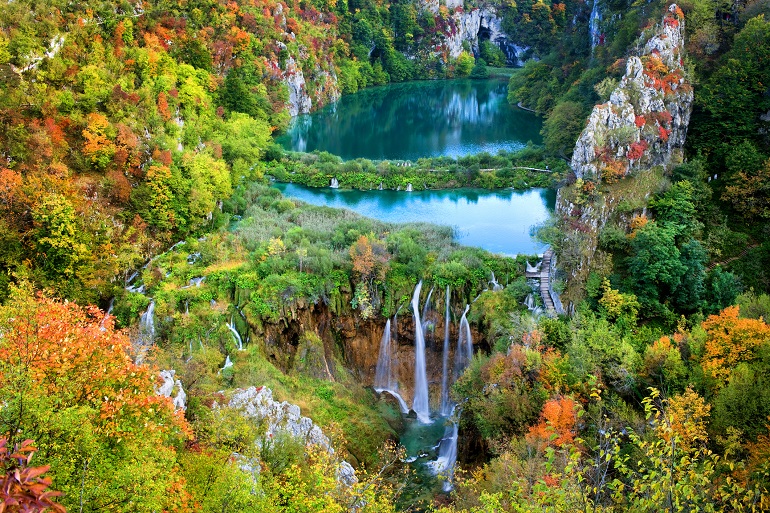
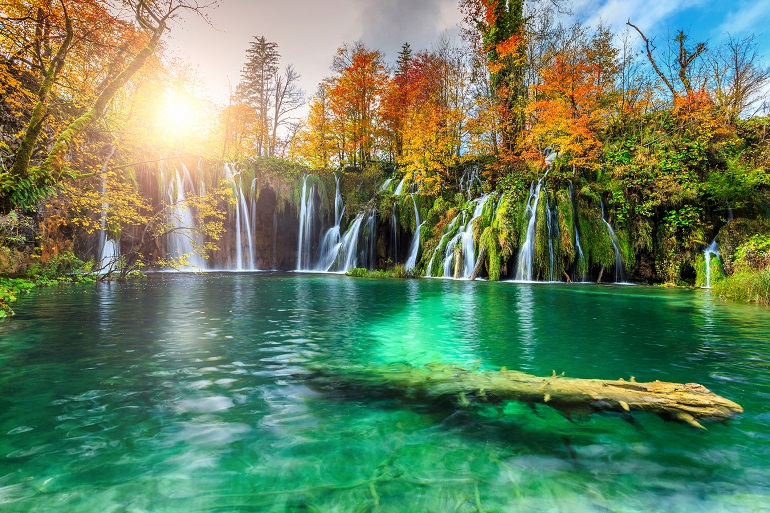
- Weather and Scenery: Autumn offers a serene escape with fewer tourists. The mild temperatures and stunning autumn colours make it an excellent time for photography and nature walks.
- Crowds: The park is less crowded, providing a more tranquil experience.
- Tips: Similar to spring, arriving early and booking tickets in advance can enhance your visit.
Summer (June to August)
- Weather and Scenery: Summer brings hot weather and long days, ideal for photography. However, it is the peak tourist season, making the park very crowded.
- Crowds: Expect long queues and packed boardwalks. Ticket prices are also higher during this period.
- Tips: If you must visit during summer, arrive before 8 am to avoid the crowds. Booking tickets well in advance is crucial.
Winter (November to March)
- Weather and Scenery: The park transforms into a winter wonderland with snow-covered trails and frozen waterfalls. It is peaceful and magical, but some routes may be closed due to ice.
- Crowds: The park is almost deserted, offering a unique and serene experience.
- Tips: Check the latest conditions before visiting, as some facilities like boats and shuttle buses may not operate.
In summary, for a balanced experience of good weather, fewer crowds, and reasonable prices, May, early June, September, and October are the best months to visit Plitvice Lakes National Park.
Conservation and Responsible Tourism
Conservation Efforts
The park's conservation history dates back to 1949 when it was officially designated as a national park. In 1997, its boundaries were expanded to protect the entire catchment area of the lakes and most of the groundwater system. Today, conservation efforts focus on:
- Preserving the delicate tufa barriers that form the lakes
- Protecting old-growth forests of beech and fir
- Safeguarding habitats for rare species, including Brown Bear, Grey Wolf, and Lynx
- Maintaining water quality crucial for the park's ecological processes
Sustainable Tourism Practices
Under the leadership of director Tomislav Kovačević, Plitvice Lakes National Park has become an exemplar of sustainable development in Croatian tourism. Key initiatives include:
- Introduction of LED lighting to reduce energy consumption
- Procurement of electric vehicles and boats to minimise emissions
- Implementation of a reservation system to control visitor numbers
- Adoption of the Green Destinations Certification, demonstrating commitment to responsible travel practices
Visitor Guidelines
To ensure the park's preservation, visitors are expected to follow strict rules of conduct:
- Stay on marked footpaths
- Do not pick plants or disturb wildlife
- Refrain from littering, swimming, or camping within the park
- Keep dogs on leads
- Do not use drones or remotely controlled aircraft
Local Community Engagement
The park actively supports the local community, with over 80% of employees being locals who receive free bus transport to work within a 60-kilometre radius. This initiative aims to reduce private vehicle use and associated pollution.
Future Sustainability Goals
Looking ahead, the park management is focused on:
- Appointing a sustainability coordinator
- Improving visitor monitoring systems
- Further reducing greenhouse gas emissions, especially in transport
- Transitioning from fossil fuels to renewable energy sources

Visitor Centres and Educational Facilities
Visitor Centres
The park features two main entrances, each equipped with comprehensive visitor facilities:
- Entrance 1 (North): Located near the Lower Lakes, this entrance provides access to information points, trail maps, luggage storage, ATMs, currency exchange, restrooms, souvenir shops, and restaurants.
- Entrance 2 (South): Situated next to the Upper Lakes, this entrance offers similar amenities to Entrance 1, including information services and facilities.
Both entrances house information offices where visitors can obtain details about the park, its trails, and current conditions.
Educational Facilities and Programmes
Plitvice Lakes National Park places a strong emphasis on education and environmental awareness:
- Educational Panels: Throughout the park, visitors will encounter informative panels providing details about the park's special features, including characteristics of the Lower and Upper Lakes, the Cave Garden, and interesting facts about the park's ecology and geology.
- Workshops and Programmes: The park organises various educational programmes and workshops focusing on nature conservation, ecology, and sustainable tourism. These initiatives are designed to educate visitors about the importance of protecting natural resources.
- Children's Educational Materials: The park has developed picture books and a children's map specifically designed to educate younger visitors about the park's ecosystem, water, forests, and animals. These materials, available in the park's souvenir shops, include titles such as "Forest Story", "Power of Water", and "Jurica, the Big Ant".
- School Trips: The park is a popular destination for educational tours, offering students the opportunity to learn about the unique ecosystem, geology, and conservation efforts in a hands-on environment.
- Research Collaboration: Plitvice Lakes National Park collaborates with scientific institutions and universities on various research projects, contributing to a better understanding of the park's ecosystems.